A California federal judge allowed the federal government to share basic Medicaid participant information with ICE, but blocked sharing of more sensitive data, citing unclear policies and privacy concerns. The ruling permits sharing of minimal data like citizenship, location, and contact info, while safeguarding more detailed health data, amid ongoing legal disputes over immigration enforcement and data privacy.
The U.S. Immigration and Customs Enforcement (ICE) is expanding its surveillance capabilities with new high-tech tools and legal flexibilities under the Trump administration, raising concerns about privacy and civil liberties as it broadens its scope beyond immigration enforcement to include domestic monitoring of critics and threats, while also reducing oversight and protections for American residents' data.
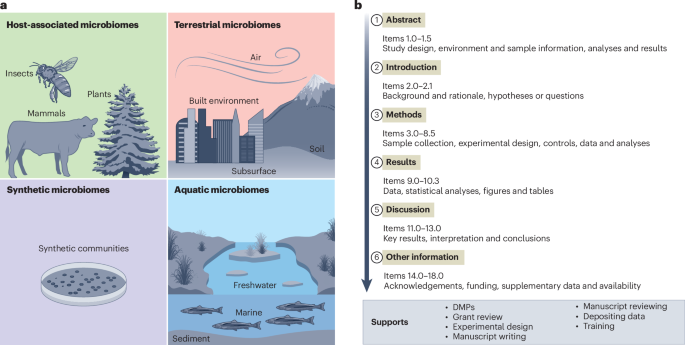
The STREAMS guidelines establish comprehensive standards for reporting and sharing data in environmental and host-associated microbiome studies, aiming to improve reproducibility, data quality, and FAIR principles through community-driven development and extensive feedback.
LinkedIn is now using user posts and achievements to train AI models in certain regions, but users can opt out through privacy settings to limit data sharing for AI training and personalized ads.
A U.S. judge ordered Google to share parts of its search index and user click-and-query data with competitors to promote market competition, raising concerns about user privacy and data security, as this sensitive information could potentially be used to identify individuals or reveal personal details.
Researchers are increasingly leveraging biobanks, large collections of biological samples and data, to enhance scientific studies. The article highlights how biobanks like the UK Biobank facilitate access to extensive, diverse datasets, enabling breakthroughs in health research, despite challenges related to costs, legalities, and underutilization. The growth of biobanking, driven by technological advances, is transforming research capabilities across the globe.
Costco is implementing a new shopping policy starting Monday, which involves processing personal data and sharing information with numerous vendors and ad partners, raising privacy considerations.
The IRS has begun sharing sensitive taxpayer data with immigration authorities to locate undocumented migrants, marking a significant shift in data sharing practices for immigration enforcement, amid internal concerns and political tensions.
OpenAI removed a controversial feature that allowed ChatGPT users to make their chats discoverable in search engines, after it was revealed that thousands of private conversations, some containing sensitive information, were indexed by Google, raising privacy concerns.
JPMorgan Chase and Coinbase are partnering to directly link bank accounts to crypto wallets, bypassing traditional data aggregators, with plans to launch next year, amid ongoing regulatory and industry shifts.
The Trump administration is planning to share personal Medicaid data of millions of enrollees, including non-citizens, with immigration authorities to track undocumented immigrants, raising privacy concerns and potential legal challenges, especially in California where state-funded programs serve immigrants ineligible for federal Medicaid.
The Trump administration is set to share personal Medicaid data of nearly 79 million enrollees with ICE to aid immigration enforcement, sparking legal challenges from several states including California, which seeks to block the data sharing due to privacy concerns and potential chilling effects on healthcare access.
The Trump administration has arranged for ICE to access personal Medicaid data of 79 million Americans, including addresses and ethnicities, to locate and deport undocumented immigrants, raising concerns about privacy and legality.
The Meta AI app has become a privacy disaster as users inadvertently share sensitive conversations, personal information, and even criminal inquiries publicly due to unclear privacy settings and a flawed design that encourages sharing, leading to potential misuse and embarrassment.
The FTC is proposing a $7 million fine against telehealth firm Cerebral for careless handling and sharing of patients' data, as well as deceptive advertising practices. The company allegedly shared sensitive data with third parties, mailed patients postcards with diagnosis and treatment details, and had lax security practices that exposed confidential medical records. Cerebral will be required to pay partial refunds, establish a comprehensive data privacy program, and report annually on it, with a 20-year audit requirement.