Tag

Core Pce

All articles tagged with #core pce

"Key Insights Ahead of Crucial PCE Inflation Data Release"

Originally Published 1 year ago — by ForexLive

Featured image for "Key Insights Ahead of Crucial PCE Inflation Data Release"
Source: ForexLive

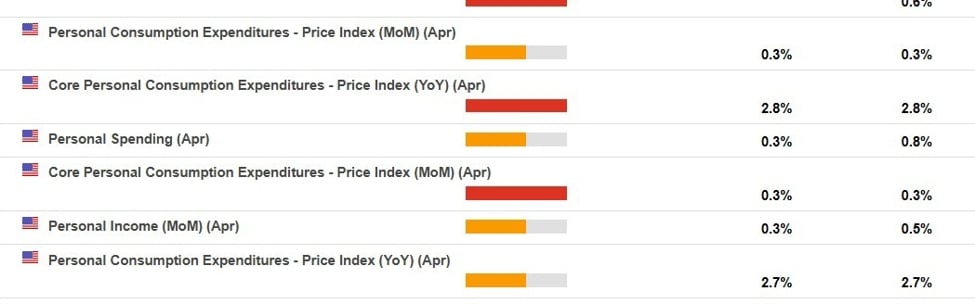
The Core PCE data, a key measure of US inflation, is due on Friday, May 31, 2024, with expected ranges of 2.7%-2.8% y/y and 0.2%-0.3% m/m. Data falling outside these ranges can significantly impact markets due to surprise factors, psychological effects, risk reassessment, automated trading triggers, and potential changes in monetary and fiscal policies.

"Market Anticipation: Inflation Report and Rate Cut Debate"

Originally Published 1 year ago — by Yahoo Finance

Featured image for "Market Anticipation: Inflation Report and Rate Cut Debate"
Source: Yahoo Finance

The March Consumer Price Index (CPI) is expected to show elevated inflation of 3.4%, driven by higher energy costs, with core inflation at 3.7%. Despite this, some economists anticipate a slowdown in core inflation throughout the year. The Federal Reserve is debating whether to cut rates, with market expectations shifting from six cuts to just two and a half this year, as strong labor data complicates the decision-making process.

"US February Core Inflation Matches Expectations at +2.8% Year-Over-Year"

Originally Published 1 year ago — by ForexLive

Featured image for "US February Core Inflation Matches Expectations at +2.8% Year-Over-Year"
Source: ForexLive

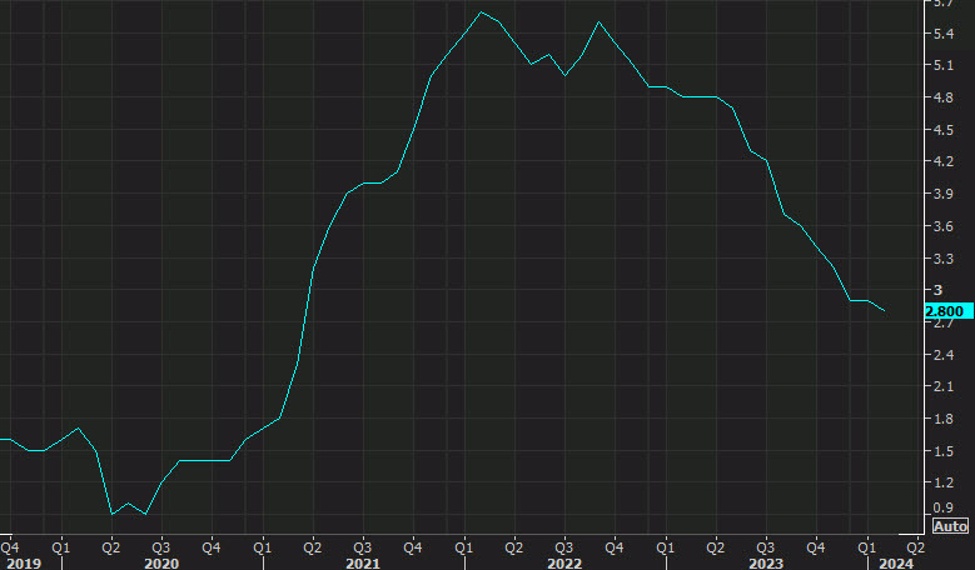
In February, US core PCE inflation rose by 2.8% year-on-year, meeting expectations, while personal income increased by 0.3% and personal spending surged by 0.8%. The dollar softened despite a lower-than-expected headline monthly inflation reading. Goods prices fell by 0.2% year-on-year, while services prices rose by 3.8% year-on-year, indicating a mixed inflation trend.

"Market Dynamics: US Dollar Reacts to Core PCE and Inflation Data"

Originally Published 1 year ago — by DailyFX

Featured image for "Market Dynamics: US Dollar Reacts to Core PCE and Inflation Data"
Source: DailyFX

The US dollar's near-term trajectory and the FOMC’s guidance may be influenced by the release of core personal consumption expenditures data, the Fed’s preferred inflation gauge. A subdued core PCE reading below 3.0% could lead to a sharp turn to the downside for the greenback, potentially validating market pricing of deep interest rate cuts. Meanwhile, EUR/USD is facing potential pullback towards 1.0770, GBP/USD is consolidating within a symmetrical triangle, and gold is confined between $2,030 and $2,005 with potential breakout levels at $2,065 and $1,990.

PCE Inflation Drops in November 2023, Easing Price Pressures

Originally Published 2 years ago — by CNBC

Featured image for PCE Inflation Drops in November 2023, Easing Price Pressures
Source: CNBC

The core personal consumption expenditures (PCE) price index, a key inflation gauge used by the Federal Reserve, rose 0.1% in November and increased 3.2% from a year ago, slightly below economists' expectations. On a six-month basis, core PCE increased 1.9%, indicating that the Fed is nearing its inflation target. Consumer expenditures and income also rose in line with expectations, suggesting continued spending despite ongoing inflation pressures. The Fed prefers PCE as an inflation measure and has indicated it is done raising rates, with expectations of rate cuts in 2024.

Gold Price Rises as Dollar Weakens and Traders Monitor Economic Data

Originally Published 2 years ago — by DailyFX

Featured image for Gold Price Rises as Dollar Weakens and Traders Monitor Economic Data
Source: DailyFX

The technical outlook for gold is positive as the market awaits the release of the US Core PCE Price Index, which is expected to show a slight decrease in November. If the data aligns with market forecasts, the Federal Reserve will face challenges in justifying the need to maintain current interest rates. Gold is currently testing resistance levels and finding support at the 20-day simple moving average. A break above resistance could lead to further gains, while a break below support may leave the precious metal vulnerable. Retail trader data suggests a bearish sentiment, but the contrarian view takes into account the possibility of gold prices continuing to fall.

"The Stock Market's Fate: Inflation's Impact and a Strategic Playbook for the Year Ahead"

Originally Published 2 years ago — by MarketWatch

Featured image for "The Stock Market's Fate: Inflation's Impact and a Strategic Playbook for the Year Ahead"
Source: MarketWatch

Analysts at 22V Research have outlined a playbook for how the stock market will react to different inflation scenarios. They predict that if inflation remains above 2.4% but below 2.75%, the Fed may still cut rates, favoring deeper cyclicals and making it tough to short the U.S. dollar or bet on U.S. Treasury yields declining. If core inflation tracks above 3%, Treasury yields and the U.S. dollar would move higher, benefiting risk-off factors. Alternatively, if inflation falls below 2.4% without an increase in the unemployment rate, stocks are expected to perform well. The analysts also suggest that lagging companies, such as small caps, should continue to catch up.

"Federal Reserve projects core PCE to decline to 2.4% by 2024"

Originally Published 2 years ago — by CNBC

Featured image for "Federal Reserve projects core PCE to decline to 2.4% by 2024"
Source: CNBC

The Federal Reserve has lowered its inflation forecast, expecting the core personal consumption expenditures (PCE) price index to fall to 2.4% in 2024. The central bank also upgraded its forecast for gross domestic product (GDP) growth in 2023 to 2.6%. Projections for the unemployment rate remained largely unchanged. The Fed's dot plot showed a median expectation of three quarter-point rate reductions by the end of 2024, bringing the targeted range to 4.6%.

Fed Inflation Gauge Meets Expectations, Spending Surpasses Estimates

Originally Published 2 years ago — by CNBC

Featured image for Fed Inflation Gauge Meets Expectations, Spending Surpasses Estimates
Source: CNBC

Inflation in the US accelerated in September, with the core personal consumption expenditures price index rising 0.3%, in line with expectations. However, consumer spending exceeded forecasts, increasing by 0.7%. Personal income also rose by 0.3%, slightly below estimates. The Federal Reserve focuses on core inflation, which has been on a downward trend but remains above the central bank's 2% target. The report is unlikely to change the Fed's view that inflation will slow in the coming months as demand moderates. Traders are pricing in a near-100% chance that the Fed will not announce a rate hike at its upcoming policy meeting.

Inflation Indicators: Slowest Increase Since September 2021

Originally Published 2 years ago — by Yahoo Finance

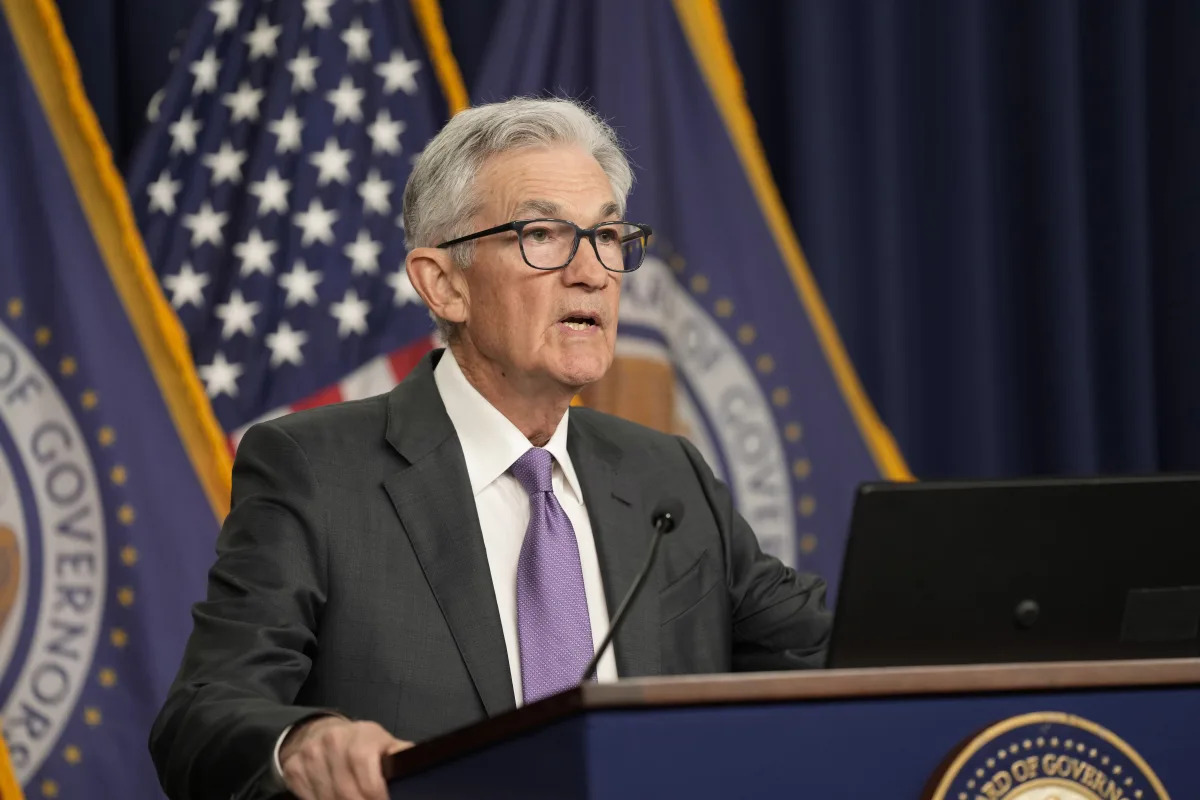
The Federal Reserve's preferred inflation measure, the Personal Consumption Expenditures (PCE) Index, grew at its slowest pace since September 2021 in August, with a year-over-year increase of 3.5%. The "core" PCE, which excludes food and energy categories, grew 3.9% year over year. These figures align with the Fed's efforts to tame inflation, as Chairman Jerome Powell noted that inflation remains above the target of 2%. The Fed expects core PCE to peak at 3.7% this year before cooling to 2.6% next year and 2.3% in 2025. The Fed is closely monitoring economic developments that could impact inflation's trajectory.

Inflation Stagnation and Slumping Spending: A Slow Progress Report

Originally Published 2 years ago — by WOLF STREET

The core PCE price index, the inflation measure favored by the Fed, remained stuck near 4.6% for the sixth consecutive month, while core services inflation stayed at a 38-year high of 5.4%. Durable goods prices, which had been dropping, rose again due to a spike in motor vehicle prices. Energy prices plunged, contributing to a decrease in the overall PCE price index. Food prices saw a slight increase, while the overall PCE price index rose by 3.8%, the lowest since April 2021.

Inflation Gauge Hits 2-Year Low, Signaling Potential Relief for Central Banks

Originally Published 2 years ago — by Barron's

Featured image for Inflation Gauge Hits 2-Year Low, Signaling Potential Relief for Central Banks
Source: Barron's

The Federal Reserve's preferred inflation gauge, the core personal consumption expenditures (PCE) price index, showed a lower-than-expected increase in May, indicating that the central bank may not need to raise interest rates significantly to combat rising prices. This data provides reassurance regarding the Fed's approach to managing inflation.