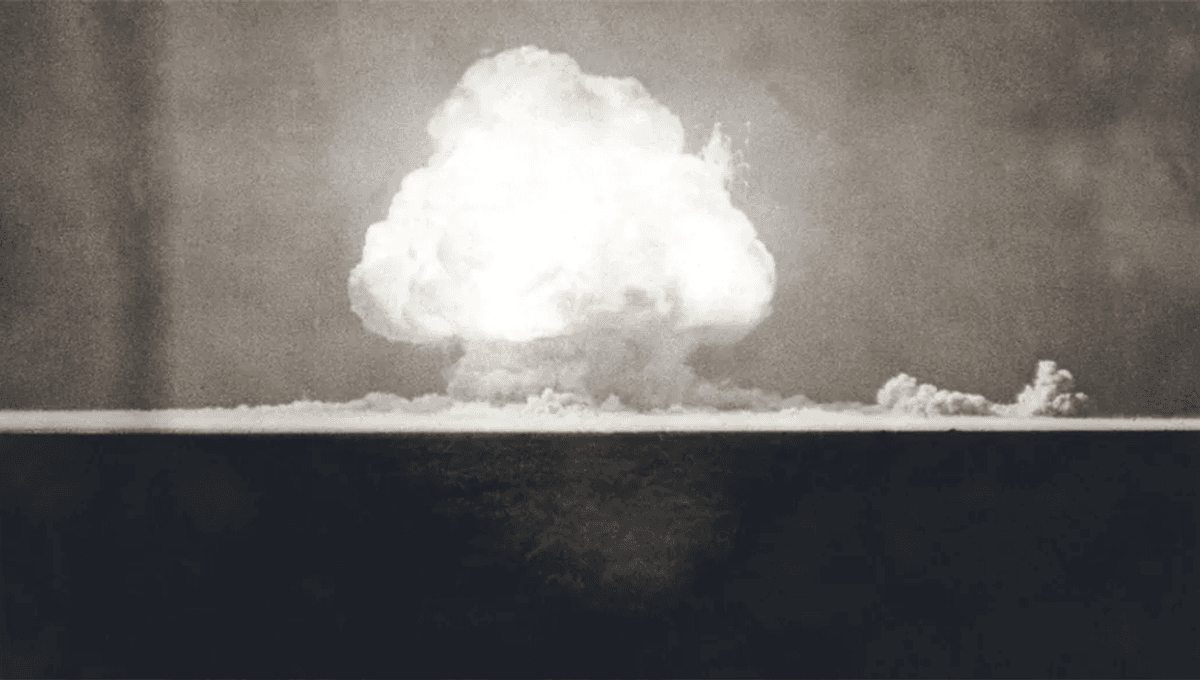
Physicists were initially concerned that a nuclear bomb detonation could set the atmosphere on fire and destroy the world, but experimental data has since shown that sustained reactions in the oceans and atmosphere are not triggered by nuclear explosions. A new paper points out that while the initial teams missed a key reaction, the radiocarbon produced by nuclear weapons remains in our bodies as a lasting reminder of the human hubris leading to their development.
A vintage photo from 1971 shows the aftermath of a library shelf catastrophe at the Lorain Ohio Public Library, where one shelf fell, causing a domino effect that resulted in 50,000 books scattered on the floor. The photo captures the increasing panic of the librarian as each shelf collapsed. Despite the chaos, the people in the photo maintain a good attitude. The cleanup process and the time it took to restore order remain unknown.
The World Health Organization (WHO) has warned that there are only 24 hours left of water, electricity, and fuel in Gaza before a "real catastrophe" occurs. Egyptian authorities have accused Israel of not cooperating in delivering humanitarian aid to Gaza, where Israeli air strikes have killed thousands and displaced hundreds of thousands. Israel has shown little interest in allowing aid into Gaza, with the Israeli Energy Minister opposing the opening of the blockade on humanitarian grounds. The United States has expressed support for allowing aid into Gaza, and the United Nations humanitarian chief will travel to the Middle East for negotiations.
NASA's asteroid tracker has identified a massive asteroid, designated as 349507 (2008 QY), which is set to pass Earth on October 3. Estimated to be around 1.2 kilometers in diameter, or the size of 100 capybaras, an impact event with this asteroid could have catastrophic global consequences. However, the asteroid will be traveling at a safe distance of over 6 million kilometers from Earth. Scientists have been working on methods to deflect asteroids, with kinetic deflection showing promise in altering their orbital paths.
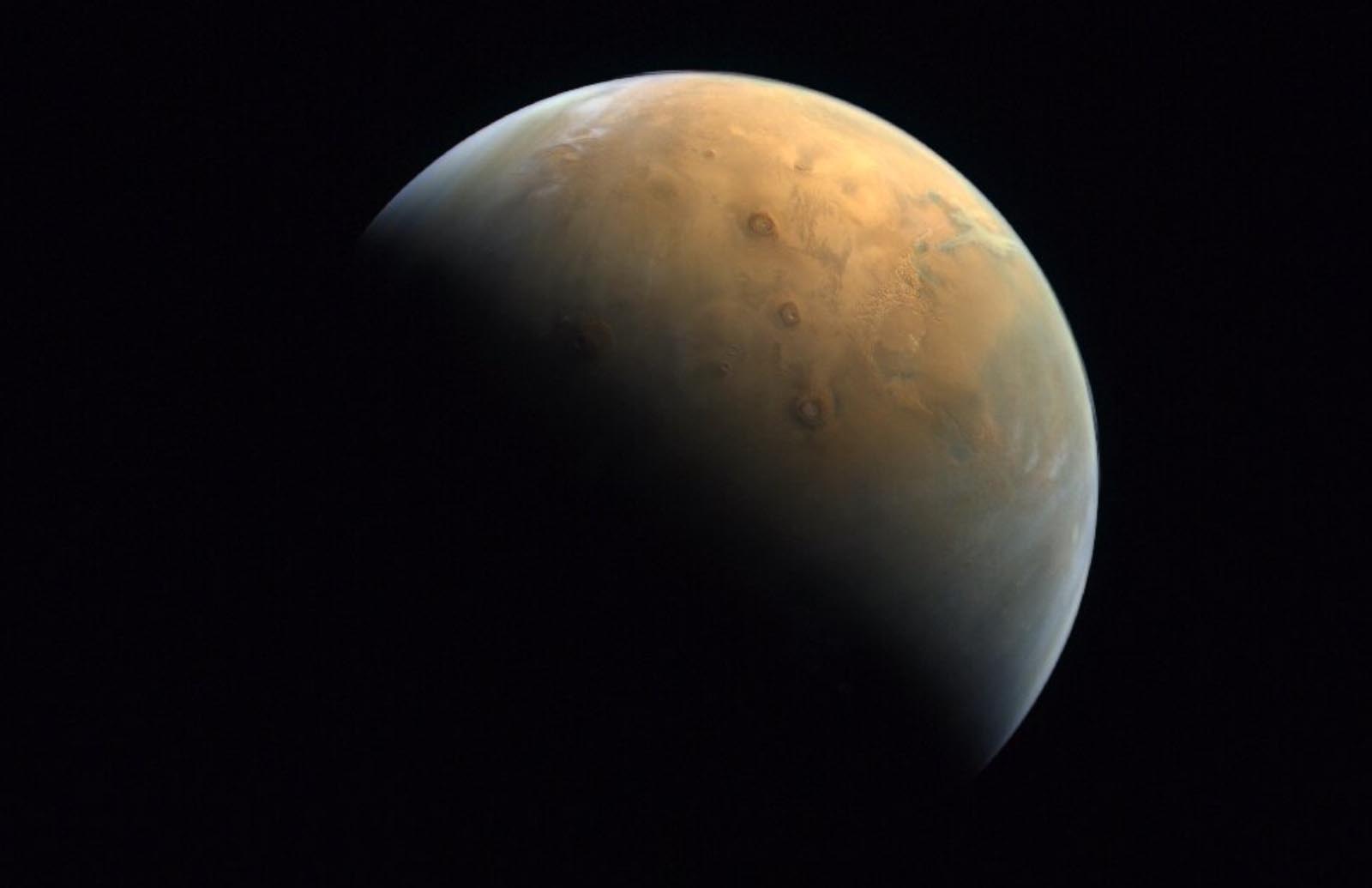
New research using data from NASA's Insight Lander and China's Zhurong Martian Rover has revealed that Mars has small pockets of magnetism with varying magnitudes. Some areas have a stronger magnetosphere, while others are much weaker, suggesting a possible catastrophe associated with the change. Understanding the disappearance or change of Mars' magnetosphere is crucial for future exploration efforts, including NASA's planned manned mission to the planet. The findings provide valuable information for astronomers and help in better understanding Mars as a whole.
State Farm has announced that it will no longer offer new home and property insurance policies in California due to the state's rapidly growing catastrophe exposure, historic increases in construction costs, and a challenging reinsurance market. The decision comes ahead of what experts fear could be an intense and active wildfire season. State Farm is not the only insurer pulling out of the state, with many homeowners in fire-prone zip codes struggling to find affordable insurance options.
Melting permafrost has the potential to create an unstoppable feedback loop that could lead to catastrophic consequences such as droughts, floods, crop failures, and the collapse of civilization. To prevent this, humanity must take concrete steps to stop global warming and/or cool the planet, such as stopping all fossil fuel burning, extracting carbon dioxide from the atmosphere, or using geoengineering techniques. The permafrost has already started to melt, and a catastrophe will occur if this melting process accelerates to the point where it becomes unstoppable.
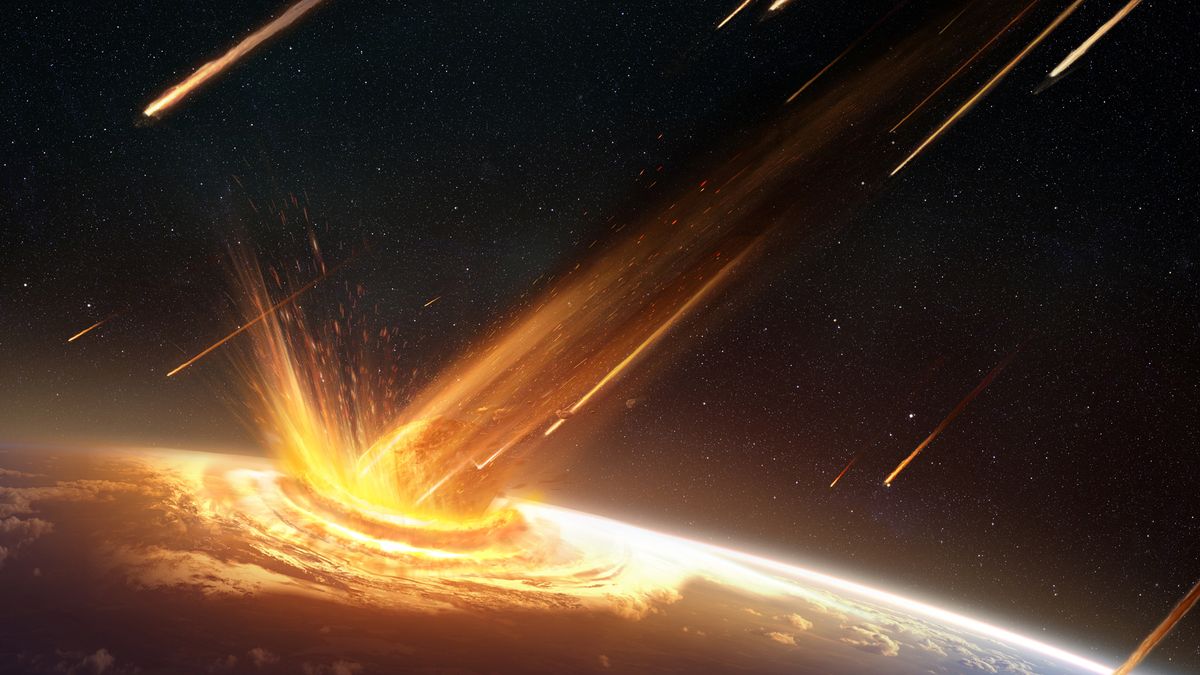
Scientists have presented a hypothetical scenario at the 8th Planetary Defence Conference in Vienna, Austria, to illustrate the potential devastation an asteroid could cause if it were on a collision course with Earth. The scenario begins with the discovery of a new asteroid, 2023 PDC, which is initially designated a "potentially hazardous asteroid" (PHA). The impact probability of 2023 PDC is initially just 1-in-10,000, but this steadily increases as asteroid tracking facilities on Earth continue following the rock, better constraining its orbit around the sun. The size of the asteroid is important because not only will it determine how much damage it does, but it will also determine what measures need to be taken to divert it, or whether this would be possible at all.