Tag

Earlyuniverse

All articles tagged with #earlyuniverse

JWST Spots MoM-z14, the Universe’s Oldest Galaxy Yet (280 Million Years After the Big Bang)
space1 month ago

JWST Spots MoM-z14, the Universe’s Oldest Galaxy Yet (280 Million Years After the Big Bang)

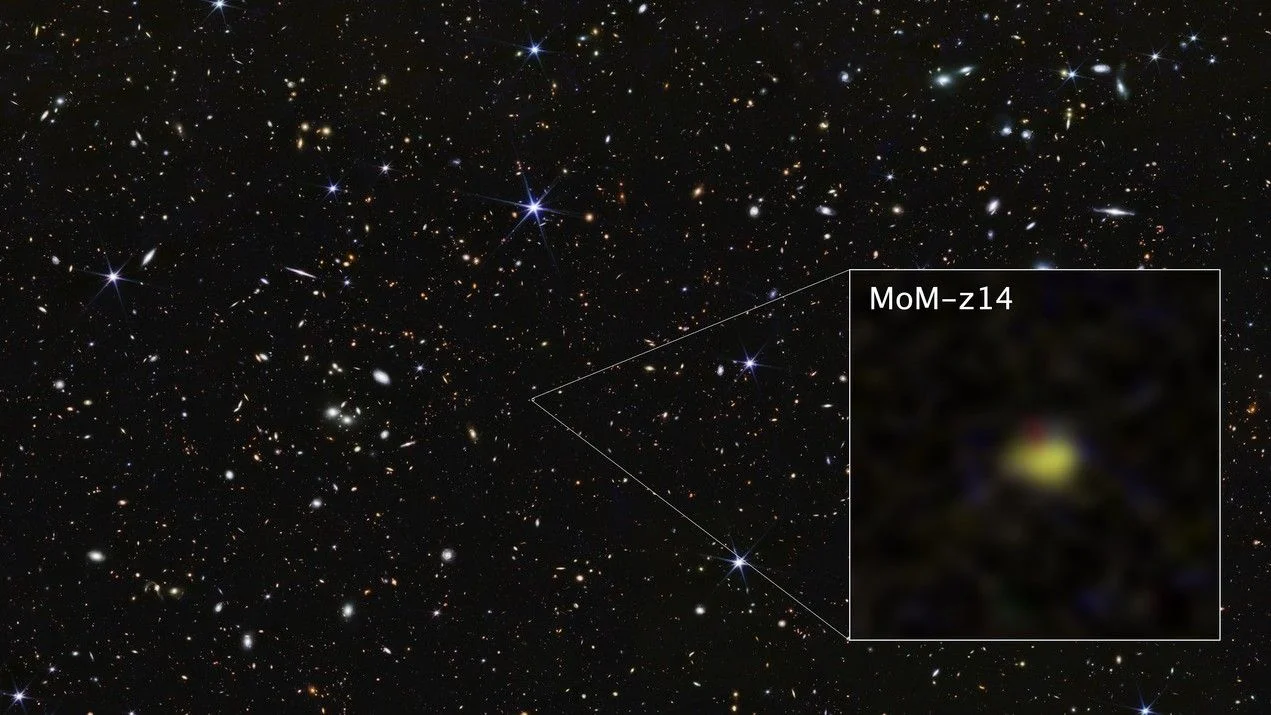
NASA’s James Webb Space Telescope confirmed MoM-z14 as the most distant spectroscopically confirmed galaxy to date, seen as it emitted light about 280 million years after the Big Bang (redshift z=14.44). The galaxy is compact (roughly 240 light-years across) with a mass similar to the Small Magellanic Cloud, and shows rapid star formation and nitrogen-rich composition, suggesting early, globular-cluster–like stellar activity. The finding, first reported in a 2025 preprint and later peer‑reviewed in early 2026, challenges existing models of early galaxy formation and signals more discoveries to come, including with the Nancy Grace Roman Space Telescope.
"Early Cosmic Structures Resembled Bananas, Research Indicates"
science-and-technology2 years ago

"Early Cosmic Structures Resembled Bananas, Research Indicates"

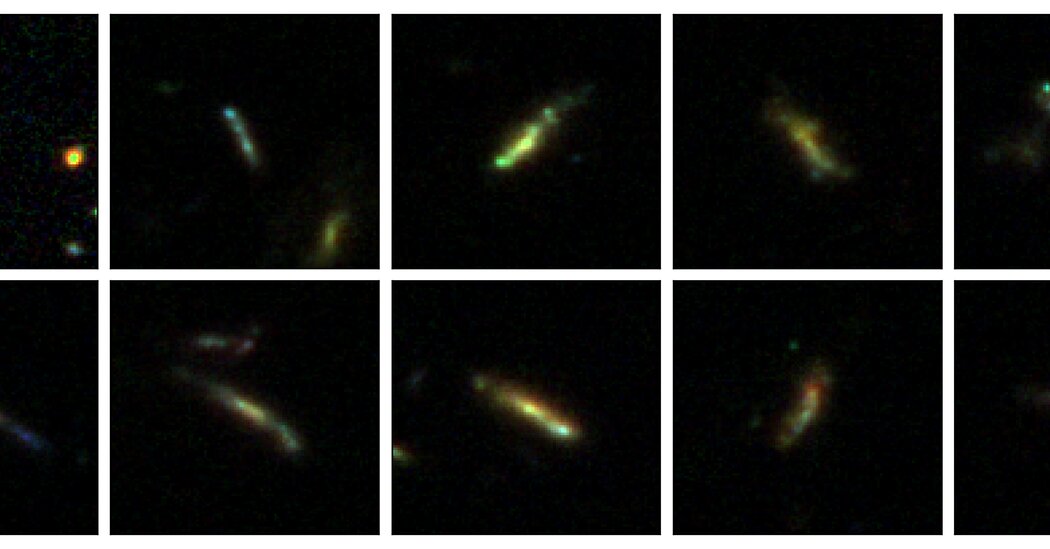
A new study analyzing images from the James Webb Space Telescope has revealed that galaxies in the early universe were elongated and shaped more like bananas, rather than the orbs and spidery discs we see today. This unexpected finding, which deviates from previous assumptions based on Hubble telescope observations, could significantly impact our understanding of galaxy formation and the role of dark matter. The research, led by Viraj Pandya of Columbia University, suggests a revision of the gravitational frameworks that describe how galaxies are born and evolve, and it may provide new insights into the enigmatic nature of dark matter.

"Spiral Galaxies Abounded in the Early Cosmos, Studies Indicate"
science-and-technology2 years ago

"Spiral Galaxies Abounded in the Early Cosmos, Studies Indicate"

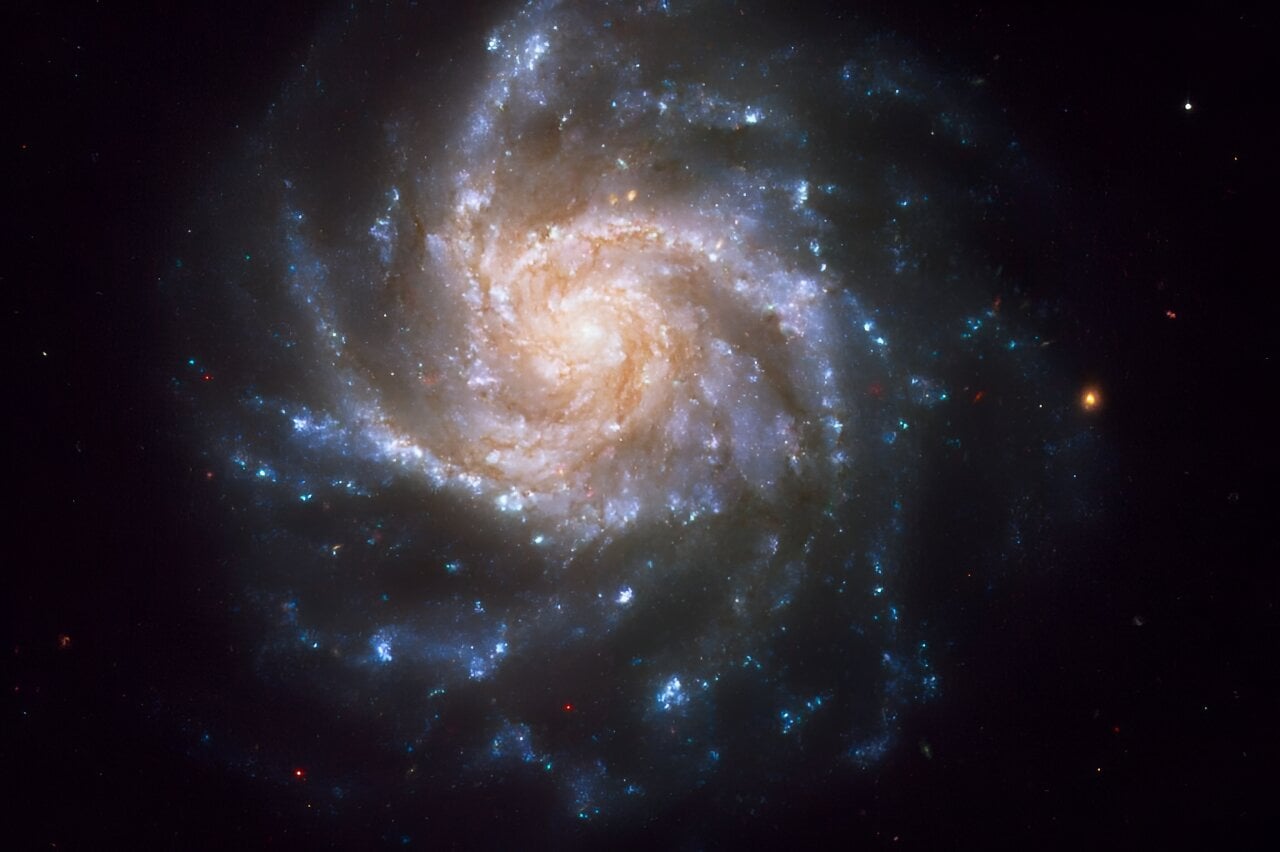
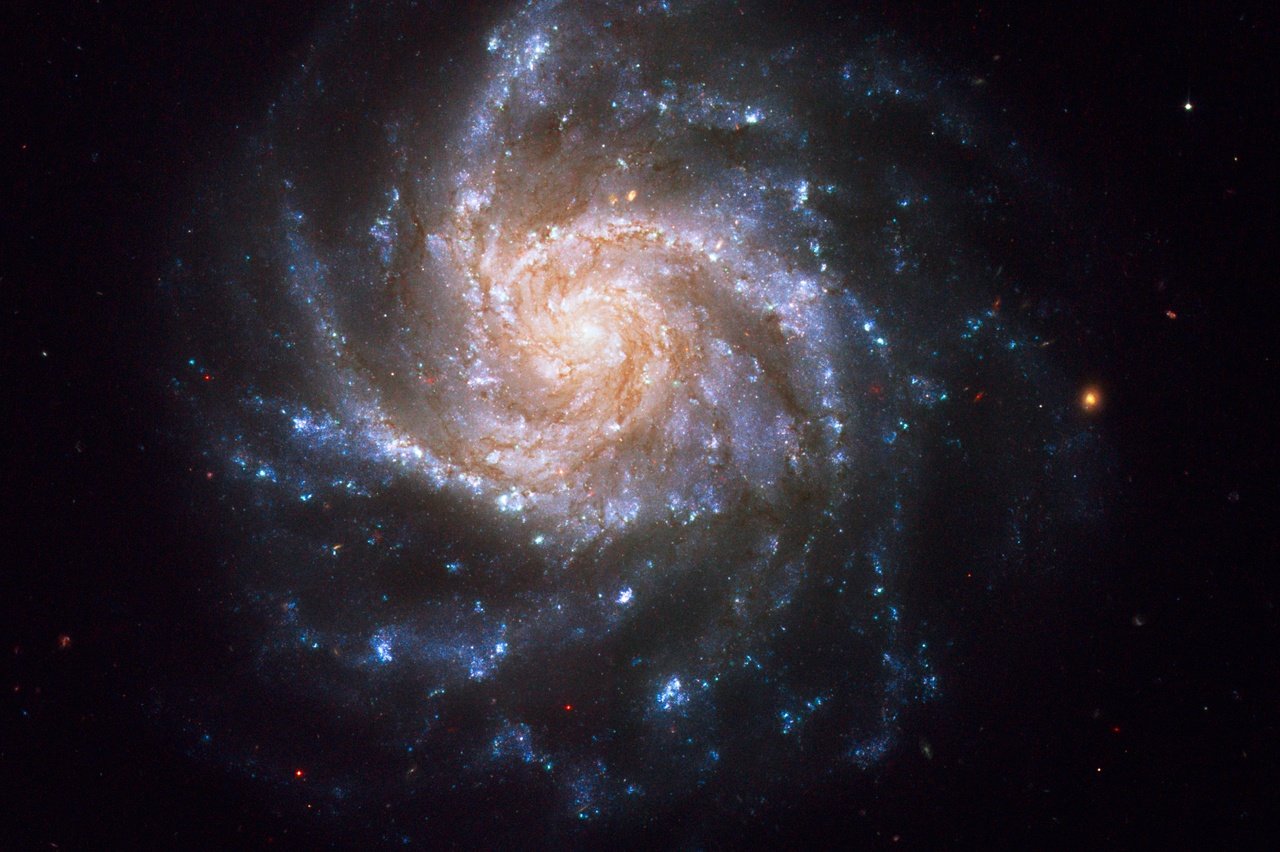
A new study using data from the James Webb Space Telescope has revealed that spiral galaxies were much more common in the early universe than previously thought. Researchers found that about a fifth of galaxies at redshift z=3, which corresponds to less than two billion years after the Big Bang, were spiral galaxies. This challenges the notion that spiral galaxies mainly form from mergers and collisions over time, suggesting that other factors contribute to their formation. The findings, which are based on observations from the Cosmic Evolution Early Release Science Survey (CEERS), indicate that many galaxies evolved into spirals much earlier than expected, and further research is needed to understand the underlying processes.

"Seismic Ripples Reveal Surprising Abundance of Early Spiral Galaxies"
science-and-technology2 years ago

"Seismic Ripples Reveal Surprising Abundance of Early Spiral Galaxies"

Astronomers using the ALMA observatory have studied BRI 1335-0417, the oldest known spiral galaxy at over 12 billion years old, to gain insights into early galaxy formation. They observed seismic wave patterns and a bar structure within the galaxy, which are indicative of dynamic star formation processes and the galaxy's growth. The findings, which include the most distant known galactic bar, help explain the rapid star formation rates in early galaxies and provide a glimpse into the past when the Universe was only 10 percent of its current age. The research contributes to our understanding of how spiral structures form and the evolution of galaxies like our own Milky Way.

"Spiral Galaxies Abounded in the Youthful Cosmos"
science-and-technology2 years ago

"Spiral Galaxies Abounded in the Youthful Cosmos"

A new study using data from the James Webb Space Telescope challenges the traditional view of galaxy formation by revealing a higher-than-expected number of spiral galaxies in the early Universe. The findings suggest that spiral galaxies formed much earlier than previously thought, with about a fifth of galaxies at redshift z = 3 (less than two billion years after the Big Bang) being spirals. This indicates that other factors besides galactic collisions and mergers may play a significant role in the formation of spiral galaxies. Further research with JWST data may uncover how these early galaxies evolved and the reasons behind the longstanding presence of spiral galaxies.