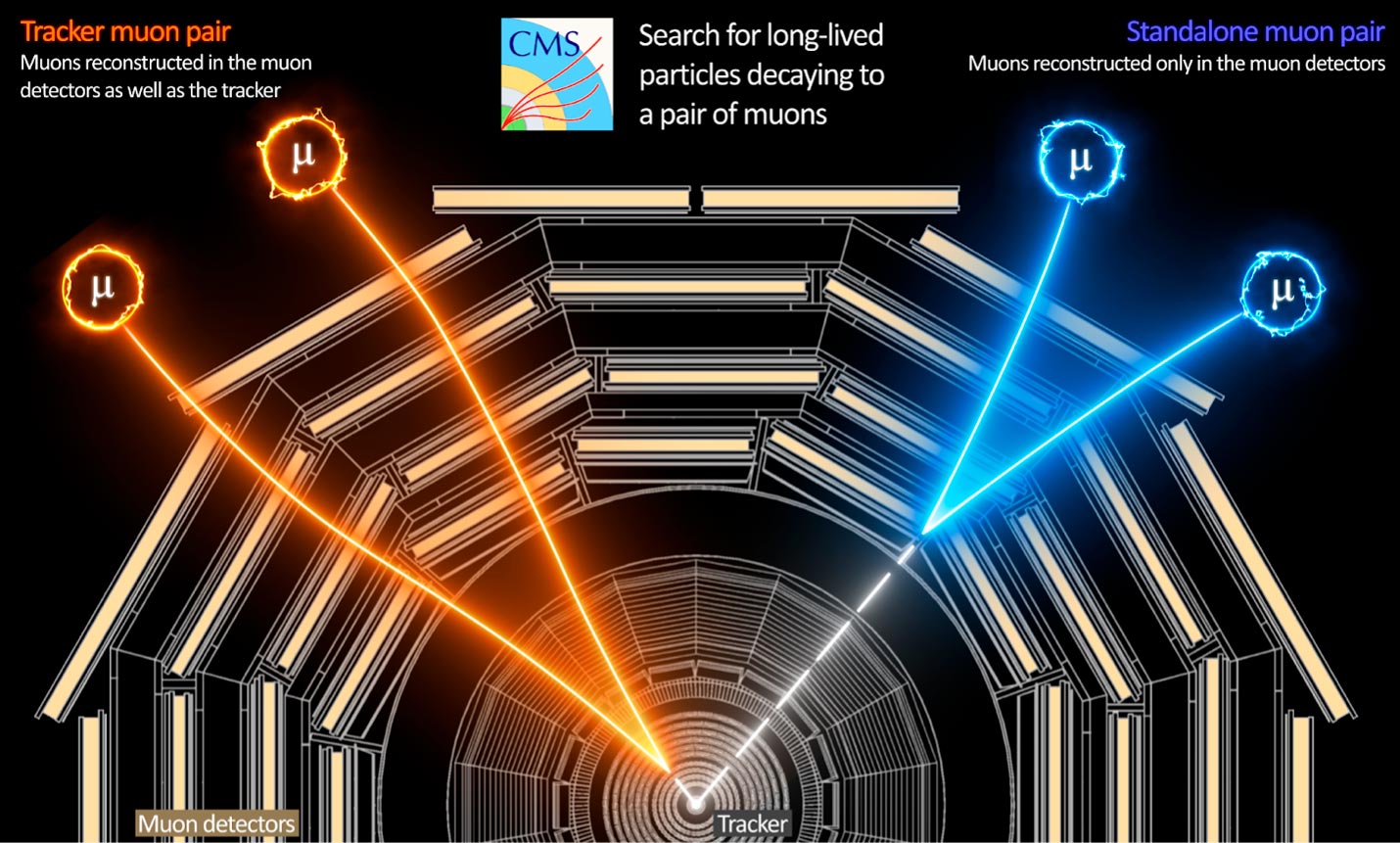
The CMS experiment at the Large Hadron Collider has initiated a search for "dark photons," hypothetical long-lived particles that could be produced by the decay of Higgs bosons. These particles are not part of the Standard Model and could help answer unresolved physics questions. The search involves detecting "displaced muons" that originate from the decay of dark photons, which would have traveled a measurable distance before decaying. With improvements to the CMS trigger system, particularly the non-pointing muon algorithm, the experiment has become more sensitive to such events. The first results from Run 3 data have set more stringent limits on the parameters of Higgs boson decay to dark photons, and the CMS team plans to continue refining their techniques to explore new physics beyond the Standard Model.
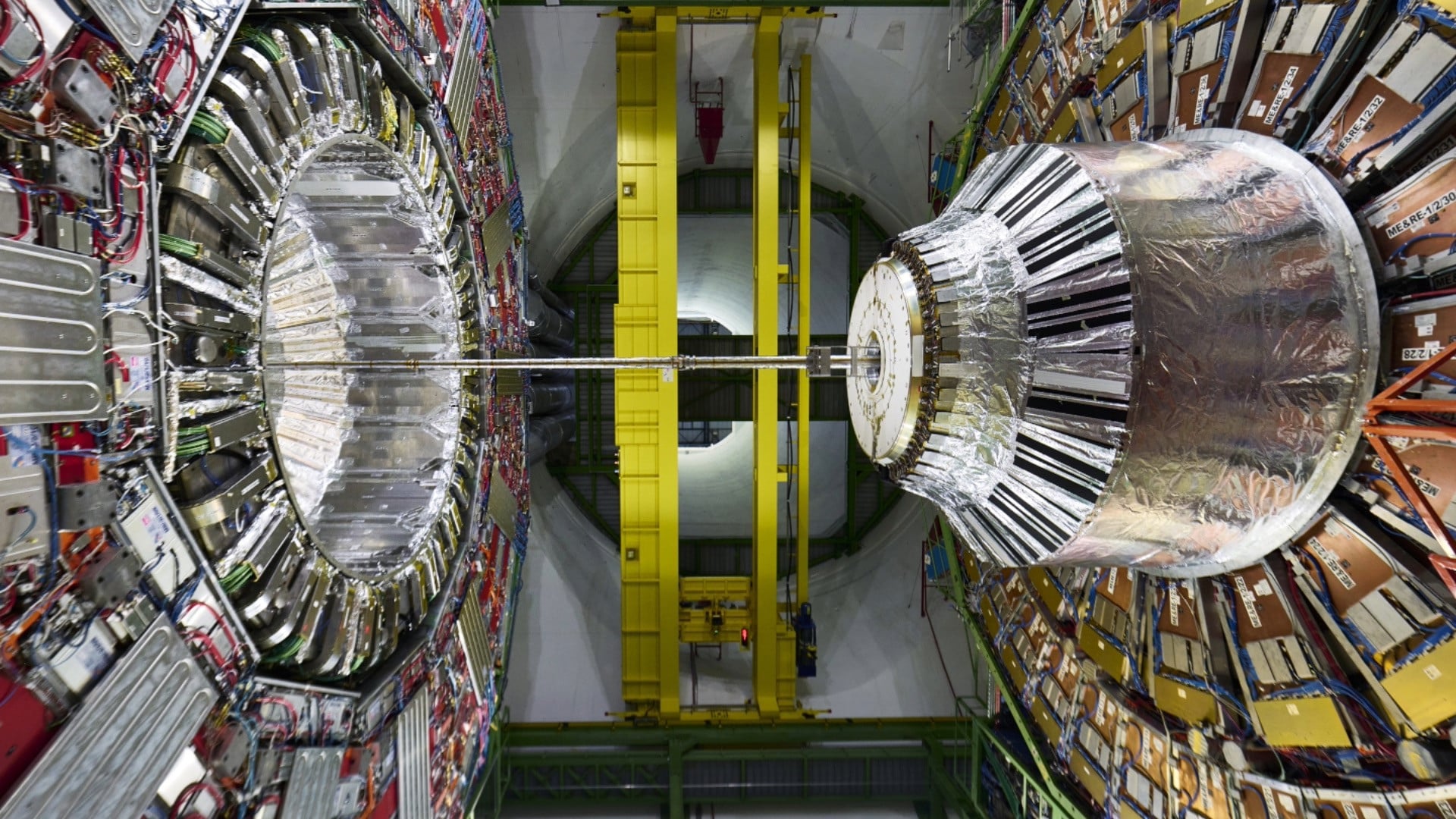
The CMS experiment at the Large Hadron Collider (LHC) has released initial results on dark photons, particles that could help unravel mysteries like dark matter. These particles, not predicted by the standard model, are noted for their unusual longevity, surviving over a billionth of a second. The findings from the LHC's Run 3 experiment could provide significant insights into the nature of these exotic particles.
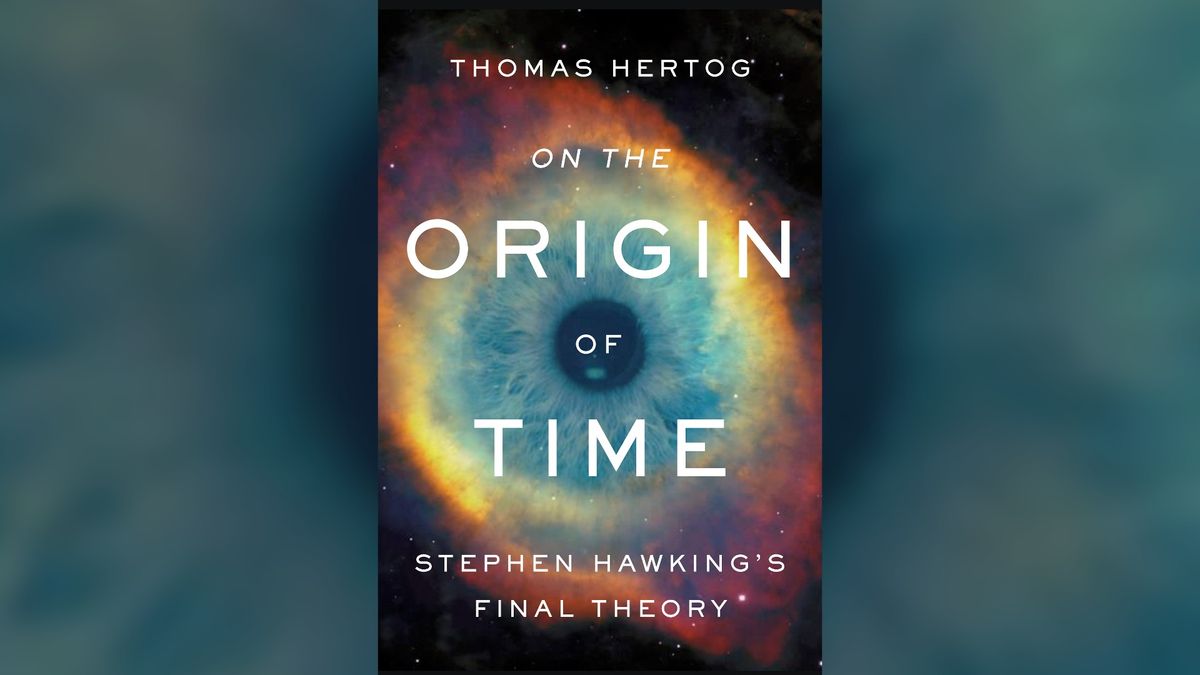
Stephen Hawking had hoped that the Large Hadron Collider (LHC) at CERN would produce black holes, but the lawsuit filed against the LHC was dismissed, and the LHC has not yet made black holes. However, it is possible to create black holes by colliding particles with enough energy in a particle accelerator. Gravity and black holes challenge the idea that higher energies probe shorter distances, and the search for a unified framework that encompasses all basic laws of nature is ongoing. Thomas Hertog, a close collaborator of Hawking, discusses these topics in his new book.