Tag

M Dwarf Star

All articles tagged with #m dwarf star

science1 year ago

Astronomers Trace Mysterious Radio Bursts to Unlikely Cosmic Sources

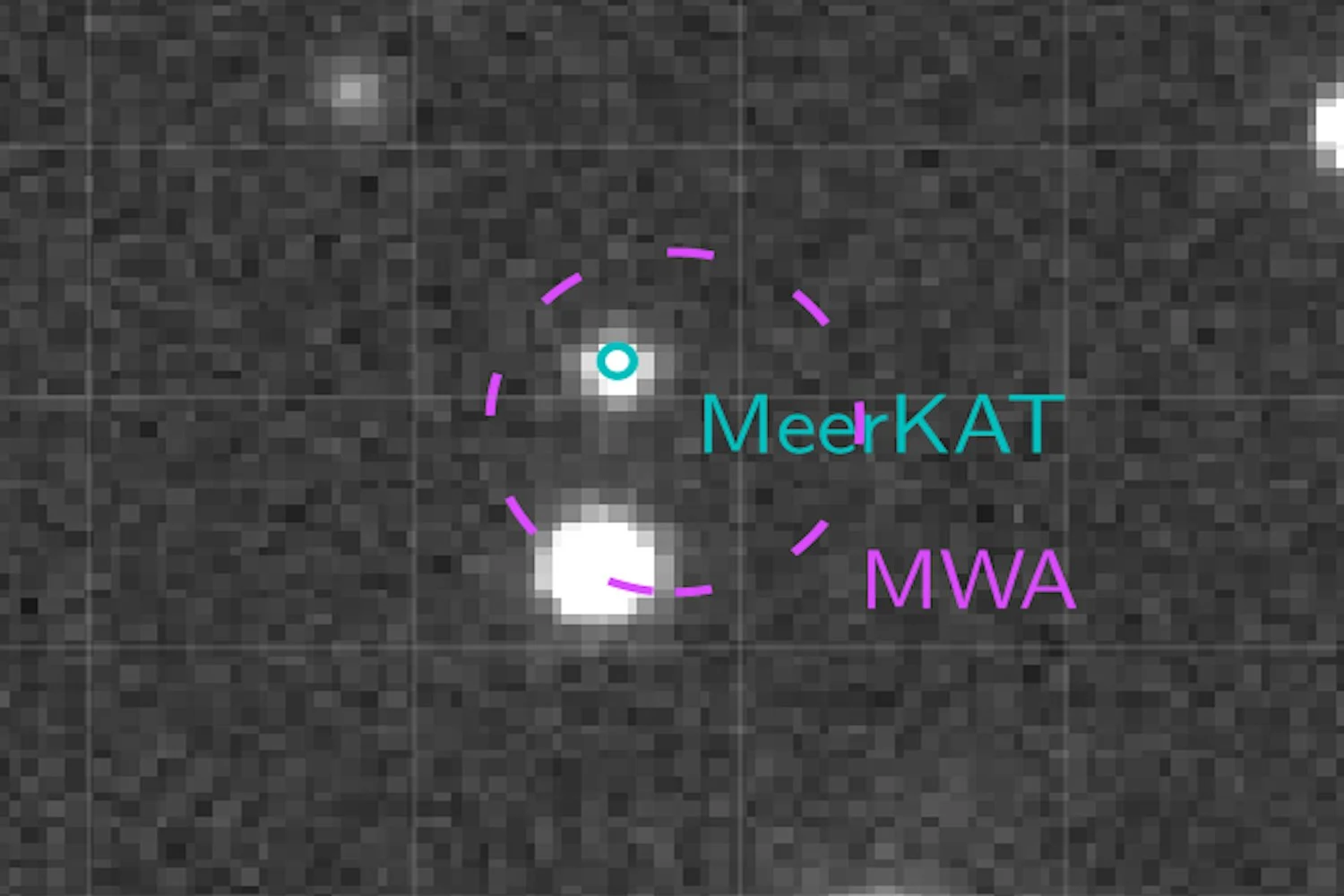
Astronomers have identified a mysterious radio signal emanating from the outskirts of the Milky Way, pinpointing its source to a binary star system consisting of an M dwarf and a white dwarf. This discovery, made using the Murchison Widefield Array and MeerKAT telescopes, marks the longest-period radio transient ever detected. The signal, named GLEAM-X J0704-37, challenges previous understanding as M dwarfs alone cannot produce such energy, suggesting a collaborative emission with the white dwarf. Researchers aim to explore more long-period radio transients in the universe.

astronomy1 year ago

"Astronomers Uncover Ultra-Short-Period Super-Earth in New Discovery"

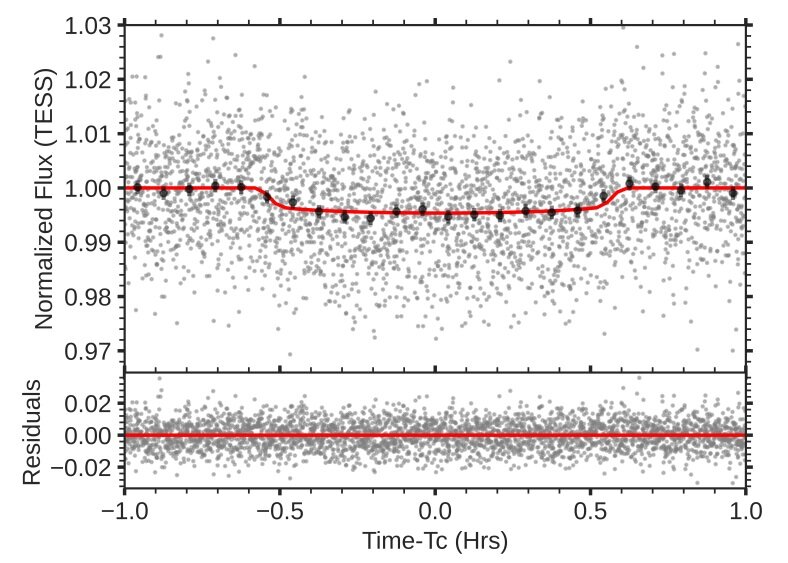
Using NASA's TESS, astronomers have discovered an ultra-short-period exoplanet, Wolf 327 b, orbiting a nearby M-dwarf star. This super-Earth is slightly larger and 2.5 times more massive than Earth, with a rocky composition and a 13.7-hour orbit. The findings, reported in a paper on arXiv, suggest the potential for detecting secondary transits with the James Webb Space Telescope and hint at the possibility of other planets in the system.

astronomy2 years ago

TESS Spots Saturn-like Planet Orbiting M-dwarf Star

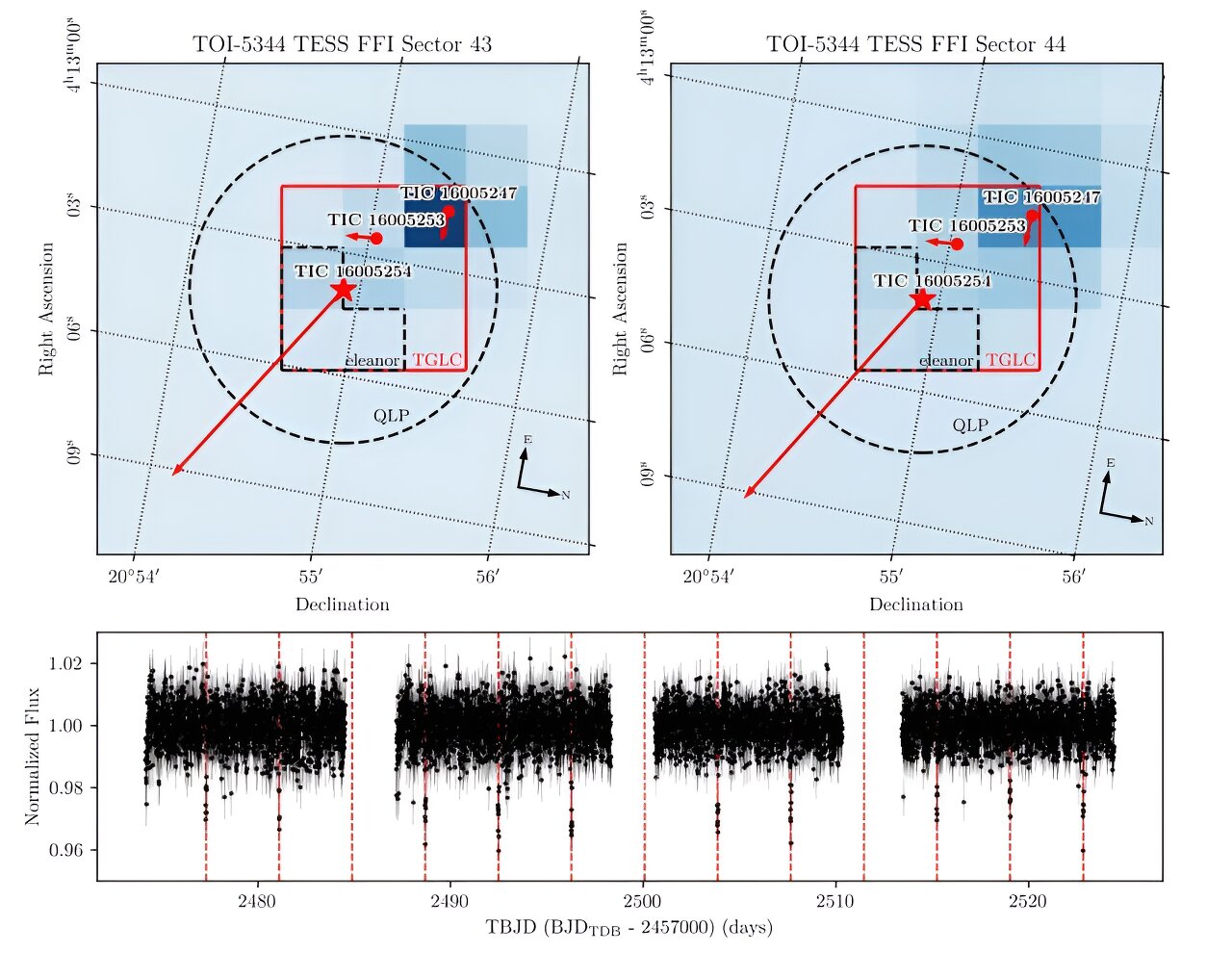
NASA's TESS has discovered a new exoplanet, TOI-5344 b, orbiting an M-dwarf star. The planet is similar in size and mass to Saturn and is nearly 10 times larger and 135 times more massive than Earth. It joins a small group of giant exoplanets around M-dwarf stars and has a density of 0.8 g/cm3. The parent star, TOI-5344, is estimated to be 7.1 billion years old and has a high metallicity. Astronomers hope that further discoveries of similar exoplanets will shed light on the formation and evolution of giant exoplanets.

astronomy2 years ago

"Groundbreaking Discovery: Super-Earth Spotted Orbiting M-Dwarf Star"

Astronomers using NASA's TESS have discovered a new "super-Earth" exoplanet called TOI-1680 b, which is about 50% larger than Earth and orbits an M-dwarf star located 120 light years away. The planet has a radius of 1.46 Earth radii and a predicted mass of about 3.18 Earth masses. It orbits its host star every 4.8 days at a distance of approximately 0.03 AU. The discovery suggests that TOI-1680 b could be a suitable target for atmospheric characterization studies with the James Webb Space Telescope.

astronomy2 years ago

Recent Discoveries in Exoplanets, Asteroids, and Binary Stars

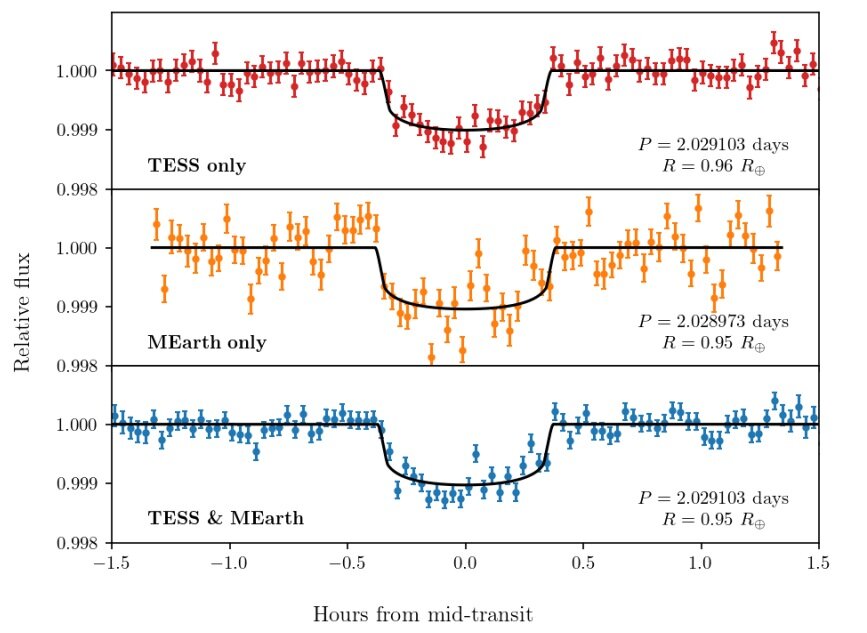
Using NASA's TESS, astronomers have discovered a Venus-sized exoplanet, LHS 475 b, orbiting a nearby M-dwarf star. The planet has a radius of approximately 0.955 Earth radii and orbits its host every 48.7 hours, at a distance of about 0.02 AU from it. The planet's equilibrium temperature was estimated to be some 587 K, thus LHS 475 b is likely too hot to be habitable. The mass of LHS 475 b remains to be determined, but exoplanets of this size are highly likely to be terrestrial and might also have a similar interior composition to that of the Earth's.

astronomy2 years ago

Astronomers discover massive double-ring disk around distant star.

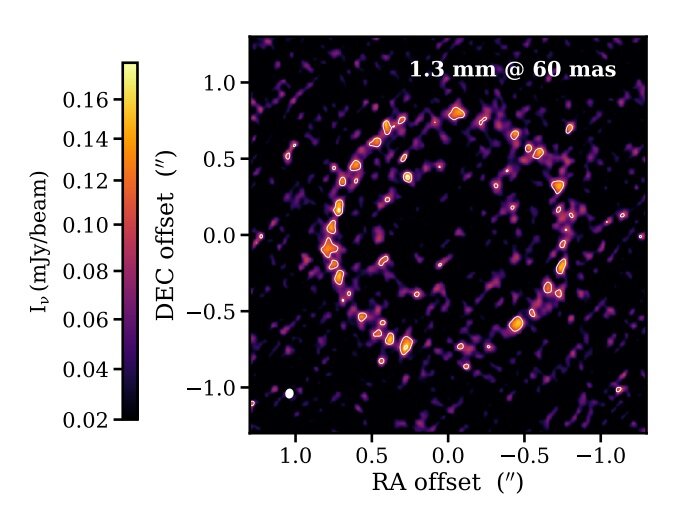
Using ALMA, astronomers have discovered a large double-ring dust disk around the M-dwarf star 2MASS J04124068+2438157. The disk consists of two narrow rings at distances of 70 and 116 AU, with the outer ring being narrower than the local pressure scale height, suggesting the presence of a pressure bump that traps dust particles. The authors suggest that planet-disk interactions are the most likely explanation for the observed gaps and rings in the disk, with the properties of the gap between the two rings indicating the presence of a Saturn-mass planet at about 90 AU from the star. Further observations are required to confirm this assumption.