
Report Reveals Arecibo Telescope's Collapse Linked to Its Own Radar
TL;DR Summary
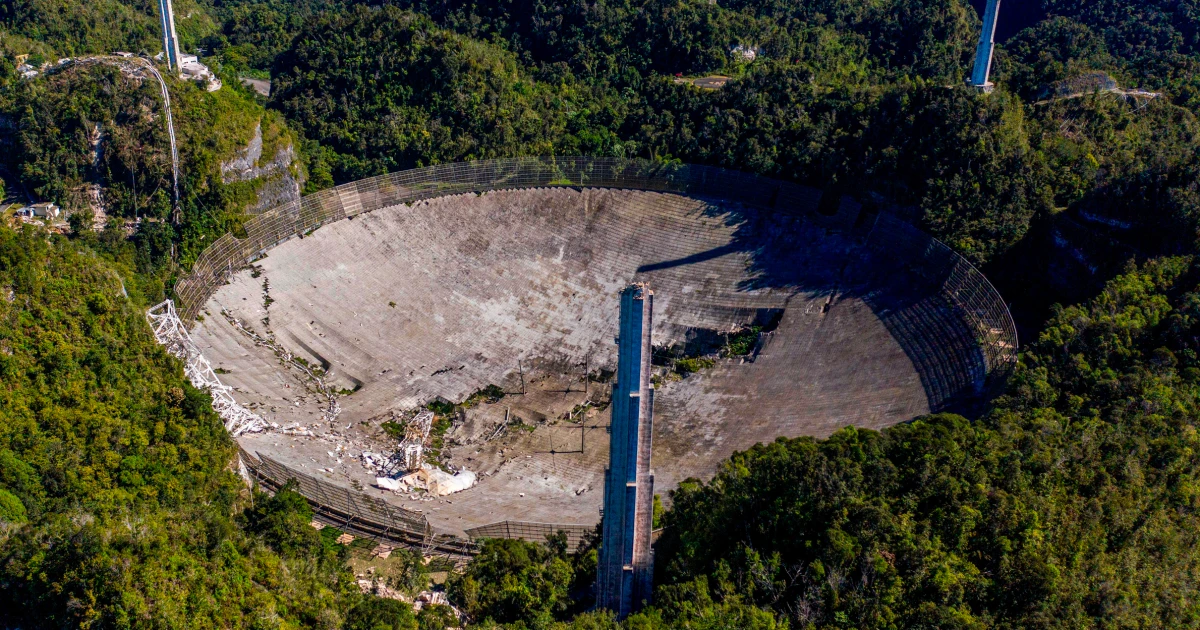
A report by the National Academies of Sciences, Engineering, and Medicine has identified "zinc creep" as the cause of the Arecibo Observatory's radio telescope collapse in Puerto Rico. The zinc-filled sockets supporting the steel cables failed, leading to the platform's fall. The report suggests low-current electroplasticity may have accelerated the zinc's deformation. Recommendations include further study of the remaining components and better monitoring of aging facilities. The telescope, once a key research tool, will not be rebuilt, but a $5 million education center is planned for the site.
Topics:science#arecibo-observatory#national-science-foundation#radio-telescope#science-and-technology#structural-failure#zinc-creep
- Unprecedented failure led to the collapse of the world-renowned radio telescope in Puerto Rico, report shows NBC News
- 4 years after the giant Arecibo Observatory collapsed, we finally know what happened Space.com
- Arecibo’s Powerful Radar May Have Contributed to the Telescope’s Demise Sky & Telescope
- Giant telescope's own powerful radiation may have contributed to collapse Mashable
- Tabatabai interviewed by two magazines about the final report on Arecibo’s demise University of Wisconsin-Milwaukee
Reading Insights
Total Reads
1
Unique Readers
9
Time Saved
2 min
vs 3 min read
Condensed
85%
583 → 88 words
Want the full story? Read the original article
Read on NBC News