Scientists have identified a lineage of archaea called Asgard archaea, specifically Hodarchaeales, as the common ancestor of all eukaryotic life, shedding light on the origins of complex cells in organisms like animals, plants, and fungi.
Scientists have discovered Sukunaarchaeum mirabile, a microbe with a minimal genome and characteristics that blur the line between cellular life and viruses, challenging traditional definitions of life and suggesting a new branch in the tree of life, with significant implications for understanding microbial evolution.
Marine researchers discovered a new species of archaea in a mysterious black goo found inside a ship's rudder, revealing an unexpected habitat for extremophiles and potential applications in biofuel production, highlighting the importance of exploratory science.
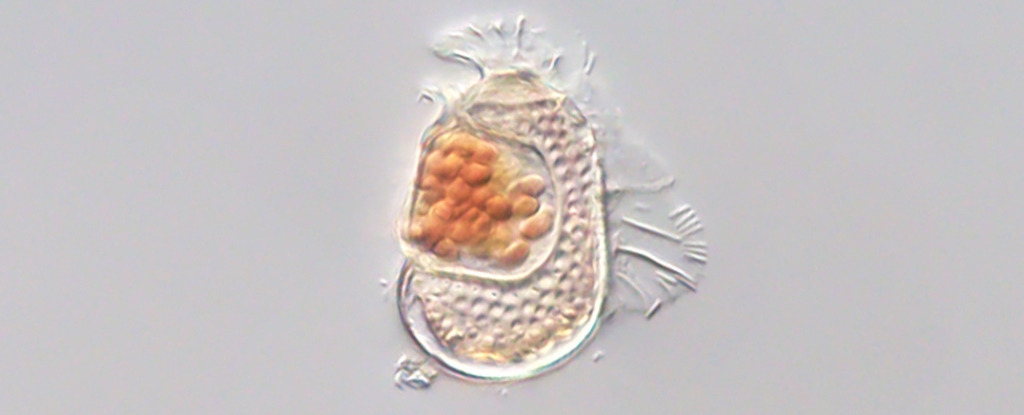
Scientists have discovered Sukunaarchaeum mirabile, a tiny organism within plankton that blurs the line between living cells and viruses, possessing a stripped-down genome and relying heavily on its host for biological functions, challenging traditional definitions of life.
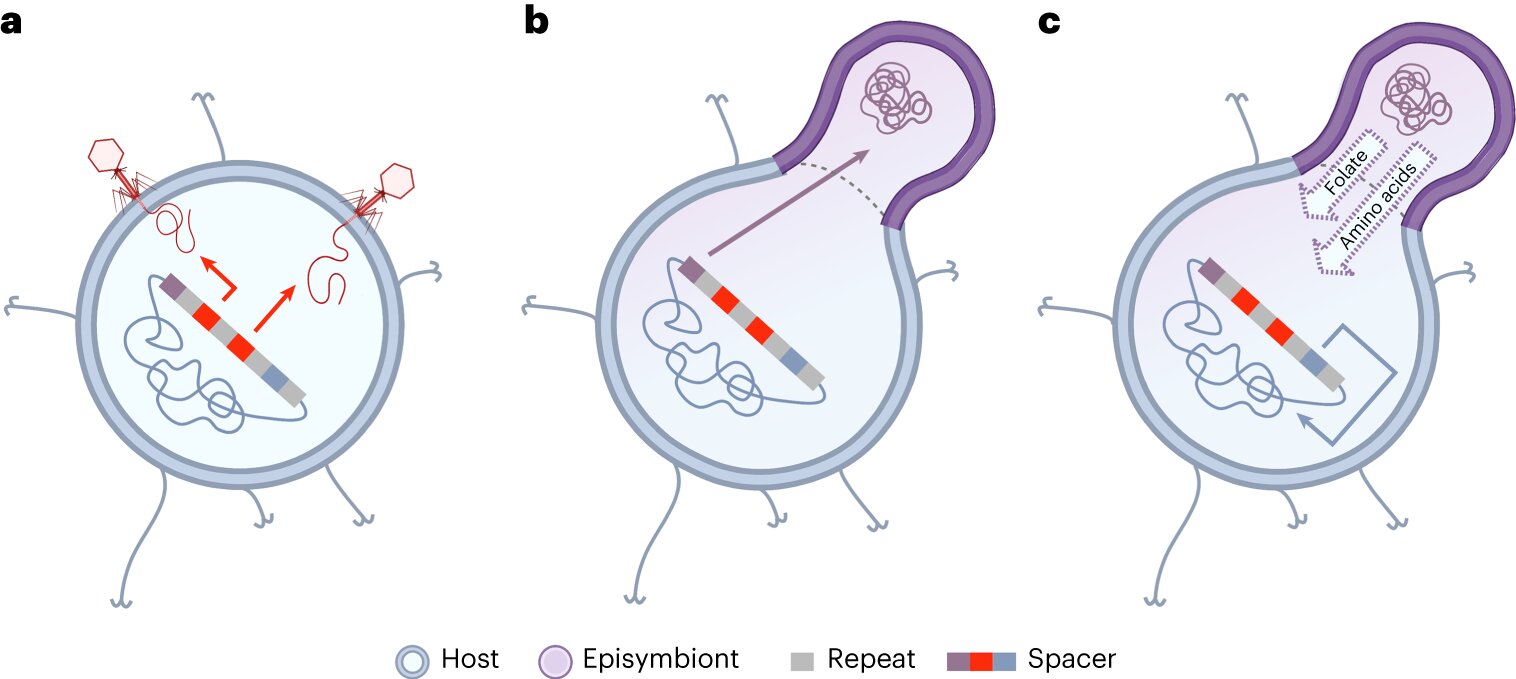
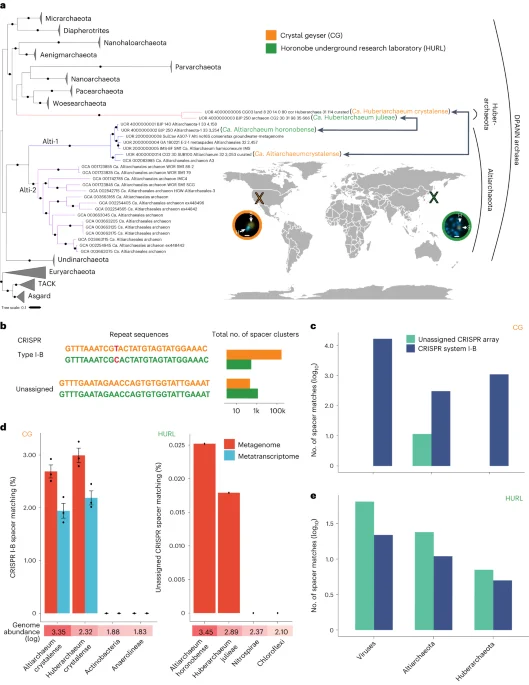
Scientists led by Professor Dr. Alexander Probst have discovered that archaea, microorganisms similar to bacteria, use the CRISPR-Cas system to combat parasites. Through genomic analysis of over 7,000 genomes, the researchers found that archaea incorporate parasitic DNA into their own genomes. When attacked by parasites with matching DNA, the CRISPR system recognizes and decomposes the foreign genetic material. This finding not only sheds light on the defense mechanisms of microorganisms but also has implications for understanding symbiotic relationships and important metabolic processes in ecosystems.
Researchers have discovered a new function of the CRISPR-Cas system, commonly known as "genetic scissors," used in genetic engineering. Microorganisms, specifically archaea, utilize this system to defend against parasites. By analyzing the genetic material of microbes in the Earth's deep crust, the researchers found that archaea incorporate parasitic DNA into their genomes. When attacked by parasites with matching DNA, the CRISPR system recognizes and decomposes the foreign genetic material. This finding not only helps distinguish between beneficial symbionts and harmful parasites but also provides insights into important metabolic processes in ecosystems.
Researchers have discovered a potential symbiotic relationship between uncultivated archaea and other microorganisms mediated by the CRISPR/Cas bacterial immune system. The study, published in Nature, suggests that these archaea may rely on CRISPR to target and interact with other microorganisms in their environment. This finding sheds light on the evolutionary adaptations and ecological roles of uncultivated archaea, providing insights into their genomic diversity and potential symbiotic interactions.
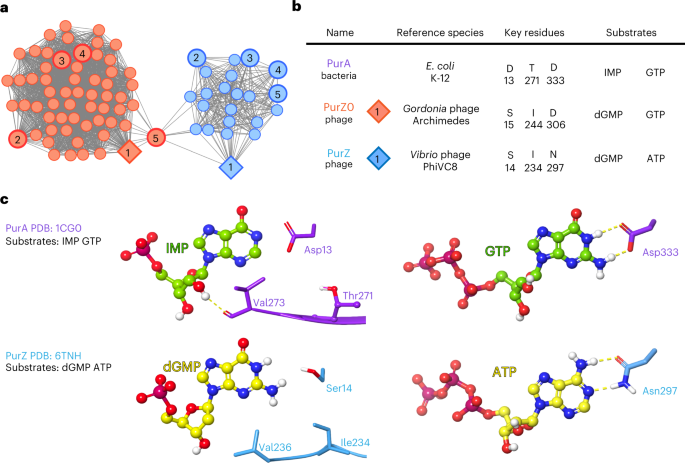
Researchers have discovered a third purine biosynthesis pathway in phages that replaces adenine with aminoadenine, a modification previously only found in Archaea. The pathway involves a novel enzyme, GpPurZ0, which catalyzes the conversion of IMP to 2-aminopurine ribonucleotide. The discovery suggests an evolutionary progression from Archaea to phages and expands our understanding of the diversity of DNA biosynthesis pathways.
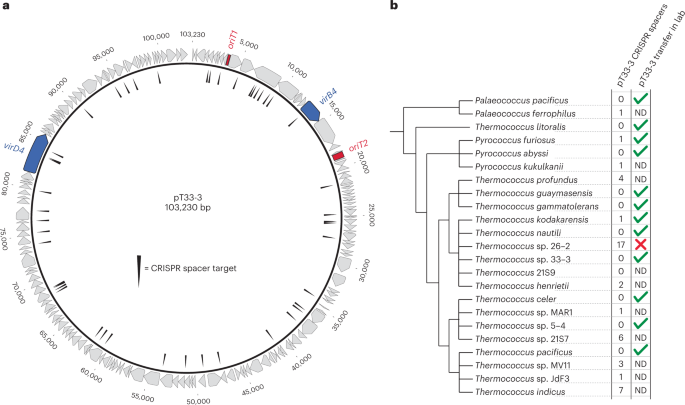
Researchers have discovered a self-transmissible plasmid from a hyperthermophile that can facilitate genetic modification of diverse Archaea. Plasmids are small, circular pieces of DNA that can replicate independently of the host genome and can carry genes that confer advantageous traits such as antibiotic resistance. The plasmid, named pTN1, was found in Thermococcus nautili, a hyperthermophilic archaeon isolated from a deep-sea hydrothermal vent. The discovery of pTN1 could lead to new tools for genetic modification of Archaea, which are important for biotechnology and environmental applications.