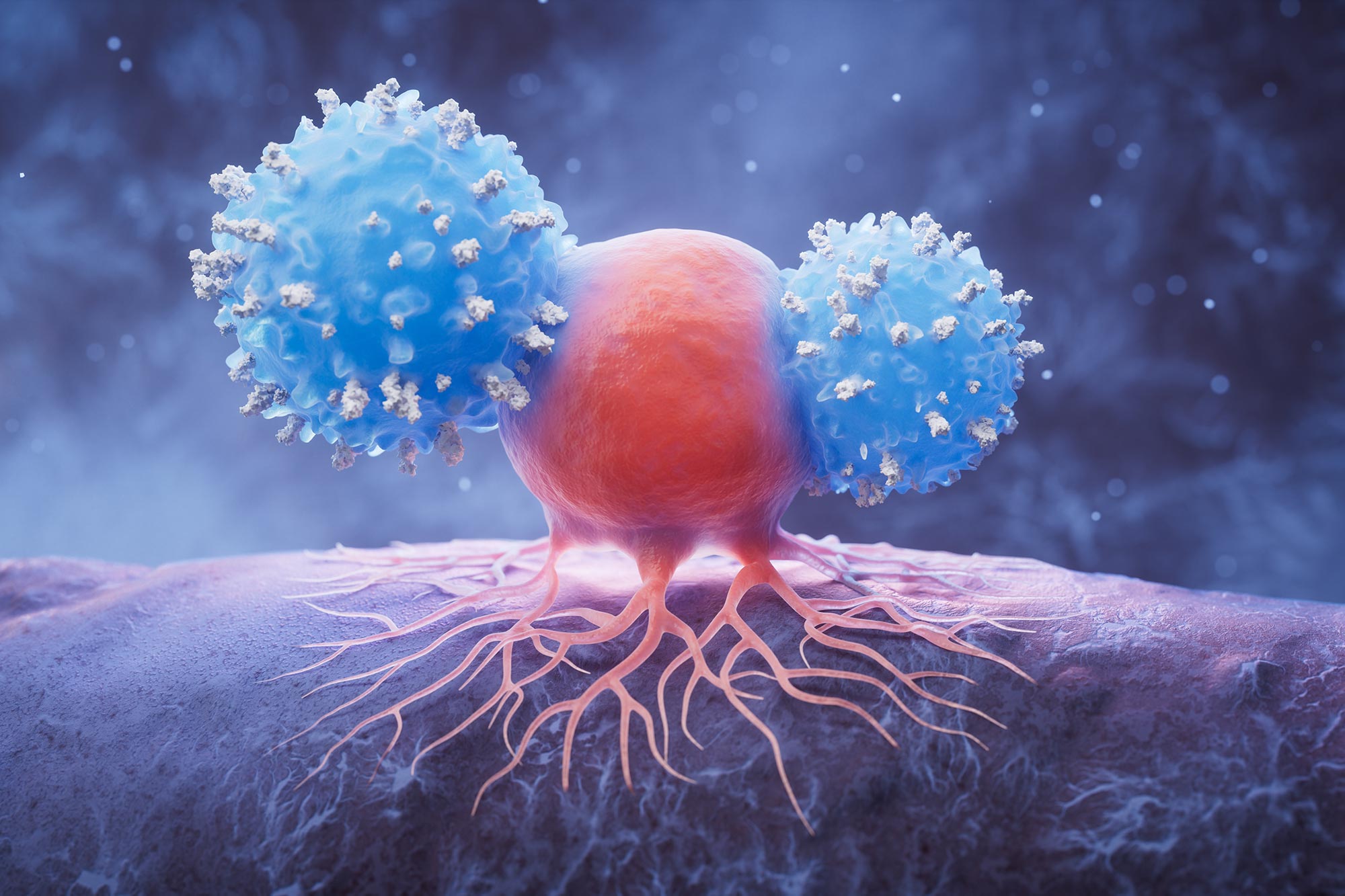
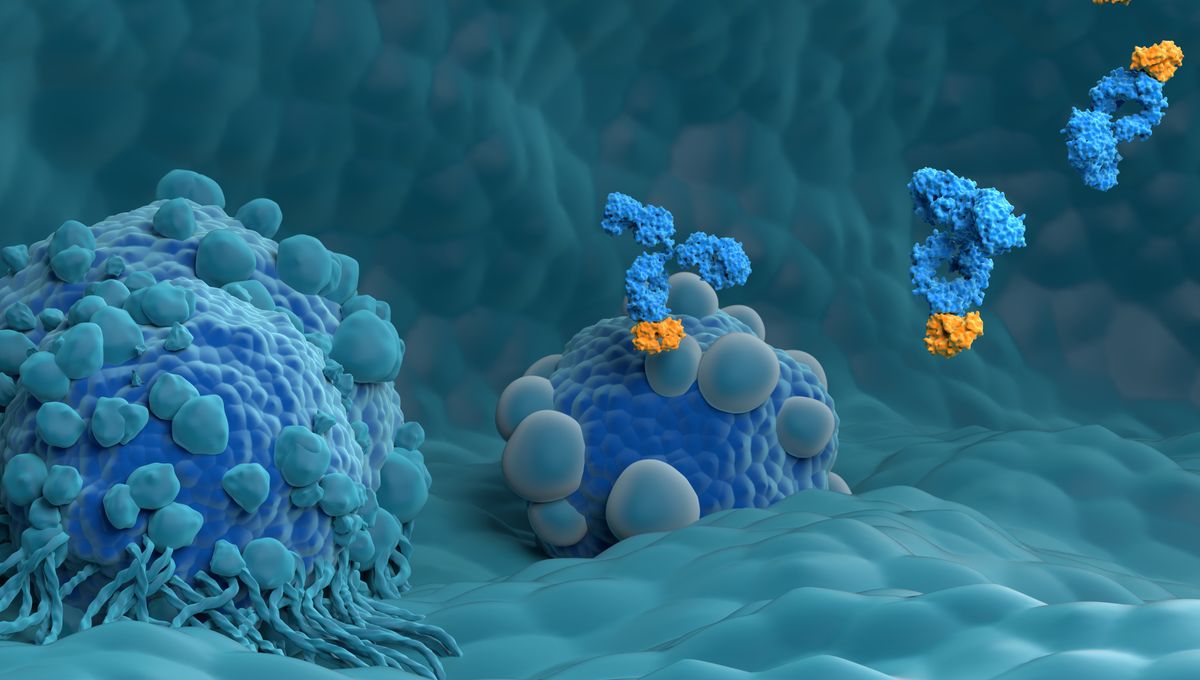
Scientists at Northwestern Medicine have discovered that pancreatic tumors evade immune attack by using a sugar-based signal to hide, but they developed a monoclonal antibody that can restore immune responses in mice, offering hope for new treatments.
Researchers at Tel Aviv University have discovered a new method to treat cancer by targeting a protein called Ly6a, which acts as an immune "brake". This protein, found in high levels in tumors, helps cancer evade the immune system. By using anti-Ly6a antibodies to release these brakes, the immune system can effectively attack and reduce tumors, including those resistant to current immunotherapies. The findings, published in Nature Communications, could lead to new treatments for cancer patients who do not respond to existing therapies.
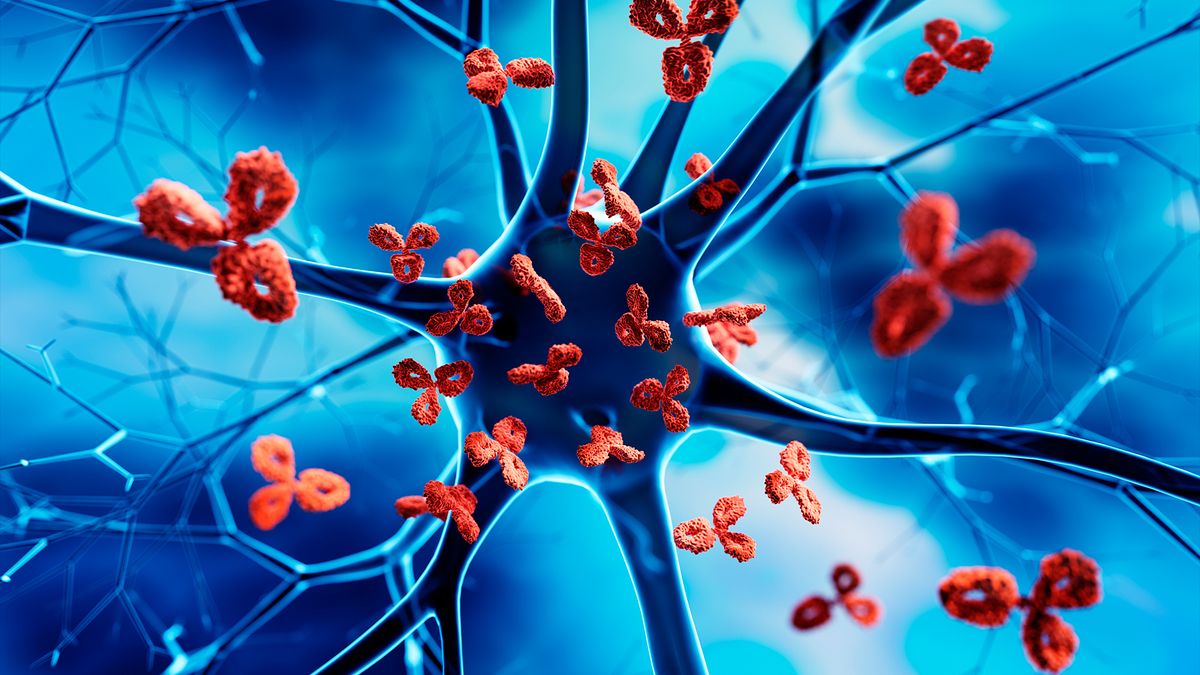
Early clinical trial data suggests that a new antibody treatment called prasinezumab may slow the progression of movement problems in some people with Parkinson's disease by targeting and breaking down abnormal protein clumps in the brain. The treatment showed promise in slowing the signs of motor dysfunction in individuals with rapidly progressing forms of Parkinson's disease, but further research is needed to confirm these findings and determine its effectiveness for those with slower disease progression.
The FDA has authorized a new antibody treatment, Pemgarda, to protect immunocompromised individuals from Covid-19, following the withdrawal of AstraZeneca's Evusheld due to its ineffectiveness against new Omicron variants. This drug is particularly important for immunocompromised patients who may not receive adequate protection from vaccination due to weakened immune systems. While there is a need for additional Covid-19 protections, it remains uncertain how many patients will opt for this new treatment. Invivyd, the drug's developer, estimates there are 9 million immunocompromised people in the U.S., with an initial focus on those with the most acute need. Pemgarda is a re-engineered version of the original antibody, designed to cover Omicron variants, and has been granted emergency use authorization by the FDA.
The Epstein-Barr Virus (EBV), which infects around 95% of the human population and is associated with diseases like mononucleosis and certain cancers, has been found to have vulnerabilities. New research has identified weak spots on the virus's protein, gp42, and developed antibodies that could prevent infection in mice. If these findings translate to humans, it could lead to targeted treatments and potential vaccines for EBV, offering hope for preventing severe diseases caused by the virus.
Researchers at Scripps Research have developed an antibody that shows promise in reversing the lethal effects of carfentanil overdose, a potent variant of the synthetic opioid fentanyl. The antibody, administered through a simple intramuscular injection, binds powerfully to carfentanil and other fentanyl variants, effectively counteracting carfentanil-induced respiratory depression in rodents. This discovery could lead to a more robust and long-lasting treatment for synthetic opioid overdoses compared to current methods. FDA-approved clinical trials for the antibody, CSX-1004, are set to begin this month to assess its effectiveness in preventing fentanyl overdoses.
Eli Lilly's phase 3 trial results for its Alzheimer's drug candidate, donanemab, suggest that it slows cognitive decline by about 35% compared to a placebo. The drug works by removing beta amyloid protein from the brain, which is associated with the progression of Alzheimer's. Donanemab may not need to be continuously taken, as patients who were taken off the drug and put on a placebo continued to show a slowdown in cognitive decline. Lilly has applied for full FDA approval, with a decision expected by the end of the year.
The U.S. Food and Drug Administration has approved Beyfortus, a preventive antibody treatment developed by Sanofi and AstraZeneca, to protect healthy babies and some vulnerable toddlers against respiratory syncytial virus (RSV), the leading cause of hospitalization among young children in the country. Beyfortus, which is not a vaccine but works similarly, provides temporary protection for a single winter respiratory virus season by blocking the virus from entering cells. It can be given at birth or administered in a pediatrician's office before a baby's first winter respiratory virus season. The approval marks the first time broad protection against RSV will be offered to all healthy babies, as previous treatments were limited to high-risk infants.
Eli Lilly has released trial results showing that its new drug, donanemab, significantly slows memory loss and cognitive decline in Alzheimer's patients. The phase 3 clinical study demonstrated a 35% reduction in disease progression in the early stages. The drug, based on antibodies against amyloid, has been submitted for FDA approval, with a decision expected by the end of the year. Dementia experts have hailed this as a landmark moment in Alzheimer's treatment, following similar findings for another antibody drug, lecanemab. Future therapies are expected to be tailored drug combinations based on individual biomarker tests.