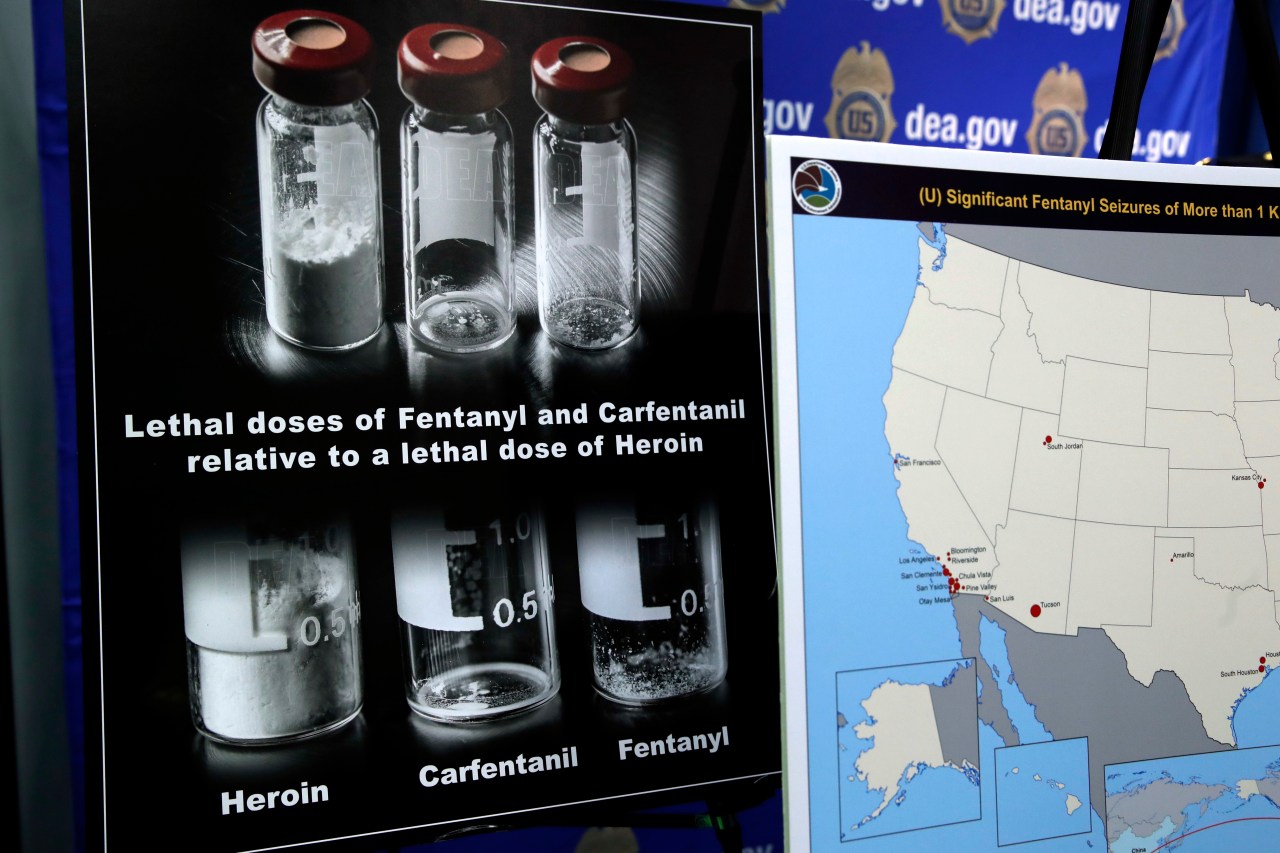
Experts warn that drug traffickers are increasingly mixing potent veterinary sedatives like carfentanil, which is 100 times stronger than fentanyl, with opioids, significantly raising the risk of overdose and death, with substances like xylazine and medetomidine also contributing to the danger.
A Riverside man died from an overdose of carfentanil, a synthetic drug 100 times more potent than fentanyl, which has been linked to a rise in overdose deaths. Carfentanil, used in veterinary anesthesia, is increasingly entering illicit markets and is difficult to detect, posing significant risks to public health. Officials urge caution, naloxone use, and awareness to combat this dangerous trend.
The CDC has issued a warning about carfentanil, a synthetic opioid 100 times more potent than fentanyl, which has caused a significant spike in overdose deaths, rising over 700% in the past year. Carfentanil, often mixed with other drugs, poses a high risk of fatal overdoses even in small amounts. The CDC calls for rigorous monitoring and prevention efforts, emphasizing the need for education and open communication to protect against the dangers of synthetic opioids.
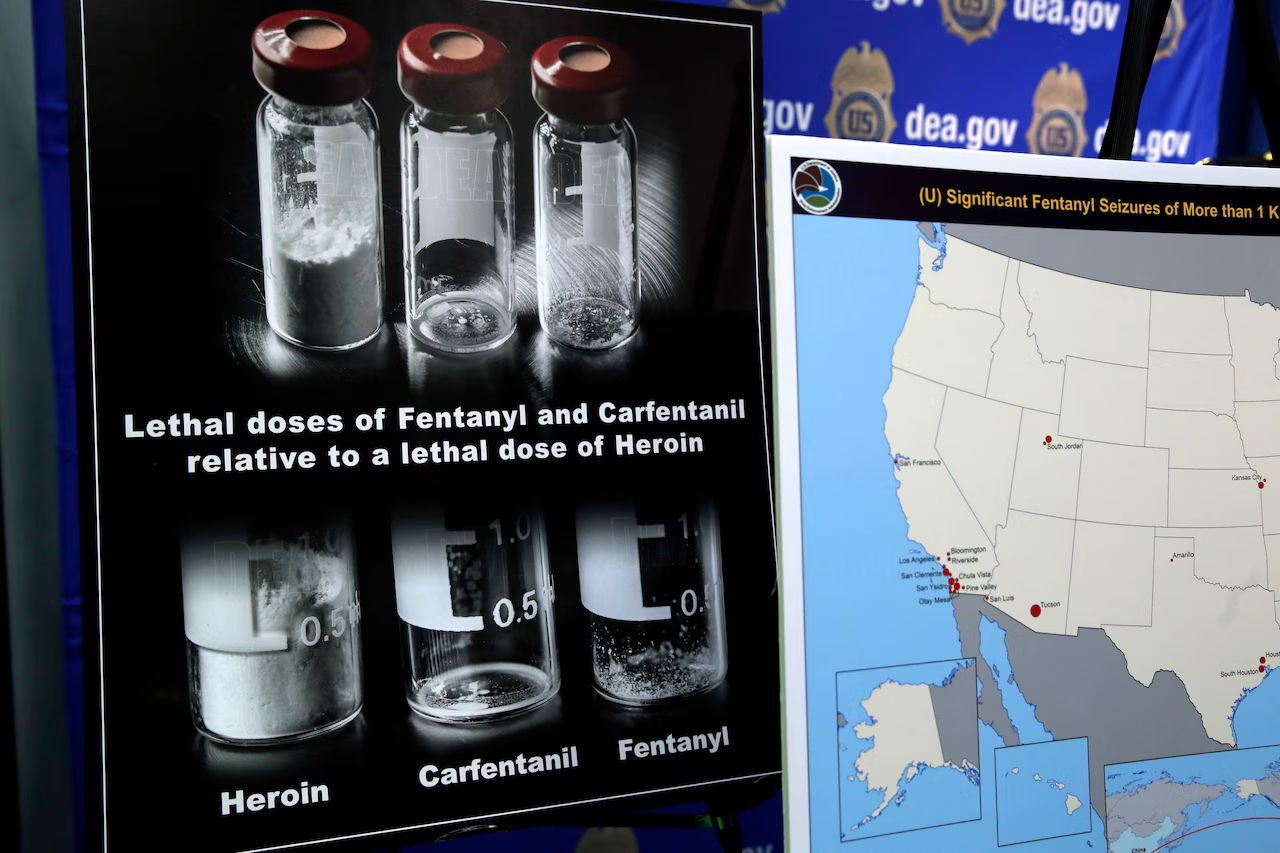
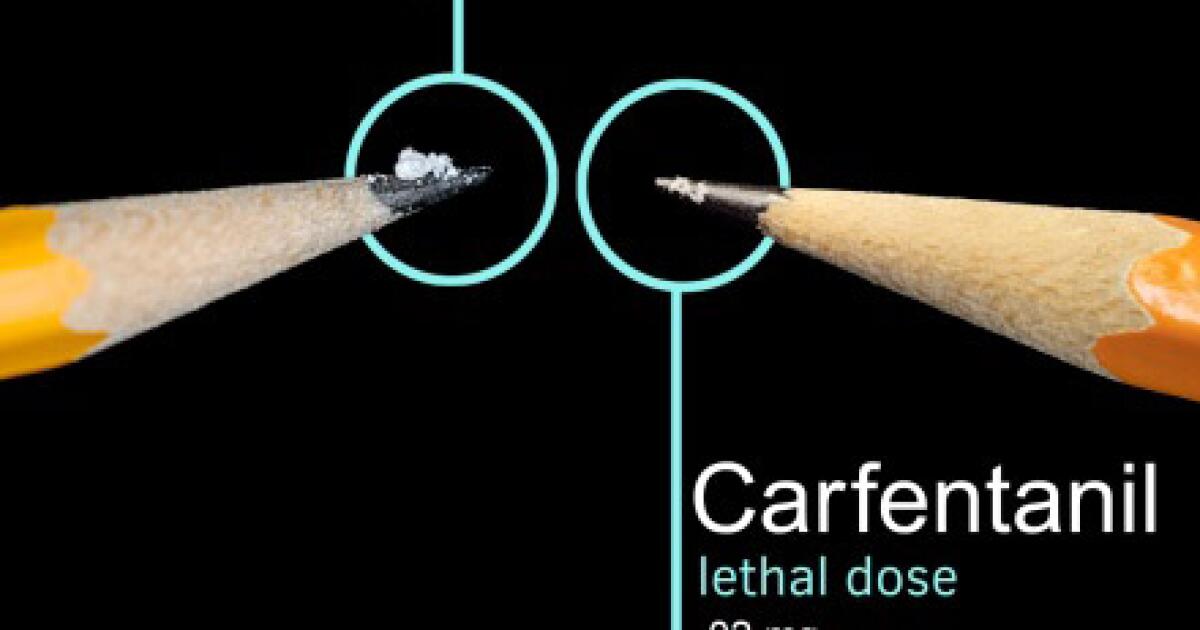
The CDC has issued a warning about carfentanil, a synthetic opioid 100 times more potent than fentanyl, which is increasingly found in illegal drug supplies. Originally an elephant tranquilizer, carfentanil is being mixed with other drugs, often without users' knowledge, leading to a rise in overdose deaths. Just two milligrams can be lethal to 50 people. While naloxone can help in overdoses, it may require multiple doses to counteract carfentanil. Health officials urge the public to carry naloxone and be cautious of counterfeit drugs.
The CDC has issued a warning about carfentanil, a drug 100 times more potent than fentanyl, which has caused 513 overdose deaths across 37 states from January 2021 to June 2024. Originally designed to tranquilize large animals, carfentanil is now being illegally manufactured and mixed into other drugs, posing a significant public health threat. Despite a general decline in drug overdoses, carfentanil-related deaths have surged, particularly in states like Florida and West Virginia. The DEA advises immediate medical attention and the use of naloxone in case of exposure.
A recent opioid-related overdose death in Erie County, New York, has been linked to carfentanil, a highly potent drug used to tranquilize elephants. Carfentanil, which is 10,000 times more potent than morphine and 100 times stronger than fentanyl, has been found as a cheap filler in cocaine, methamphetamine, heroin, and other illicit drugs. The discovery of carfentanil in the local drug supply highlights the escalating risks of the opioid epidemic. The Erie County Health Department warns people about the dangers of using any illicit drugs and emphasizes the availability of support, resources, and harm reduction tactics to prevent injury and death. The Medical Examiner's Office has investigated a significant increase in opioid-related overdose deaths, and it is possible that carfentanil may be present in other cases.
A death in Erie County, New York, has been linked to carfentanil, an opioid that is 100 times more potent than fentanyl. Carfentanil, typically used as an anesthetic for large animals, has been found mixed with cocaine, meth, and heroin as a cheap filler substance. The county has seen a significant increase in opioid-related overdose deaths in 2023, with a 20% rise compared to the previous year. Authorities are urging people to take precautions and seek support to reduce the risk of fatal harm.
Scientists at Scripps Research have developed an antibody therapy that effectively reverses the life-threatening effects of the potent opioid carfentanil in preclinical tests. The antibody, in single-chain fragment variable (scFv) format, binds tightly to carfentanil and other fentanyl variants, and when administered shortly after an overdose, it reverses the potentially deadly respiratory depression caused by carfentanil. This antibody therapy could provide a longer-lasting and more powerful treatment for synthetic opioid overdoses compared to existing options. The researchers have licensed the rights to further develop and market the antibody to a pharmaceutical company, with clinical trials planned to begin this month.
Researchers at Scripps Research have developed an antibody that shows promise in reversing the lethal effects of carfentanil overdose, a potent variant of the synthetic opioid fentanyl. The antibody, administered through a simple intramuscular injection, binds powerfully to carfentanil and other fentanyl variants, effectively counteracting carfentanil-induced respiratory depression in rodents. This discovery could lead to a more robust and long-lasting treatment for synthetic opioid overdoses compared to current methods. FDA-approved clinical trials for the antibody, CSX-1004, are set to begin this month to assess its effectiveness in preventing fentanyl overdoses.