Tag

Airborne Transmission

All articles tagged with #airborne transmission

Airflow and Masks Proved Key in Stopping Flu Spread in Indoor Trial

Originally Published 17 hours ago — by ScienceDaily

Featured image for Airflow and Masks Proved Key in Stopping Flu Spread in Indoor Trial
Source: ScienceDaily

In a controlled hotel-room study with five influenza patients and 11 healthy volunteers, close face-to-face contact did not result in transmission, likely due to limited coughing, rapid mixing and dilution of airborne virus, and possibly age-related protection; the findings underscore ventilation, air movement, and masking as effective defenses against indoor flu spread and could inform infection-control guidelines.

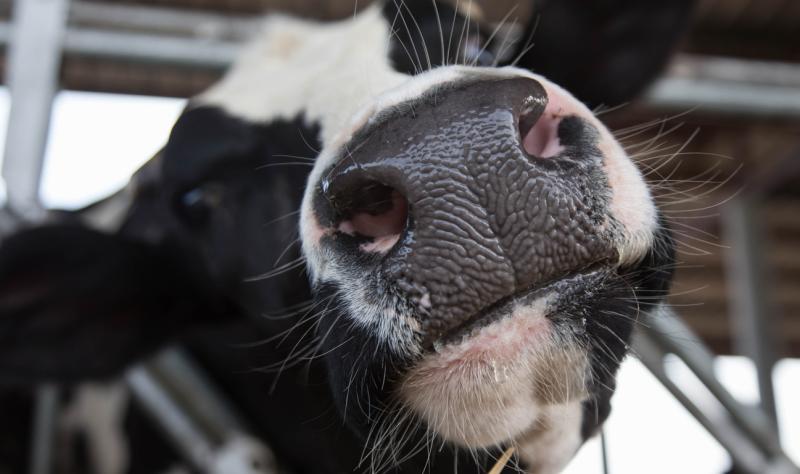
Bird Flu Risks and Transmission on Dairy Farms

Originally Published 5 months ago — by The New York Times

Featured image for Bird Flu Risks and Transmission on Dairy Farms
Source: The New York Times

Scientists have found evidence that bird flu may spread through the air in milking parlors and contaminated wastewater on dairy farms, with live virus detected in the air and on equipment, suggesting inhalation and environmental routes as possible transmission pathways, which raises concerns about undetected spread and potential risks to farmworkers and humans.

Rising H5N1 Bird Flu Concerns: Are We Repeating Past Mistakes?

Originally Published 1 year ago — by University of Minnesota Twin Cities

Featured image for Rising H5N1 Bird Flu Concerns: Are We Repeating Past Mistakes?
Source: University of Minnesota Twin Cities

A study by Erasmus University Medical Center found that newer H5N1 avian flu strains, including one from a Texas dairy worker, show increased airborne transmissibility compared to older strains, based on experiments with ferrets. The research highlights the importance of understanding the virus's spread among cattle and its potential for mammalian adaptation, crucial for outbreak control and public health safety.

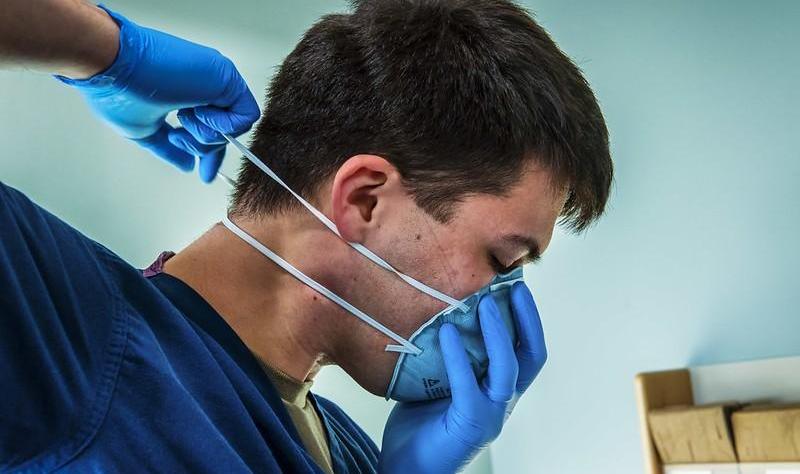
UMD Study: N95 Masks Nearly 100% Effective Against Airborne COVID-19

Originally Published 1 year ago — by Mirage News

Featured image for UMD Study: N95 Masks Nearly 100% Effective Against Airborne COVID-19
Source: Mirage News

A University of Maryland study found that N95 masks, particularly the "duckbill" design, are highly effective in blocking 98% of COVID-19 particles from escaping into the air, outperforming other mask types. The research underscores the importance of mask-wearing in controlling airborne viruses and suggests that duckbill N95 masks should be standard in high-risk settings.

WHO Updates Definition of Airborne Pathogens

Originally Published 1 year ago — by STAT

Featured image for WHO Updates Definition of Airborne Pathogens
Source: STAT

The World Health Organization (WHO) has updated its guidelines to include a new definition of disease transmission, acknowledging the airborne spread of Covid-19. The new definitions, developed by a multidisciplinary group of experts, distinguish between direct contact and transmission through the air, with a focus on particle size and inhalation. While the update aims to align with the science of disease transmission, there is still debate over the implications for infection prevention and control policies. The shift in terminology reflects a more nuanced understanding of how viruses spread, but further research and collaboration are needed to improve infection control practices for current and future diseases.

"Redefining Airborne Pathogens: Global Health Groups' New Terminology"

Originally Published 1 year ago — by University of Minnesota Twin Cities

Featured image for "Redefining Airborne Pathogens: Global Health Groups' New Terminology"
Source: University of Minnesota Twin Cities

After grappling with the terminology for pathogens that spread through the air, an international group including the WHO and CDC has proposed new agreed-on terminology, introducing descriptors for transmission through the air and "infectious respiratory particles." The report acknowledges concerns about practical implications and emphasizes the need to balance scientific insights with practical realities to minimize health inequity. While some experts welcome the clarifications, others see shortcomings and hope for further engagement of key disciplines in addressing airborne transmission.

WHO Redefines Airborne Disease Transmission Post-COVID

Originally Published 1 year ago — by Reuters

Featured image for WHO Redefines Airborne Disease Transmission Post-COVID
Source: Reuters

The World Health Organization and 500 experts have defined what it means for a disease to spread through the air, aiming to prevent confusion and improve prevention strategies for diseases like measles and future pandemics. The new definition moves away from past debates over "droplets" versus "aerosols" and considers the risk of exposure and disease severity. This development follows criticism of the WHO's early response to COVID-19, with experts emphasizing the importance of ventilation in addition to measures like handwashing. The agreed-upon definition is expected to facilitate discussions on ventilation in various settings and improve disease prevention practices.

"Concerns Rise as CDC Revisits Airborne Transmission: Health Workers Fear Profit Over Protection"

Originally Published 1 year ago — by NBC News

Featured image for "Concerns Rise as CDC Revisits Airborne Transmission: Health Workers Fear Profit Over Protection"
Source: NBC News

Healthcare workers and experts fear that the CDC's revisiting of guidelines on airborne transmission may prioritize profits over protection, as it did in the early months of the Covid-19 pandemic. Concerns stem from the CDC's initial advice against widespread use of N95 masks and its current draft guidelines that may leave room for unsafe decisions on protection against airborne infections. Critics worry that if the final guidelines don't emphasize the need for N95 masks and ventilation, it could lead to shortages and inadequate protection for healthcare workers in future health emergencies.

Rapid COVID-19 Air Detection Device Unveiled

Originally Published 2 years ago — by CTV News

Featured image for Rapid COVID-19 Air Detection Device Unveiled
Source: CTV News

Researchers at Washington University have developed a device that can detect the presence of COVID-19 in the air within five minutes. The device, which is around the size of a football, uses a biosensor combined with an air sampler to quickly identify live viruses in the air. It has the potential to detect other respiratory viruses in the future. The device could be a game-changer for managing COVID-19, allowing for real-time monitoring of viral risk in indoor settings and aiding healthcare professionals in ensuring patient safety. While the prototype is not yet ready for widespread use, the team is working on commercializing the device and addressing issues such as noise.

Lessons Ignored: UK's Misguided Focus on Flu and Austerity's Impact on Healthcare During COVID-19 Pandemic.

Originally Published 2 years ago — by Byline Times

Featured image for Lessons Ignored: UK's Misguided Focus on Flu and Austerity's Impact on Healthcare During COVID-19 Pandemic.
Source: Byline Times

The UK's Covid inquiry has failed to address the issue of airborne transmission, which is the main mode of transmission for Covid-19. The WHO's failure to acknowledge aerosols throughout 2020 is considered one of the gravest mistakes of the pandemic. The inquiry needs to address inconsistencies between evidence produced by UK authorities and the guidance currently in use, particularly in regards to healthcare workers.

Insights into SARS-CoV-2 transmission, vaccines, and genome sequencing.

Originally Published 2 years ago — by News-Medical.Net

Featured image for Insights into SARS-CoV-2 transmission, vaccines, and genome sequencing.
Source: News-Medical.Net

Scientists in Quebec have successfully isolated infectious particles of the SARS-CoV-2 virus from air samples collected from hospital rooms of COVID-19 patients and kept frozen for more than a year. The study provides insight into a scientific field that has been little explored since the beginning of the pandemic: airborne transmission of the virus causing COVID-19. The findings can be used to prepare for the next pandemic, be it SARS-CoV-2 or another respiratory virus, and can also be adapted to closed environments other than hospitals, such as schools, to test air quality and evaluate the effectiveness of protection measures against airborne transmission of viruses.