The U.S. Department of Education has allocated $169 million through the Fund for the Improvement of Postsecondary Education to support innovative projects in AI, civil discourse, accreditation reform, and workforce-aligned short-term programs, aiming to enhance teaching, learning, and student success in higher education.
An NYU professor used AI-powered oral exams to better assess student understanding and combat the limitations of traditional written assignments, which often lack genuine comprehension. The experiment involved AI conducting and grading live oral exams, demonstrating a scalable and potentially fairer assessment method in the AI era, despite some student stress and mixed preferences.
In 2025, AI was widely adopted across various sectors including healthcare, legal, employment, education, and agriculture, transforming how services are delivered, improving efficiency, and fostering innovation worldwide.
A Chinese entrepreneur, Derek Li, is betting on AI-powered adaptive learning software to revolutionize education, with a focus on personalized lessons and data-driven teaching, amid China's strict regulations on tutoring and expanding globally, including plans for US centers and an IPO.
Stanford professor Jure Leskovec discusses how AI has prompted a shift in assessment methods, with his class switching from open-book exams to paper exams to better evaluate student knowledge amidst AI advancements. He emphasizes the importance of human skills and domain expertise, advocating for re-skilling and new teaching approaches to prepare students for an AI-augmented workforce. Despite AI's rapid growth, Leskovec believes we are still in the early stages of developing effective solutions for integrating AI into education and work.
Stanford professor Jure Leskovec adapted his exams to the AI era by returning to paper-based tests, emphasizing human grading to better assess student knowledge and skills, amidst broader debates on AI's impact on education and the workforce.
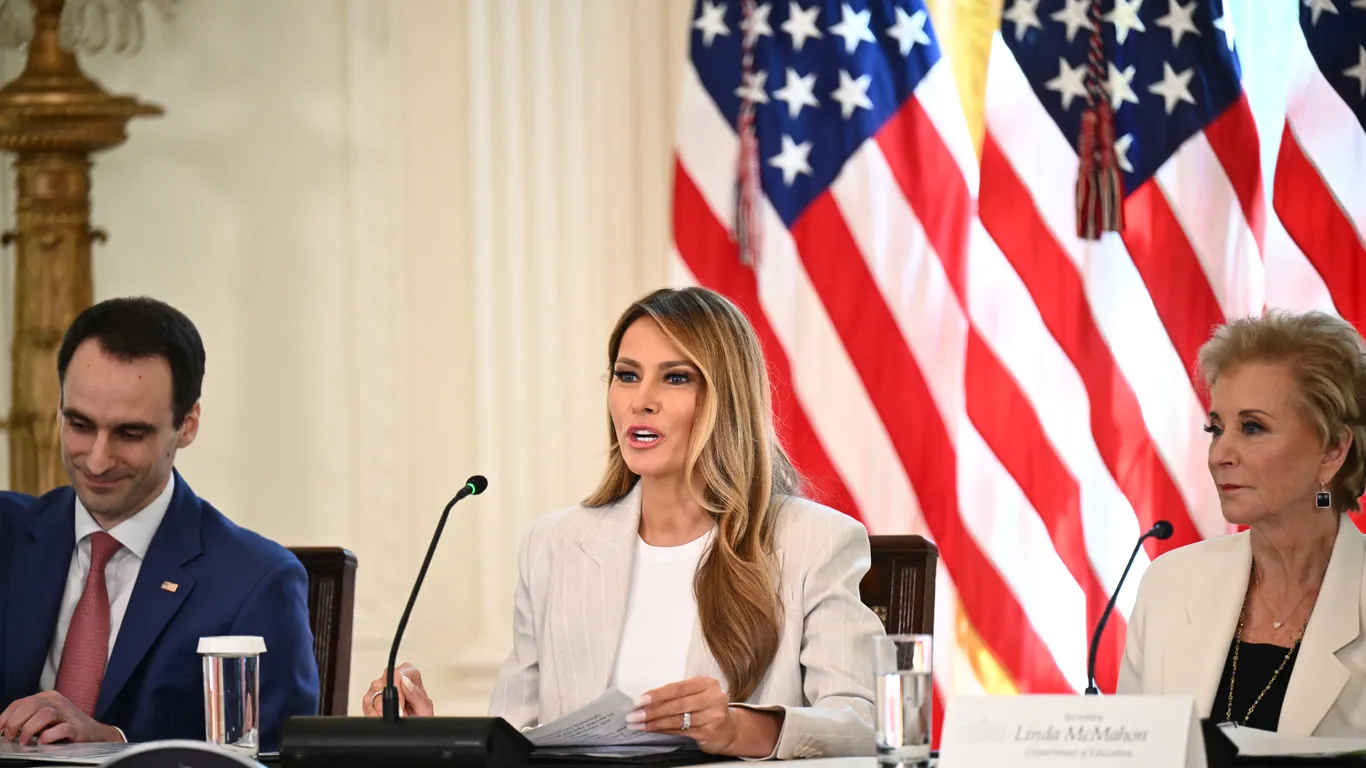
First lady Melania Trump emphasized the importance of teaching AI literacy in schools to ensure American competitiveness, highlighting new initiatives and commitments from major tech companies, while noting the lack of focus on children's safety and mental health during the event.
A soldier opened fire at Fort Stewart injuring five, while President Trump’s increased tariffs on imports from various countries took effect, impacting companies like McDonald's. Trump also indicated a potential meeting with Putin and Zelenskyy to discuss ending the Ukraine war. AI tools are increasingly used in education, raising concerns about academic integrity. Additionally, Claire's filed for bankruptcy for the second time in seven years amid other news stories.
OpenAI has launched 'Study Mode' in ChatGPT to promote active learning among students by providing interactive, question-based guidance aimed at reducing reliance on AI for cheating and encouraging deeper understanding, though its effectiveness depends on student adoption and motivation.
OpenAI, Microsoft, and Anthropic are partnering with the American Federation of Teachers to create the National Academy for AI Instruction, offering free AI training to 400,000 K-12 educators over five years, supported by $23 million in funding, to help integrate AI tools into classrooms across the US.
Microsoft and OpenAI are collaborating with a US teachers' union to establish the National Academy for AI Instruction, aiming to provide AI training to educators nationwide.
Google announced new AI-powered tools for education, including over 30 features for teachers and students, such as personalized lesson plans, interactive study guides, and AI chatbots called Gems, aimed at enhancing engagement and support in the classroom. These tools are part of Google's broader push to integrate responsible AI into educational settings, offering new ways to create content, track progress, and facilitate learning, while also ensuring data security and control.
OpenAI is aggressively promoting its AI chatbot ChatGPT on college campuses, aiming to replace traditional educational roles with AI tools despite concerns about misinformation, erosion of critical thinking, and reduced social interaction among students.
OpenAI plans to integrate ChatGPT and AI tools into college campuses to serve as personalized tutors, career advisors, and exam prep assistants, aiming to create 'A.I.-native universities' that embed AI into every aspect of student life.
OpenAI has announced ChatGPT Edu, a specialized version of its AI platform for universities, developed in collaboration with Arizona State University. Set to launch this summer, it features advanced reasoning capabilities and robust administrative controls. ASU has already conducted over 200 AI projects to enhance the platform, which aims to transform higher education through innovative applications like AI tutors and traffic optimization.