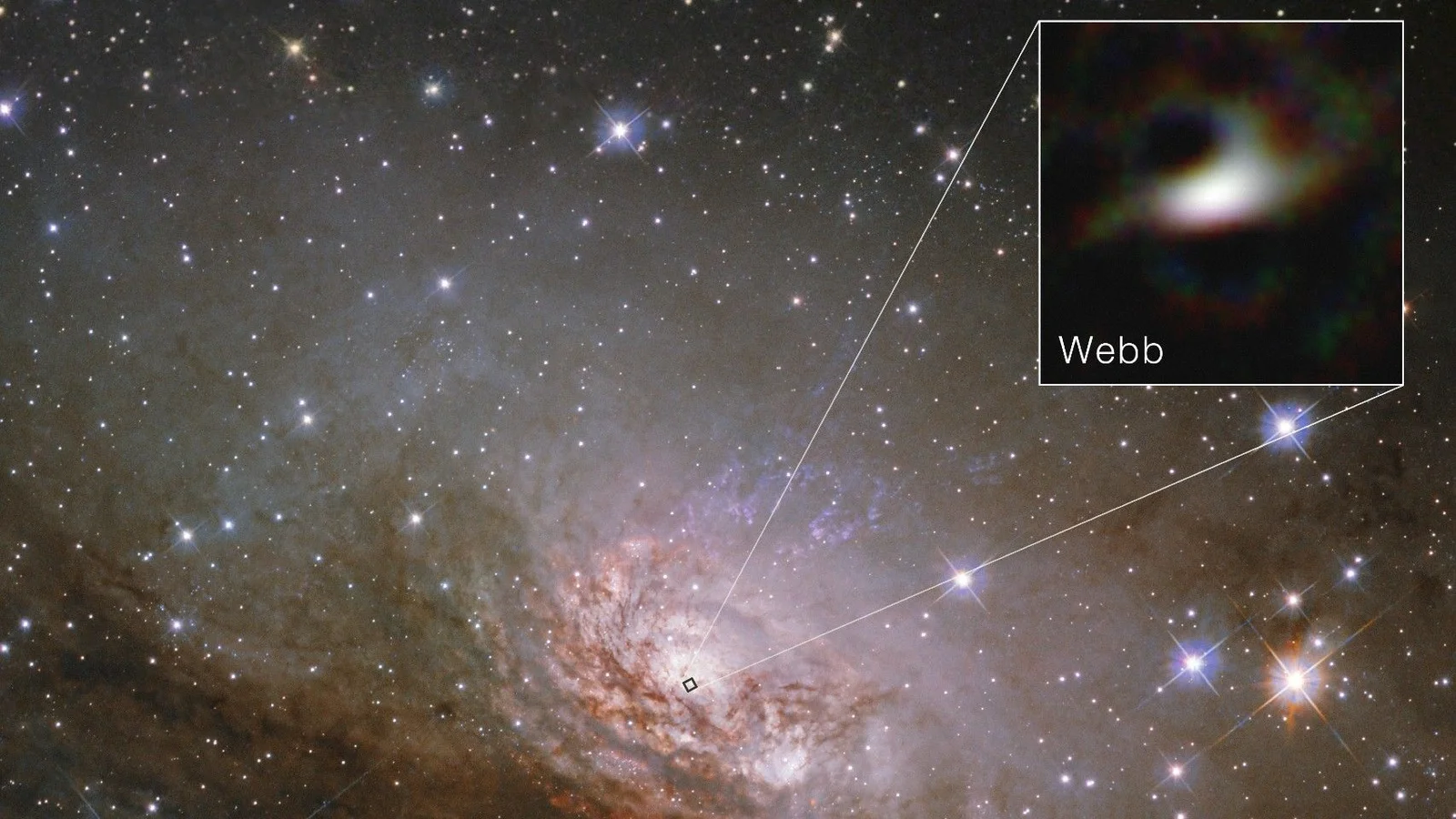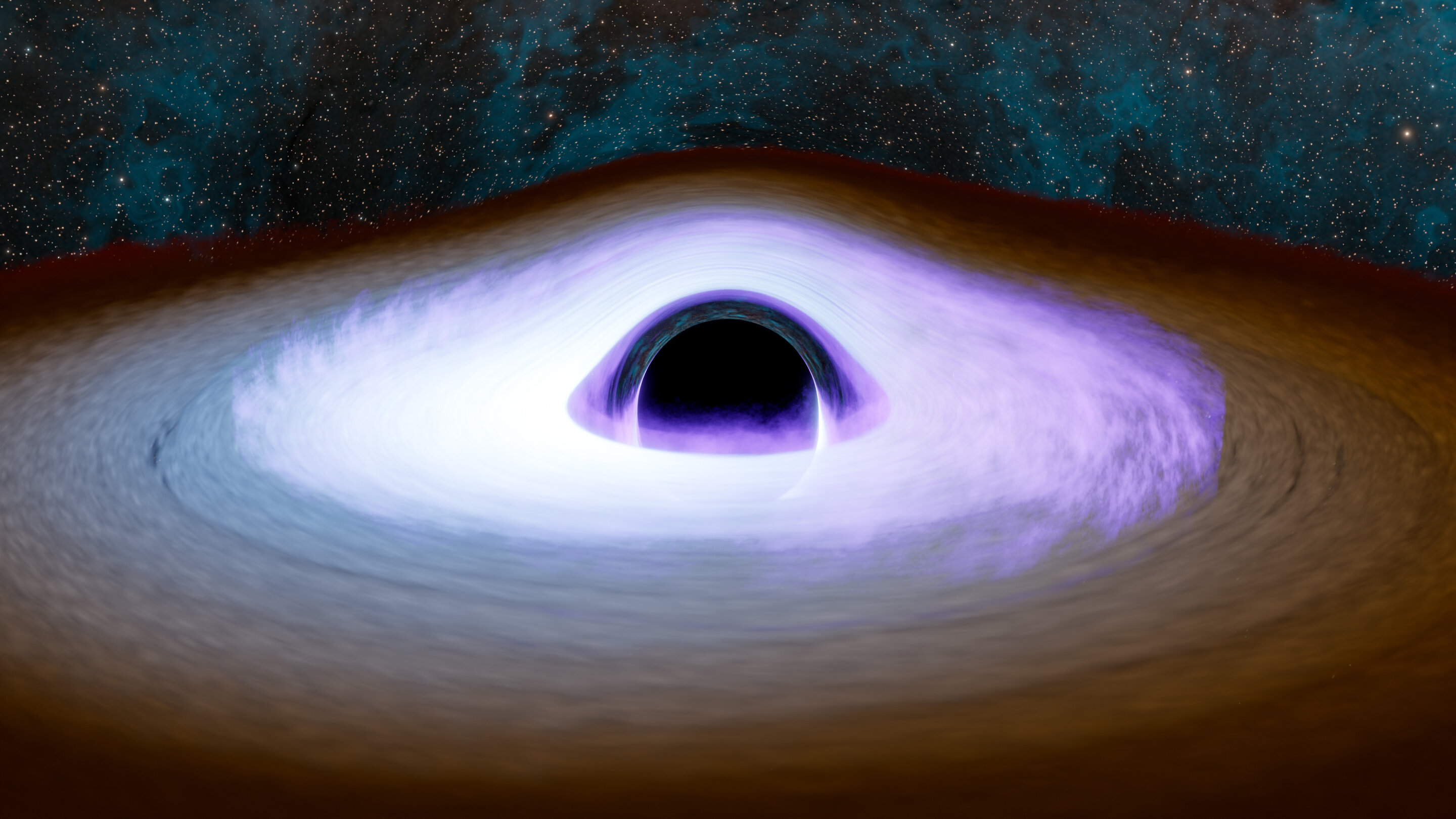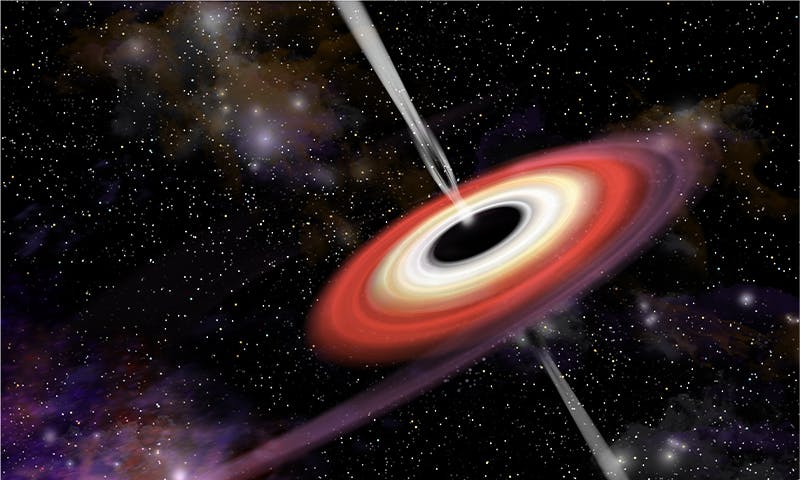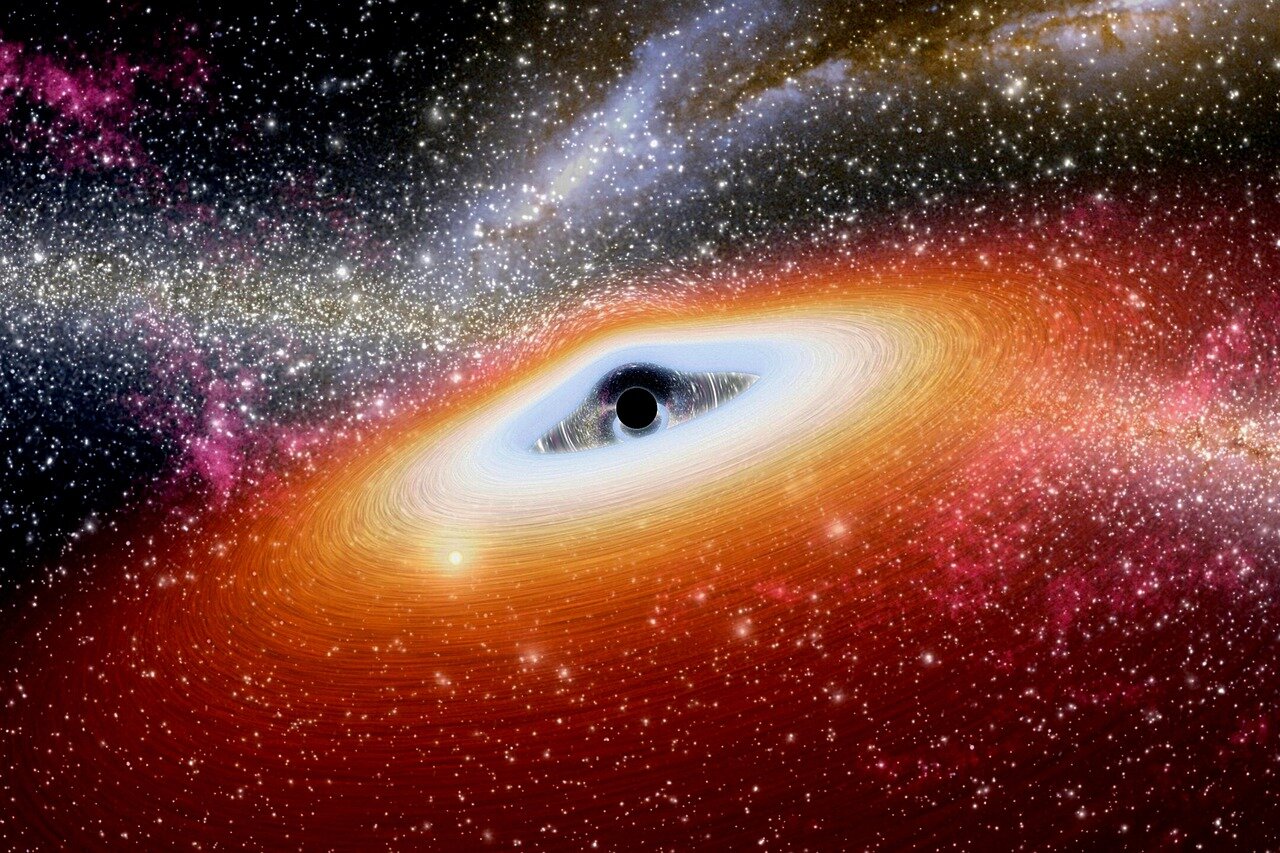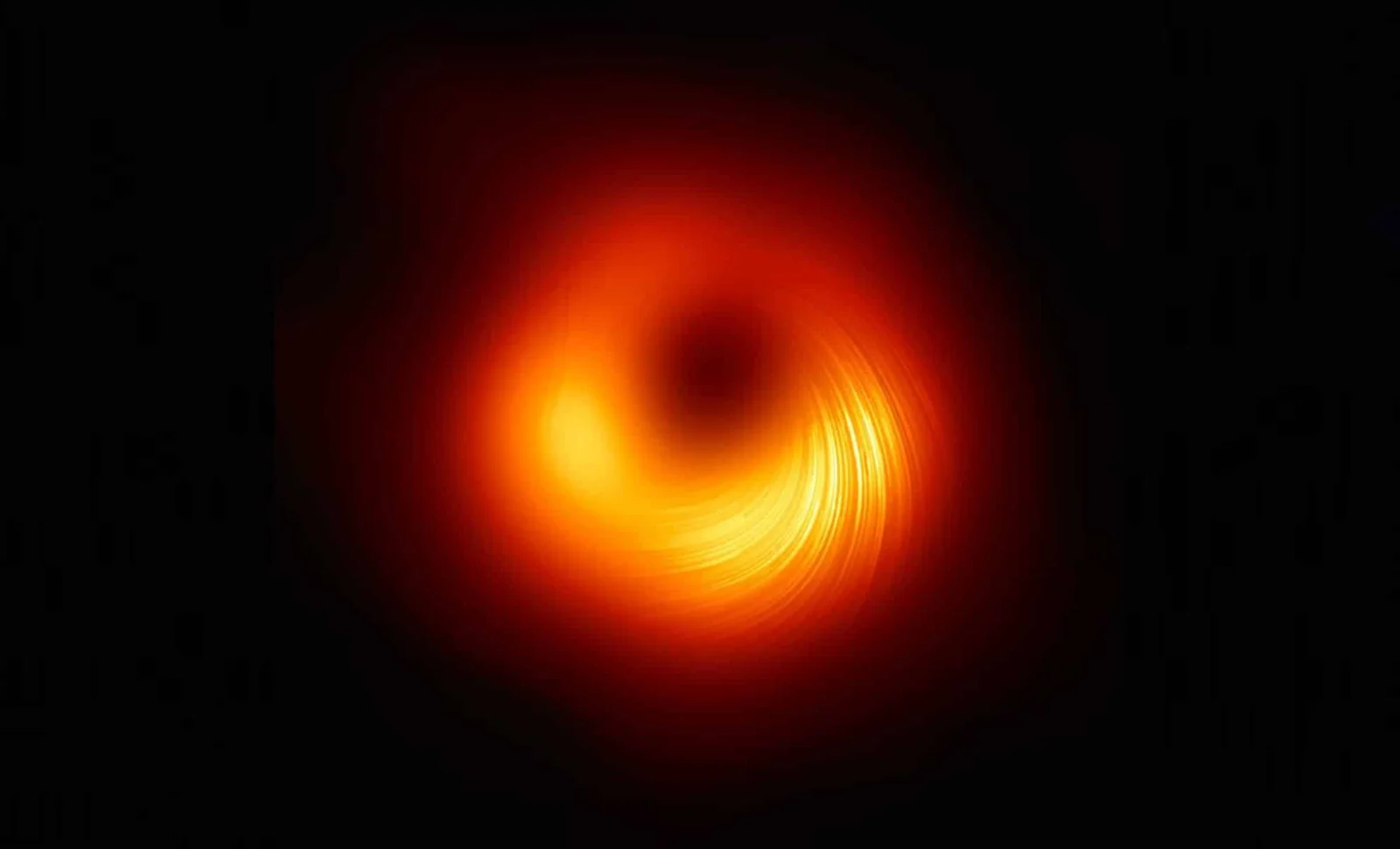
NASA's IXPE has measured a high polarization degree in the black hole IGR J17091-3624, challenging existing theories about the behavior of matter near black holes and suggesting the presence of phenomena like matter winds or fast plasma outflows.
NASA's Hubble Space Telescope has revealed new insights into FU Orionis, a young star in Orion, showing its accretion disk is hotter and more dynamic than previously thought, with temperatures reaching 16,000 kelvins. This challenges existing theories about young stars and has implications for understanding stellar and planetary formation, as the intense activity could affect the chemical and physical environments of surrounding disks where planets form.
Scientists have, for the first time, observed the shape of a black hole's corona, revealing it to be disk-like rather than spherical, similar to the accretion disk. Using data from NASA's Imaging X-ray Polarimetry Explorer, researchers studied scattered X-rays from obscured black holes, including Cygnus X-1 and X-3, to detect this pattern. This discovery aids in refining black hole models and understanding their role in active galactic nuclei.
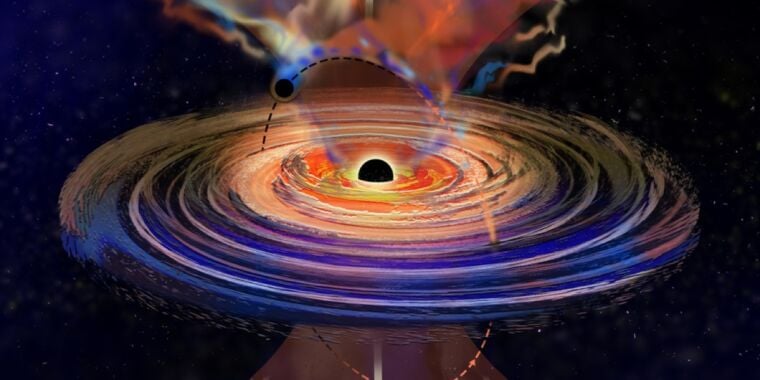
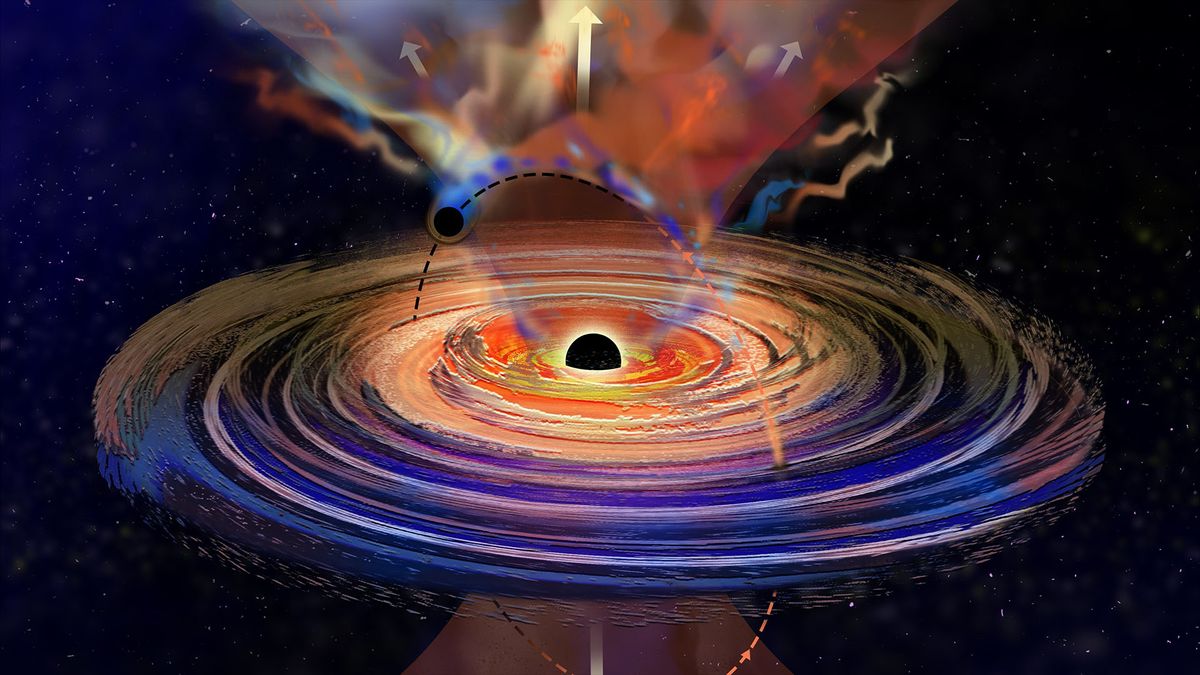
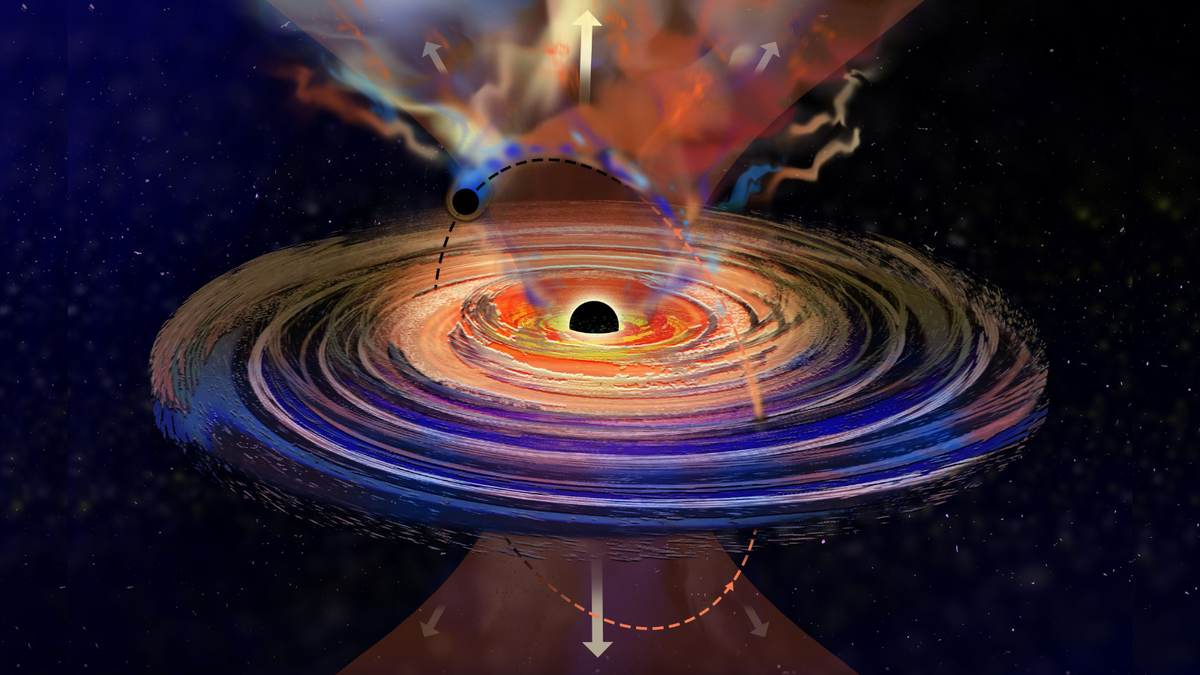
Astronomers have discovered the cause of an unusual burst of light from a supermassive black hole 848 million light-years away, which exhibited periodic energy dips akin to celestial hiccups. They found that the black hole is orbited by a smaller black hole that periodically punches through its accretion disk, releasing plumes of gas. This challenges the traditional understanding of black hole accretion disks and suggests a significant population of similar binary black hole systems in the universe.
Astronomers have observed a distant supermassive black hole exhibiting periodic "hiccups," which are caused by a smaller black hole orbiting around it and disrupting its accretion disk. This discovery suggests that black hole accretion disks may host a variety of cosmic objects, including other black holes and stars. The researchers anticipate that the immense gravity of the supermassive black hole will eventually merge with its companion black hole. This finding challenges existing knowledge about black hole systems and may lead to the discovery of a new population of extreme binaries.
Astronomers have observed a supermassive black hole experiencing periodic eruptions, which are believed to be caused by a smaller black hole diving through its accretion disk. This behavior challenges the conventional understanding of black hole accretion disks and suggests the presence of exotic components such as stars and smaller black holes. The eruptions were triggered by a star being shredded in a tidal disruption event, leading to a sudden influx of matter that brightened the accretion disk. The findings, published in Science Advances, could help astronomers better understand supermassive black holes and their environments.
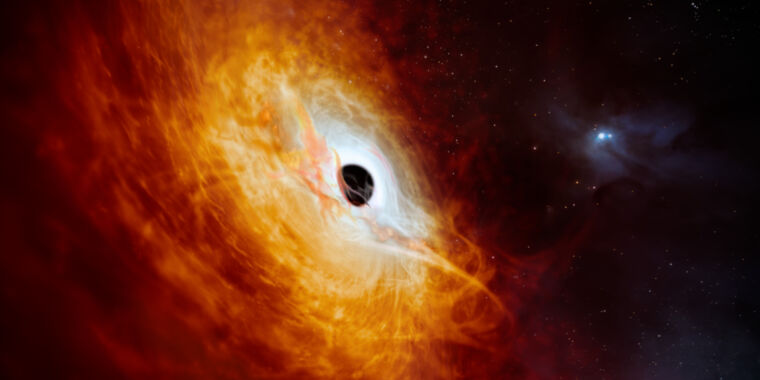
Astronomers have identified the brightest quasar ever observed, named J0529−4351, with a supermassive black hole estimated to have a mass of 17-19 billion solar masses and an accretion disk roughly seven light-years across. The quasar's extreme brightness is powered by an accretion rate just below the Eddington limit, equivalent to about a Sun's mass per day, and its variability suggests it may not be pushing the limit constantly. Researchers are intrigued by the system's extreme nature and believe it could provide insights into sustaining high accretion rates for long enough to form such extreme supermassive black holes, and they suggest using the ALMA telescope array and the Very Large Telescope to further study this unusual system.
Astronomers have long debated whether star formation is possible around black holes, particularly in the vicinity of Sagittarius A* (Sgr A*), the supermassive black hole at the center of the Milky Way. While the extreme tidal and electromagnetic forces near black holes were believed to disrupt star formation, recent observations have suggested that star formation may be occurring closer to Sgr A* than previously thought. Researchers have identified a young stellar object, X3a, which may have formed in a gaseous envelope in the outer ring of the accretion disk surrounding Sgr A*. Other theories, such as tidal disruption events and shock compression, have also been proposed to explain the presence of stars near black holes. The evolutionary stage of the black hole and the surrounding galaxy likely play a role in star formation.
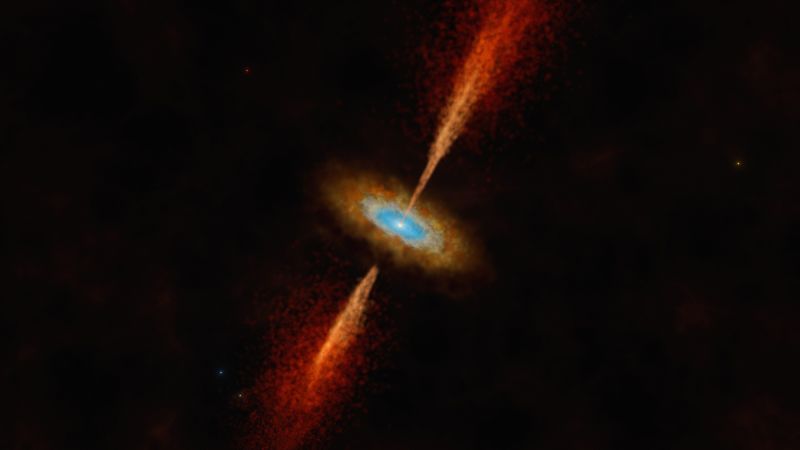
Astronomers have discovered a young star, HH 1177, outside the Milky Way galaxy that is surrounded by a dense disk where planets may form. This unprecedented find in the neighboring dwarf galaxy, the Large Magellanic Cloud, could provide valuable insights into star and planet formation. The star's disk was observed using the ALMA telescope, and its presence was confirmed by measuring the movement of dense gas around the star. This discovery marks the first direct evidence of an extragalactic accretion disk, shedding light on the formation of stars and planets in other galaxies.
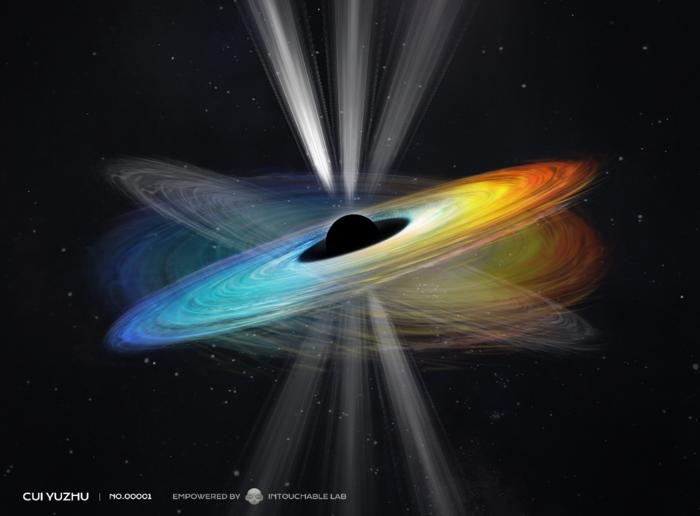
A study led by Yuzhu Cui has provided solid proof that the supermassive black hole in the galaxy M87 is spinning. The study analyzed 17 years' worth of data from a global network of radio telescopes and discovered a recurring 11-year cycle of precessional jets, indicating a misalignment between the black hole's rotational axis and the accretion disk. This finding confirms the existence of spinning black holes and presents new challenges for scientists in understanding their structure and energy transfer mechanisms.
Scientists have observed a wobble in the jet of material being flung out from the center of the galaxy Messier 87, providing evidence that its supermassive black hole is spinning. By examining 22 years of data, researchers found that the innermost portion of the jet twirls around once every 11 years, indicating the rotation of the black hole. The wobbling of the accretion disk, which is connected to the jet, suggests that the plane of its spin is not entirely aligned with the black hole's spin. This finding sheds light on the growth and history of supermassive black holes.
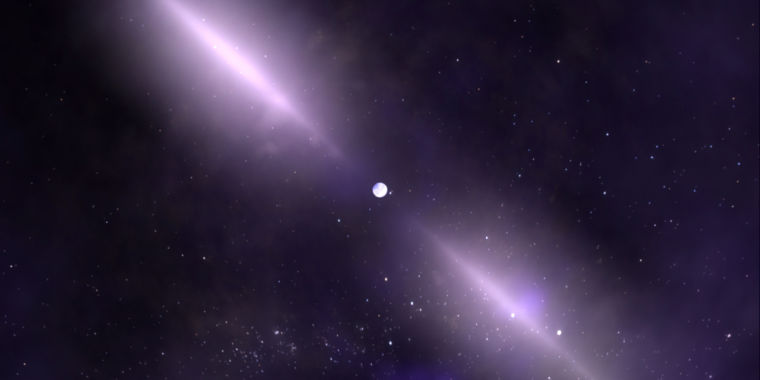
Astronomers have finally unraveled the mysterious behavior of pulsar PSR J1023+0038, a millisecond pulsar in a close binary system with another star. The pulsar switches between intensely bright "high mode" and dimmer "low mode" as it strips material from its companion star. The material forms an accretion disk around the pulsar, and when a large amount of material spirals closer to the pulsar, it collides with the pulsar's powerful winds, heating up and pushing the material outward. This results in explosive flashes of X-rays, ultraviolet, and visible light during high mode. After the material is blown off, the emissions plummet, and the pulsar enters low mode. Observing PSR J1023 required multiple telescopes, and further research is needed to understand the similarities between transitional millisecond pulsars and black holes.
Researchers from the University of Science and Technology of China have discovered that the spectral energy distribution of supermassive black holes at the centers of quasars is independent of the intrinsic brightness of the quasars, challenging the traditional understanding in this field. Their study supports models that incorporate widespread accretion disk winds and reveals a departure from the predictions of the classical accretion disk theory. This finding has implications for our understanding of supermassive black hole accretion physics and other related phenomena.
A new forensic analysis of the tidal disruption event ASASSN-14li, where a star was ripped apart by a black hole, reveals that the star was likely three times the mass of the Sun. Observations from NASA's Chandra and ESA's XMM-Newton X-ray telescopes detected carbon and nitrogen in the black hole's accretion disk, indicating the evisceration of a high-mass star. This finding provides valuable insight into the destruction of massive stars by black holes and could aid in the search for similar events in other galaxies.
Scientists have accidentally measured the size of the disk of matter swirling around a supermassive black hole for the first time. The discovery, made while collecting data to confirm the presence of the accretion disk, could provide insights into the growth of black holes and the evolution of surrounding galaxies. The researchers used the Gemini Near-Infrared Spectrograph to detect a second double-peak emission from the outside edge of the accretion disk, allowing them to calculate its radius. This finding will help scientists observe the feeding process and inner structure of active galaxies, shedding light on the mysteries of supermassive black holes.