
Tag

Fu Orionis

All articles tagged with #fu orionis

science1 year ago

Hubble Observes Star's Superheated Planet-Forming Disk

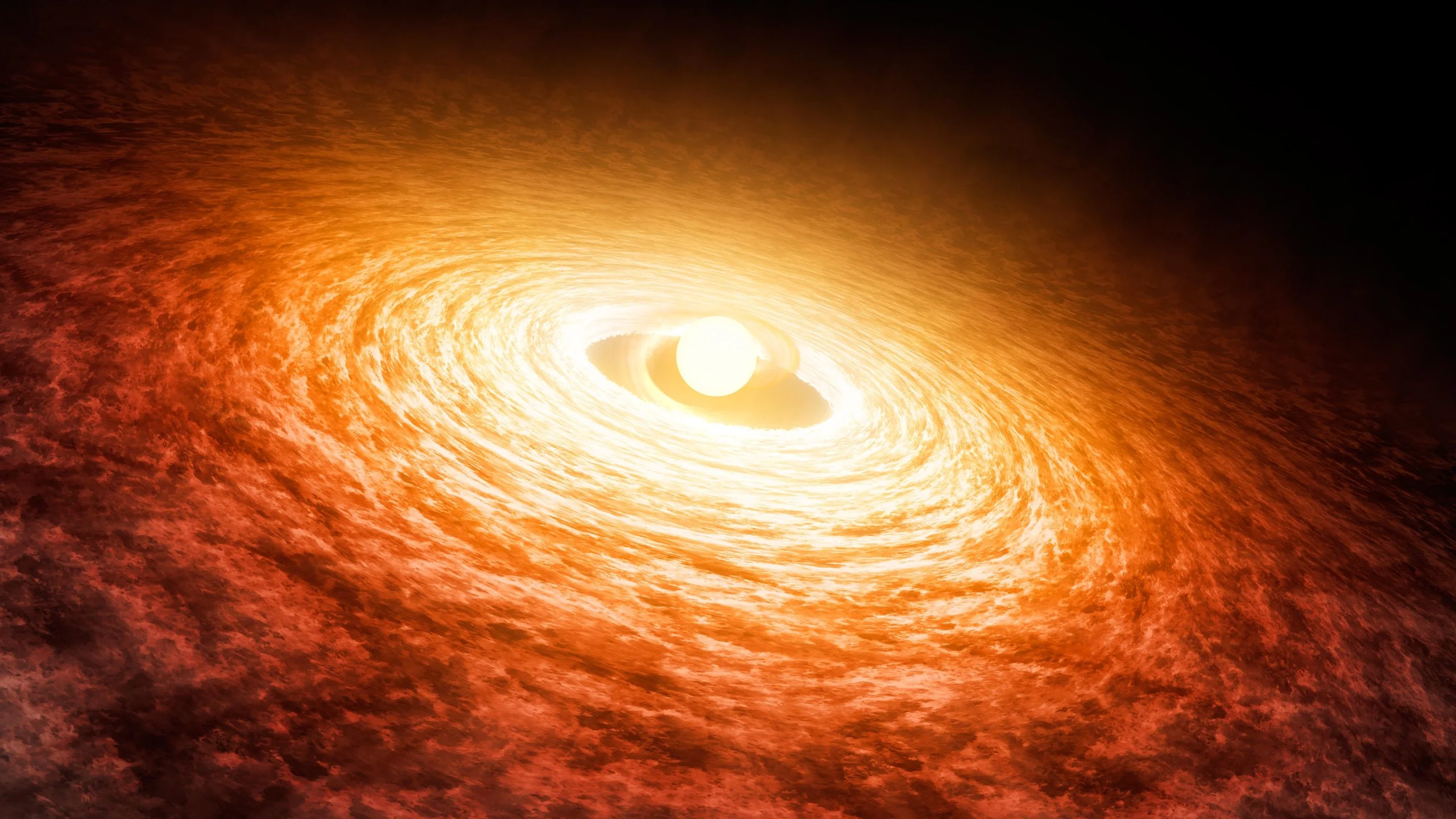
The Hubble Space Telescope has revealed that the star FU Orionis, located 1,360 light-years from Earth, has a planet-forming disk that reaches temperatures three times hotter than the Sun's surface. This extreme heat is caused by the disk's rapid rotation and collision with the star's surface, creating a shockwave. Such conditions make it unlikely for Earth-like planets to form close to the star, as they would be either consumed or destroyed by radiation. The findings were published in The Astrophysical Journal Letters.
science1 year ago

Hubble Unveils Surprising Heatwave in Young Star FU Orionis

Astronomers using the Hubble Space Telescope have discovered that the inner accretion disk of the young star FU Orionis is much hotter than previously thought, reaching 16,000 kelvins. This finding challenges existing astrophysical models and provides new insights into the mechanisms of stellar accretion and the potential impact on planet formation. The study highlights the complex interactions between the star and its disk, which could influence the chemical composition and survival of forming planets.

science1 year ago

Hubble Uncovers Sizzling Secrets of Young Star FU Orionis

NASA's Hubble Space Telescope has revealed new insights into FU Orionis, a young star in Orion, showing its accretion disk is hotter and more dynamic than previously thought, with temperatures reaching 16,000 kelvins. This challenges existing theories about young stars and has implications for understanding stellar and planetary formation, as the intense activity could affect the chemical and physical environments of surrounding disks where planets form.

science1 year ago

Hubble Uncovers Fiery Secrets of Young Star FU Orionis

Astronomers using the Hubble Space Telescope have discovered that the inner accretion disk of the young star FU Orionis is much hotter than previously thought, reaching 16,000 kelvins. This temperature is nearly twice what models predicted, challenging existing theories about star-disk interactions. The findings, published in The Astrophysical Journal Letters, suggest that the accretion disk's material creates a hot shock when it impacts the star, emitting significant ultraviolet light. This research has implications for understanding planet formation around such stars.