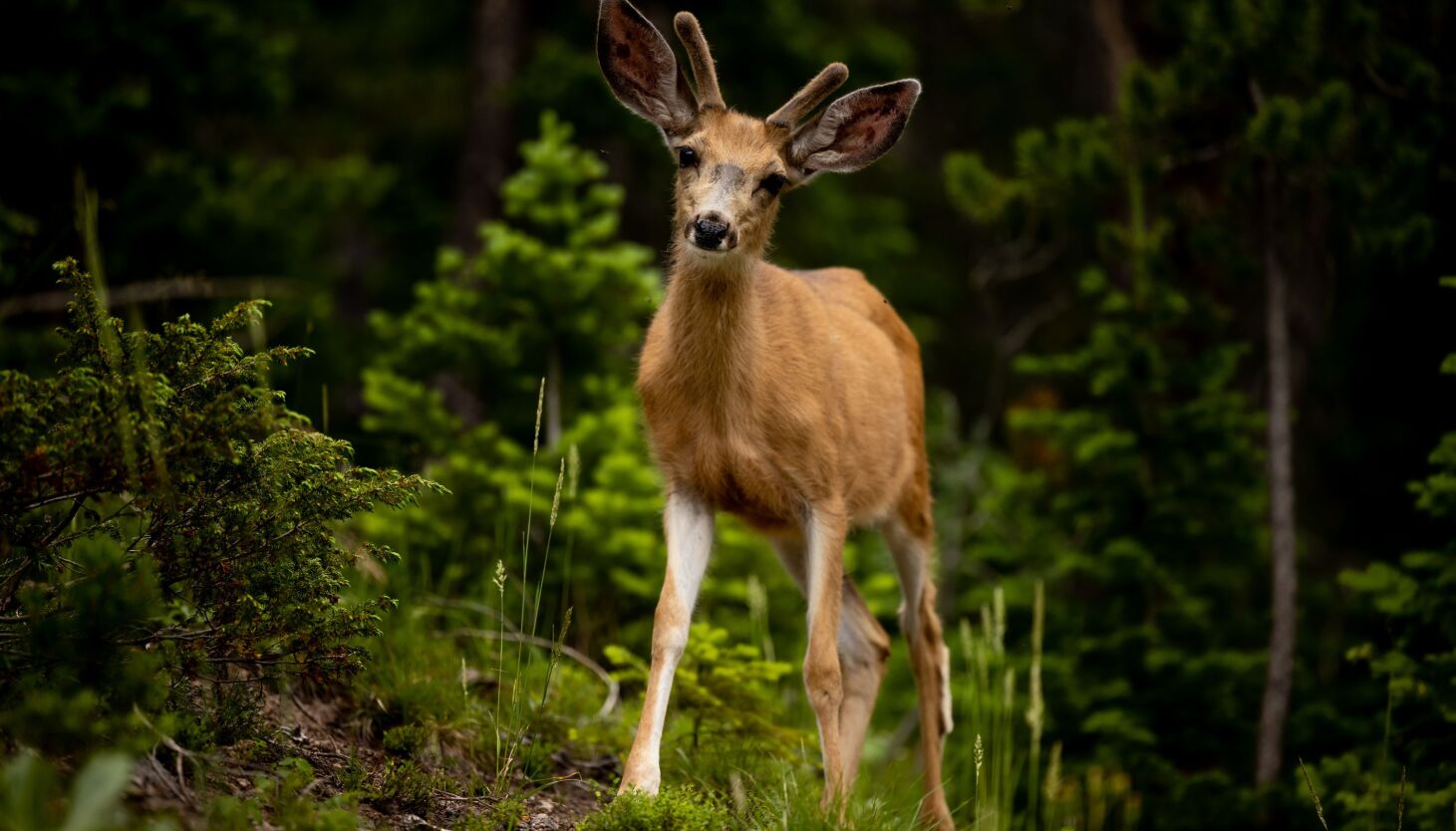
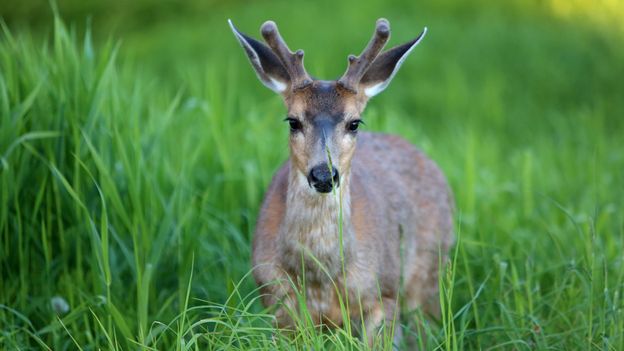
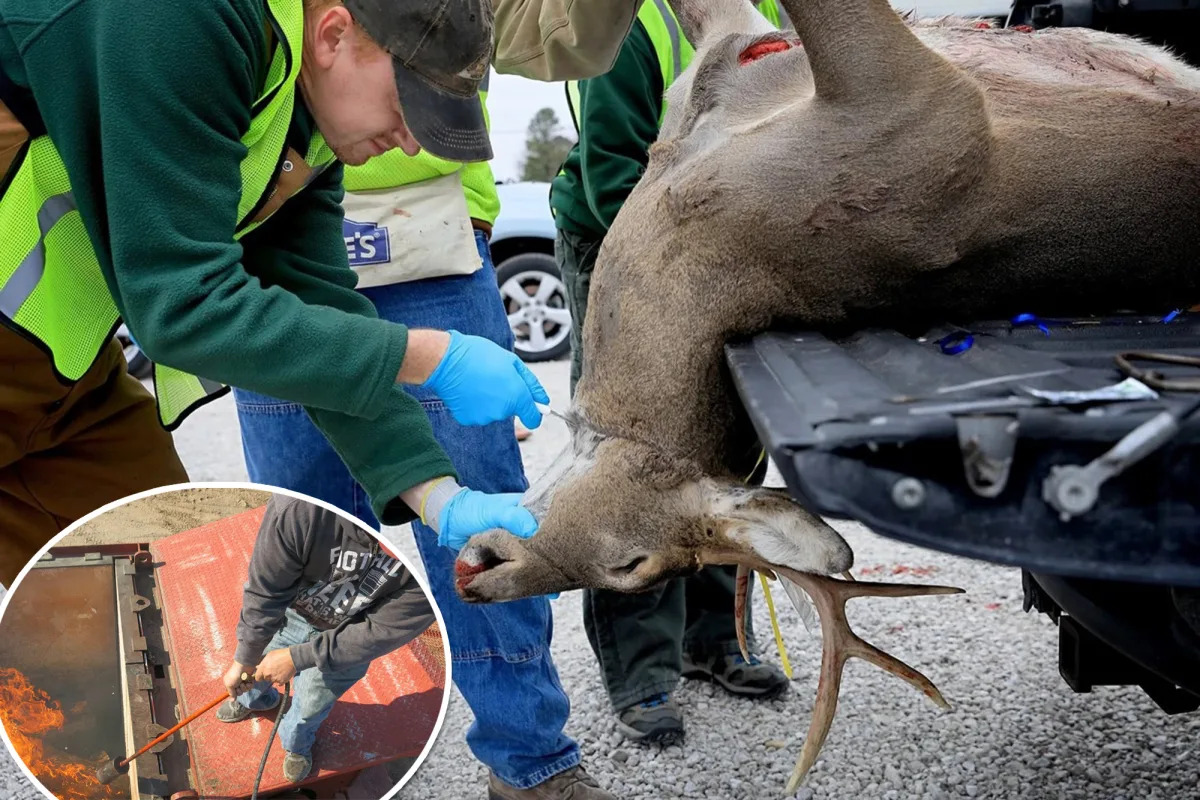
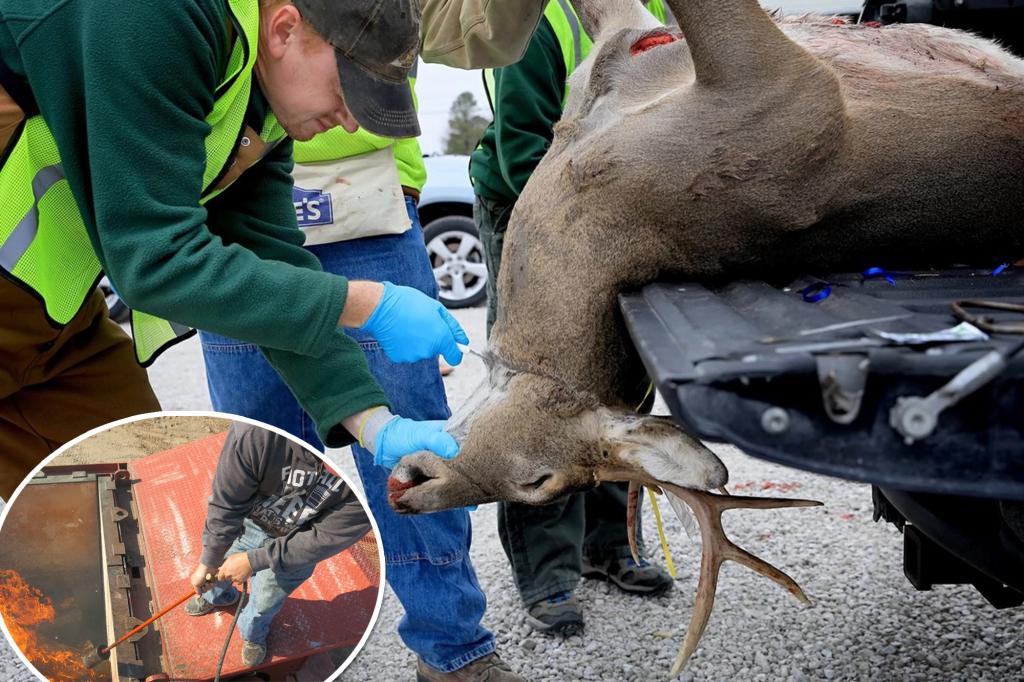
Wildlife officials in Florida have identified a second case of chronic wasting disease, also known as 'zombie deer disease,' prompting emergency measures to contain its spread, which poses a significant threat to local deer populations and hunting activities.
Two white-tailed deer at Antietam and Monocacy national battlefields in Maryland have tested positive for chronic wasting disease (CWD), also known as "zombie deer disease," marking the first cases detected at national parks in the state. CWD is a highly contagious and fatal brain disease that affects deer, elk, reindeer, and moose, and while there have been no reported CWD infections in humans, some studies have suggested a potential risk. Officials recommend not consuming meat from animals infected with or suspected of being infected with CWD, and so far, no treatments or vaccines have been discovered for the disease.
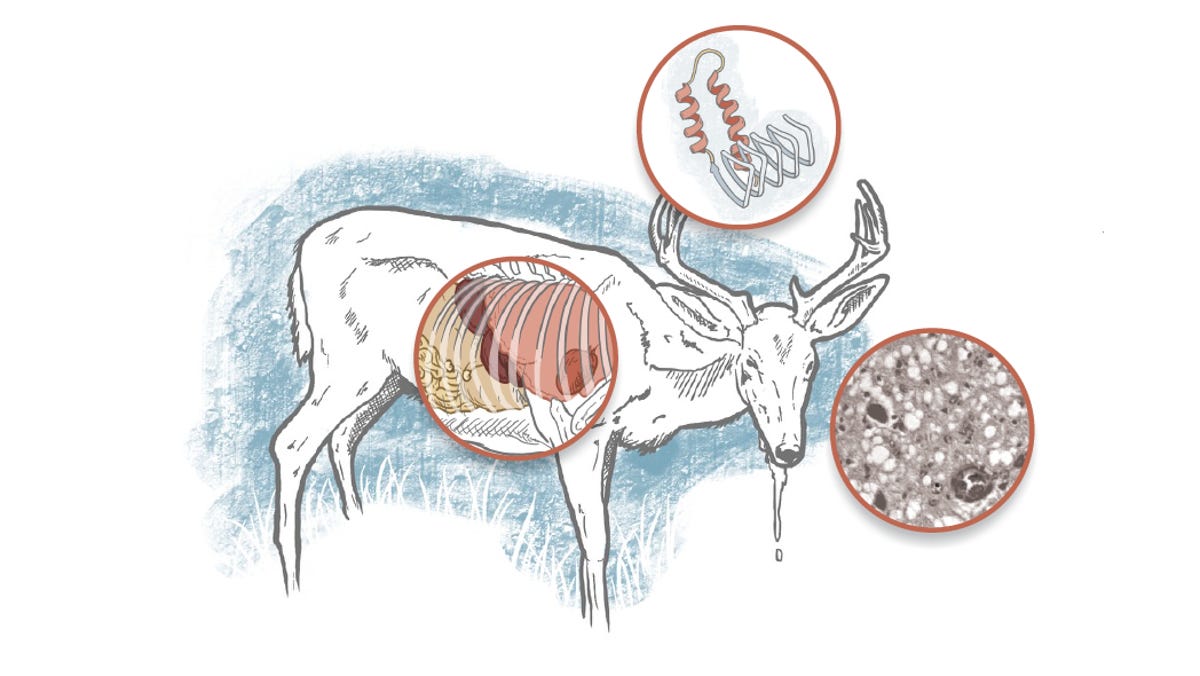
Scientists are investigating the potential for the zombie deer disease, also known as chronic wasting disease (CWD), to spread to humans through experimental studies. While no human cases have been reported, the rising number of cases in the US has raised concerns. CWD is a prion disease affecting deer, elk, and other animals, with prions spread through bodily fluids. The cause of misfolding in prion proteins remains a mystery, but researchers are working to understand the risk of transmission to humans, with conflicting evidence and structural differences from mad cow disease.
The "zombie deer disease," or chronic wasting disease (CWD), is causing concern as cases rise in the US, with experts uncertain about its potential to spread to humans. While no transmission to humans has been documented, the disease's similarity to mad cow disease raises worries. Research emphasizes the need for preparedness in case of transmission, as CWD affects deer, elk, and other animals, spreading through bodily fluids. Agencies are urged to be ready for potential disastrous consequences and the emergence of new strains.
Media reports about the potential for chronic wasting disease, also known as "zombie deer disease," to mutate and infect humans have sparked concerns, but experts emphasize that there is currently no evidence of human infection. Chronic wasting disease, a prion disease affecting deer, elk, and moose, has not crossed over to humans, although the risk is not entirely ruled out. While the disease's impact on cervid populations is significant, there is no need for widespread fear among humans at this time. Ongoing research and monitoring are crucial to understanding and addressing the potential risks associated with chronic wasting disease.
Chronic Wasting Disease, also known as "zombie deer disease," has been spreading among North American deer populations, with potential risks for human infection. The disease, caused by prions, can lead to neurological damage in animals and has no known cure or vaccine. While there are currently no confirmed cases of CWD in humans, scientists are concerned about the potential for transmission through consumption of infected deer. The spread of CWD also poses ecological and economic risks, impacting deer populations, food security, and ecosystems. Measures to prevent the spread of the disease include following CDC guidelines for hunting and testing deer for CWD before consuming their meat.
Chronic Wasting Disease, also known as "zombie deer disease," is spreading among North American deer populations, with potential risks for human health. The disease, caused by abnormal proteins called prions, can lead to neurological damage in animals and has the potential to infect humans through consumption of infected deer. The spread of CWD poses ecological and economic risks, impacting deer populations, food security, and ecosystems. While there are currently no confirmed cases of CWD in humans, researchers are developing vaccines and recommending guidelines for hunters to prevent the spread of the disease.
Chronic Wasting Disease, also known as "zombie deer disease," is a neurodegenerative condition affecting wildlife such as deer, moose, and elk. While there have been no reported cases of transmission to humans, experts are concerned about the potential for animal-to-human transmission based on experimental studies and the history of other prion diseases. Surveillance efforts are ongoing, and researchers are working on potential live tests for CWD to mitigate the risk of human consumption of infected deer. However, there is still uncertainty about the possibility of CWD breaching the species barrier, and concerns remain about the potential impact of climate change and the emergence of novel CWD prion strains.
Scientists are concerned about the spread of "zombie deer disease" (chronic wasting disease) and its potential to mutate to infect humans. The disease, which is 100% fatal and has no treatments or vaccines, has been reported in deer, elk, and moose in 33 states across the US, as well as in other countries. There are fears that humans could contract the disease through the consumption of infected venison, and research suggests that CWD could potentially be contagious and transmit from person to person. Scientists warn that there are no contingency plans in place for a potential spillover of the disease to humans.
Scientists are concerned about the spread of chronic wasting disease, also known as "zombie deer disease," and fear it may mutate to infect humans. The disease, which is 100% fatal and has no treatments or vaccines, has been reported in deer, elk, and moose in multiple countries. While the most likely route of transmission to humans would be through consuming infected venison, there are worries that the disease could evolve to spread to humans. Research has shown that the disease may be contagious and could potentially transmit from person to person, raising concerns about the lack of contingency plans and preparedness for a potential spillover into human populations.
Chronic wasting disease (CWD), also known as "zombie deer disease," is spreading among deer populations in North America, raising concerns about its potential to jump to humans. The disease is caused by prions, which are notoriously resilient and can persist in the environment for years. While there is no conclusive evidence of direct transmission to humans, concerns persist due to potential exposure through hunting and consumption of infected animals. The spread of CWD also poses significant ecological and economic risks, threatening deer populations and potentially disrupting ecosystems. International cooperation and comprehensive measures are needed to monitor and control the disease, protect wildlife, and mitigate potential human health implications.
Scientists are concerned that Chronic Wasting Disease, also known as 'zombie deer disease,' which is nearly 100% fatal to animals, may be evolving to infect humans. The disease, caused by misfolded proteins called prions, is spreading rapidly in deer populations across the US and parts of Canada. There are fears that humans could contract the disease from eating infected venison or through contact with contaminated soil and water. With no treatments or vaccines available, researchers are preparing for a potential outbreak and studying the possibility of the disease passing to humans or domestic animals.
Chronic Wasting Disease (CWD), also known as "zombie deer disease," has spread across North America, with recent cases in British Columbia and Yellowstone National Park. The prion disease, which affects deer and elk, has been detected in at least 31 U.S. states and 23% of samples in Canada's Alberta province. There are concerns about the disease potentially jumping to humans, as it has in the past with other prion diseases like Mad Cow Disease. While there have been no reported cases of CWD in humans, studies have shown transmission to other species, prompting health advisories against consuming infected animal meat. Wildlife officials are working to prevent further spread of the disease.
Chronic wasting disease (CWD), also known as "zombie deer disease," caused by transmissible prions, is spreading across North America, with the first confirmed case in Yellowstone National Park. The disease affects deer, elk, moose, and other cervids, causing neurological changes and ultimately death. CWD poses ecological implications as it can impact the diverse array of wildlife in Yellowstone. There are concerns that CWD could jump the species barrier and infect livestock or even humans. The disease is difficult to eradicate and can persist in the environment for years. Wildlife experts urge testing of game animals and caution against consuming meat from infected animals. The liberal killing of predators like wolves and cougars in the Greater Yellowstone Ecosystem is seen as counterproductive to controlling CWD.
Pennsylvania has introduced new rules for hunters in an effort to limit the spread of "zombie deer disease," a neurological disorder that affects deer and elk. The regulations include restrictions on importing high-risk deer parts from other states, as well as increased testing and reporting requirements for hunters. The state is taking these measures to protect wildlife populations and prevent the disease from spreading further.