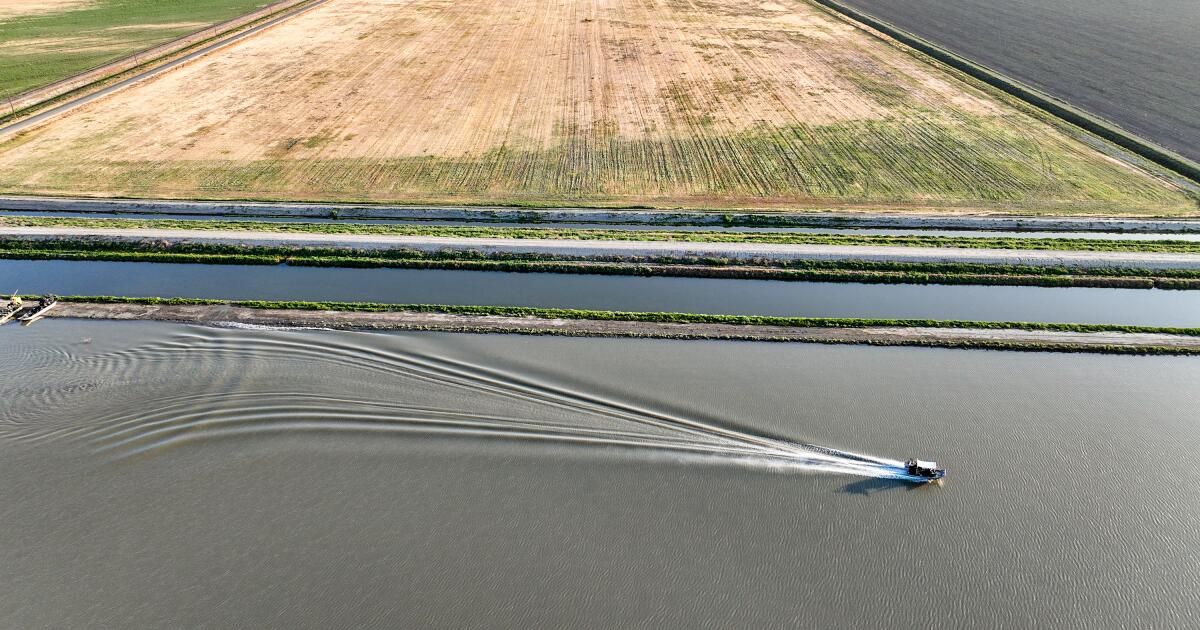
The State Water Resources Control Board has placed California's Tulare Lake basin on "probationary" status for failing to address chronic overpumping of groundwater, causing water levels to decline and land to sink. This marks the first time the state has intervened to enforce measures under the Sustainable Groundwater Management Act. Large agricultural landowners will now be required to report water usage and pay fees, with potential for further state intervention if local agencies fail to address deficiencies in their groundwater plan. The decision aims to protect water resources and communities, but has sparked concerns among farmers about the impact on their livelihoods.
Researchers have identified a protein called dirigent protein (DP) that plays a crucial role in sealing plant roots and regulating the uptake of nutrients and water from the soil. This discovery could pave the way for the development of climate-proof crops that require less water and chemical fertilizers. By understanding how plants control their uptake of water and nutrients through the deposition of lignin, scientists can engineer plants to grow more efficiently in changing environmental conditions.
Two Maui residents have filed a lawsuit against the state Land Board chair over the reassignment of the state executive responsible for regulating surface water on Maui. The lawsuit alleges that pressure from developers led to the removal of Kaleo Manuel, who was relieved of his duties after a landowner complained that he withheld permission to recharge reservoirs during the Lahaina wildfire. Environmental and water rights advocates argue that only the water commission should have the authority to decide who acts as its chief regulator. The Land Department has not provided an explanation for the decision.