Tag

Voyager Probes

All articles tagged with #voyager probes

science-and-technology1 year ago

NASA's Voyager Probes Face Imminent Shutdown as Power Fades

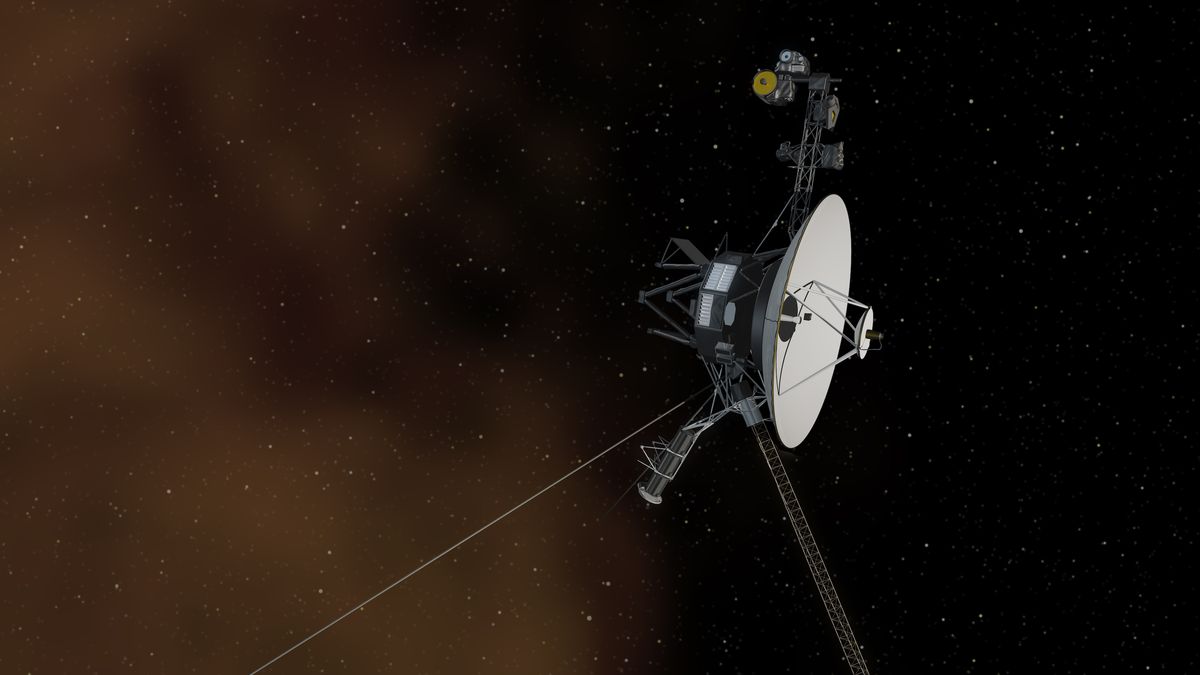
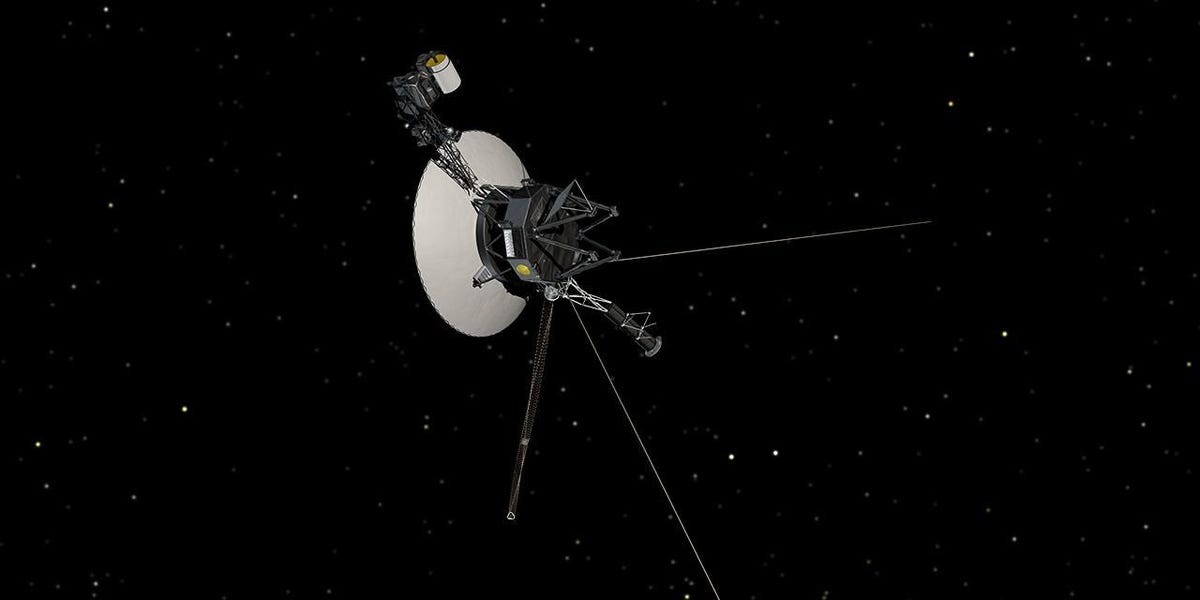
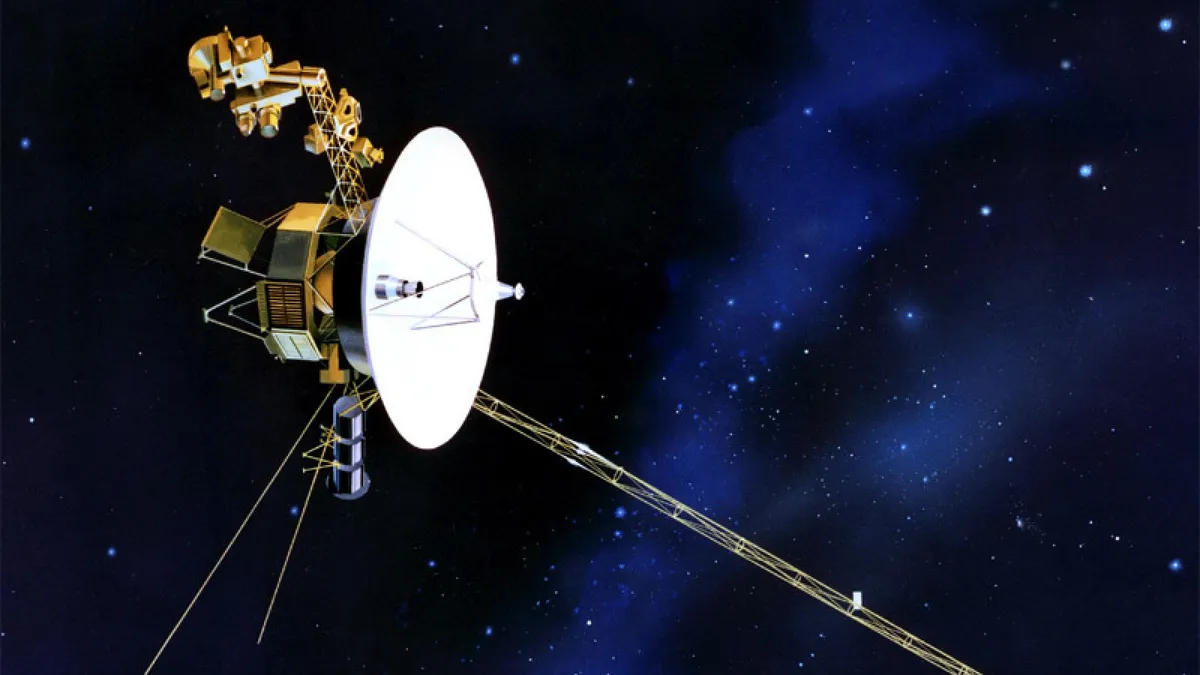
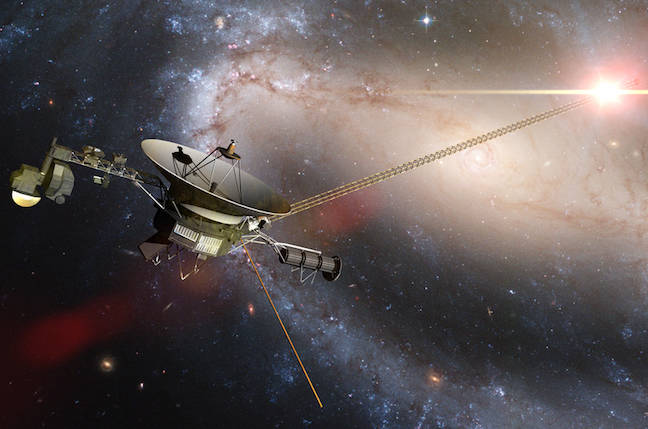
NASA's Voyager 1 and Voyager 2 probes, launched in 1977, are nearing the end of their missions as their nuclear batteries deplete. These batteries, which convert heat from decaying Plutonium-238 into energy, are running low, prompting NASA to gradually shut down systems to conserve power. Despite communication challenges, both probes continue to send data from beyond the heliosphere, with hopes they will last until their 50th anniversary in 2027. Once power is exhausted, the probes will drift indefinitely through space.
space-exploration1 year ago

"NASA's Europa Clipper: Sending a 'Golden Record' Message to Alien Life"

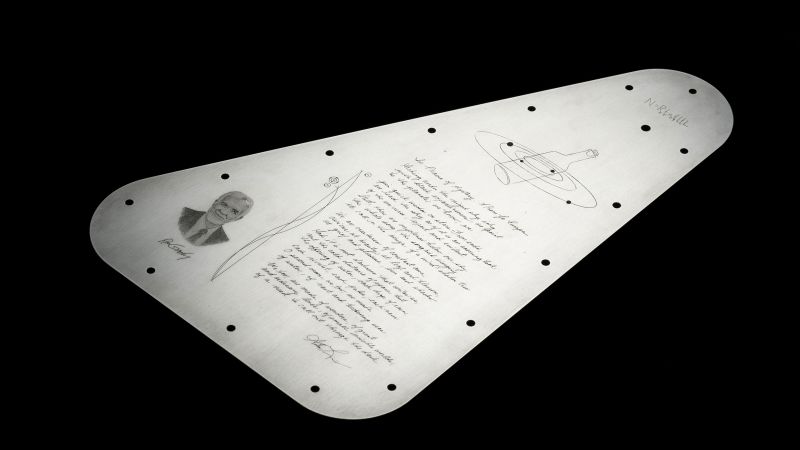
NASA's Europa Clipper mission, set to launch in October, will carry a unique design etched with names, poetry, and artwork symbolizing humanity to Jupiter's moon Europa, one of the best places to search for life beyond Earth. The spacecraft will carry a triangular plate made of tantalum, featuring a silicon microchip with over 2.6 million names, a poem by US Poet Laureate Ada Limón, and a portrait of planetary sciences pioneer Ron Greeley. The plate also includes the Drake Equation and waveforms depicting the word "water" in 103 languages. Europa Clipper aims to make nearly 50 flybys of Europa to study its potential to support life using various instruments, including cameras, spectrometers, and ice-penetrating radar.

space-exploration1 year ago

"Voyager Probes: Lessons for Humanity in Space"

Dr. Garry E Hunt, a member of the original Voyager imaging team, credits the probes' unprecedented longevity to brilliant engineering. Despite being funded only to Saturn, the Voyager spacecraft continued their tour of the solar system, capturing iconic images and providing valuable data. Hunt expresses concerns about the current political and economic climate affecting future space missions, emphasizing the shift from space exploration to exploitation. While acknowledging the need to demonstrate the benefits of space exploration, he worries about a more commercial approach potentially compromising safety and quality. Despite these concerns, he remains enthusiastic about the scientific potential of space exploration and looks forward to celebrating Voyager's 50th anniversary at JPL.

science-and-astronomy2 years ago

"NASA's Voyager Probes Receive Remote Software Updates from 12 Billion Miles Away"

NASA's Voyager 1 and Voyager 2 probes, launched 46 years ago, are receiving software updates from Earth to address issues with corrupted data transmission and potential fuel clogs in their thrusters. The updates aim to keep the spacecraft in contact with Earth and extend their operational lifespan. Engineers have developed a software fix for Voyager 1's corrupted data transmission, although the reason behind the issue remains unknown. Additionally, the probes are being maneuvered to reduce the frequency of thruster firings and prevent fuel inlet tube clogs. These updates demonstrate the creative solutions being employed to overcome challenges faced by the aging Voyager probes.

space-exploration2 years ago

"Voyager Probes: Visible from Deep Space"

According to astrophysicist Michael Zemcov, if you were in space near the Voyager probes, you would be able to see them due to the brightness of the sun. The probes are still pretty bright despite being beyond all major planets, and from their distance, you could see the side facing the sun in detail and possibly even read a book. The Voyager probes will continue to be illuminated by the sun for hundreds, if not thousands, of years as they travel deeper into space.

space2 years ago

"Reviving Space Missions with Ancient Technology"

Space missions like the Voyager probes and Cluster satellites have defied expectations and continued operating long past their intended lifespans, thanks to the ingenuity and problem-solving skills of the engineering and science teams behind them. These missions have faced various challenges, including software obsolescence, power issues, and mechanical failures, but have been kept alive through creative solutions such as using virtual environments to run outdated software, rebooting satellites during eclipses, and hacking code from other missions. Despite the eventual end of these missions, the Voyager spacecraft, carrying messages from Earth, will continue its journey for millions of years.

science2 years ago

The Enduring Success of the Voyager Probes in Deep Space.

NASA's Voyager 1 and 2 probes, launched in 1977, have been on extended missions for 45 years and counting. The probes are in interstellar space and are the only spacecraft to operate beyond the heliosphere, the sun's bubble of magnetic fields and particles. The probes rely on radioisotope thermoelectric generators, and the team has had to turn off instrument heaters and other nonessential systems to conserve power. The probes' plasma science instruments are still functioning and can take direct measurements of the density of the plasma in interstellar space. As long as both Voyager 1 and 2 remain healthy, it's likely the aging probes will continue their record-breaking missions for years to come.

space2 years ago

NASA's Voyager 2 Probe Receives Life-Extending Power Boost in Deep Space.

NASA engineers have implemented an energy-saving strategy on Voyager 2, the longest-running spacecraft, to extend its life and collect more scientific data in interstellar space. The Voyager probes have been flying since 1977 and their power sources have been gradually fading, putting their instruments at risk. The energy-conserving gambit could buy the probes’ science mission a few extra years, but it will require sacrificing the science instruments one by one. Voyager 2 still has five instruments humming along, and turning each one of them off would buy another year of life.