Tag

Uninsured Deposits

All articles tagged with #uninsured deposits

finance2 years ago

"US Banking System Faces Unresolved Risk of Uninsured Deposits"

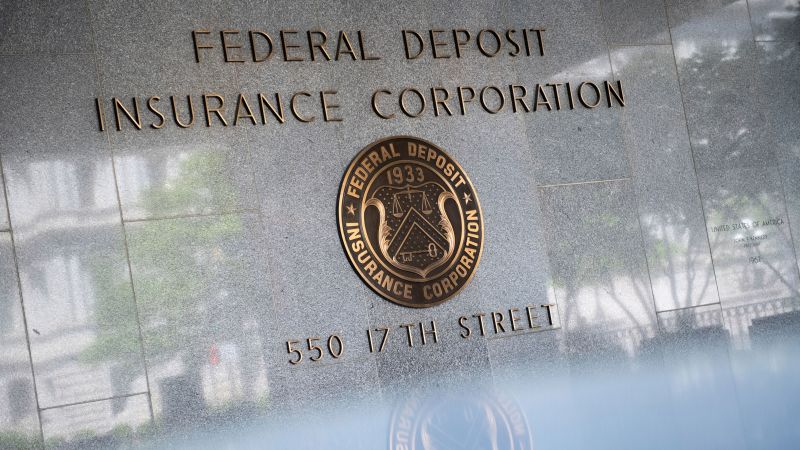
The FDIC has noticed that some insured depository institutions (IDIs) are not accurately reporting estimated uninsured deposits in their Call Reports. Some institutions are incorrectly reducing the reported amount by considering collateralized uninsured deposits, while others are excluding intercompany deposit balances of subsidiaries. The FDIC emphasizes that collateralization and intercompany deposits should not affect the portion of a deposit covered by federal deposit insurance. IDIs are urged to amend their Call Reports to ensure accuracy and comply with reporting requirements.
finance2 years ago

FDIC Reports Record Drop in US Bank Deposits, Causing Banking Crisis and Stock Tumbles.

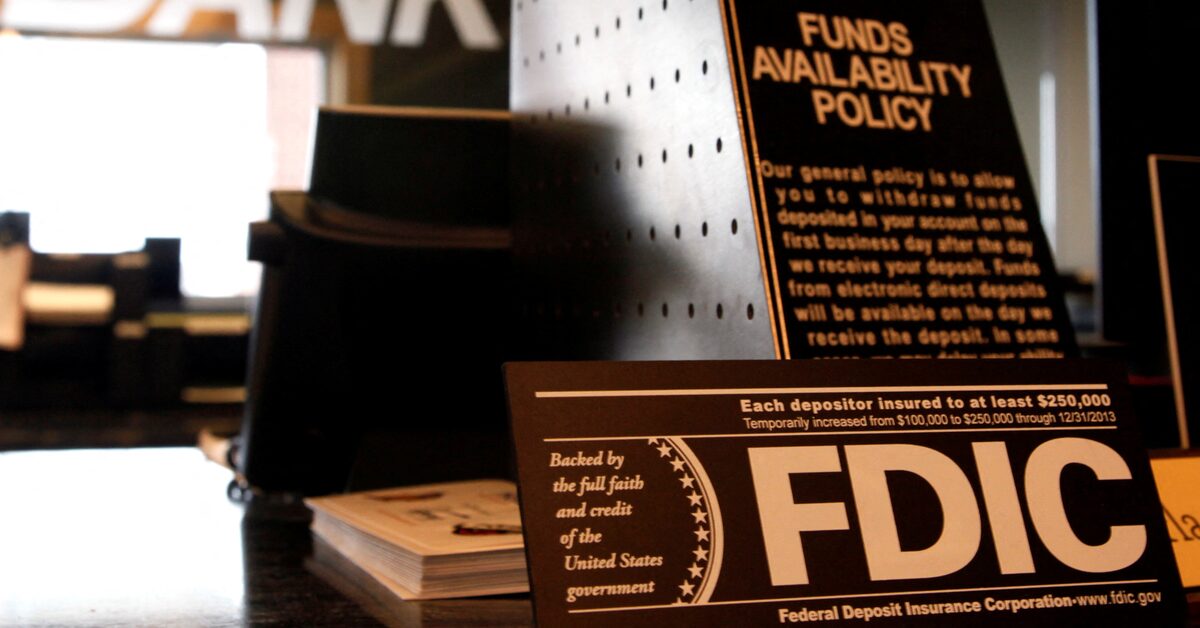
The US banking system saw a decline in total deposits in Q1 2023, even as insured deposits rose, due to withdrawals of uninsured deposits amid the banking crisis caused by the failures of three regional banks. The decline in overall deposits was driven by depositors with uninsured balances in excess of the FDIC’s $250,000 limit on insured deposits. The FDIC's Deposit Insurance Fund (DIF) saw its balance decline by $12.1 billion from the end of Q4 2022 to March 31, 2023, when it stood at $116.1 billion. The decline was due to loss provisions for actual and anticipated bank failures.

FDIC imposes multi-billion dollar fees on big US banks for bank failure fund.
finance2 years ago

FDIC imposes multi-billion dollar fees on big US banks for bank failure fund.

The Federal Deposit Insurance Corporation (FDIC) will apply a "special assessment" fee of 0.125% to the uninsured deposits of lenders in excess of $5 billion to replenish the $16 billion hit to a key deposit insurance fund caused by recent bank failures. The fee applies to all banks, but in practice, it would affect lenders with more than $50 billion in assets, which would cover over 95% of the cost. Banks with less than $5 billion in assets would not pay any fee. The levy would be collected over eight quarters beginning in June 2024.

FDIC Proposes Billions in Fees for Big Banks After Recent Collapses.
finance2 years ago

FDIC Proposes Billions in Fees for Big Banks After Recent Collapses.

The FDIC has proposed levying higher fees on banks with more than $5 billion in uninsured deposits to recover the $15.8 billion depleted from its Depositor Insurance Fund after the government insured depositors’ money that exceeded the $250,000 insurance cap at Silicon Valley Bank and Signature Bank. The proposed rule would charge banks 0.125% annually for two years on all their uninsured deposits as of the end of last year after deducting $5 billion. The FDIC estimates that 113 banks would be subject to the proposed fees, with banks with more than $50 billion in total assets contributing 95% of fees to replenish the DIF.

FDIC Proposes Reforms to Strengthen Business Banking Insurance
business2 years ago

FDIC Proposes Reforms to Strengthen Business Banking Insurance

The Federal Deposit Insurance Corporation (FDIC) has recommended that Congress consider expanding its regulatory powers to backstop certain deposits to prevent bank runs. Currently, the FDIC insures bank deposits only up to $250,000, leaving banks with a large share of uninsured deposits vulnerable to runs. The FDIC estimates that as of the end of last year, banks held $7.7 trillion of uninsured deposits, about 43 percent of total deposits in the United States. The regulator has been studying ways to improve the system, including raising the existing insurance cap, expanding it so that deposit insurance is unlimited, and creating a more targeted approach that would provide higher levels of deposit insurance to business accounts that are used for payroll processing.

Navigating the Future of Banking Amidst Recent Failures.
finance2 years ago

Navigating the Future of Banking Amidst Recent Failures.

Mismanagement of interest rate risk and reliance on uninsured deposits were at the core of recent bank failures. Regulators historically address interest rate risk through supervision, but there are potential policy changes to encourage banks to better manage it. Deposit insurance systems aim to balance reducing the risk of runs with promoting market discipline. Policymakers should evaluate any potential policy changes thoughtfully and remain mindful of how they impact the majority of banks in the majority of times.

finance2 years ago

"Federal Reserve Chair Powell Criticizes Silicon Valley Bank Management"

Federal Reserve Chairman Jerome Powell criticized the management of Silicon Valley Bank (SVB) for failing to manage the bank’s exposure to interest-rate risk and uninsured deposits. SVB was overexposed to long-dated Treasury securities that created substantial interest-rate risk as the Federal Reserve hiked rates to tamp down inflation. The bank's stock plummeted and sparked concern among depositors who rushed to take their money out, exacerbating the bank's woes and prompting its failure.

US Banking System at Risk: Regulators Knew of SVB-Type Collapse Five Years Ago.
finance2 years ago

US Banking System at Risk: Regulators Knew of SVB-Type Collapse Five Years Ago.

A report from the Financial Stability Oversight Council (FSOC) shows that regulators knew about the risk posed by Silicon Valley Bank's (SVB) high proportion of uninsured deposits five years before its collapse, but no action was taken to reduce the risk. The report warned that uninsured deposits are at a much higher risk of bank runs than insured deposits. Despite this, regulators approved SVB's merger and did not subject the bank to enhanced supervision. Experts say high proportions of uninsured deposits are a major bank-run risk factor that should have prompted regulatory action.

The Lingering Risks in Global Banking: A Closer Look.
finance2 years ago

The Lingering Risks in Global Banking: A Closer Look.

The recent takeover of Silicon Valley Bank by regulators has raised concerns about the stability of the banking industry, with other banks facing similar risks due to the Federal Reserve's interest rate hikes. A new report from researchers at Stanford, Columbia, Northwestern and University of Southern California found that 190 banks are at risk of failure even if half their uninsured depositors withdraw their funds. Depositors are advised to check their bank's financials, including its share of uninsured deposits and Texas Ratio, to gauge risk. Credit Suisse's problems are unique and not directly related to the issues faced by SVB and other US banks.

US Banking System at Risk: SVB Analysis Identifies 186 Vulnerable Banks.
finance2 years ago

US Banking System at Risk: SVB Analysis Identifies 186 Vulnerable Banks.

A recent analysis by economists revealed that nearly 190 banks operating in the United States are at potential risk of a run due to a large share of uninsured deposits and the recent rise in interest rates, which brought down the U.S. banking system’s market value of assets by $2 trillion. The collapse of Silicon Valley Bank (SVB) served as a reminder of the fragility of the traditional financial system. The report explains that a bank is considered insolvent if the mark-to-market value of its assets is insufficient to repay all insured deposits.

Preventing and Managing Banking Crises: Smart Solutions Needed.
finance2 years ago

Preventing and Managing Banking Crises: Smart Solutions Needed.

The failure of Silicon Valley Bank has highlighted the fragilities of the US banking system, particularly the critical role of large uninsured depositors, who constitute more than $8tn or approximately 40% of all US deposits. To address this problem, the US should create a special class of bank called a "payment bank" that does nothing more than process payments. Their deposit bases would be large and potentially volatile, they would be very tightly regulated, and they would be unable to take any credit or maturity risk. This solution would avoid uncapping the deposit insurance limit and making all banks systemically important.

"Banking System Soundness and Consumer Protection Plans in the Spotlight"
personal-finance2 years ago

"Banking System Soundness and Consumer Protection Plans in the Spotlight"

Treasury Secretary Janet Yellen has warned that uninsured deposits may not be protected in the event of future bank failures. Depositors generally have up to $250,000 of coverage per bank, per account ownership category through the Federal Deposit Insurance Corporation (FDIC). However, many depositors at failed banks, such as Silicon Valley Bank and Signature Bank, had uninsured deposits at the time of failure. To ensure FDIC coverage, customers should check their bank statements and consider opening accounts at other banks. Other financial safety nets, such as Treasury bills, may also provide protection.

Yellen assures Congress of sound US banking system amid recent turmoil.
finance2 years ago

Yellen assures Congress of sound US banking system amid recent turmoil.

US Treasury Secretary Janet Yellen assured Americans that the US banking system is sound and that their deposits are safe. However, she denied that the emergency actions taken after the collapse of Silicon Valley Bank and Signature Bank meant that a blanket government guarantee now existed for all deposits. Yellen stated that a bank only gets that treatment if supermajorities of the boards of the Federal Reserve, the Federal Deposit Insurance Corp, and herself determine that the failure to protect uninsured depositors would create systemic risk and significant economic and financial consequences.

Regional Bank Stocks Plunge, First Republic Bank Considers Sale After Credit Downgrade.
finance2 years ago

Regional Bank Stocks Plunge, First Republic Bank Considers Sale After Credit Downgrade.

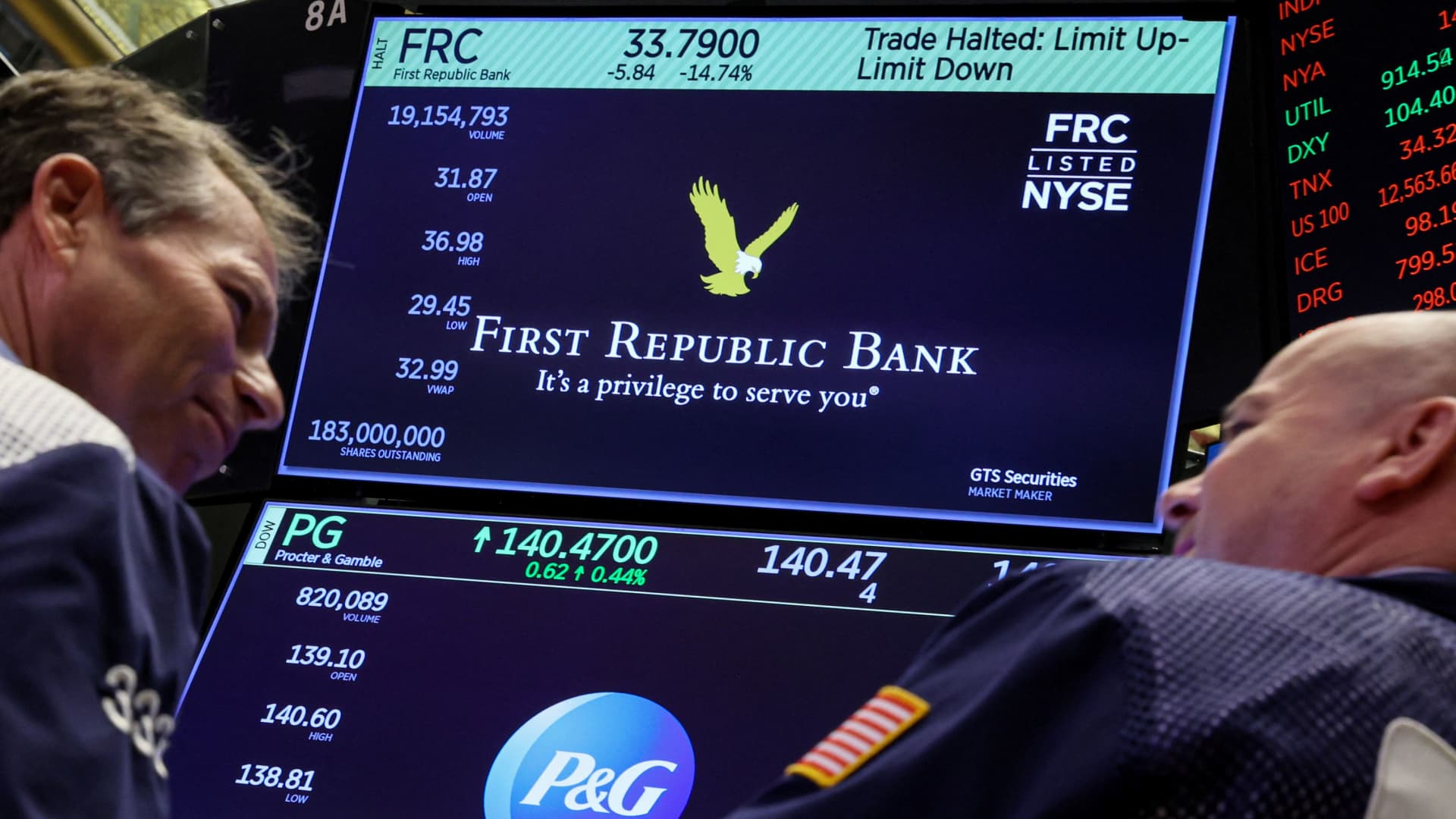
Shares of First Republic and other regional banks continue to fall, with First Republic dropping over 30% in morning trading. The collapse of Silicon Valley Bank has left investors concerned about other regional banks with similar balance sheet issues, such as high rates of uninsured deposits and bonds or loans with long maturities. Despite U.S. regulators' announcement of additional support, fears of more bank failures and potential increased regulation continue to hurt regional bank stocks. Credit Suisse's struggles also add to concerns about the global banking system, but appear to be unrelated to the issues facing U.S. regional banks.

First Republic Bank faces credit downgrade and deposit concerns, causing stock to tumble.
business2 years ago

First Republic Bank faces credit downgrade and deposit concerns, causing stock to tumble.

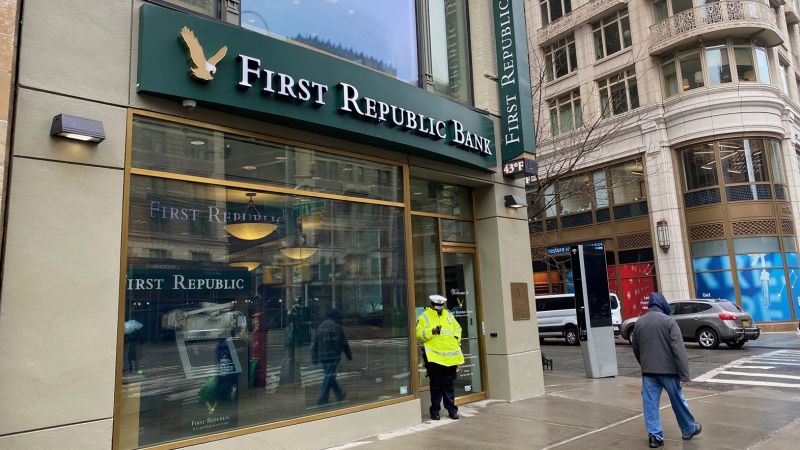
First Republic Bank's credit rating was downgraded by Fitch Ratings and S&P Global Ratings due to concerns about potential deposit outflows despite federal intervention. The bank's shares tumbled 16% in midday trading. Both credit ratings firms pointed to the large amount of uninsured deposits at First Republic, which has a high concentration of deposits among wealth clients in coastal markets in the United States.