Recent research suggests that the relationship between ultraviolet and X-ray emissions in quasars has changed over billions of years, challenging long-held assumptions about the uniformity of matter surrounding supermassive black holes and impacting methods used to study the universe's structure and evolution.
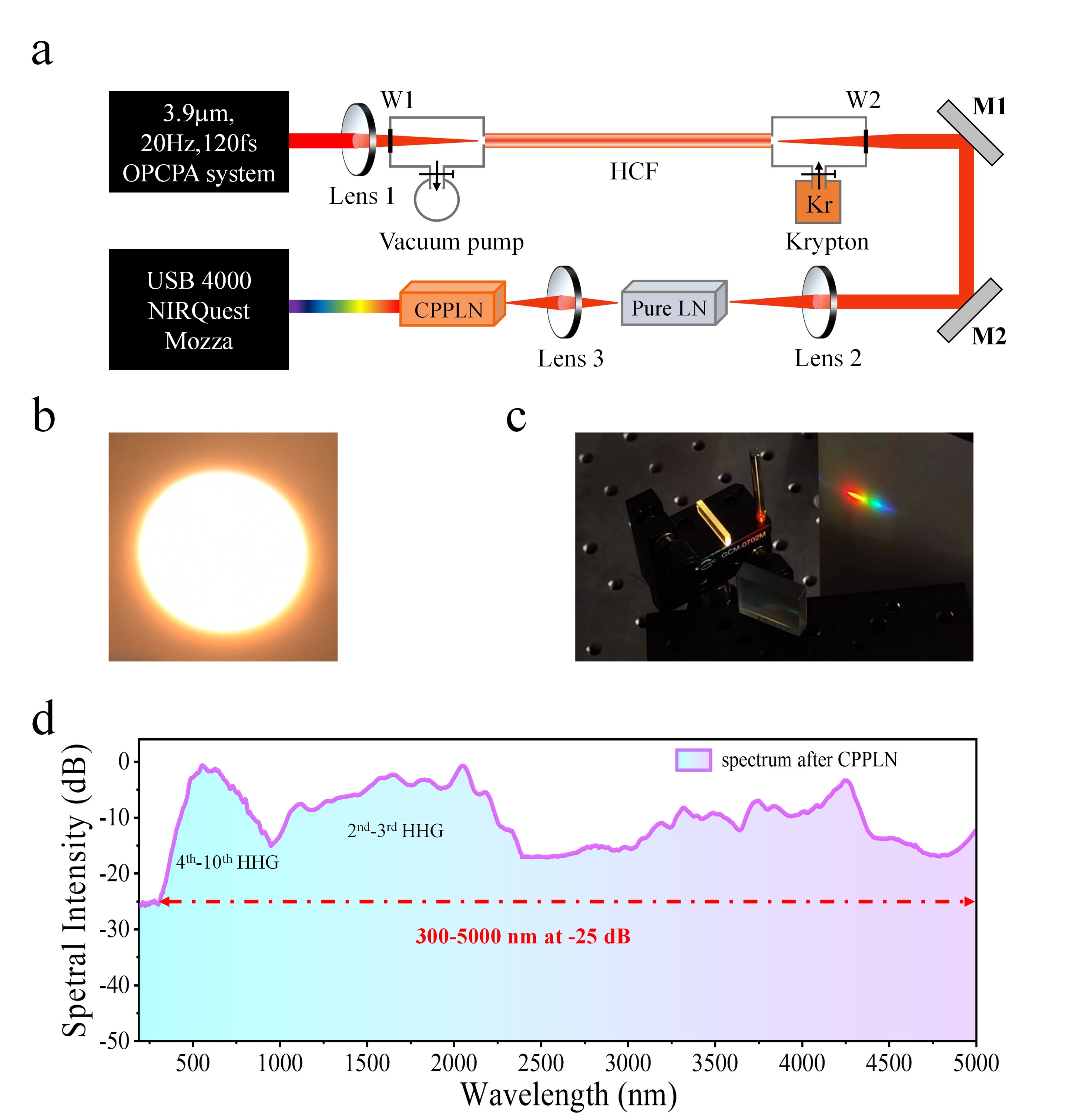
Scientists have developed a cascaded architecture of gas-filled hollow-core fiber, a lithium niobate crystal plate, and a specially designed chirped periodically poled lithium niobate crystal to generate an intense four-octave-spanning ultraviolet-visible-infrared (UV-Vis-IR) full-spectrum laser. By harnessing the synergic action of second-order nonlinear (2nd-NL) high harmonic generation (HHG) and third-order nonlinear (3rd-NL) self-phase modulation (SPM) effects, the laser achieves an extremely large bandwidth, high-flatness spectral profile, and large pulse energy. This breakthrough could have applications in optical spectroscopy, physics, chemistry, biology, materials science, information technology, industrial processing, and environmental monitoring.
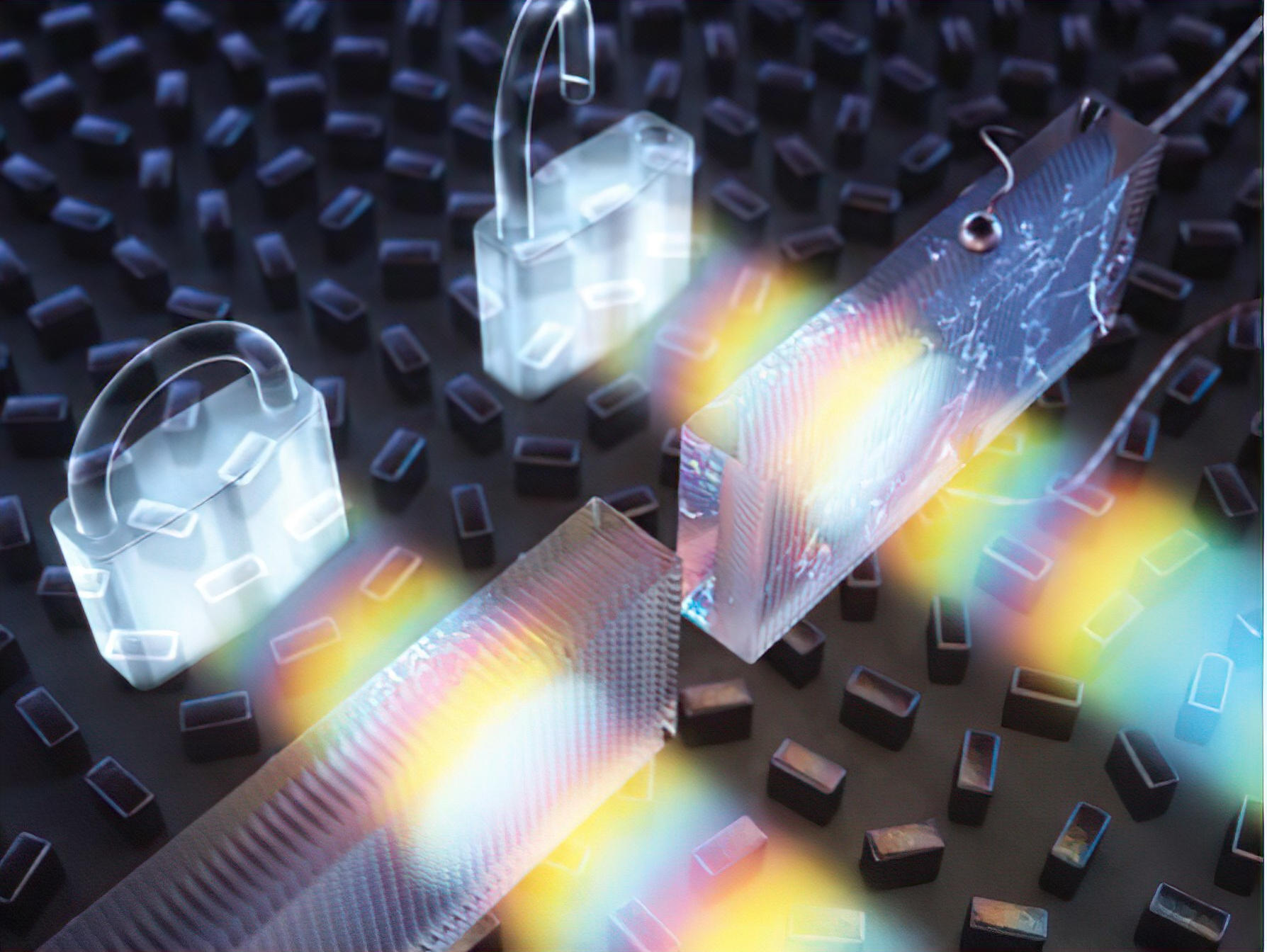
Researchers at Pohang University of Science and Technology have developed a method for generating meta-holograms in both the visible and ultraviolet spectral regions, overcoming prior limitations. They also devised a way to encode two distinct holographic phase profiles onto a single metasurface, leveraging polarization characteristics and liquid crystal, leading to potential applications in security technologies such as anti-counterfeiting measures, identifications, and passports.