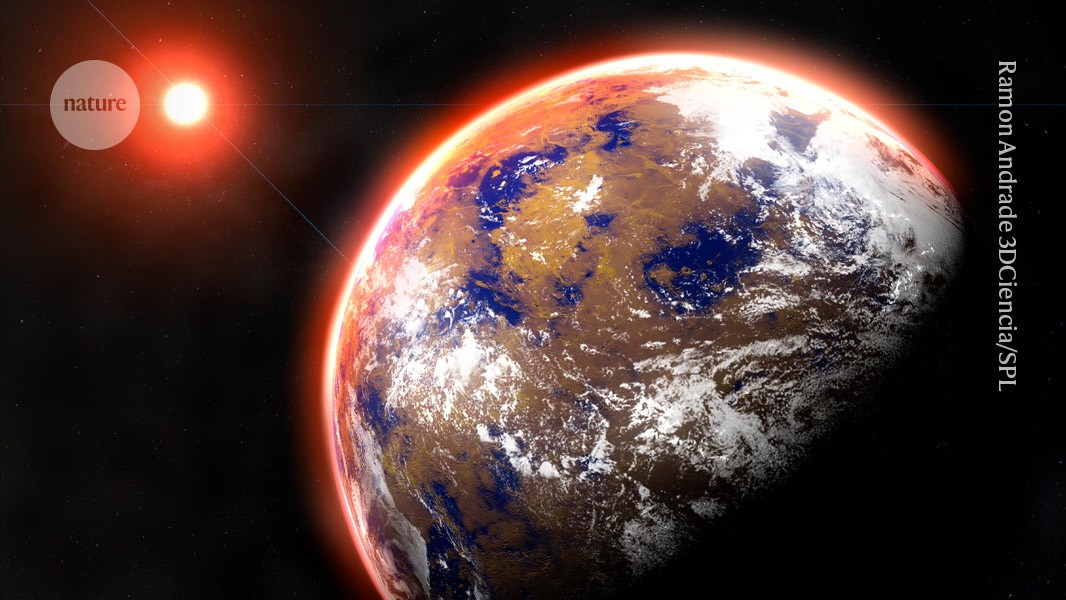
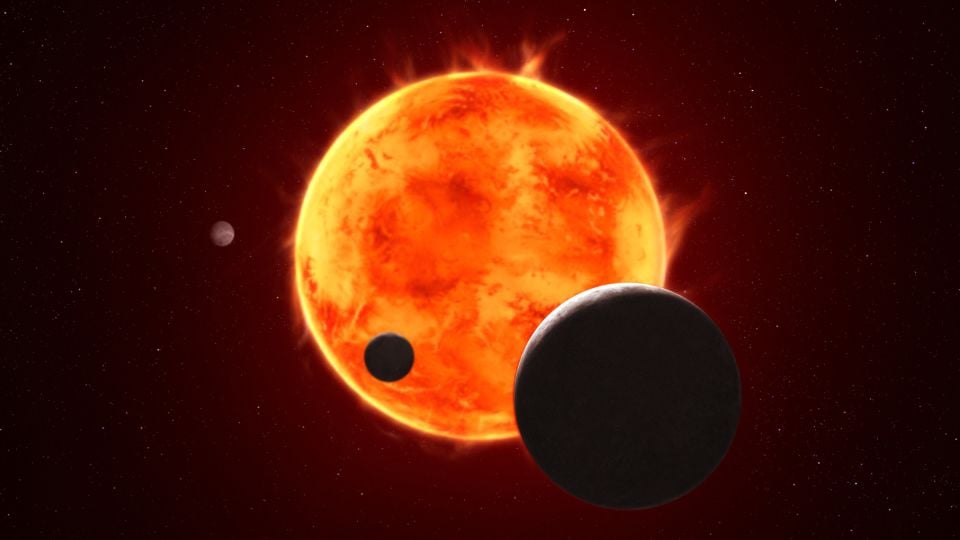
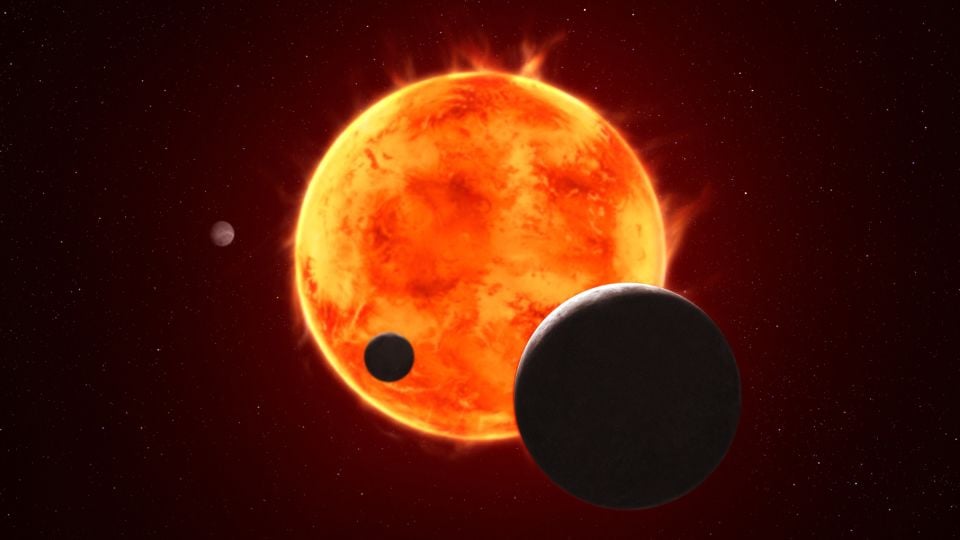
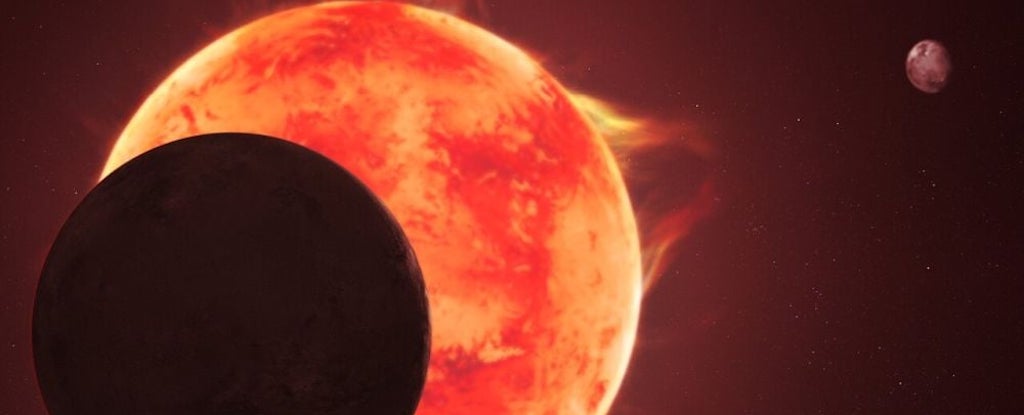
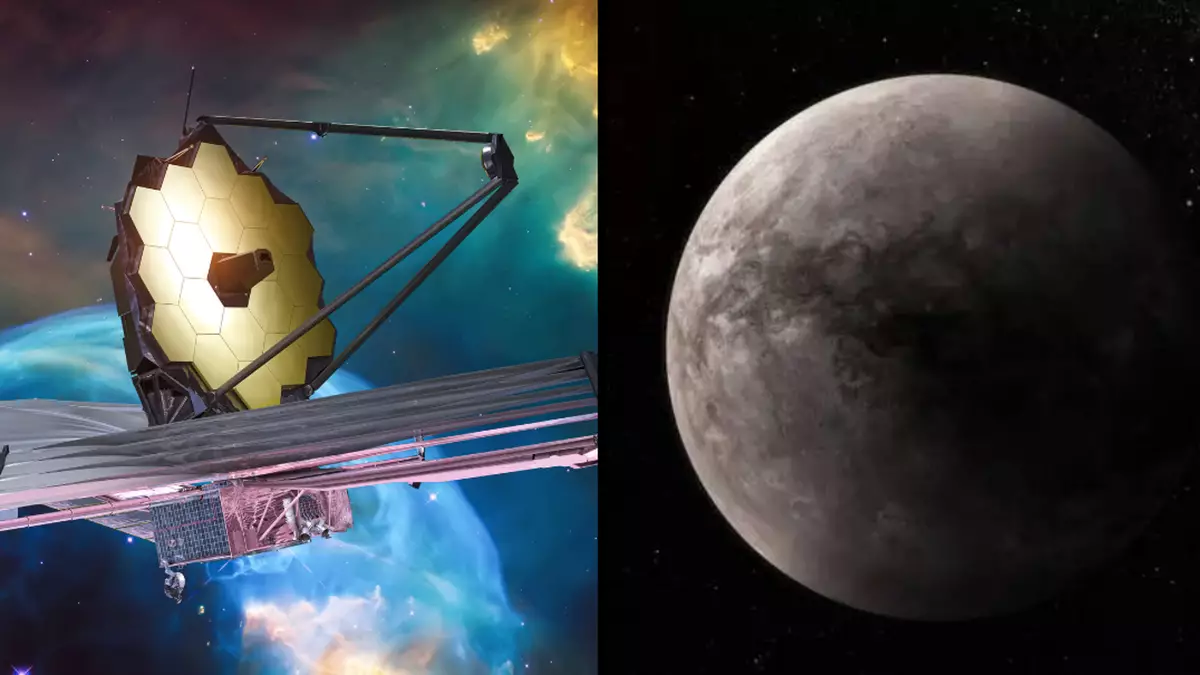
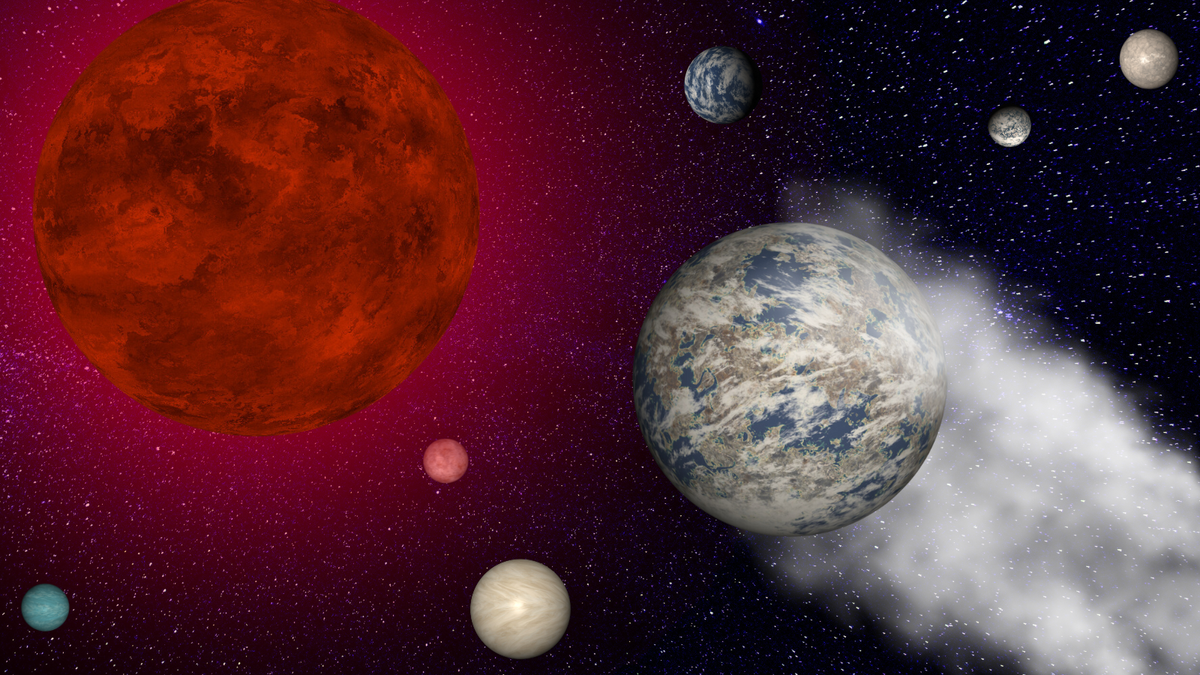
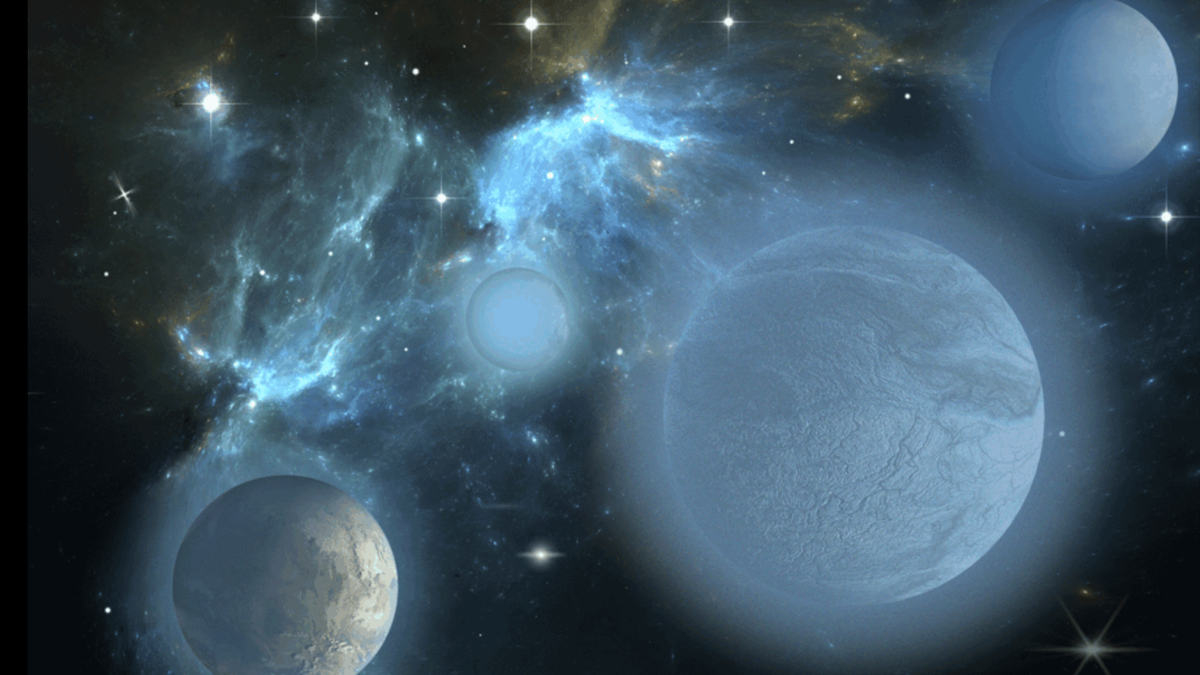
Astronomers favor several exoplanets like Proxima Centauri, TRAPPIST-1, and K2-138 for their unique features and potential habitability, highlighting the diversity and ongoing discovery of alien worlds beyond our Solar System.
Astronomers are close to confirming whether the Earth-sized exoplanet TRAPPIST-1 e, located 40 light-years away, has an atmosphere capable of supporting liquid water, using observations from the James Webb Space Telescope. Preliminary data suggest it may have a nitrogen-heavy atmosphere similar to Earth, making it a prime candidate in the search for habitable worlds beyond our solar system.
Astronomers are close to confirming whether the exoplanet TRAPPIST-1 e, located 40 light-years away, has an Earth-like atmosphere, which could indicate potential habitability, with upcoming Webb telescope observations expected to provide more definitive answers.
Astronomers are close to confirming whether the exoplanet TRAPPIST-1 e, located 40 light-years away, has an Earth-like atmosphere, using observations from the James Webb Space Telescope. Preliminary data suggest it may have a nitrogen-heavy atmosphere, similar to Earth, and could potentially support liquid water, making it a prime candidate in the search for habitable worlds beyond our solar system.
Astronomers are close to confirming whether the exoplanet TRAPPIST-1 e, located 40 light-years away, has an Earth-like atmosphere, using observations from the James Webb Space Telescope. Preliminary data suggest it may have a nitrogen-heavy atmosphere, similar to Earth, and could potentially support liquid water, making it a prime candidate in the search for habitable worlds beyond our solar system.
Scientists using NASA's James Webb Space Telescope have found evidence suggesting that the exoplanet TRAPPIST-1e, located 40 light-years away, may have an Earth-like, nitrogen-rich atmosphere, raising the possibility that it could support liquid water and life. This discovery marks a significant step in the search for extraterrestrial life, although further studies are needed to confirm the atmosphere's composition.
Recent observations from the James Webb Space Telescope show that TRAPPIST-1 d lacks an Earth-like atmosphere, ruling it out as a potentially habitable planet, although the outer planets in the system may still possess thick atmospheres and water. This finding highlights the challenges of habitability around red dwarf stars and advances our understanding of exoplanet atmospheres.
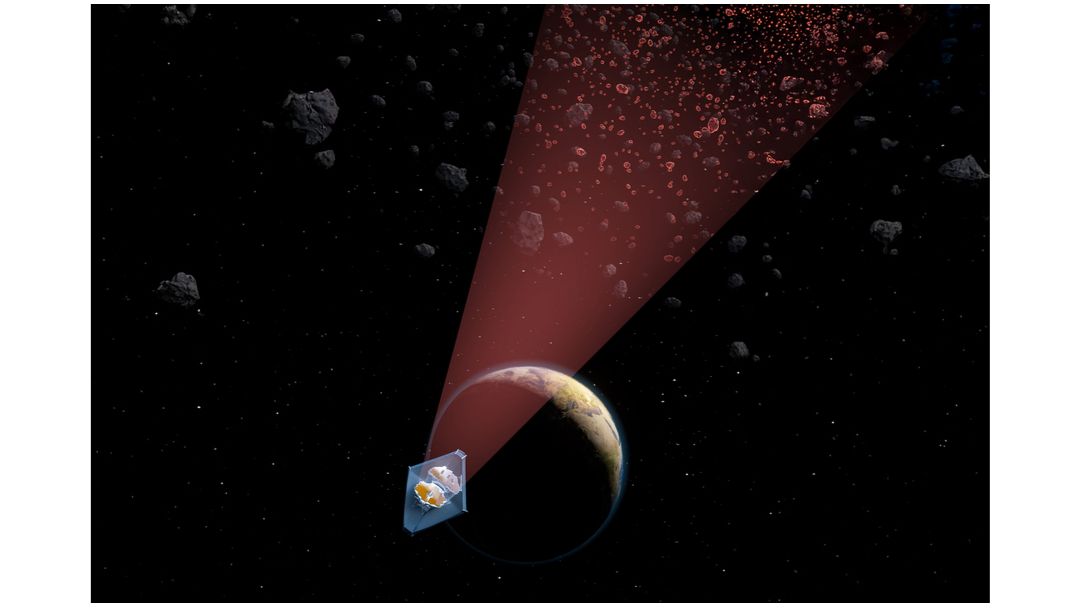
Astronomers using the James Webb Space Telescope have identified the smallest asteroids ever seen in the main belt between Mars and Jupiter, including a 33-foot-wide asteroid. This discovery, made by analyzing data originally intended for exoplanet research, allows for more precise tracking of small asteroids, which are potential threats to Earth. The team identified 138 previously undiscovered small asteroids, highlighting a new population regime formed through collisions. This advancement in detection is crucial for planetary defense.
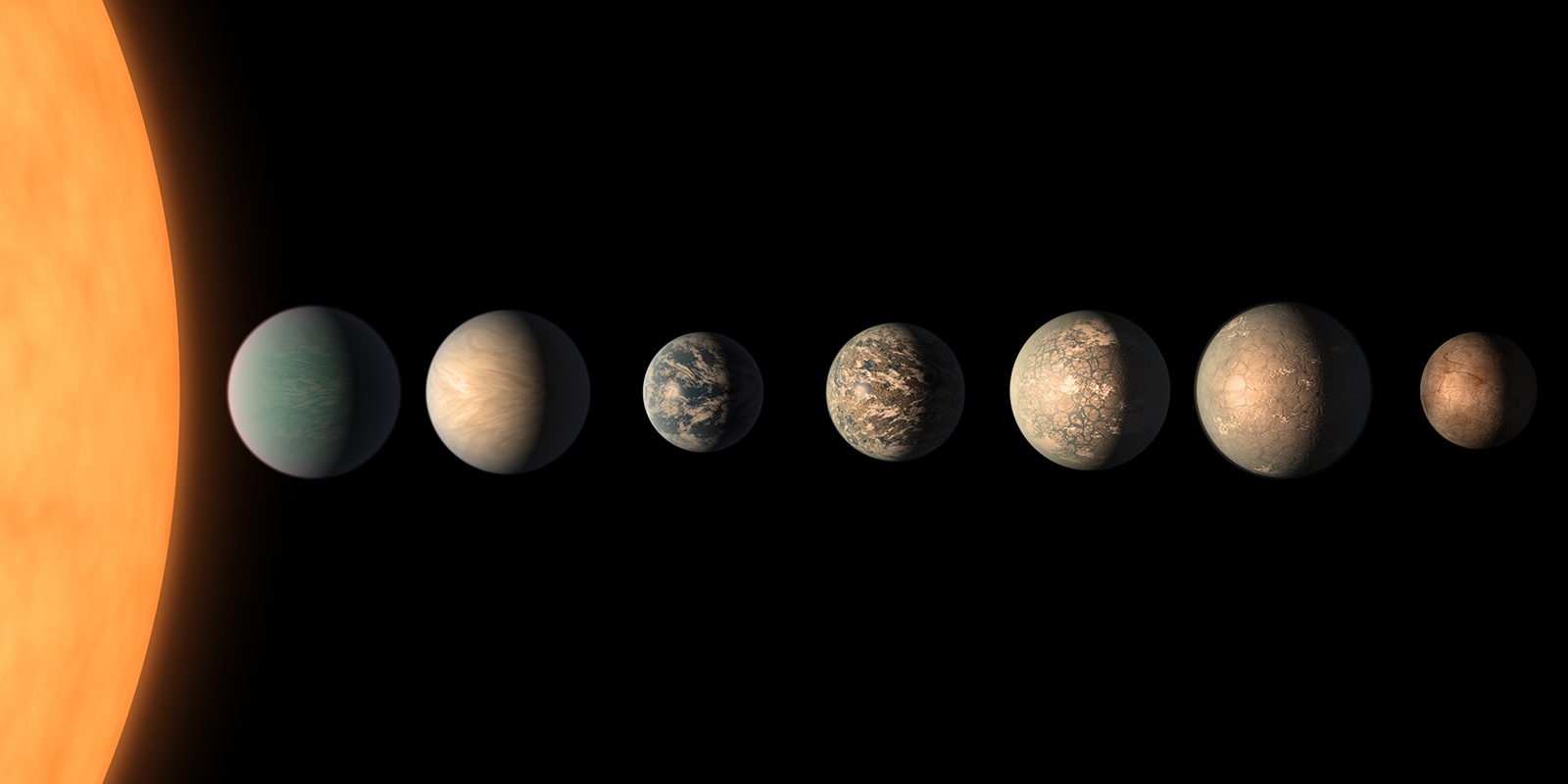
The James Webb Space Telescope (JWST) is on the brink of potentially detecting signs of life outside our solar system by 2025. Since its launch in 2021, the JWST has observed rocky exoplanets in the habitable zone of the TRAPPIST-1 star system, 40 light-years away. The telescope's next challenge is to identify molecular signatures in these planets' atmospheres, which could indicate the presence of life. Additionally, the JWST has detected possible signs of carbon dioxide and methane on K2-18b, a gas giant with a water ocean, suggesting diverse possibilities for extraterrestrial life.
NASA's James Webb Space Telescope has made a groundbreaking discovery by detecting infrared light emitted from an Earth-like planet, TRAPPIST-1 b, located 40.7 light-years away. This marks the first time light has been detected from a planet outside our solar system. While the planet's Earth-like composition is promising, it lacks an atmosphere and has extreme temperatures, making it unsuitable for life. However, the discovery paves the way for further exploration of exoplanets and the search for conditions conducive to supporting life.
"Deep Sky" is an IMAX presentation directed by Nathaniel Kahn and narrated by Michelle Williams, showcasing the groundbreaking images captured by NASA's James Webb Space Telescope. The film takes audiences on a monumental journey through the cosmos, chronicling the mission behind the telescope and immersing viewers in the beauty and scale of the universe. It explores the TRAPPIST-1 star system and the potential for discovering extraterrestrial life, inviting audiences to ponder humanity's place in the cosmos and leaving them with a newfound curiosity about the universe.
Scientists have discovered that Trappist-1e, a potentially habitable exoplanet, is having its atmosphere stripped by electric currents created as it orbits its red dwarf host star, rendering it inhospitable to life. This phenomenon could also be impacting the atmospheres of other planets in the habitable zone of the Trappist-1 system, making it challenging to find life there. The stripping is caused by the planet's rapid motion around the star, driving powerful ionospheric currents that dissipate and create extreme heating, leading to the potential loss of its atmosphere over millions of years. This research has implications for understanding habitable exoplanets and identifying stars conducive to hosting planets with atmospheres.
A new study suggests that the Trappist-1 system's planets are likely barren and stripped of their atmospheres, making the existence of life in the system unlikely. The study indicates that the intense radiation from the system's red dwarf star has likely caused the planets to lose their atmospheres at a rapid rate, rendering them warm, dry rocks. This finding has significant implications for the potential habitability of planets orbiting red dwarf stars, which make up a large portion of the stars in our galaxy.
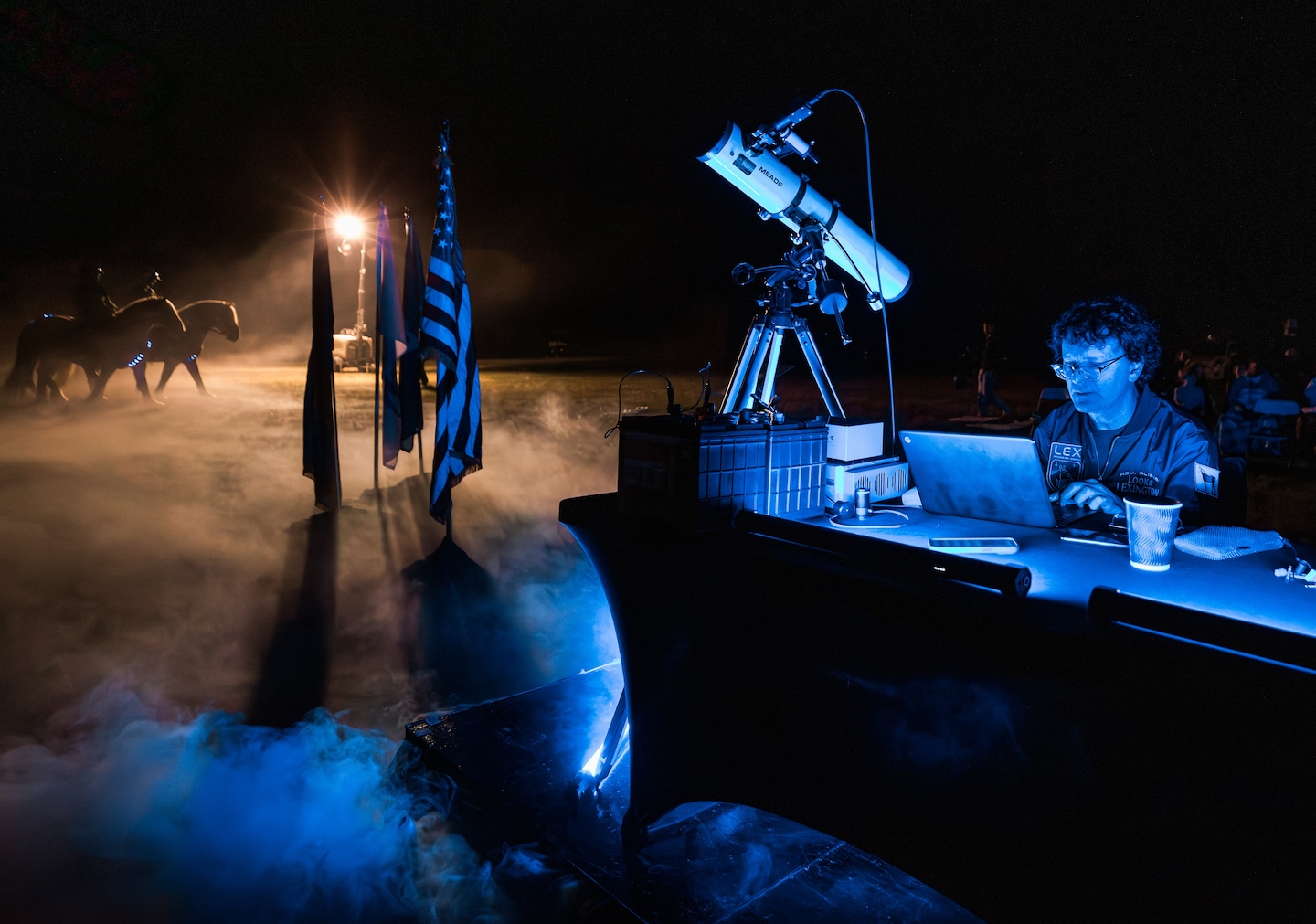
The Lexington Convention and Visitors Bureau beamed an interstellar travel advertisement into space in late October, inviting aliens to visit Lexington, Kentucky, in a bid to attract more Earthly visitors. The message, transmitted using a powerful laser aimed at the TRAPPIST-1 star system, included symbols representing prime numbers, chemical symbols for water and ethanol, and images of Lexington's iconic bluegrass landscape. While the chances of achieving first contact are slim, experts praised the project's emulation of the 1974 Arecibo message and noted that TRAPPIST-1 is considered a promising target for potential extraterrestrial life.
Scientists propose using the James Webb Space Telescope (JWST) to detect "carbon-lite" atmospheres on exoplanets as an indicator of liquid water and potential habitability. By comparing carbon dioxide levels in the atmospheres of planets within the same system, researchers can identify those with significant carbon depletion, suggesting active water cycles and possible oceans. Additionally, the presence of ozone could indicate not just habitability but also the existence of life. The TRAPPIST-1 system, with several Earth-like planets in the habitable zone, is a prime candidate for this research. The study, published in Nature Astronomy, offers a new roadmap for finding habitable and potentially inhabited exoplanets using JWST.