Tag

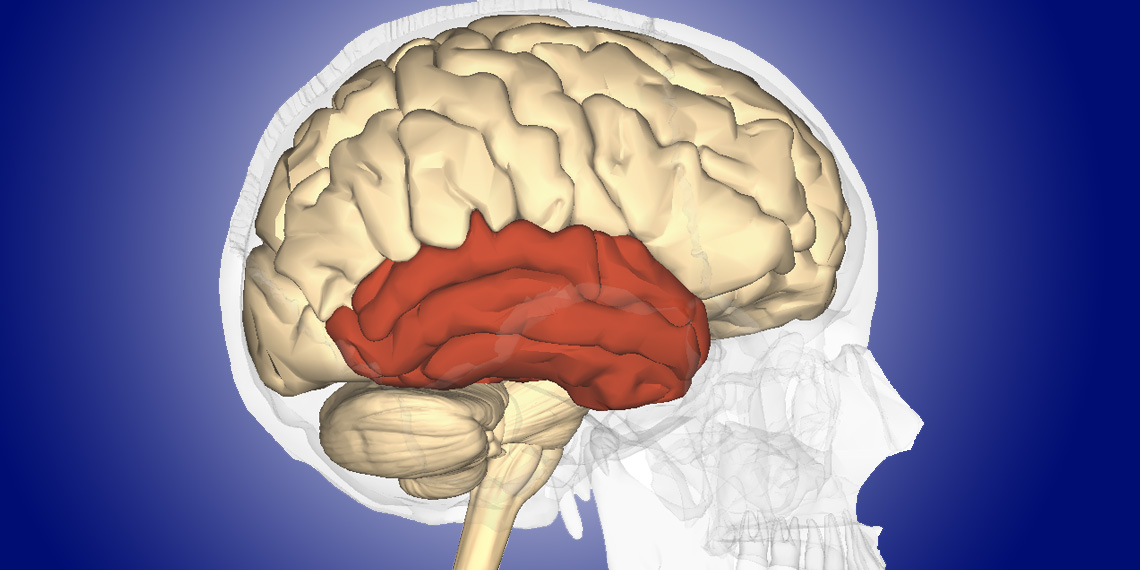
Temporal Lobe

All articles tagged with #temporal lobe

neuroscience2 years ago

Unveiling the Continual Brain Development in Early Childhood

A study conducted by researchers from the University of California, San Francisco and the University of Pittsburgh has found that the recruitment of neurons in the temporal lobe of young children is a protracted process. The study, which involved analyzing brain tissue samples from children aged 2 to 13, revealed that the recruitment of new neurons in this region continues well into late childhood. This finding challenges the previous belief that neuronal recruitment in the temporal lobe is largely completed during early development and highlights the importance of studying brain development in older children.

neuroscience2 years ago

The Intricate Relationship Between Music, Language, and the Brain

A study conducted at UTHealth Houston using direct brain recordings during an awake craniotomy on a young musician revealed shared temporal lobe activity for both music and language. However, when complexity increased in melodies or grammar, different brain regions showed distinct sensitivities. The posterior superior temporal gyrus (pSTG) was found to be crucial for both music perception and production as well as speech production, with pSTG activity modulated by syntactic complexity, and posterior middle temporal gyrus (pMTG) activity modulated by musical complexity. This research provides insights into how small parts assemble into larger structures in the neurobiology of music and language.

neuroscience2 years ago

Charlie Chaplin helps scientists understand humor processing.

Researchers used intracranial recordings to study the neural mechanisms underlying humor processing and found that high-frequency brain waves increased during the funniest scenes in a Charlie Chaplin clip. The study revealed consistent involvement of the anterior temporal lobe, the temporo-parietal junction, and the temporal-occipital sulcus in humor processing. The findings support the idea that humor processing involves two complementary mechanisms: the detection of incongruity and the experience of positive emotions. The study provides insights into the neural correlates of humor processing and highlights the role of the temporal lobe in humor.

neuroscience2 years ago

The Neuroscience of Laughter: How Humor Affects the Brain

Researchers at Paris Brain Institute and Bar-Ilan University in Tel Aviv studied the neural substrates of humor by analyzing intracerebral electrophysiological recordings of epileptic patients watching physical comedy clips from Charlie Chaplin. The study found that high-frequency neural activity, associated with tasks requiring substantial cognitive engagement, was a marker for humor appreciation. The study confirmed the prominent role of the temporal lobe in humor appreciation, suggesting the area’s anterior parts are linked to analyzing scenes and detecting incongruous content. The study only examined responses to slapstick humor, and researchers intend to explore other forms of humor in future studies to understand this unique human phenomenon better.

neuroscience2 years ago

Temporal lobe neural circuits linked to insomnia in depression

A neuroimaging study has found that people with depression and insomnia have higher resting-state functional connectivity in the superior temporal gyrus region of the brain on both sides. This type of connectivity was decreased in the left supplementary motor area and bilateral postcentral gyrus regions of the brain. The study gives an important contribution to the scientific understanding of neural correlates of insomnia in people with depression.

neuroscience2 years ago

Mapping the Brain's Social Perception Network.

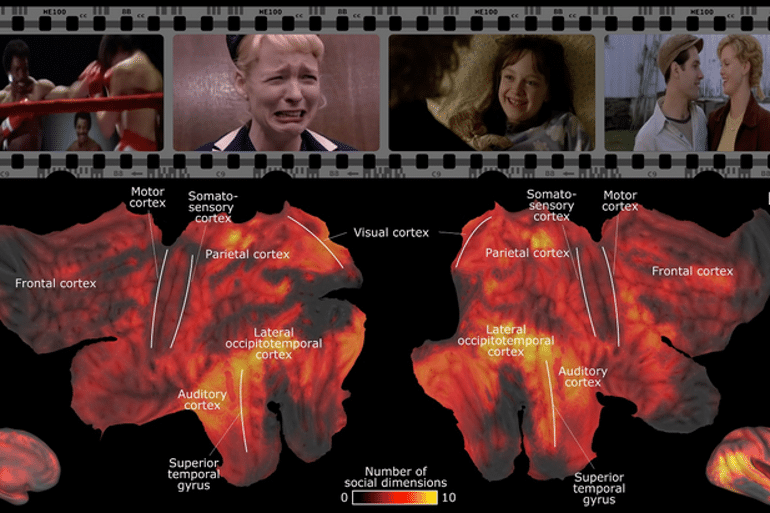
Researchers at the University of Turku have discovered an extensive neural network in the human brain that processes various social information. The social perceptual world of humans consists of a limited set of main dimensions, such as antisocial behavior, sexual or affiliative behavior, and communication, which are processed in various brain regions located mainly in the occipital and temporal lobes. Brain activity in these regions is synchronized between different individuals when they watch movies depicting social situations, meaning that the processing of information is, on average, similar between different individuals.

neuroscience2 years ago

Dual Brain Networks Engaged in Reading Process.

Two distinct brain networks in the frontal and temporal lobes work together to integrate the meaning of words and obtain higher-order meaning when reading. Researchers used implanted electrodes in the brains of patients to identify the specific roles and interactions of the brain areas involved in reading. Understanding the science behind the complex process of reading could help guide treatment options for dyslexia, which affects approximately 15% of people living in the U.S.

neuroscience2 years ago

Decoding Our Daily Surroundings: Insights from Brain Scans.

A new study has revealed the neural mechanisms behind how we process and memorize everyday events. Researchers used functional MRI scanners to monitor the brains of subjects watching short videos of scenes that could have come from real life. The study suggests that the brain makes mental sketches of people that can be transposed from one location to another, much like an animator can copy and paste a character into different scenes. The more one can bring neural patterns back online while describing an event, the better the overall memory.