Tag

Taste Perception

All articles tagged with #taste perception

neuroscience1 year ago

Unraveling the Mechanisms of Bitter Taste Perception

A recent study has revealed the detailed structure of the TAS2R14 bitter taste receptor, shedding light on how bitter tastes are perceived and potentially paving the way for treatments targeting taste receptors to address conditions like obesity and diabetes. The study also uncovered the role of cholesterol in facilitating the activation of TAS2R14, suggesting implications for metabolic regulation. This research offers exciting possibilities for drug development and provides insights into the receptor's functions beyond taste perception, with potential relevance to metabolic diseases.

health2 years ago

Study Debunks Appeal of Ultra-Processed Foods

A study conducted by the University of Bristol challenges the assumption that ultra-processed foods (UPFs) are more appealing than less processed foods. The research found that, on average, UPFs were no more liked or desired than processed or unprocessed foods. The study suggests that taste intensity, carbohydrate-to-fat ratio, and food fiber content play a significant role in food preferences. The findings highlight the importance of considering factors beyond processing levels when assessing the appeal of different food types. The consumption of UPFs has been linked to various health risks, including weight gain, heart disease, and an increased risk of cancer.

neuroscience2 years ago

The Power of Taste: How it Controls Your Appetite

A new study challenges the traditional understanding of appetite control, revealing that taste perception, rather than signals from the stomach, primarily regulates eating behavior. Neurons in the brainstem respond quickly to taste signals to control food intake, highlighting the complex interplay between taste and brain signals in managing eating behavior. This discovery could have implications for the development of more effective weight-loss drugs and treatments.

neuroscience2 years ago

"Breakthrough: Unveiling the Brain Circuit Behind Salt Aversion"

Scientists at Caltech have discovered a neural circuit in the mouse brain that regulates aversion to salty tastes. While previous research identified the brain circuit responsible for salt cravings, this new study reveals a separate circuit that enables mice to tolerate high levels of salt that would typically be aversive. These tolerance neurons, located in the forebrain, function independently from the salt-appetite neurons in the hindbrain. The activity of the tolerance neurons is modulated by the hormone prostaglandin E2 (PGE2), suggesting a link between inflammation and sodium intake. Understanding these circuits could provide insights into how the body maintains sodium balance and the interplay between sodium levels and inflammation.

health2 years ago

Unraveling the Genetic Code of Taste and Inflammation

A study conducted by researchers at the Monell Chemical Senses Center explores the relationship between taste perception and immune function, specifically focusing on the bitter taste experienced during illness. The study found that inflammation increases aversion to bitter tastes, and this change is influenced by epigenetic mechanisms in taste cells. The findings have potential implications for understanding lingering bitter tastes and designing better bitter blockers for medications.

neuroscience2 years ago

Decoding the Brain's Taste Pathways.

A research project funded by the National Institutes of Health aims to better understand how the brain processes taste and how those neural pathways can evolve. Taste is a complex neurological experience that triggers a range of neural activities, such as the pleasure derived from tasting something sweet, but our understanding of its role in guiding eating behavior and its functioning within the brain remains incomplete. By exploring the interplay between taste and touch, and the emotional responses they elicit, this five-year project hopes to shed light on fundamental principles of brain organization, potentially leading to health and disease insights.

neuroscience2 years ago

The Surprising Sweetness of Salt

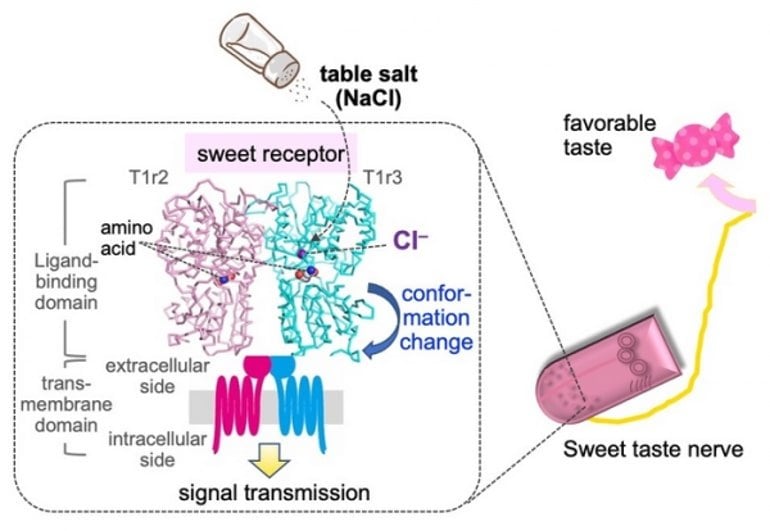
Researchers from Okayama University have discovered that chloride ions play a role in taste perception by binding to sweet taste receptors, potentially producing a light sweet taste sensation. The study found that low concentrations of chloride ions could activate neurons involved in signaling sweet taste in mice models. The findings suggest that chloride ions influence salt-taste sensation and may help maintain homeostasis and balance salt levels in the body.

neuroscience2 years ago

The Surprising Sweetness of Salt

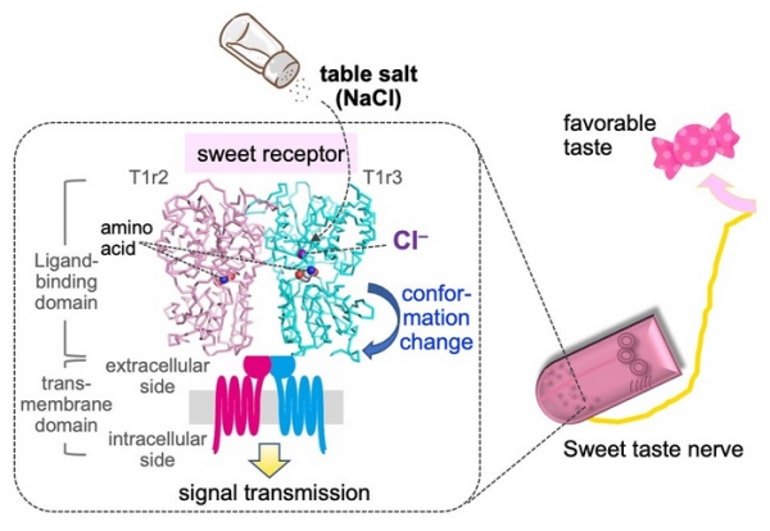
Researchers from Okayama University have discovered that chloride ions play a role in taste perception by binding to sweet taste receptors, potentially producing a light sweet taste sensation. The study found that low concentrations of chloride ions could activate neurons involved in signaling sweet taste in mice models. The findings suggest that chloride ions influence salt-taste sensation and may help maintain homeostasis and balance salt levels in the body.