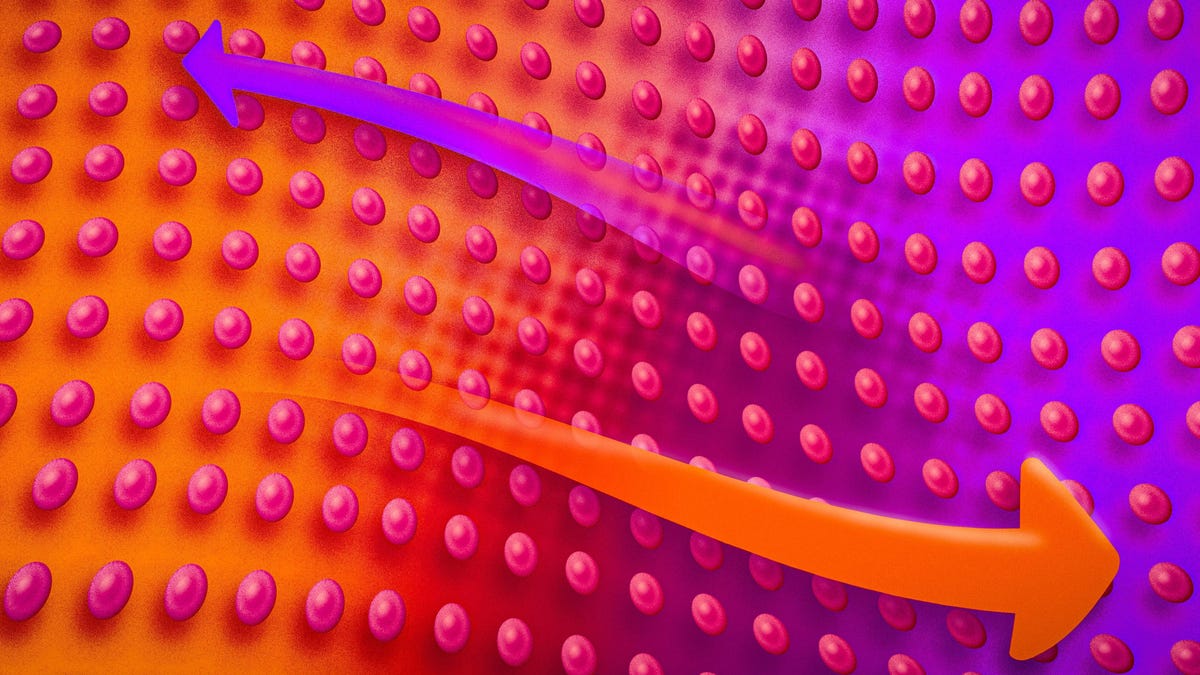
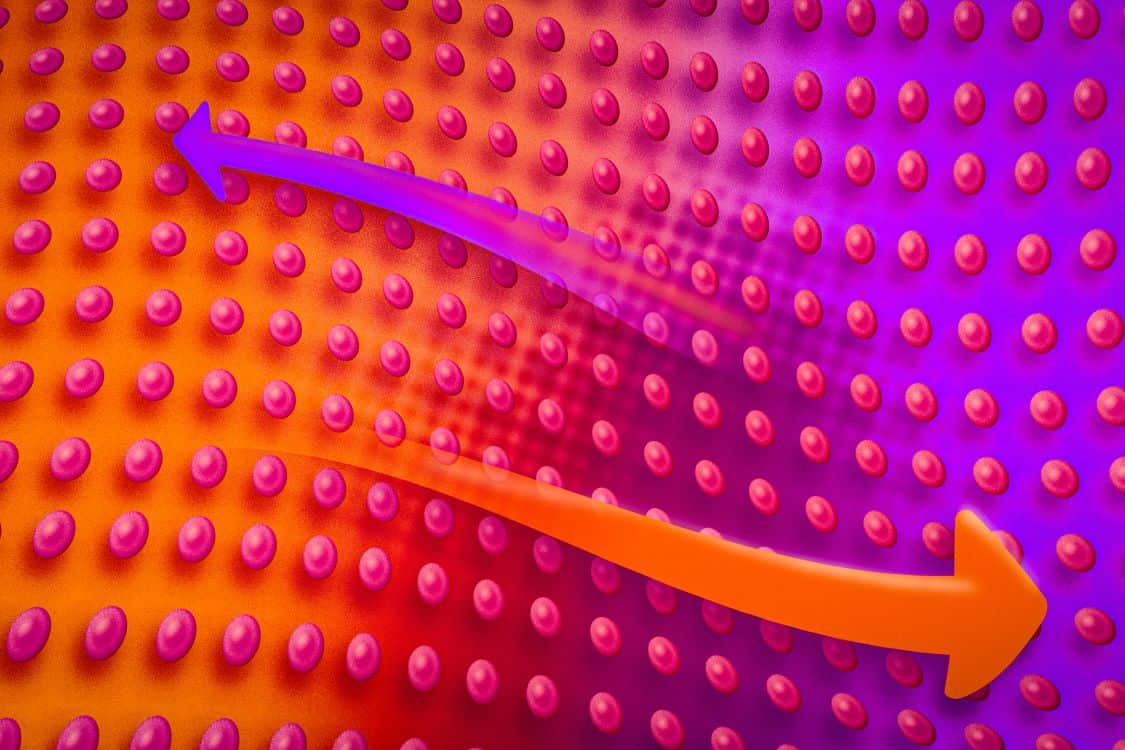
MIT physicists have captured direct images of "second sound," the movement of heat sloshing back and forth within a superfluid, for the first time. This breakthrough will expand scientists' understanding of heat flow in superconductors and neutron stars, and could lead to better-designed systems. The team visualized second sound in a superfluid by developing a new method of thermography using radio frequency to track heat's pure motion, independent of the physical motion of fermions. The findings will help physicists get a more complete picture of how heat moves through superfluids and other related materials.

Scientists at MIT have successfully captured the movement of pure heat, known as "second sound," in exotic superfluid quantum gases using a new method of thermography. This behavior, where heat propagates as a wave instead of spreading out, has been observed before but never imaged. The study, published in the journal Science, utilized a novel technique involving radio frequencies to track subatomic particles and capture the second sound in action. Understanding the properties of second-wave movement in superfluids could have implications for high-temperature superconductors and the physics of neutron stars.
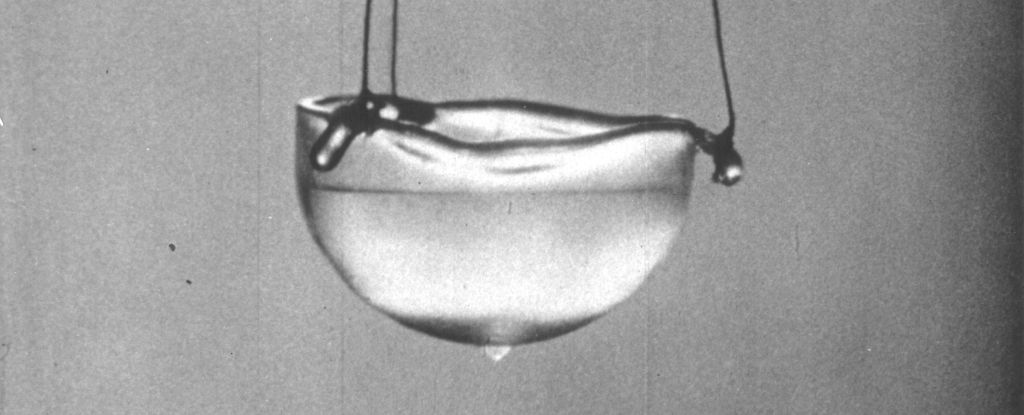
Physicists at MIT have captured images of the "second sound" of a superfluid, a state of matter that flows without friction at near absolute zero temperatures, which may explain how heat moves through certain rare materials on Earth and in space. By observing the wave-like motion of heat in a supercooled lithium fermion superfluid, the researchers were able to directly see the transition from a normal fluid to a superfluid. This breakthrough could lead to a better understanding of heat flow in high-temperature superconductors and neutron stars, potentially aiding in the development of room-temperature superconductors.
Physicists in the US have developed a new technique for monitoring "second sound," a peculiar heat wave that occurs in superfluids, which could help model various poorly understood systems. The technique involves imaging heat flow in a strongly interacting Fermi gas composed of ultracold lithium-6 atoms, providing direct measurements of heat transfer and anomalous behavior at critical temperatures. This research has implications for high-temperature superconductors, neutron stars, and other systems, and the new technique is expected to be applied in systems where the whole system is far from equilibrium.
Physicists at MIT have captured direct images of a phenomenon known as "second sound," where heat behaves like a wave, bouncing back and forth like sound, in a superfluid state of matter. The images show how heat can move independently of the material's physical matter, creating oscillations similar to sound waves. This discovery could have implications for understanding heat transfer in exotic states of matter.
A team of astrophysicists and quantum physicists has made a breakthrough in understanding neutron star "glitches" by using ultracold dipolar atoms as a proxy to simulate neutron star behavior. The study suggests that these glitches, where the spins of neutron stars suddenly accelerate, may be caused by superfluid vortices carrying angular momentum to the star's surface. The research establishes a link between quantum mechanics and astrophysics, providing insights into the inner nature of neutron stars and paving the way for new avenues in quantum simulation.
Scientists have made a breakthrough in understanding the dynamics of neutron star "glitches" by studying an exotic form of matter on Earth. Neutron stars, which are incredibly dense and made almost exclusively of neutrons, experience glitches when tiny vortices of swirling inner material break the surface. By numerically simulating a neutron star using ultracold dipolar atoms, researchers found that these glitches may be caused by superfluid vortices carrying angular momentum to the star's surface. The study provides new insights into the behavior of neutron stars and opens avenues for quantum simulation of stellar objects in low-energy Earth laboratories.
Physicists have conducted an experiment using a finger-sized probe to study the properties of a quantum superfluid, specifically helium-3. They discovered that the superfluid forms a two-dimensional layer on its surface that transports heat away from the probe, while the bulk of the superfluid remains passive and feels empty. This finding redefines our understanding of superfluid helium-3 and has implications for the study of collective matter states and quantum energy states. The research has the potential to transform our understanding of this macroscopic quantum system.
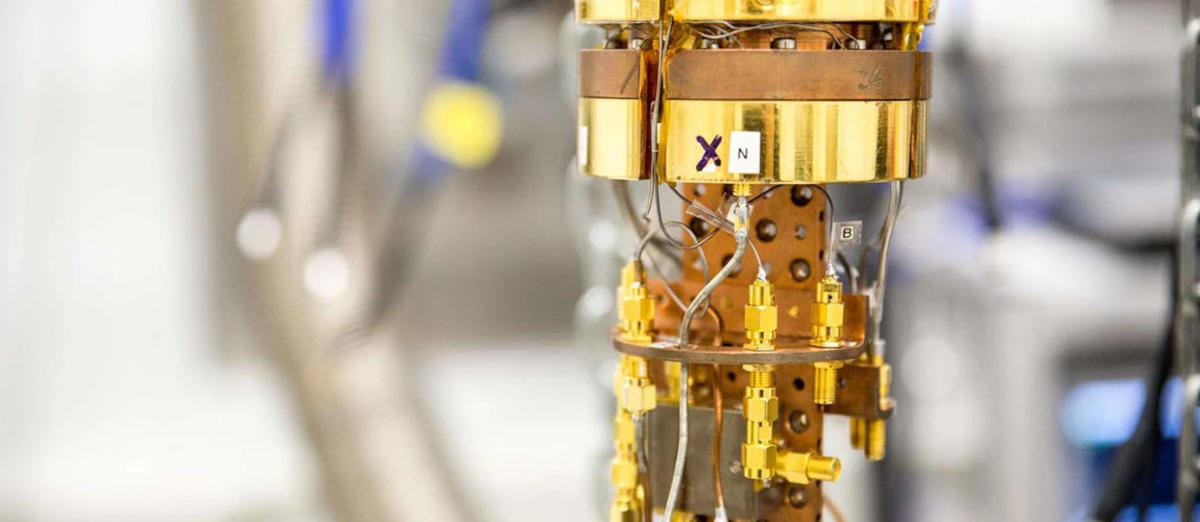
Researchers from Lancaster University and Aalto University have demonstrated the dissipation of energy in quantum turbulence, providing insights into turbulence across various scales. The team's findings demonstrate a new understanding of how wave-like motion transfers energy from macroscopic to microscopic length scales, and their results confirm a theoretical prediction about how the energy is dissipated at small scales. The discovery could become a cornerstone of the physics of large quantum systems and could lead to improved engineering in domains where the flow and behaviour of fluids and gases like water and air is a key question.
Researchers at Aalto University have studied turbulence in the Helium-3 isotope in a unique, rotating ultra-low temperature refrigerator and found that Kelvin waves act on individual vortices by continually pushing energy to smaller and smaller scales, ultimately leading to the scale at which dissipation of energy takes place. This new understanding of how wave-like motion transfers energy from macroscopic to microscopic length scales could lead to improved engineering in domains where the flow and behavior of fluids and gases like water and air is a key question.