A 1-minute video illustrates the movement of Earth's tectonic plates over the past 1.8 billion years, highlighting the formation and breakup of supercontinents, the dynamic nature of Earth's crust, and potential future tectonic shifts such as the formation of new supercontinents and the splitting of Africa.
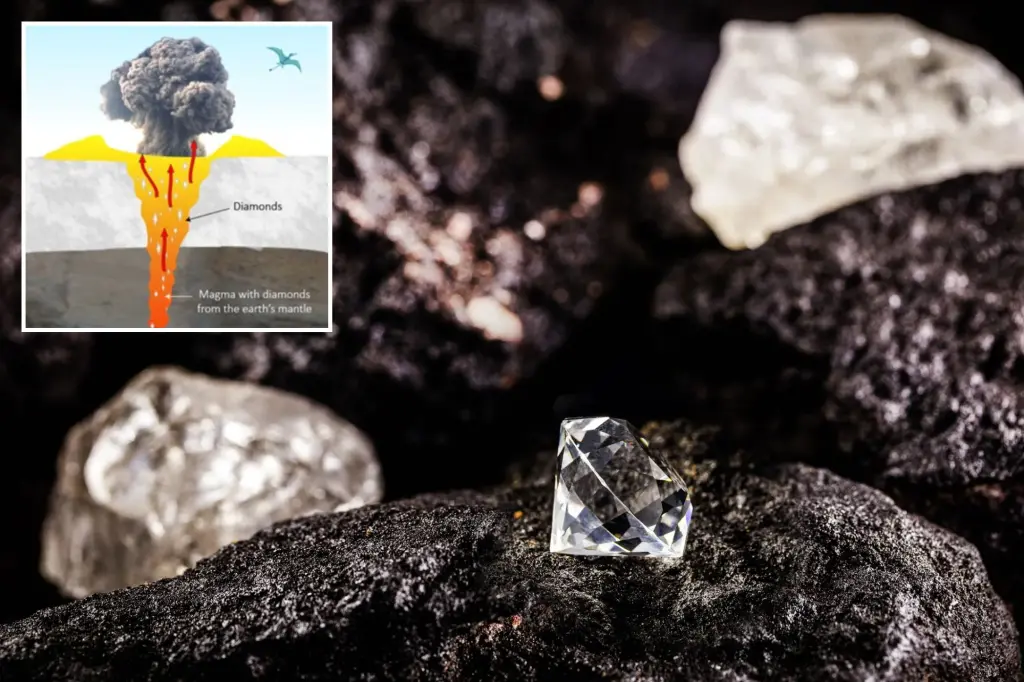
Diamonds that erupt from the Earth's center during supercontinent break-ups provide insights into the planet's deep history. These diamonds, found in formations known as kimberlites, originate from deep within the Earth and carry valuable information about supercontinent cycles. Recent studies suggest that the eruptions of these diamonds coincide with the breakup of supercontinents, shedding light on the movements of tectonic plates and the formation of diamonds. Additionally, the study of ancient diamonds may reveal crucial information about Earth's history, including the timing of supercontinent breakups and the influence of subduction processes on the planet's evolution.
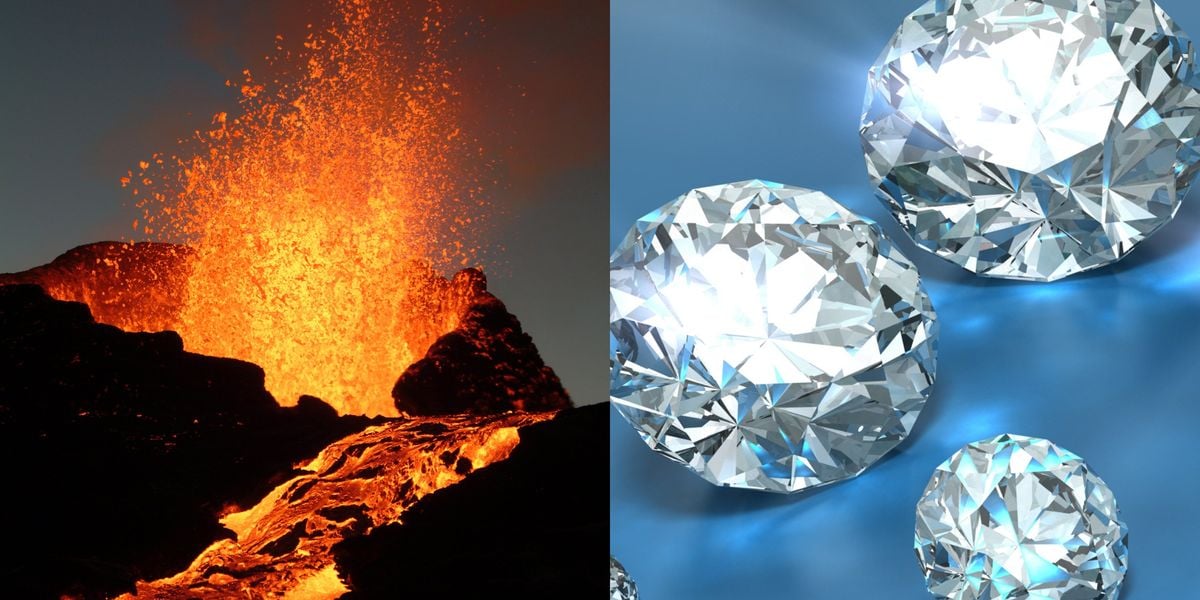
New research led by Thomas Gernon, a professor at the University of Southampton, suggests that the breakup of supercontinents can trigger 'fountains of diamonds' to erupt from deep within the Earth's core. Kimberlite eruptions, which propel diamonds upwards at speeds of up to 133 km/h, are found to occur roughly 22 to 30 million years after tectonic plates start to separate. This geological phenomenon is linked to the mixing of rock, water, and carbon dioxide with minerals like diamonds, creating explosive events that could potentially lead to the discovery of new diamond deposits. The study, published in Nature, provides insights into the timing and power of these eruptions, which have been depositing diamonds at the base of continents for hundreds of millions or even billions of years.
Ancient superdeep diamonds, formed between 650 and 450 million years ago beneath the supercontinent Gondwana, have provided valuable insights into the formation, stabilization, and movement of supercontinents. Analyzed by an international team, these diamonds act as durable records of the Earth's supercontinent cycles, revealing previously unknown geologic processes. By dating the inclusions inside the diamonds, the researchers traced how material was added to the base of Gondwana, contributing to the growth of the supercontinent. The diamonds also shed light on the early evolution of life on Earth and the unique characteristics of our planet.
Scientists have discovered that diamonds can be pushed to the Earth's surface during volcanic eruptions, particularly during kimberlite eruptions that occur when supercontinents break up. These eruptions, which can reach speeds of 11 to 83 mph, occur when tectonic plates shift and cause the base of the continental crust to thin, leading to explosive reactions. The eruptions typically happen 22 to 30 million years after the plates begin pulling apart. The findings may help locate previously unknown diamond deposits and provide insights into the Earth's interior.
Scientists have discovered a pattern in which diamonds explode from deep within the Earth's surface in volcanic "fountains" during significant disruptions among tectonic plates. These eruptions, called kimberlites, occur most frequently during the break-up of supercontinents. The break-up of supercontinents, such as Pangaea, triggers powerful and explosive diamond eruptions. Researchers have identified a pattern over the last 500 million years, where tectonic plates start to pull apart and kimberlite eruptions peak 22 to 33 million years later. The findings could aid in the search for undiscovered diamond deposits and explain why other volcanic eruptions occur long after supercontinent break-ups.
Scientists have discovered that the violent eruptions of diamonds to the Earth's surface are more likely to occur after continents break up, according to a new study. These eruptions, which have long puzzled researchers, are believed to be triggered by the breakup of supercontinents. The findings could aid miners in locating new diamond deposits. The eruptions are caused by a "domino effect" that pushes the diamond-rich magma closer to the center of continents as the Earth's crust is stretched and thinned during continental breakup. Understanding this process could also shed light on the interaction between the Earth's interior and its surface, including its impact on the environment and climate.
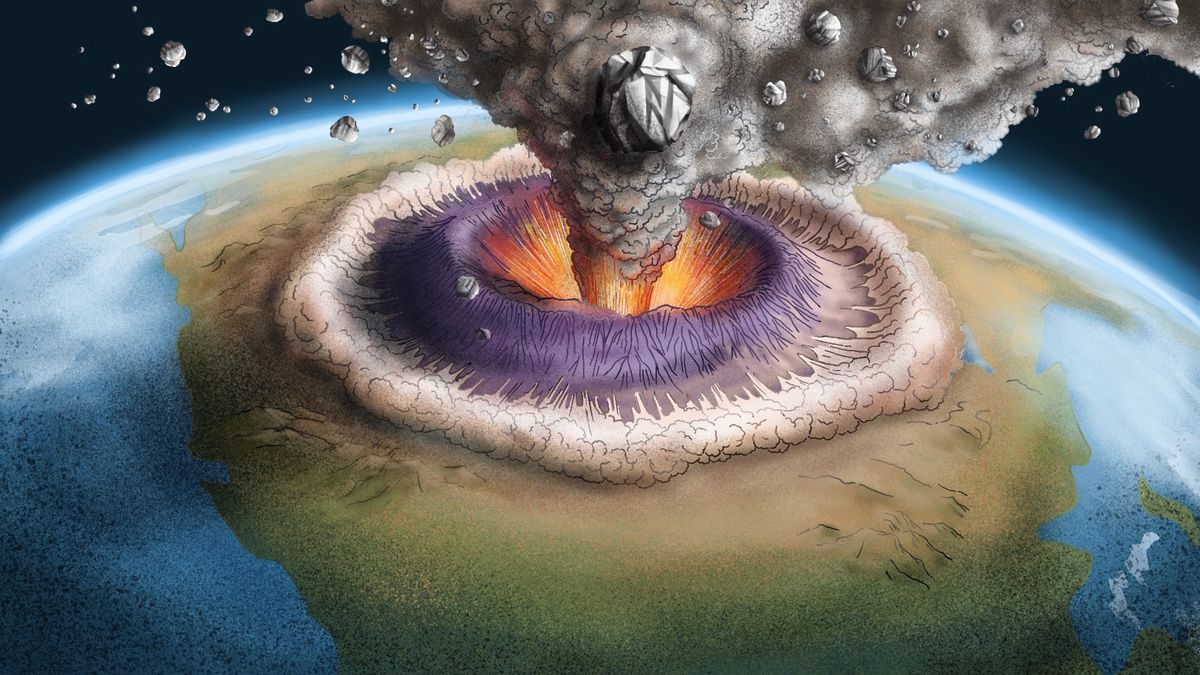
The breakup of supercontinents, such as Pangaea, may trigger explosive eruptions called kimberlites, which bring diamonds shooting up to the Earth's surface. Researchers have found a correlation between the ages of kimberlites and plate fragmentation, with eruptions peaking 22 to 30 million years after the plates start to pull apart. Computer models suggest that when tectonic plates separate, the base of the continental crust thins, creating unstable regions that gradually migrate towards the center of the continent. These instabilities allow for the mixing of materials, including diamonds, resulting in explosive eruptions. The findings could aid in the search for undiscovered diamond deposits and explain other volcanic eruptions that occur long after supercontinent breakup.
The breakup of supercontinents, such as Pangaea, can trigger explosive eruptions called kimberlites, which bring diamonds shooting up to the Earth's surface. Researchers have found a correlation between plate fragmentation and kimberlite eruptions, with eruptions peaking 22 to 30 million years after the plates start to pull apart. Computer models suggest that as tectonic plates separate, the base of the continental crust thins, creating unstable regions that gradually migrate towards the center of the continent. These instabilities allow for the mixing of rock with water, carbon dioxide, and diamonds, resulting in explosive eruptions. The findings could aid in the search for undiscovered diamond deposits and provide insights into other types of volcanic eruptions occurring long after supercontinent breakup.
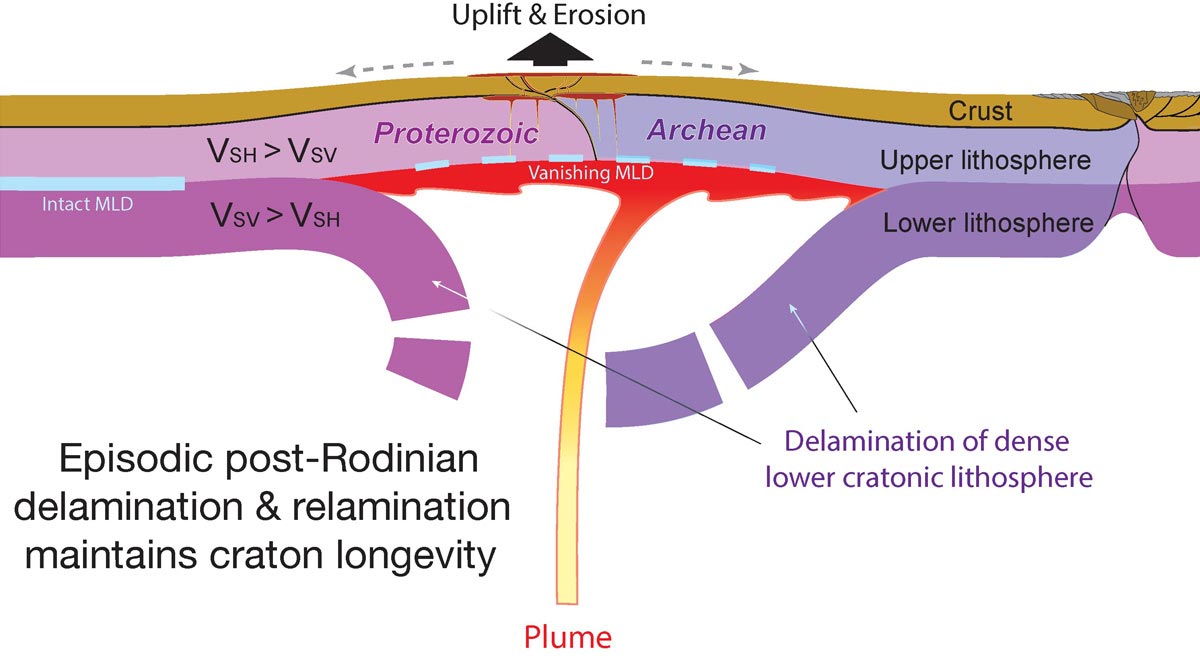
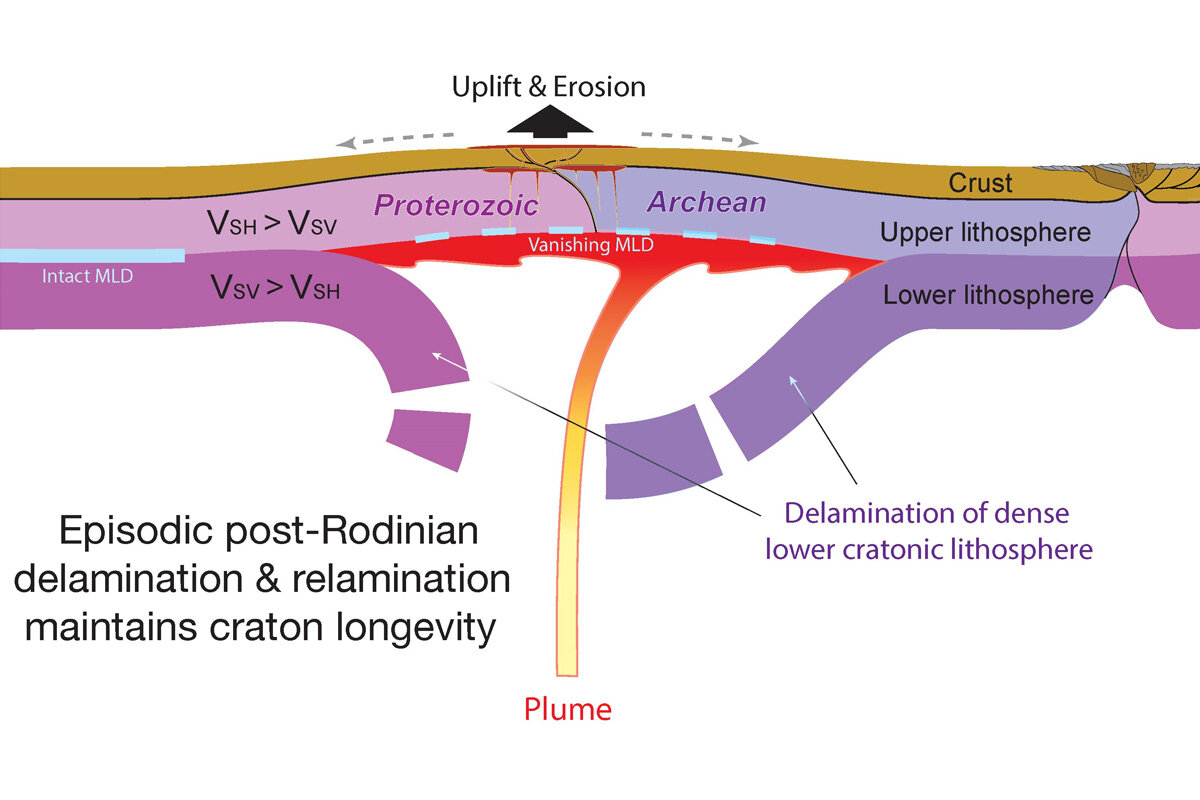
A new study challenges the conventional view of Earth's stable cratons, revealing that they have undergone repetitive deformation beneath their crust since formation. The study found that the mantle keels, once thought to be buoyant and stable, are dense and subject to significant change over time, altering our understanding of continental evolution and the operation of plate tectonics. The research shows that the lower portion of the mantle keel that has a high density and tends to repeatedly peel away from the lithosphere above when mantle upwellings, called plumes, initiate supercontinent breakup.
New research challenges the conventional view of the Earth's continental history and stability. The study shows that the seemingly stable regions of the Earth's continental plates, known as cratons, have suffered repetitive deformation below their crust since their formation. The study hypothesizes that the lower portion of the mantle keel, which is dense, tends to repeatedly peel away from the lithosphere above when mantle upwellings initiate supercontinent breakup. This deformation history is expressed in some of the more puzzling geophysical properties observed in the lithosphere.