Tag

Lithosphere

All articles tagged with #lithosphere

science10 hours ago

Earth’s crust drips beneath central Türkiye, reshaping the Konya Basin

Satellite data and seismic evidence confirm a multi‑stage lithospheric dripping beneath Türkiye’s Central Anatolian Plateau: unusually dense lower lithosphere sinks into the mantle, deepening the Konya Basin, and later detaches allowing surface rebound as the weight is shed, linking deep Earth processes to observed subsidence amid plateau uplift.

earth-science2 years ago

"Unveiling Earth's Ancient Appearance: The Impact of Absent Plate Tectonics"

The Earth's lithosphere, consisting of rigid plates that float on the convecting mantle below, has undergone continual movement and reshaping due to plate tectonics over hundreds of millions of years. However, recent research suggests that the vigorous plate tectonics we see today may be a relatively recent phenomenon, dating back only a billion years or less. Without this modern version of plate tectonics, the formation of large mountain ranges like the Himalayas would not have been possible, resulting in a flatter Earth for the first three billion years of its existence.

science-and-technology2 years ago

"Revolutionary Tectonic Model Unveils Earth's Breathtaking Beauty"

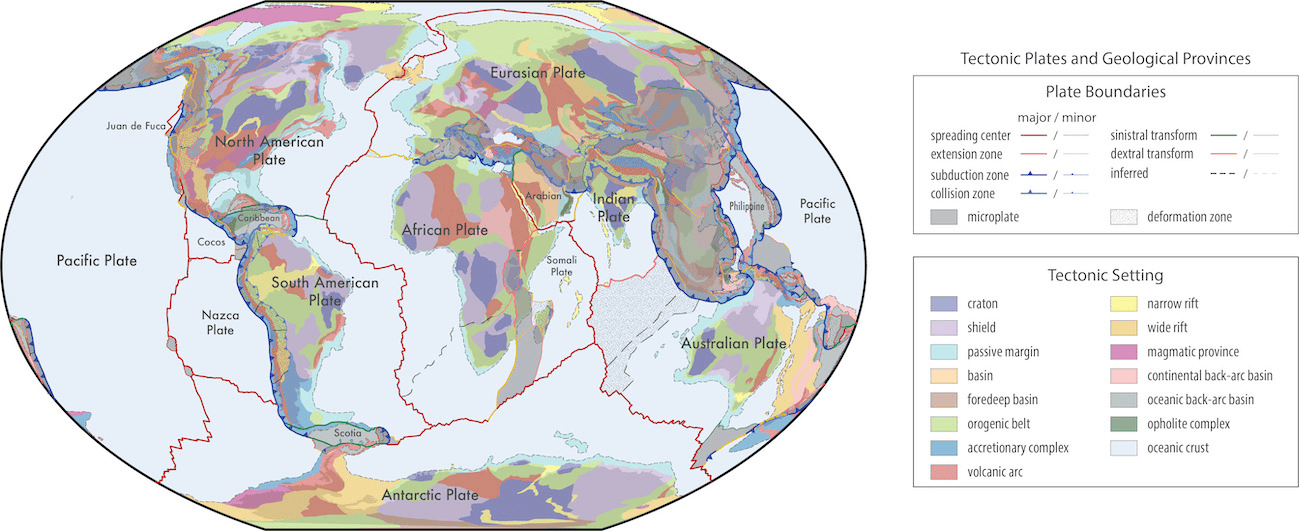
Researchers have developed comprehensive maps that provide unprecedented insight into the Earth's geological and tectonic architecture. By integrating various geological, geochemical, and geochronological data, the study presents global models of active plate boundaries and geological provinces, enhancing the accuracy of plate and province boundaries and capturing the complex interplay of geological processes. These models, available in an open-source format, are poised to become a standard for classifying geological data and will continually evolve with contributions from the scientific community, paving the way for more precise and comprehensive geological and tectonic models.

earth-science2 years ago

"Africa's Split: Mushroom-shaped Superplume Divides Continent"

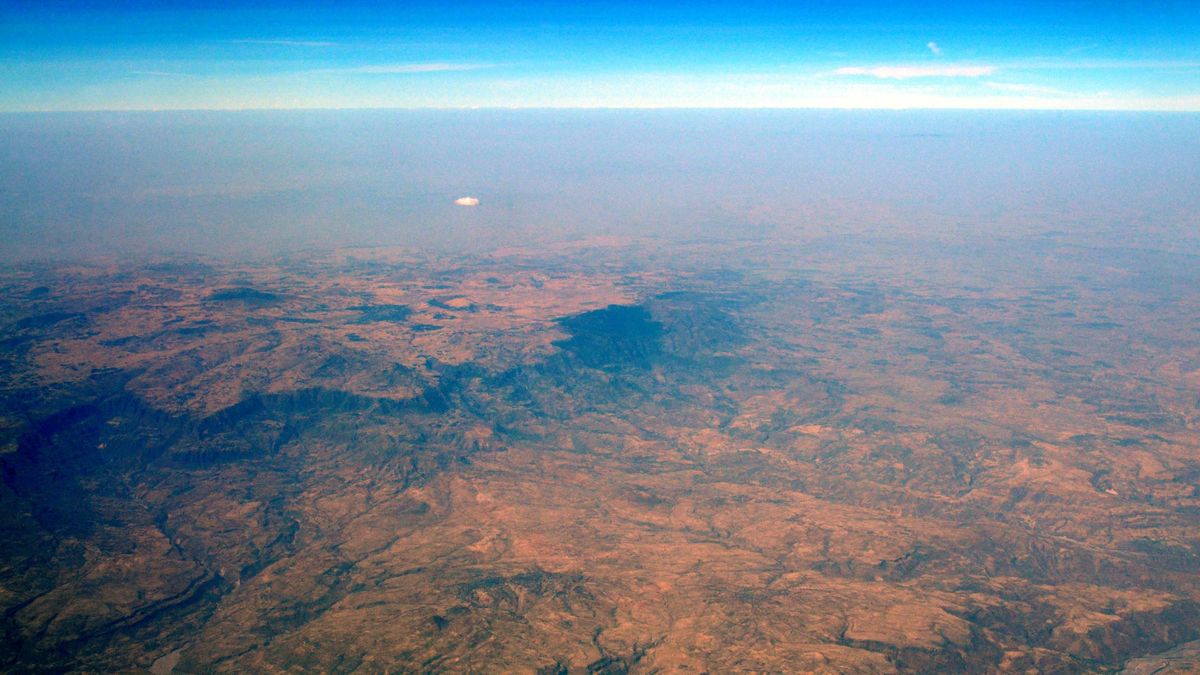
A recent study suggests that a giant plume of super-heated rock rising from near Earth's core may be responsible for the mysterious distortions observed in the East African Rift, a network of valleys stretching from the Red Sea to Mozambique. The researchers found that the deformation of the Earth's surface in the rift is not only perpendicular to its length but also parallel to it, which is unusual. They propose that a mushroom-shaped "superplume" of hot rock ascending from the mantle, known as the African Superplume, may be causing these distortions. This study improves our understanding of how continents break apart.

earth-science2 years ago

"New Study Reveals Surprising Findings on Earth's Continental History and Deformation"

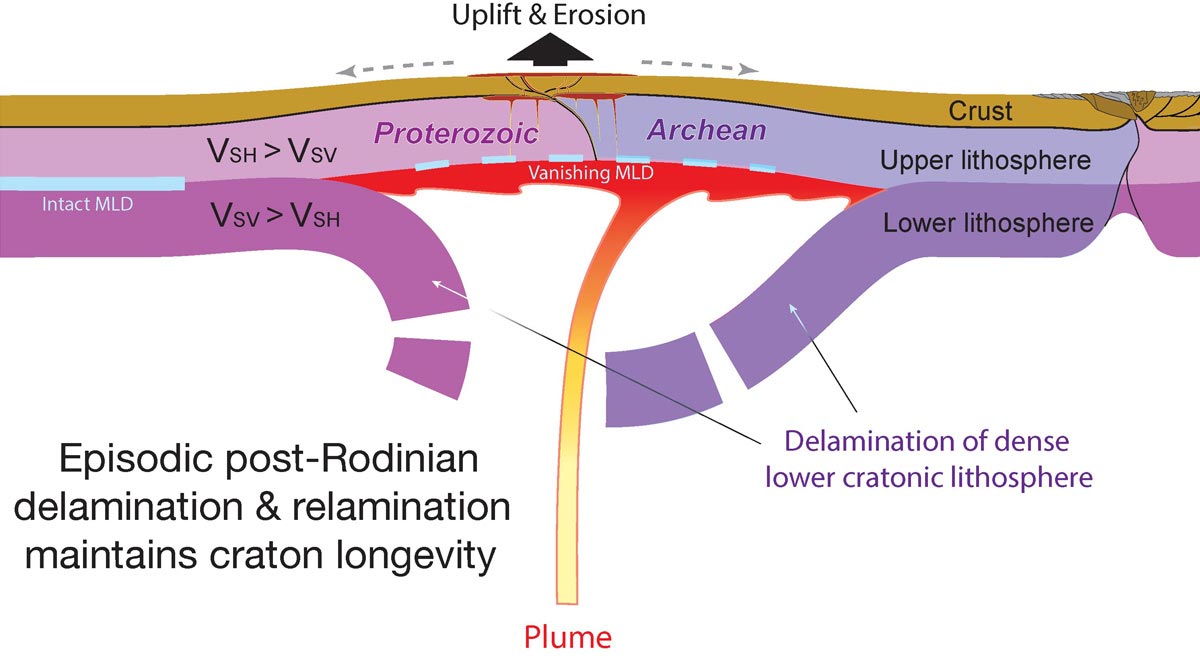
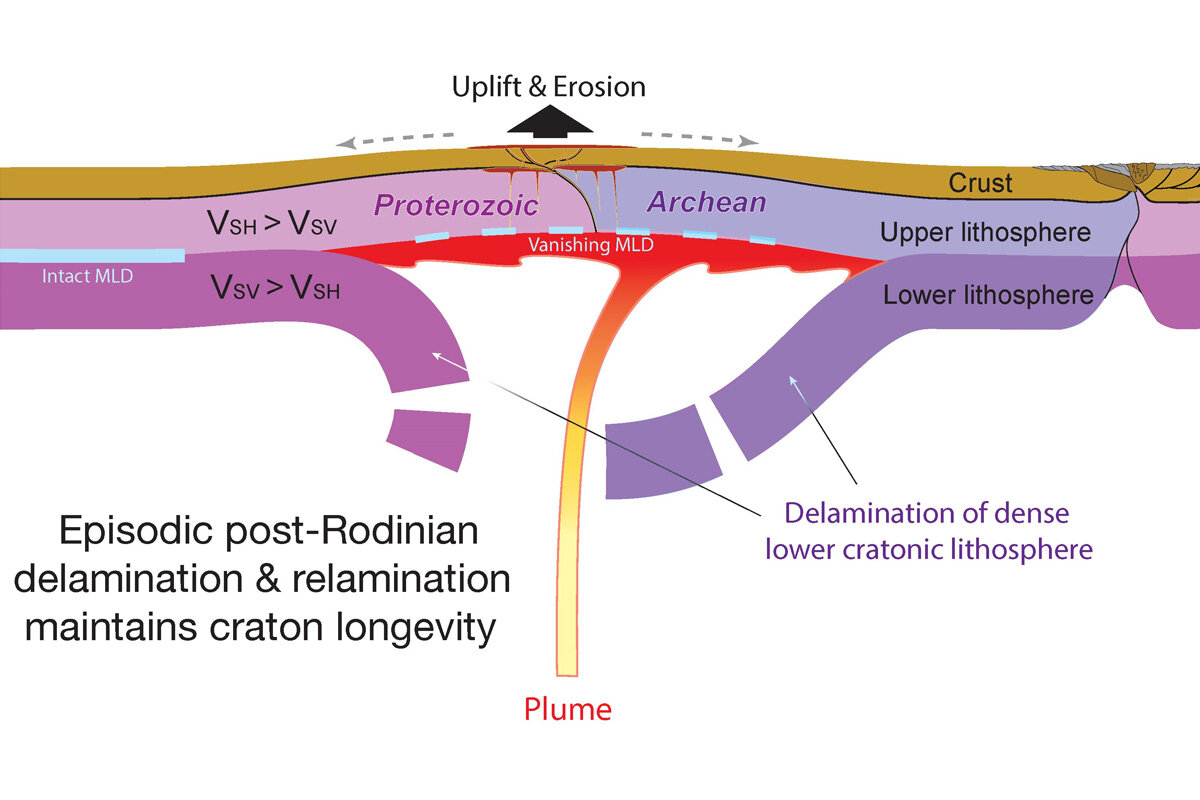
A new study challenges the conventional view of Earth's stable cratons, revealing that they have undergone repetitive deformation beneath their crust since formation. The study found that the mantle keels, once thought to be buoyant and stable, are dense and subject to significant change over time, altering our understanding of continental evolution and the operation of plate tectonics. The research shows that the lower portion of the mantle keel that has a high density and tends to repeatedly peel away from the lithosphere above when mantle upwellings, called plumes, initiate supercontinent breakup.

earth-science2 years ago

New study challenges conventional view of Earth's continental history and stability.

New research challenges the conventional view of the Earth's continental history and stability. The study shows that the seemingly stable regions of the Earth's continental plates, known as cratons, have suffered repetitive deformation below their crust since their formation. The study hypothesizes that the lower portion of the mantle keel, which is dense, tends to repeatedly peel away from the lithosphere above when mantle upwellings initiate supercontinent breakup. This deformation history is expressed in some of the more puzzling geophysical properties observed in the lithosphere.

earth-science2 years ago

The Science Behind Earthquake Frequency in Britain and Ireland

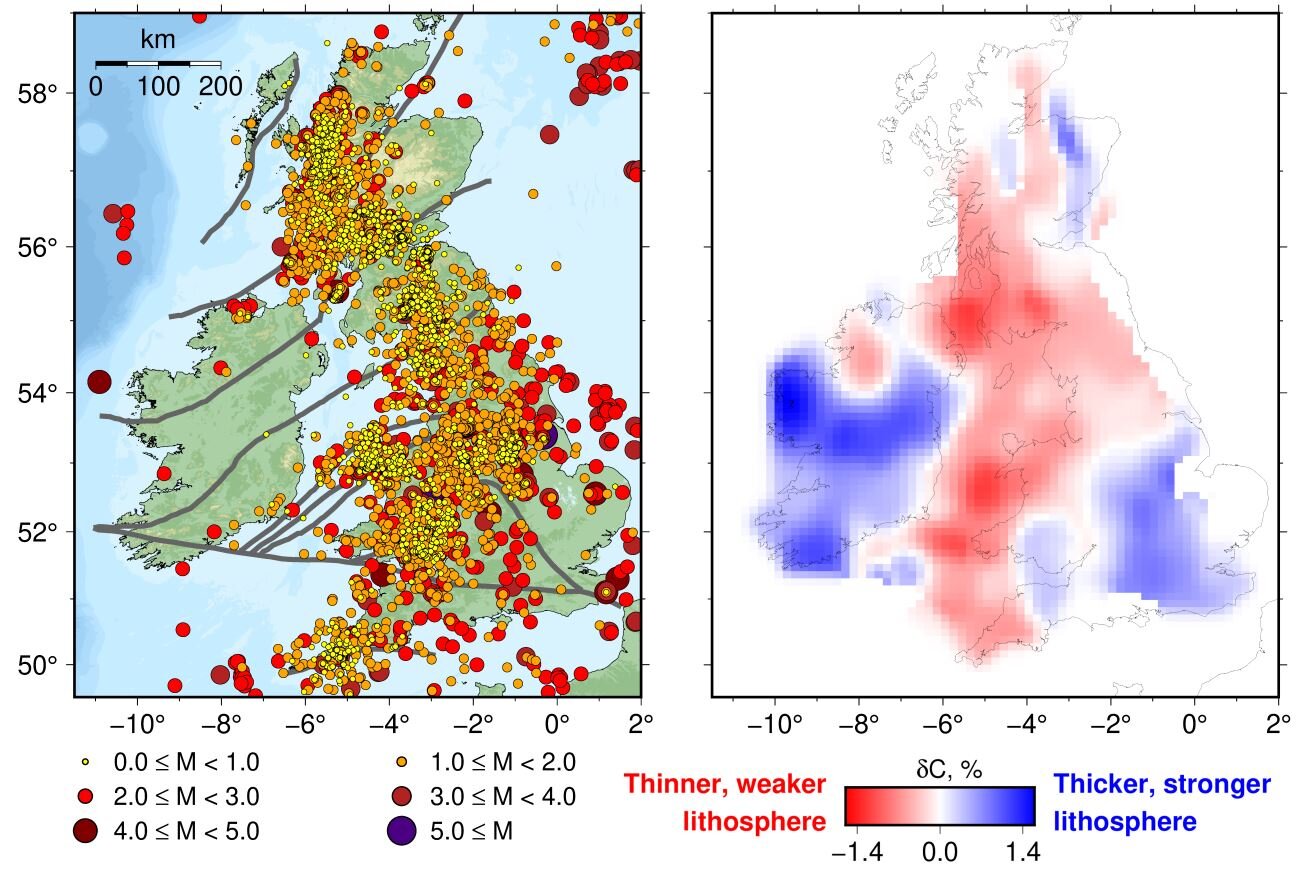
Researchers from the University of Cambridge and the Dublin Institute for Advanced Studies have discovered that variations in the thickness of tectonic plates relate directly to the distribution of earthquakes in Britain, Ireland and around the world. The study also solves an enduring mystery as to why small earthquakes happen frequently in Britain but are almost completely absent from neighboring Ireland. The researchers found that the lithosphere is thin and weak beneath western Britain, meaning that the rocks can bend easily—triggering earthquakes across this region. In contrast, Ireland sits on top of thick and strong lithosphere, explaining the lack of earthquakes.

science2 years ago

Unraveling the Mystery of the Puerto Rico Gravity Anomaly.

The Puerto Rico Trench, the deepest in the Atlantic Ocean, has a gravity anomaly where an object falls faster than it should due to a large "hanging flap" of the Atlantic lithosphere. Geophysicist Peter Molnar proposed this explanation in 1977, estimating the mass and size of the object causing the anomaly. Gravity anomalies occur when an object in free fall accelerates at a rate different from what models of gravity predict for that location.