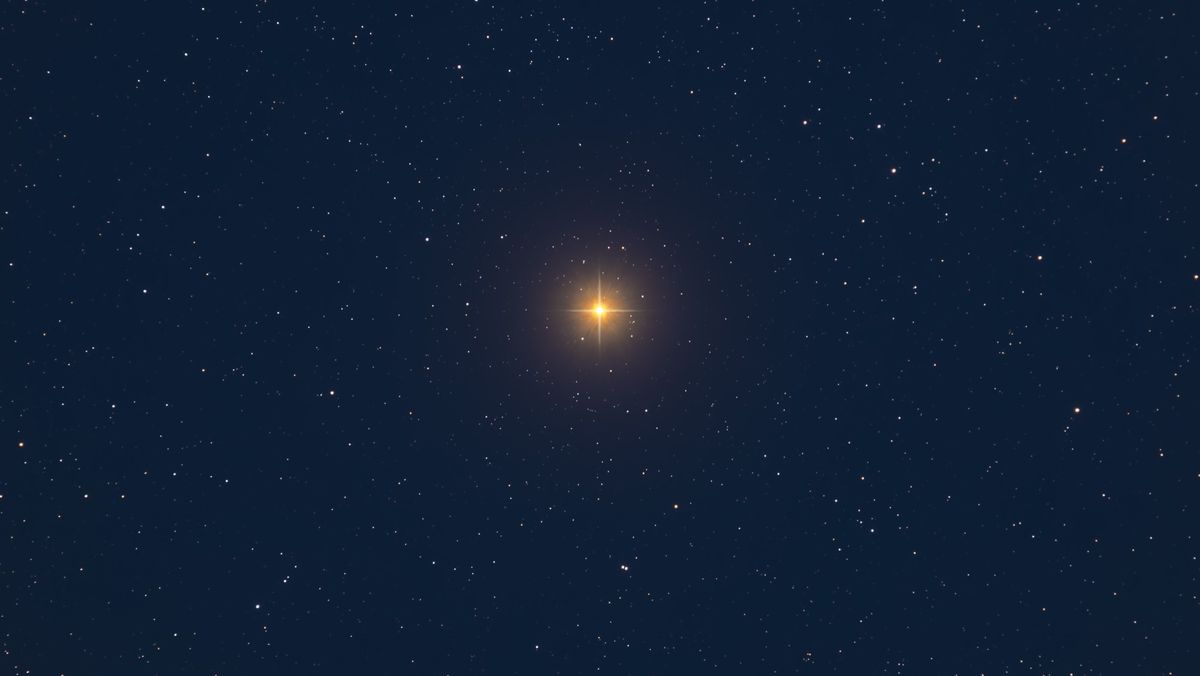
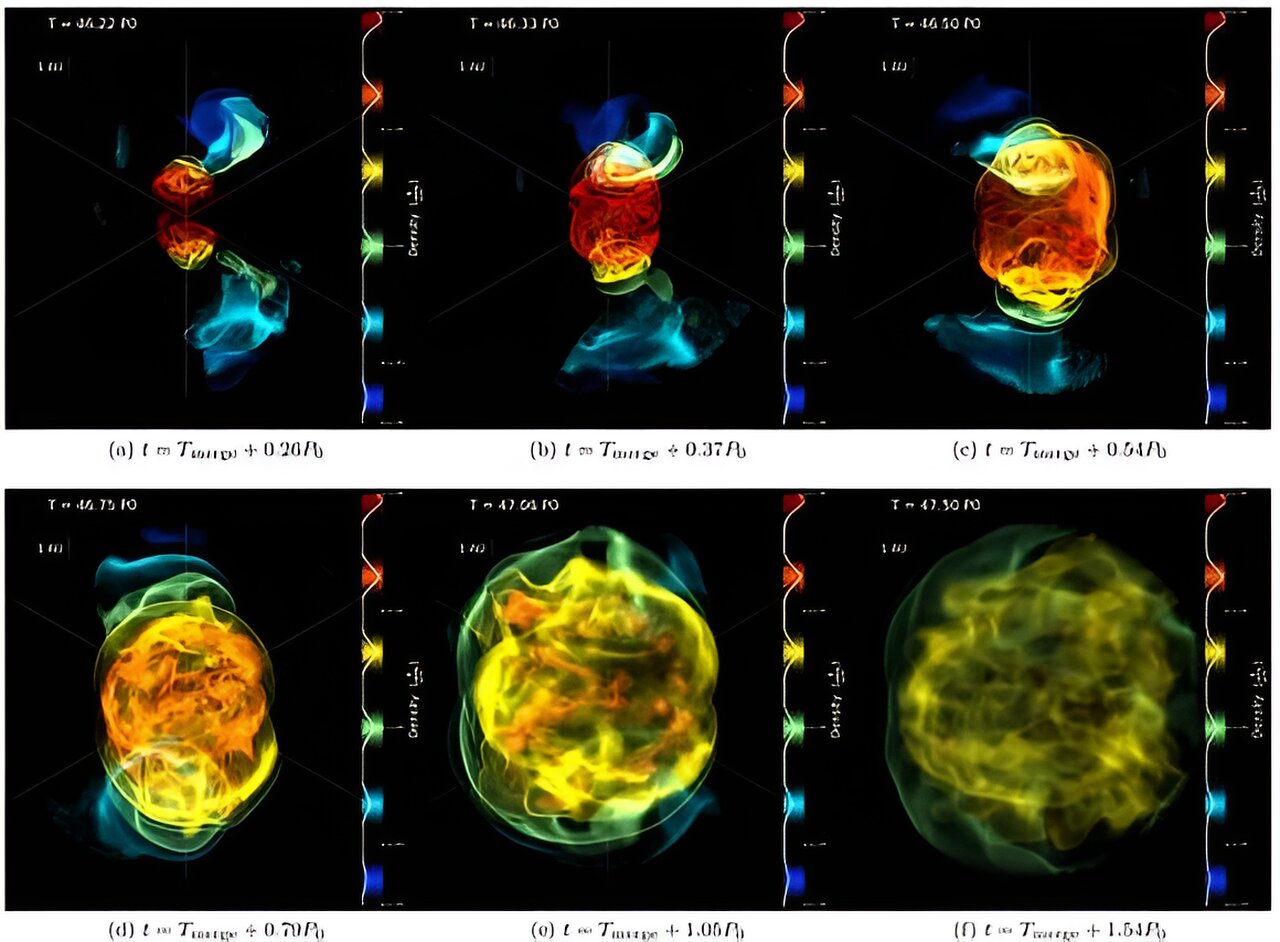
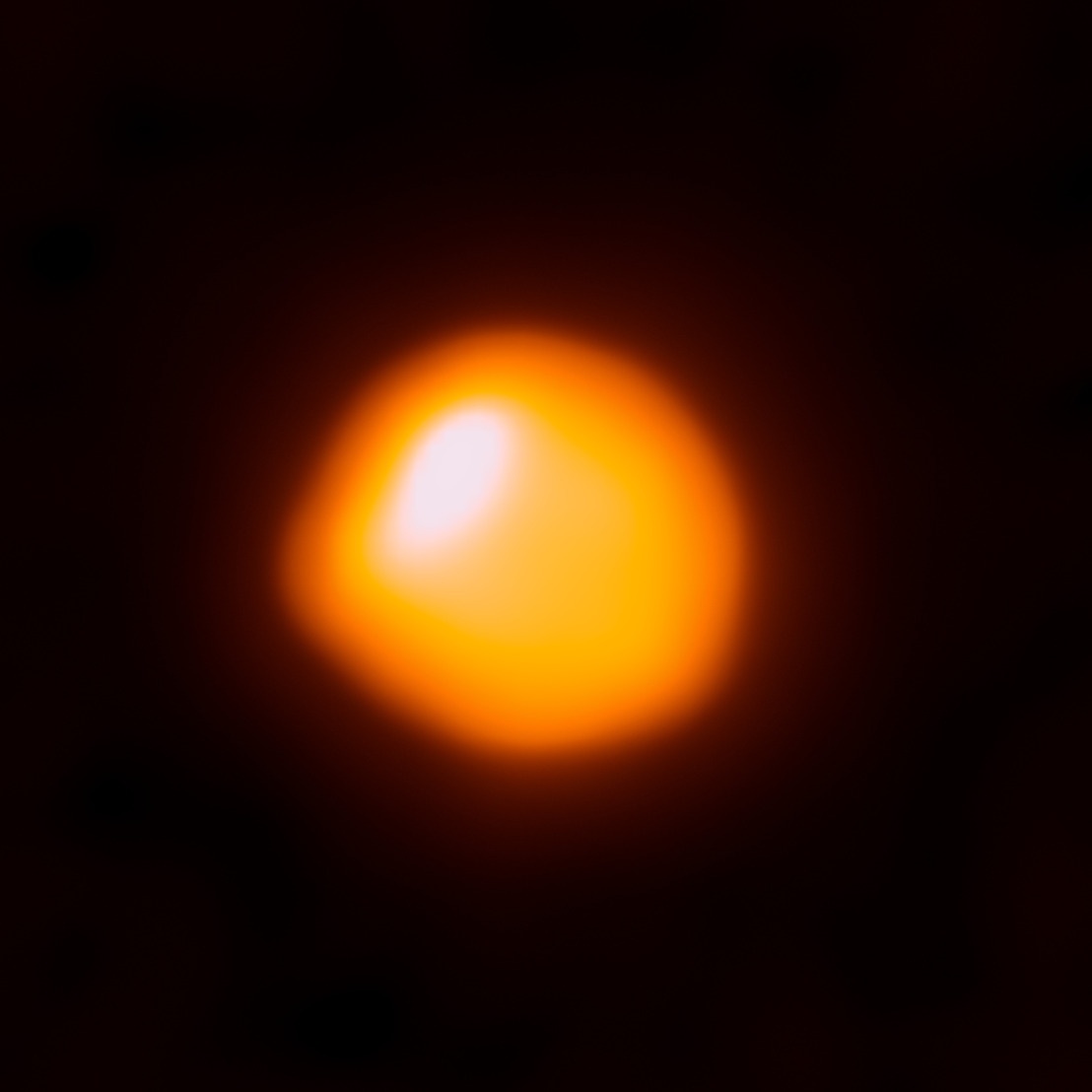
Betelgeuse, the second-brightest star in the Orion constellation, may have formed through the merger of two smaller stars, according to a computer simulation developed by astronomers. The simulation suggests that as the primary star aged and expanded into a red supergiant, its companion star funneled material onto itself, increasing its mass. Eventually, the companion star spiraled inward and merged with the primary star's helium core, releasing a significant amount of energy and ejecting some of the star's material into space. The merger mixed up the star's contents, resulting in the presence of heavier elements like nitrogen in its atmosphere. Direct evidence for this scenario may only be apparent when Betelgeuse explodes as a supernova in 50,000 to 100,000 years.
New research suggests that the recent fluctuations in the luminosity of Betelgeuse, a red supergiant star, may be due to the star consuming a smaller companion in the past. Simulations show that a merger between a massive star and a smaller companion can result in mass loss and high-speed mass flow. The rotation rate and chemical composition of Betelgeuse support the possibility of a past merger. However, more research is needed to fully understand the effects of these mergers on star evolution and supernova progenitors.
New research suggests that the recent fluctuations in luminosity of the red supergiant star Betelgeuse may be due to a past merger with a smaller companion star. Simulations show that as the stars merge, there is an exchange of energy and mass loss, which could explain Betelgeuse's high rotation rate and chemical composition. However, the study does not conclusively prove the merger theory and further research is needed to fully understand the effects of stellar mergers on massive star evolution and supernova progenitors.