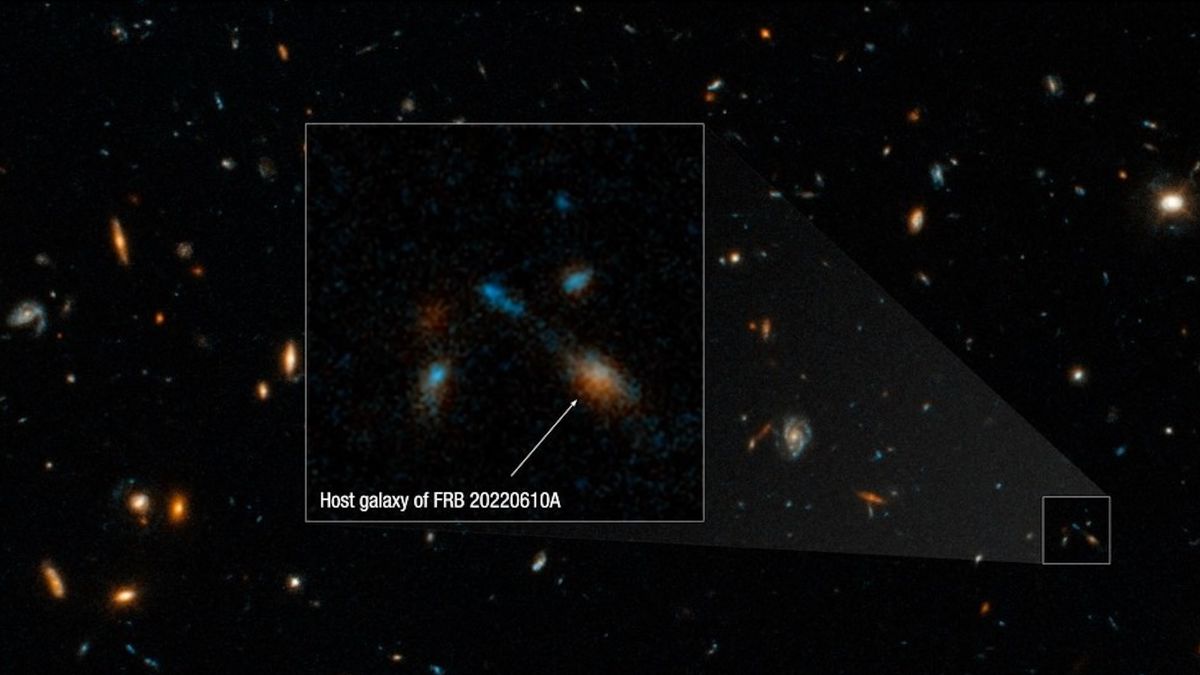
The Hubble Space Telescope has identified the source of the brightest fast radio burst (FRB) ever observed as a group of ancient galaxies in the process of merging, challenging previous assumptions that FRBs originate from single galaxies closer to Earth. The FRB, detected on June 10, 2022, was found to have originated from a region containing seven galaxies about five billion years old. This discovery has prompted astronomers to continue their search for the origins of FRBs, with hopes for breakthroughs from new, more powerful radio telescopes in the future.
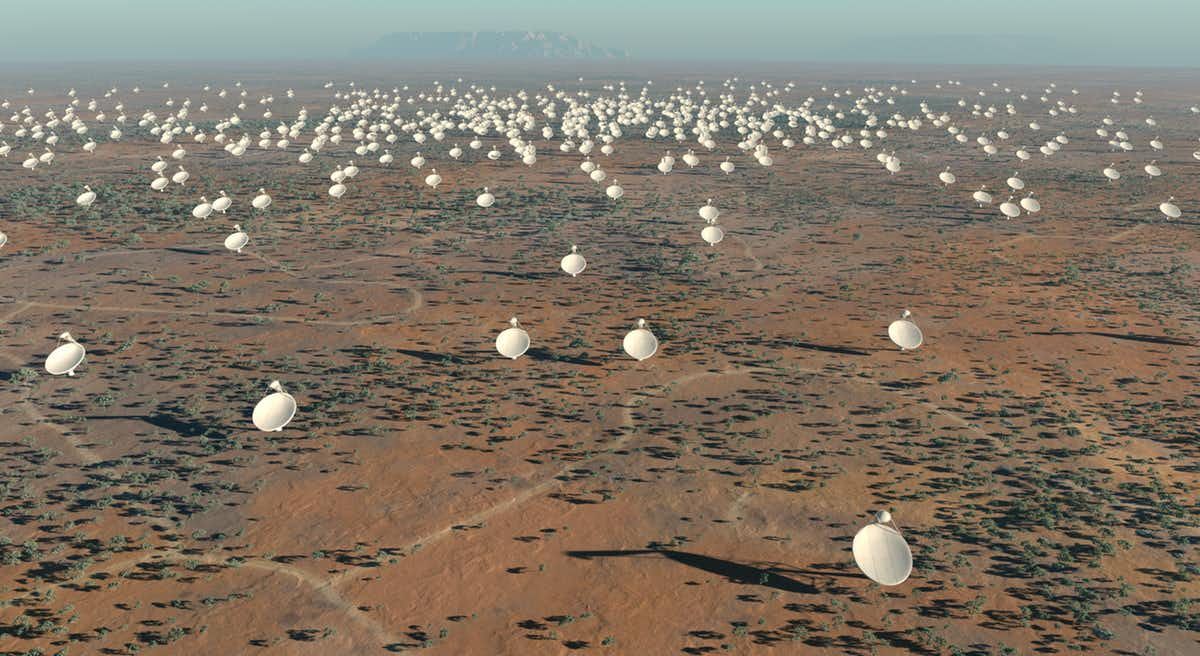
The Square Kilometer Array Observatory (SKAO), set to be the world's most powerful radio telescope, may have its view obstructed by SpaceX's Starlink satellites. These constellations of satellites, launched by private companies for global high-speed internet access, are already causing issues for ground-based observations and brightening the nighttime sky. Preliminary tests conducted by astronomers working on the SKAO revealed that the emissions from Starlink satellites were significantly brighter than the astronomical targets of the telescope. While the emissions are not in violation of any international agreements, they do overlap with the signals expected from the cosmic dawn, making it challenging for astronomers to study that epoch. Dialogue between private companies and regulatory agencies is needed to address the impact on astronomy.