Researchers have developed a superconducting camera with 400,000 pixels that can detect single photons. The camera uses a grid of superconducting wires that lose their superconductivity when struck by a photon, generating a signal. This breakthrough paves the way for larger-format superconducting cameras that could be used in astronomical imaging and biomedical research. The camera has 400 times more pixels than previous versions, making it more practical for low-light endeavors. The team plans to improve the sensitivity of the camera to capture every incoming photon, enabling it to revolutionize fields such as astronomy and medical imaging.
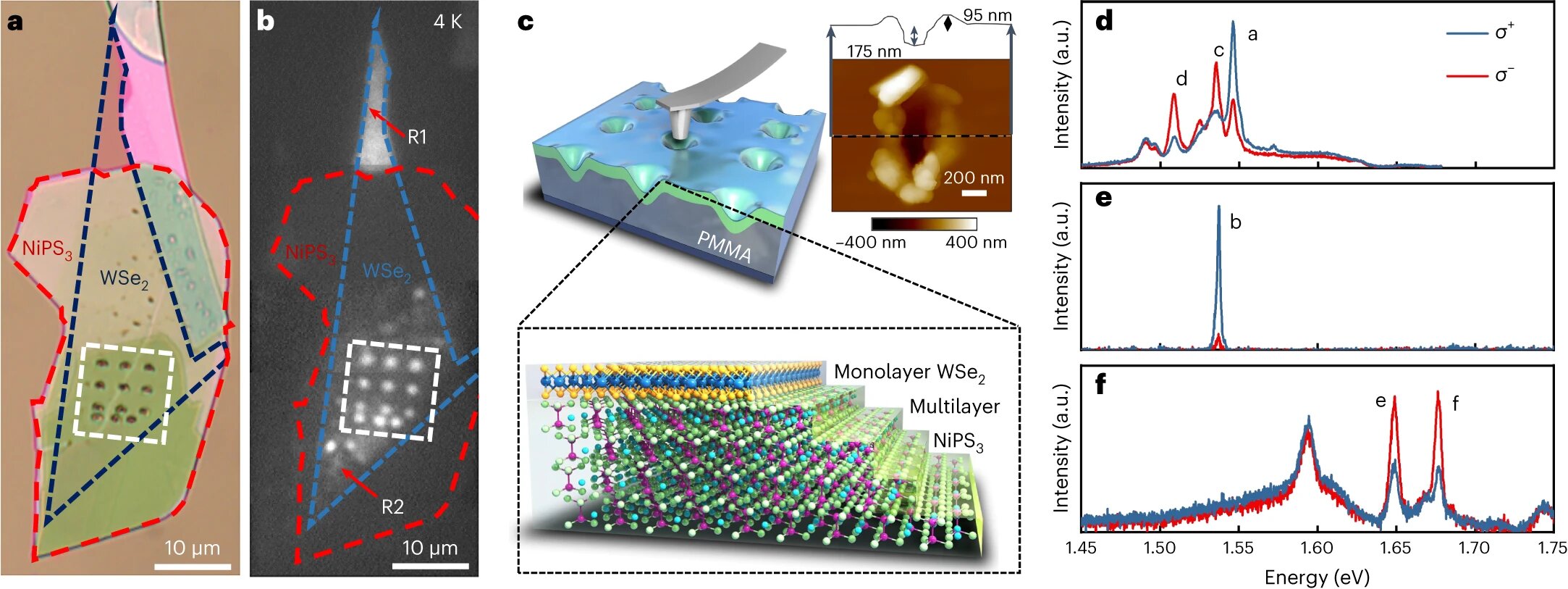
Scientists at Los Alamos National Laboratory have developed a new quantum light source that generates circularly polarized single photons without the need for an external magnetic field. By stacking two atomically thin materials and creating nanometer-scale indentations, the researchers were able to control the polarization state of the emitted photons. This breakthrough could have significant implications for quantum cryptography and communication, as it combines the generation of single photons with the ability to introduce polarization, paving the way for encoding quantum information into the photon stream.
MIT researchers have discovered that photovoltaic nanoparticles can emit streams of identical photons, potentially paving the way for new quantum computing technologies and quantum teleportation devices. The device emits a stream of single photons and could provide a basis for optical quantum computers. The researchers used novel materials that have been widely studied as potential new solar photovoltaics and showed that nanoparticles of these materials can emit a stream of single, identical photons.