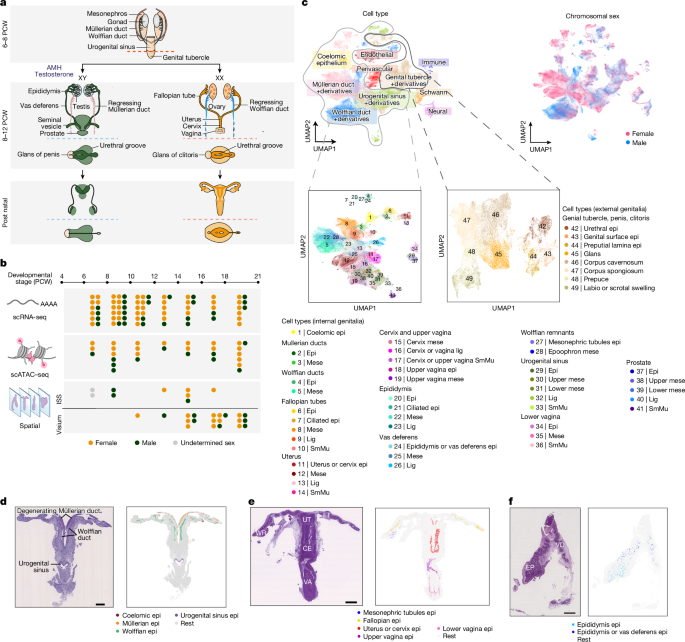
This study provides a comprehensive spatiotemporal single-cell atlas of human reproductive tract development from 6 to 21 weeks of gestation, revealing cellular differentiation, molecular patterning, and sex-specific development of internal and external genitalia, and identifying potential impacts of environmental chemicals on development.
The study provides a comprehensive transcriptomic and epigenomic atlas of mouse visual cortex development, revealing continuous cell-type diversification from embryonic to postnatal stages, with detailed trajectories for neuronal and glial cell types, enhancing understanding of cortical circuit formation.
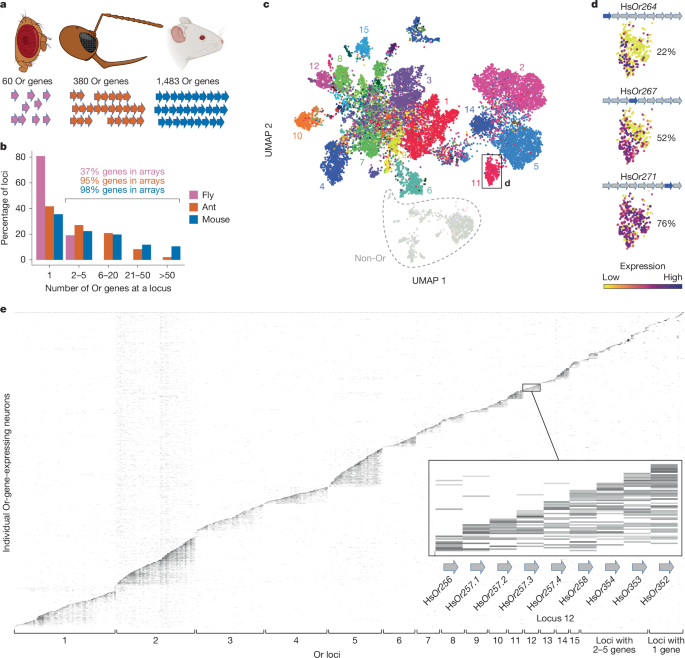
The article discusses how transcriptional interference mechanisms ensure that each ant olfactory neuron expresses only one olfactory receptor, highlighting the complex regulation of receptor gene expression during neurogenesis.
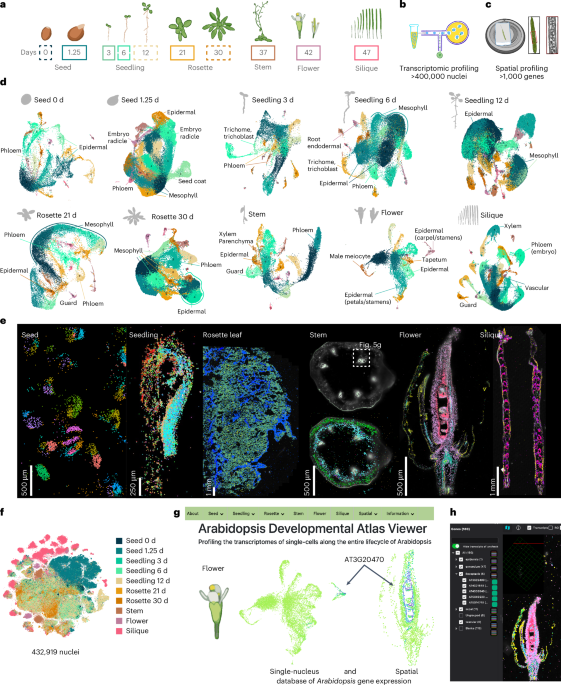
This study presents a comprehensive single-nucleus and spatial transcriptomic atlas of the Arabidopsis plant life cycle, revealing diverse molecular identities, cell types, and states across various organs and developmental stages, and demonstrating the power of combined technologies to uncover cellular complexity and function in plant biology.
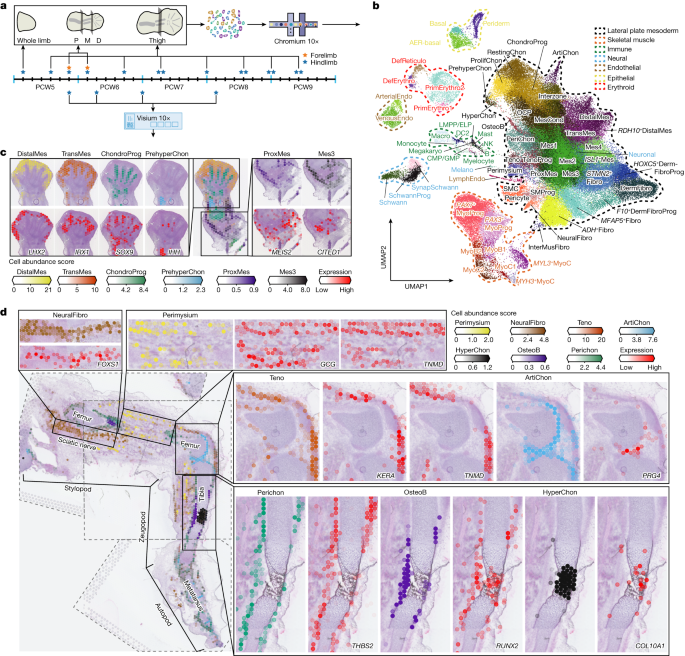
Researchers have created a comprehensive atlas of human embryonic limb development using single-cell transcriptomic RNA sequencing and spatial transcriptomic sequencing. The study identified 67 distinct cell clusters and mapped their spatial distribution across four timepoints during the first trimester of development. The research sheds light on the cellular heterogeneity, patterning events, and gene expression patterns associated with limb malformations. The findings also highlight the similarities between human limb development and that of model organisms like mice. This atlas provides valuable insights into the complex processes involved in limb development and can serve as a reference for studying genetic variations and developmental disorders.
Researchers have developed a system using human pluripotent stem cells that can self-organize into three-dimensional structures that mimic key events of early human post-implantation embryonic development. The system captures spontaneous differentiation and co-development of embryonic epiblast and extra-embryonic hypoblast-like lineages, establishes key signaling hubs with secreted modulators, and can undergo symmetry breaking-like events. Single-cell transcriptomics confirms differentiation into diverse cell states of the peri-gastrulating human embryo without establishing placental cell types, offering a reproducible, tractable, and scalable experimental platform to understand the basic cellular and molecular mechanisms that underlie human development.
A new study from the Netherlands Institute for Neuroscience proposes a roadmap for resolving conflicting results on the brain's regenerative abilities. The study highlights the importance of accurate reporting and reproducibility in single-cell transcriptomics experiments to uncover the true potential of brain regeneration. Leveraging the brain's regenerative potential in the context of aging or neurological disorders offers a promising alternative to traditional approaches for enhancing or restoring brain function, particularly given the current absence of effective treatments for neurodegenerative diseases like Alzheimer's.
A new study from the Netherlands Institute for Neuroscience examines the regenerative potential of the human brain in aging and neurological diseases, which could provide an alternative to conventional strategies for enhancing or restoring brain function. Recent single-cell transcriptomic studies in the adult human hippocampus yielded conflicting results, and the researchers found that the design, analysis, and interpretation of these studies in the adult human hippocampus can be confounded by specific issues that require particular attention and would greatly profit from an open discussion in the field. The study critically discusses and re-analyzes previously published datasets and proposes a roadmap on how to solve these issues.