
Unveiling the Intricate Development of Human Limbs: From Embryonic Atlas to Nature's Chiseling
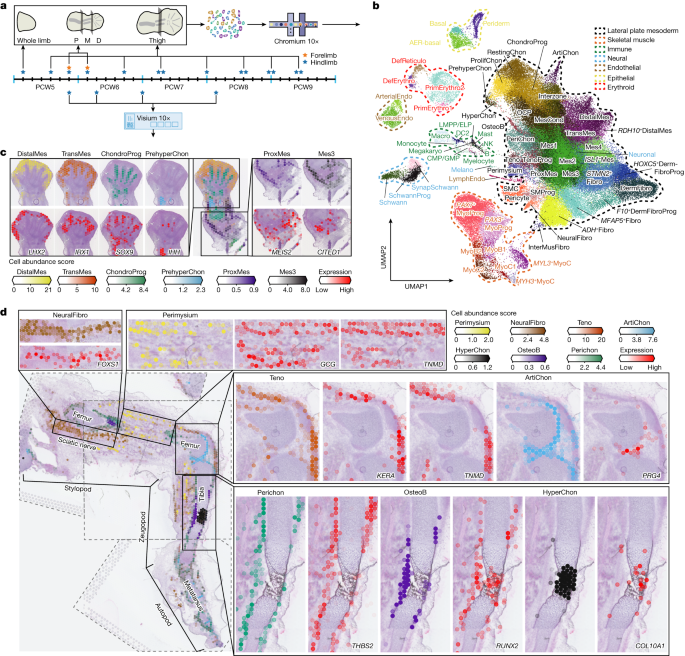
Researchers have created a comprehensive atlas of human embryonic limb development using single-cell transcriptomic RNA sequencing and spatial transcriptomic sequencing. The study identified 67 distinct cell clusters and mapped their spatial distribution across four timepoints during the first trimester of development. The research sheds light on the cellular heterogeneity, patterning events, and gene expression patterns associated with limb malformations. The findings also highlight the similarities between human limb development and that of model organisms like mice. This atlas provides valuable insights into the complex processes involved in limb development and can serve as a reference for studying genetic variations and developmental disorders.
- A human embryonic limb cell atlas resolved in space and time Nature.com
- We've Finally Seen in Exquisite Detail How Human Fingers And Toes Grow ScienceAlert
- Mapping the Unseen: How Our Limbs Grow and What Can Go Wrong SciTechDaily
- First map of human limb development reveals unexpected growth processes and explains syndromes found at birth Medical Xpress
- Scientists discover for the first time how nature 'chisels away' tissue to form fingers in the womb The Telegraph
Reading Insights
0
7
74 min
vs 75 min read
99%
14,955 → 102 words
Want the full story? Read the original article
Read on Nature.com