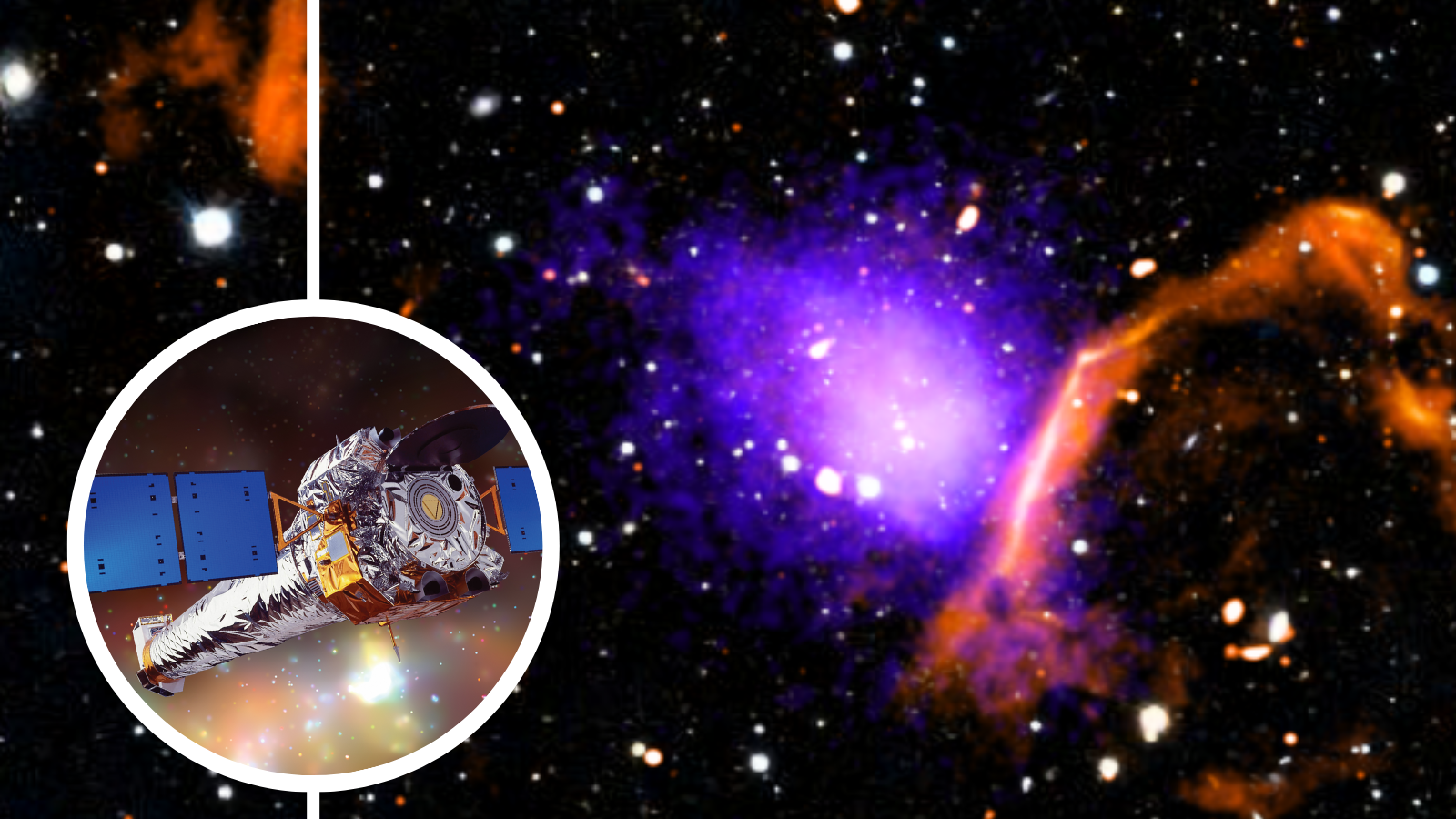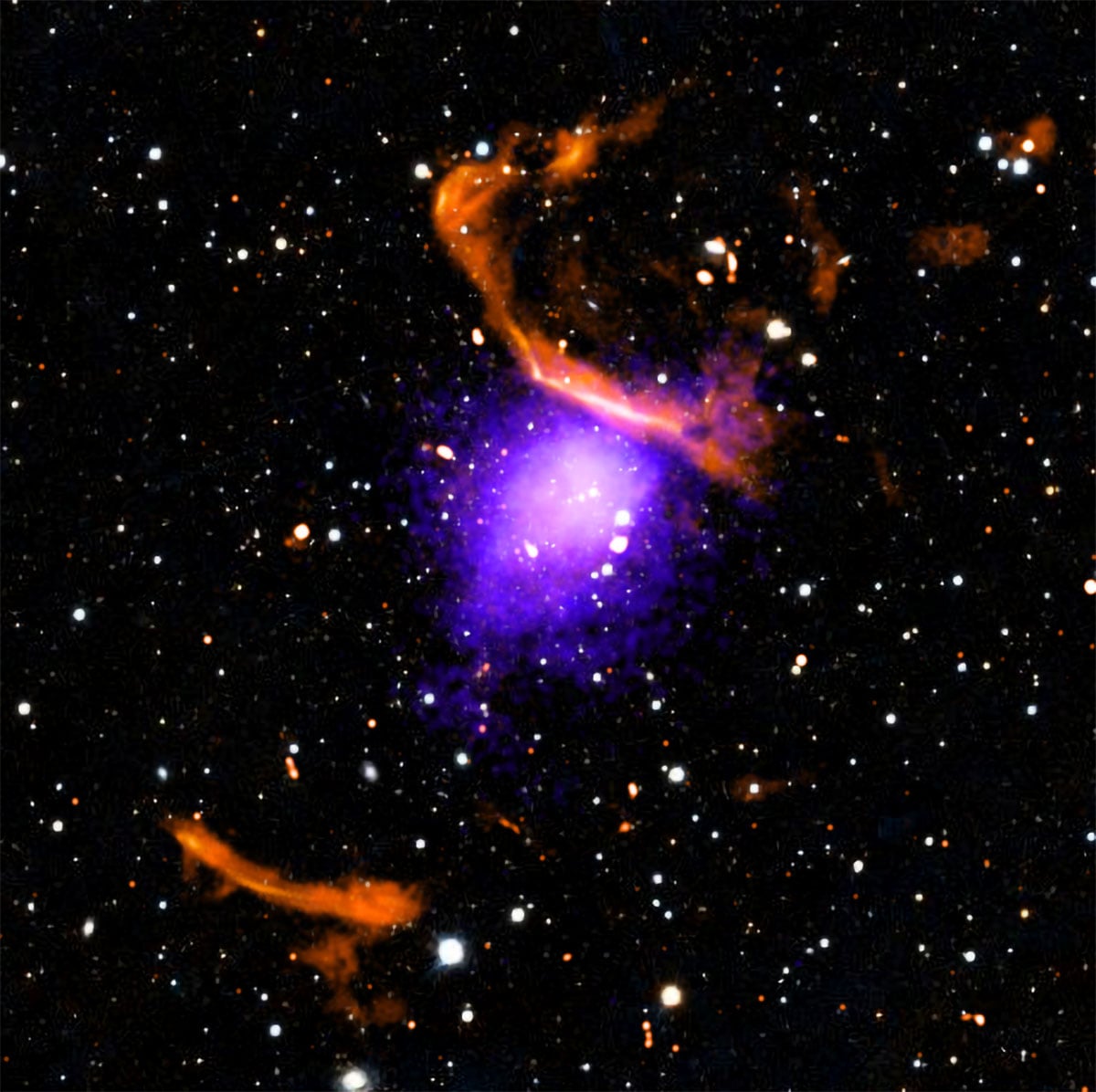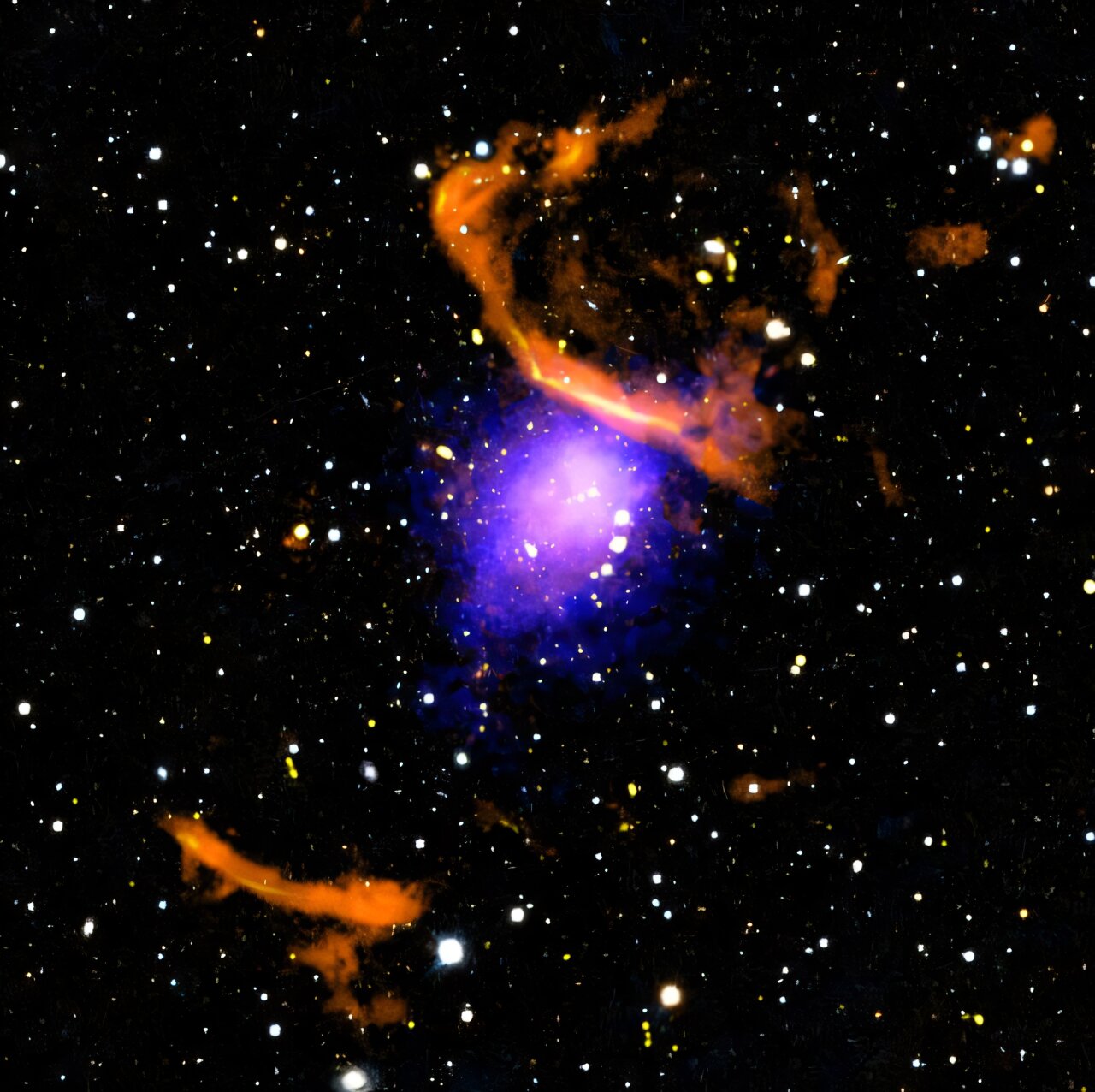
NASA's Chandra telescope discovered a massive galaxy cluster, PLCK G287.0+32.9, wrapped in a 20 million light-year-wide energized particle cocoon, likely energized by shockwaves and turbulence, revealing new insights into cosmic energy processes and magnetic fields.
Astronomers discovered the largest-ever cloud of energetic particles around a galaxy cluster, stretching nearly 20 million light-years, driven by turbulence and shockwaves rather than galaxies, challenging existing models and revealing new insights into cosmic magnetic fields and energy transfer in the universe.
Astronomers have discovered the largest known cloud of energetic particles around a galaxy cluster, spanning nearly 20 million light-years, energized by shockwaves and turbulence rather than nearby galaxies, challenging existing theories and offering new insights into cosmic magnetic fields.
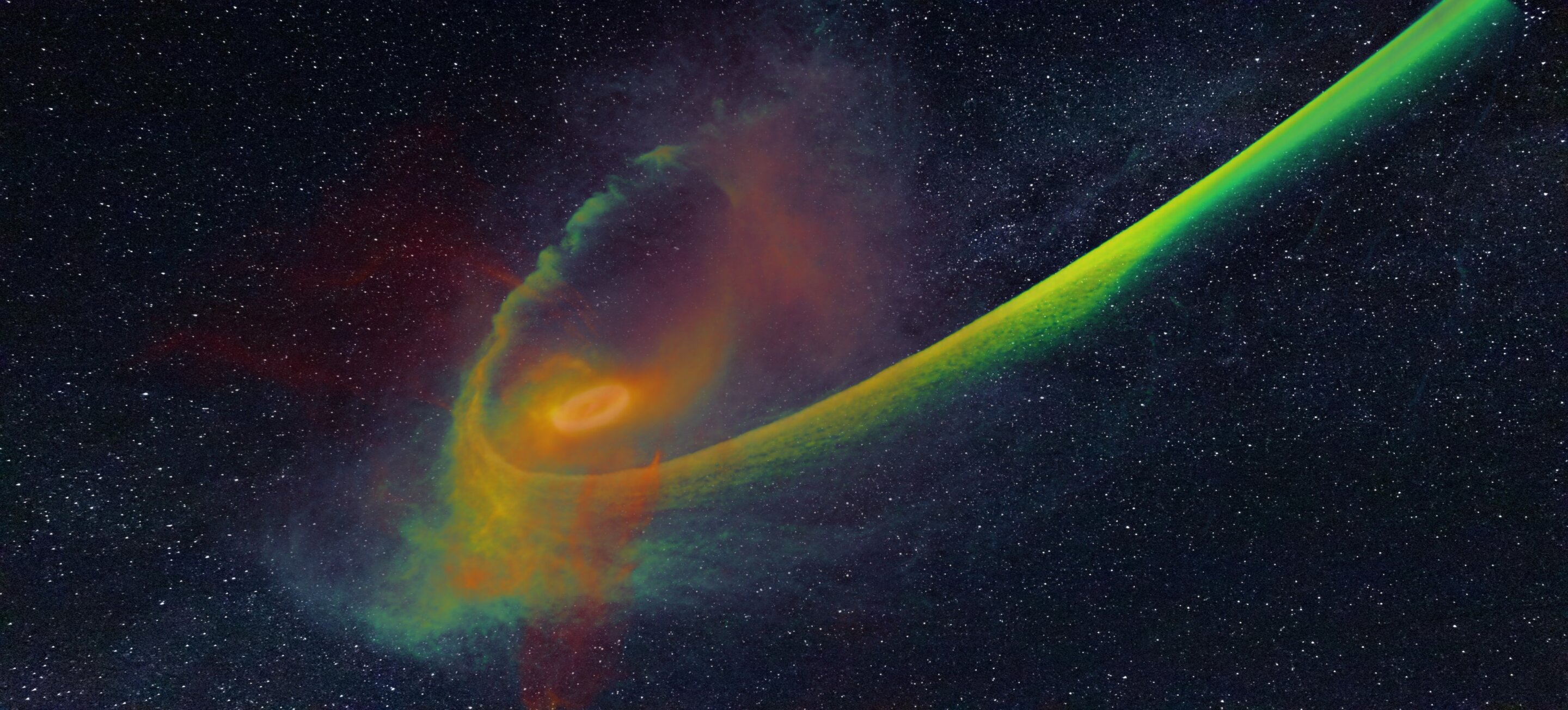
New simulations have accurately replicated the entire sequence of a Tidal Disruption Event (TDE) from stellar disruption to the peak luminosity of the resulting flare, unveiling a previously unknown type of shockwave within TDEs and settling a longstanding debate about the energy source of the brightest phases in these events. This breakthrough paves the way for future studies to utilize TDE observations as a means to measure essential properties of black holes and potentially test Einstein's predictions in extreme gravitational environments, shedding new light on the mysteries of supermassive black holes.
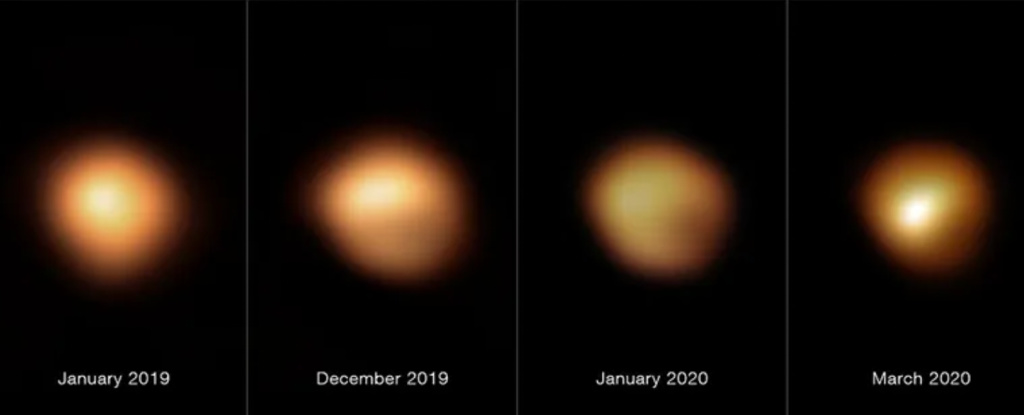
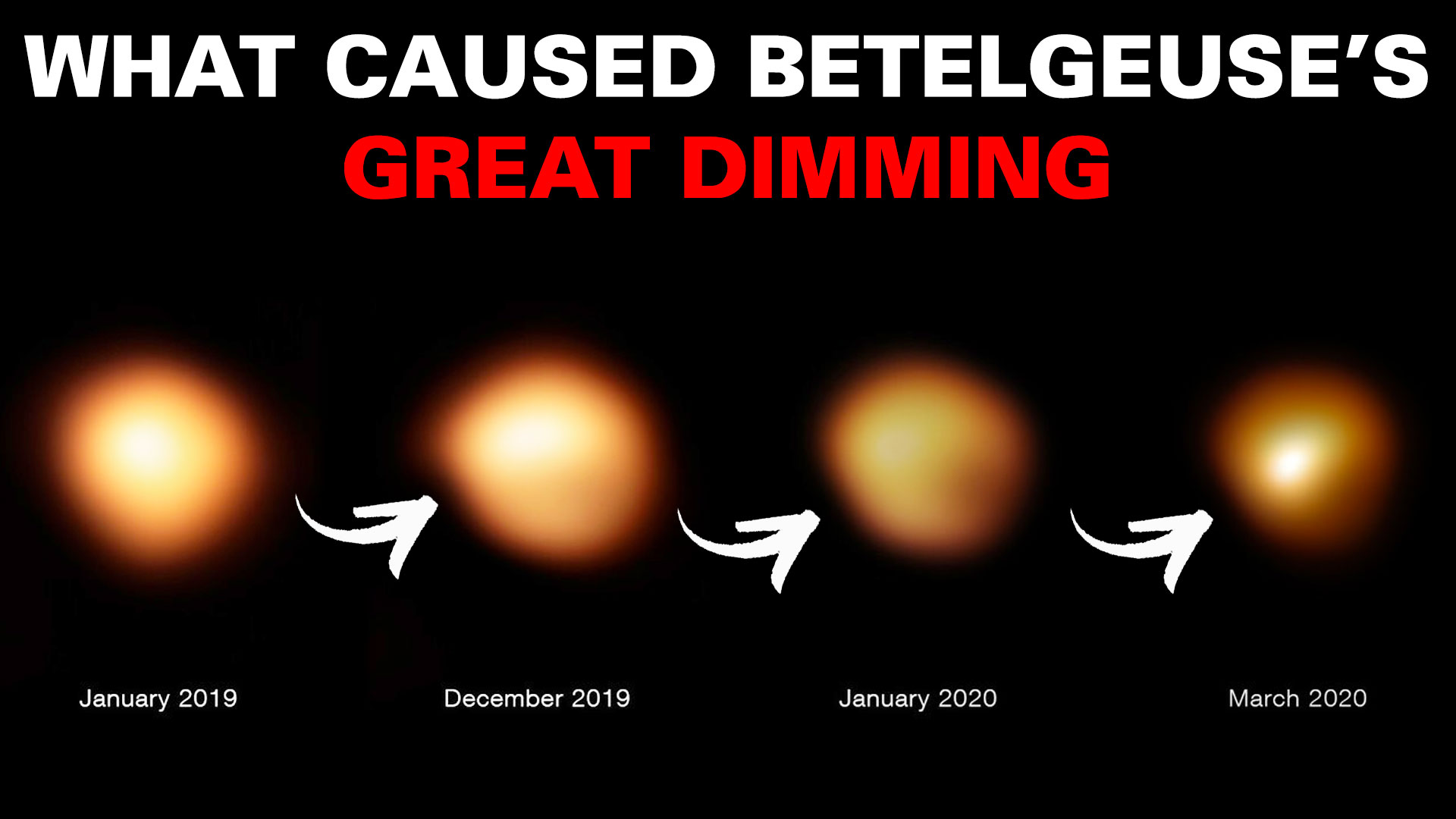
A team of astronomers has used 15 years of data from the STELLA robotic telescope to study the "Great Dimming" event of Betelgeuse, a red supergiant star. The data revealed five distinct layers of the star's photosphere and showed that the variations in the innermost layer were in line with the star's brightness variations. The analysis also identified two powerful shockwaves in the photosphere, which caused an outflow of material and subsequent infall across the layers. The star returned to its normal state in early 2022.
A team of astronomers has used 15 years of data from the STELLA robotic telescope to study the "Great Dimming" event of Betelgeuse, a red supergiant star. They found that the dimming was not consistent across the star's sphere, with the southern hemisphere being darker than the northern. The data revealed that two powerful shockwaves in the photosphere caused a major outflow of material, leading to the dimming. The events didn't happen simultaneously across all photospheric layers, and it took until early 2022 for Betelgeuse to settle back down.
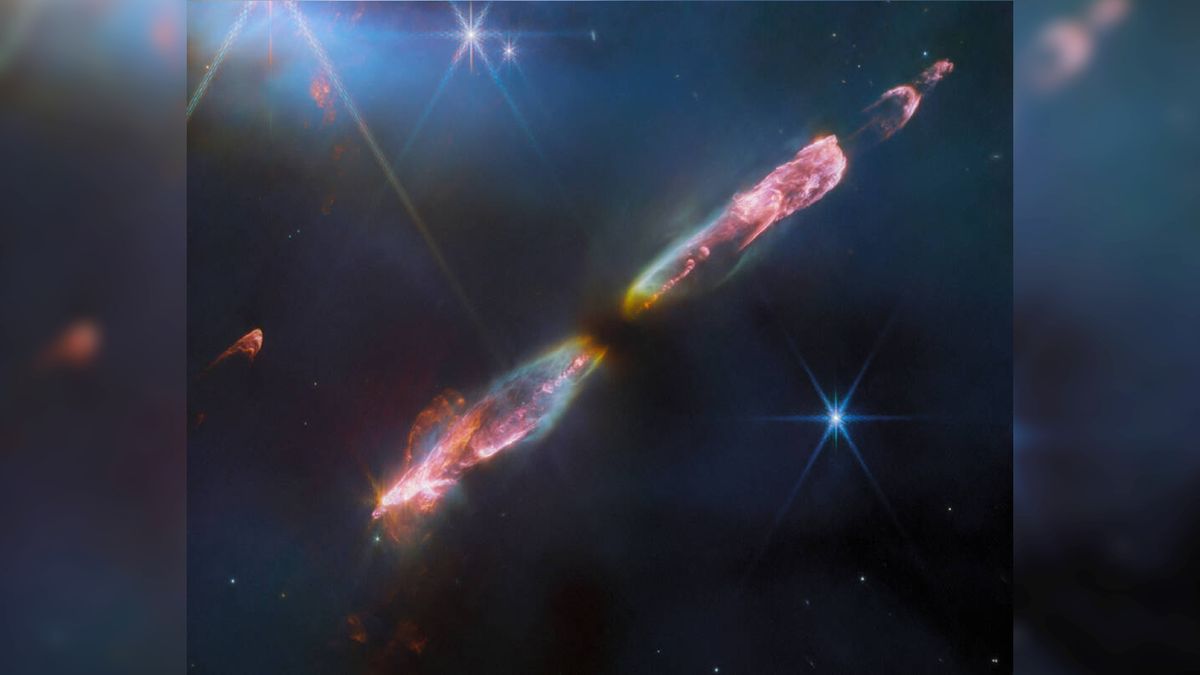
The James Webb Space Telescope (JWST) has captured stunning images of a newborn sun-like star, HH 211, emitting supersonic streams of gas and dust that create vibrant shockwaves resembling lightsabers. The protostar, located in the Perseus constellation, is surrounded by bipolar jets and is believed to be only a few thousand years old. The infrared images reveal that the jets are primarily composed of molecules, such as carbon monoxide and silicon monoxide, rather than individual atoms or ions. The high-resolution photo also shows the presence of "wiggling" tendrils of gas and dust, suggesting the possibility of an unresolved binary star system. JWST's detailed observations provide valuable insights into the formation and composition of cosmic structures.
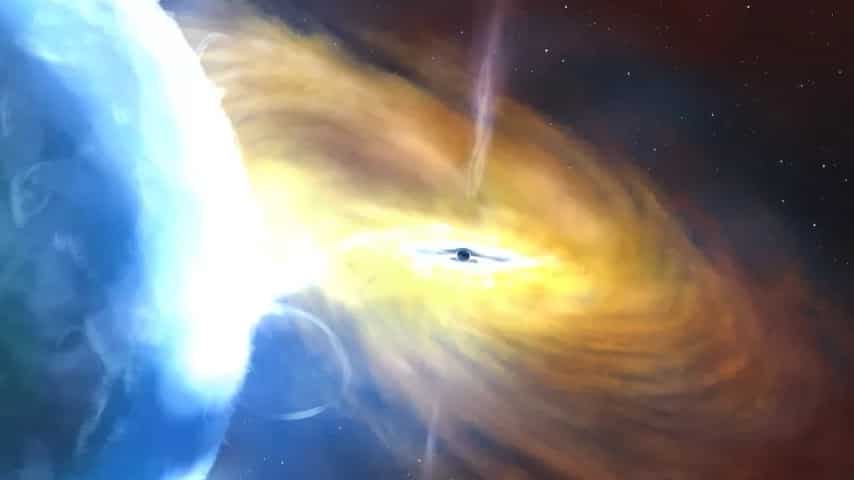
Astronomers have observed the largest explosion in space, called AT2021lwx, which has been ongoing for three years and is 10 times brighter than any known supernova. The explosion occurred 8 billion light-years away when the universe was 6 billion years old and is believed to be the result of a black hole violently disrupting a massive cloud of gas. The explosion's exceptional brightness is comparable only to quasars emitted by supermassive black holes. The researchers plan to study the explosion in different light wavelengths to understand its temperature and driving processes.