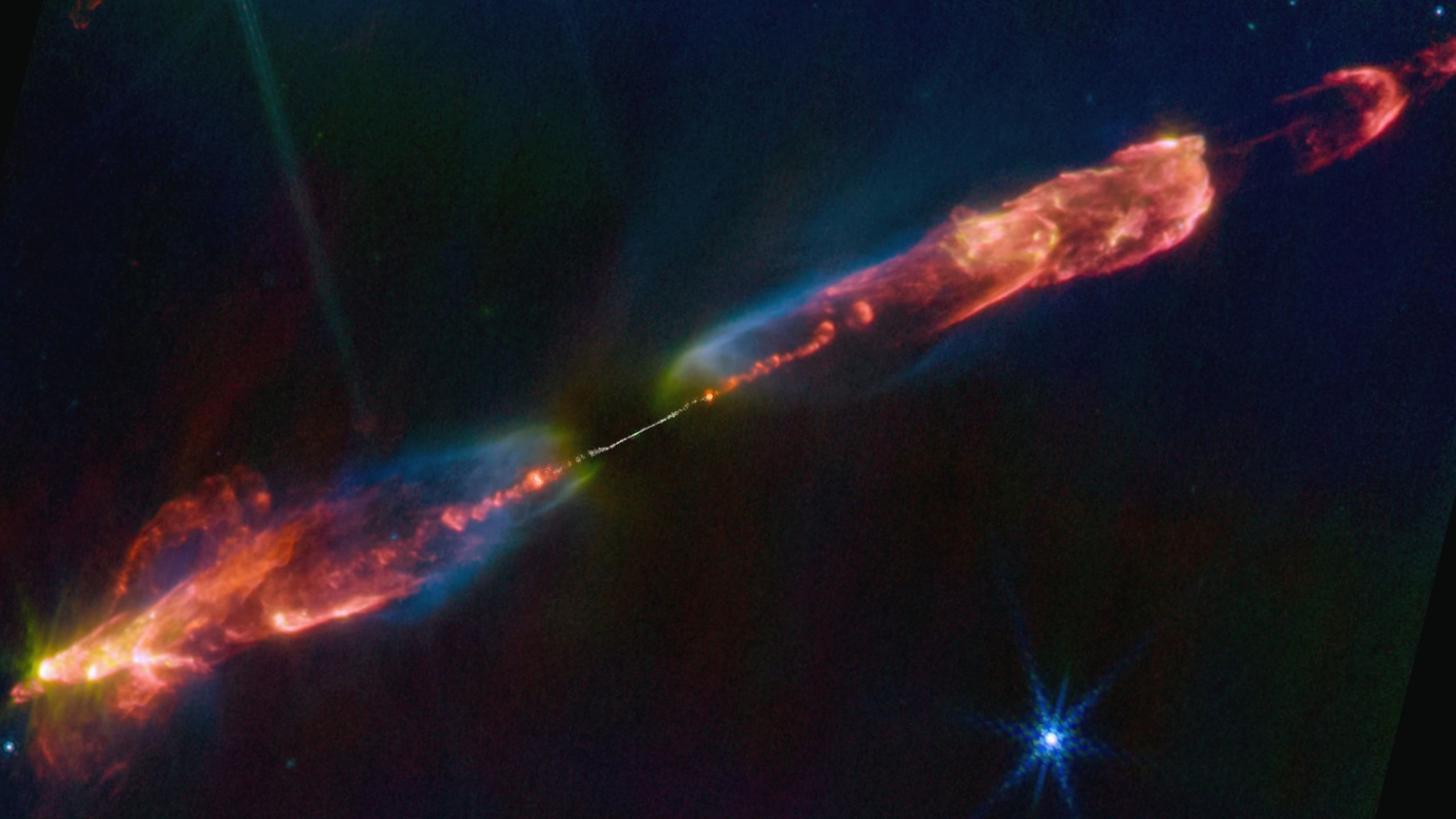
ALMA and JWST have captured the first image of the launch point of protostellar jets in the HH 211 system, providing new insights into how young stars grow by shedding excess angular momentum through magnetic field-driven jets, which helps material accrete onto the star.
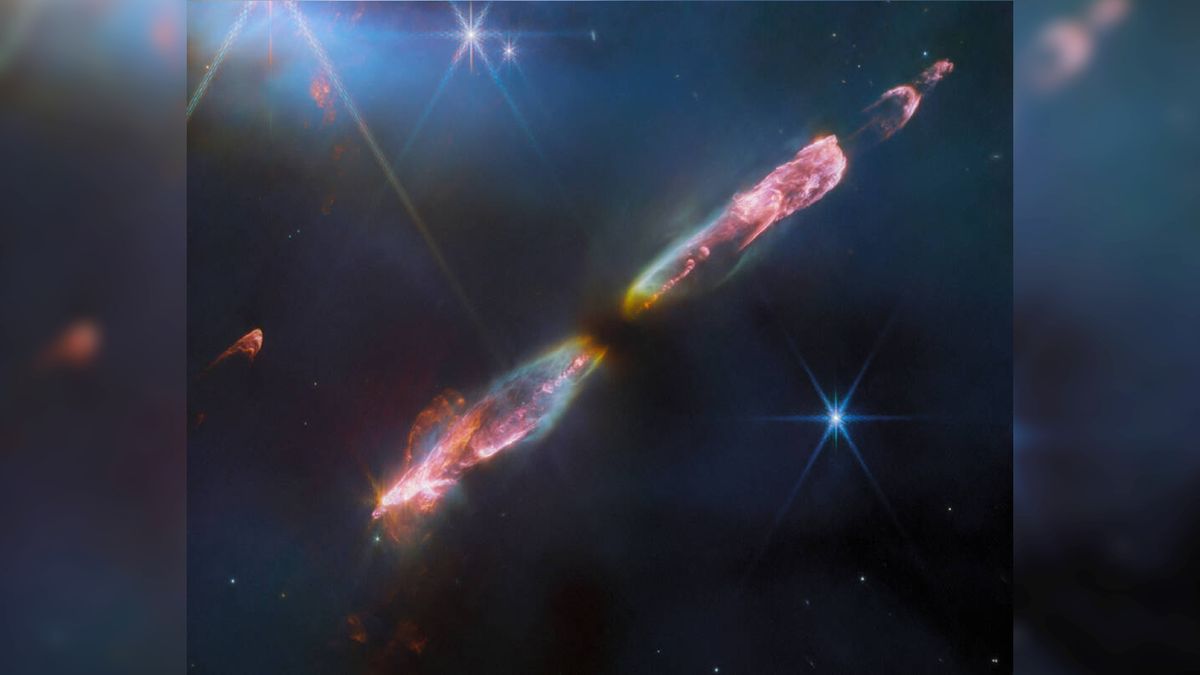
The James Webb Space Telescope (JWST) has captured stunning images of a newborn sun-like star, HH 211, emitting supersonic streams of gas and dust that create vibrant shockwaves resembling lightsabers. The protostar, located in the Perseus constellation, is surrounded by bipolar jets and is believed to be only a few thousand years old. The infrared images reveal that the jets are primarily composed of molecules, such as carbon monoxide and silicon monoxide, rather than individual atoms or ions. The high-resolution photo also shows the presence of "wiggling" tendrils of gas and dust, suggesting the possibility of an unresolved binary star system. JWST's detailed observations provide valuable insights into the formation and composition of cosmic structures.