Senate Republicans, with late support from Democrats like Tim Kaine, secured a deal to end the government shutdown by including provisions to protect federal workers from layoffs and future reductions, culminating in a bipartisan effort involving key negotiations and White House coordination.
The Trump administration has initiated substantial layoffs of federal workers amid the government shutdown, with notices being sent out to affected employees, particularly in the Department of Health and Human Services, although details on the total number and specific agencies involved remain unclear. The move has faced legal challenges and criticism from unions, with concerns about the legality and necessity of these layoffs during a shutdown.
The article discusses the possibility of NASA issuing RIF (Reduction in Force) notices following a tweet by OMB Director Russell Vought, indicating potential budget cuts or layoffs at NASA, with the situation still uncertain.
House Democrats are investigating the Trump administration's plans for federal employee layoffs during the partial government shutdown, arguing that conducting reductions in force (RIF) during a shutdown violates federal laws such as the Antideficiency Act and the Government Employee Fair Treatment Act, and raising concerns about legality and transparency in agency actions.
Federal employee unions are suing the Trump administration over plans to conduct layoffs during a government shutdown, arguing that such reductions in force are illegal during a lapse in appropriations and violate existing statutes. The unions contend that the guidance encouraging RIFs during shutdowns is unlawful and seek an injunction to prevent these actions, emphasizing the dedication of federal workers and the legal constraints on firing employees during funding gaps.
During a government shutdown, agencies can continue work related to reductions in force (RIFs) as 'excepted activities,' allowing them to issue notices and prepare for layoffs without interruption, though impacted employees will not be paid during the shutdown but are guaranteed backpay afterward. RIFs still require a 60-day notice, and employees' employment status remains until their official separation date, even if it overlaps with a shutdown. The guidance emphasizes separate notices for RIFs and shutdown plans, and clarifies rules for furloughed employees and those on administrative leave. The administration encourages agencies to proceed with RIF plans, though many are relying on voluntary separations instead.
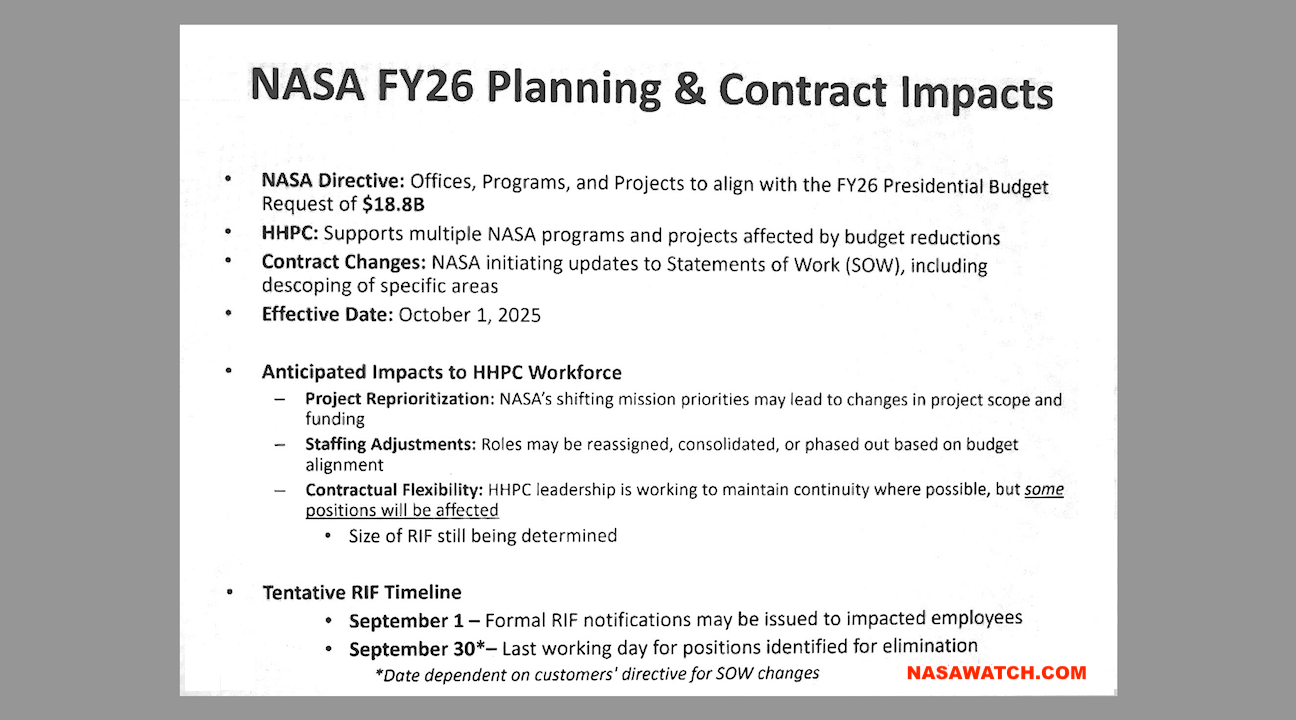
NASA is planning a reduction in force (RIF) affecting contractor employees within the Human Health and Performance Contract community, as part of broader budget realignment with the FY26 Presidential Budget Request of $18.8 billion. The layoffs are expected to begin around September 1, with some positions phased out by September 30, and are driven by project reprioritization and budget adjustments, not yet approved by Congress.
The U.S. government released a list of federal agencies involved in planned workforce reductions, but the details remain vague and the plans' public release is uncertain, with ongoing legal disputes over their transparency and legality.
NASA is reportedly discussing a significant reduction in workforce, with plans to cut over 3,000 jobs, and management is encouraging employees to leave voluntarily amid ongoing downsizing efforts.
NASA Kennedy's COMET contract management announced a reduction in force (RIF) due to significant budget cuts to the ISS program, which will impact personnel and scope of work, with ongoing efforts to manage the staffing and funding challenges transparently.