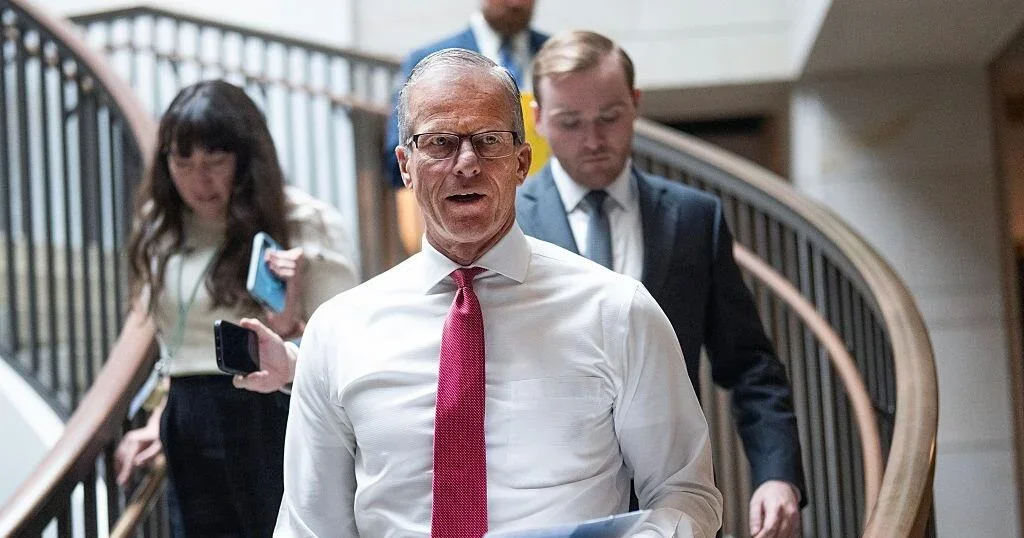
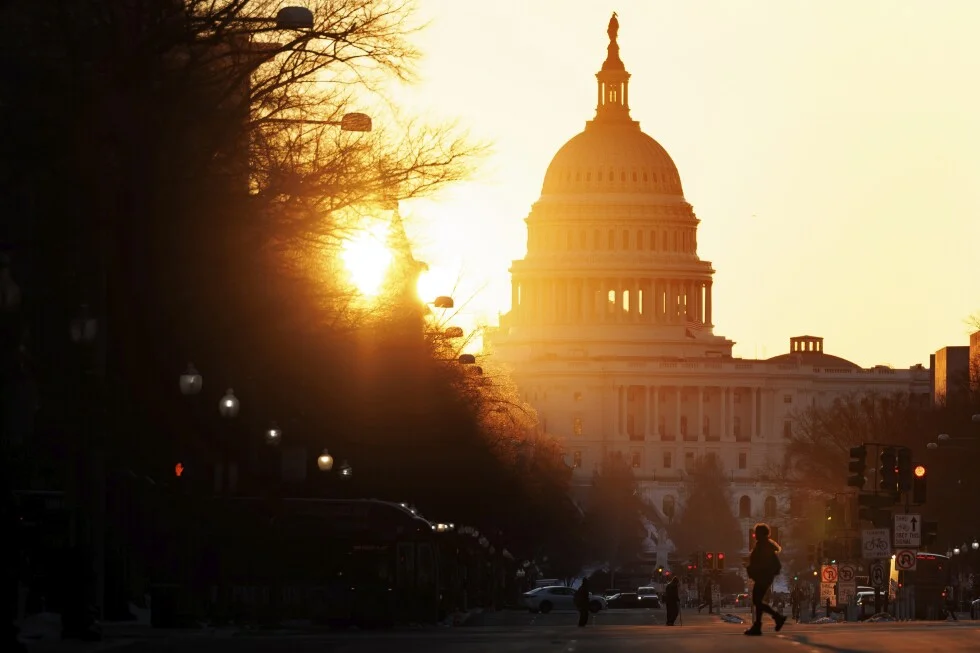
The House passed a bipartisan package of three spending bills to fund parts of the federal government through September, aiming to prevent another shutdown, with broad support from both parties and the White House, covering agencies like the Interior Department and EPA, and including provisions to limit presidential funding delays and maintain certain priorities.
Efforts are underway to prevent a government shutdown this year, with both parties engaging in constructive negotiations and the White House maintaining a low profile, learning from the previous year's political fallout, while key figures like Trump continue to push for the elimination of the filibuster to facilitate legislative action.
Trump Mobile has delayed the launch of its gold-colored T1 smartphone, blaming the US government shutdown for disrupting shipments and regulatory processes. Originally scheduled for release in late 2023, the device's delivery has been pushed to January 2024, amid ongoing operational challenges and changes in marketing claims about US manufacturing. The company operates as a virtual network using existing carriers and has faced criticism over its supply chain and production claims.
In 2026, federal agencies will face key issues including potential government shutdowns due to funding delays, workforce reductions and layoffs, implementation of Schedule F affecting civil service protections, major reorganizations across agencies, and ongoing legal battles over layoffs, agency dismantling, and funding disputes, all amid efforts to reshape the federal government under the Trump administration.
The article questions the reliability of recent U.S. economic statistics, highlighting how government shutdowns and data collection issues distort the true economic experience, especially for middle- and lower-income Americans, despite positive headlines about inflation and GDP growth. It emphasizes that these figures often benefit the wealthy and do not reflect the struggles of most Americans, warning against partisan interpretations and stressing the need for cautious analysis.
During a government shutdown that paused SNAP benefits, a rapid response by GiveDirectly and Propel provided $50 cash transfers to nearly a quarter of a million families, helping them manage immediate food needs and restore confidence in safety nets amid widespread uncertainty.
The November inflation report shows a surprisingly low 2.7% increase, but economists criticize it for being distorted by data collection issues caused by the government shutdown, especially in housing costs, which are a major component of inflation. The report's reliability is questioned, and market reactions remain muted, with experts cautioning against drawing policy conclusions from these flawed numbers.
The Transportation and Infrastructure Committee approved multiple bills, including the Aviation Funding Solvency Act to protect the air traffic control system during government shutdowns, and legislation to modernize aviation, improve water quality, and relocate the FBI headquarters, among other initiatives.
A federal judge ordered the Trump administration to reverse hundreds of layoffs caused by the government shutdown, ruling that these reductions in force must be rescinded with full back pay, and temporarily pausing further layoffs until January 30, highlighting a legal setback for efforts to reduce the federal workforce.
Delayed inflation data due to the government shutdown suggests easing price pressures, providing a boost to Trump, but experts warn the figures may be distorted and require further verification with upcoming data.
Wall Street economists warn that November's US inflation report, showing a sharp decline, may be flawed due to missing data caused by the government shutdown, leading to skepticism about the accuracy of the figures and their impact on monetary policy.
An upcoming inflation report is expected to show a slight increase in November, reflecting recent price hikes in items like coffee and beef, amid ongoing economic challenges such as sluggish hiring, rising unemployment, and cautious Federal Reserve interest rate adjustments.
A federal judge in San Francisco has ordered the reversal of hundreds of layoffs of federal employees that were finalized during the recent government shutdown, citing violations of a stopgap spending bill that prohibited such layoffs until January 30, 2026. The ruling impacts about 680 employees across several agencies and emphasizes the legal obligation to halt these reductions, with ongoing debates about the administration's interpretation of the law.
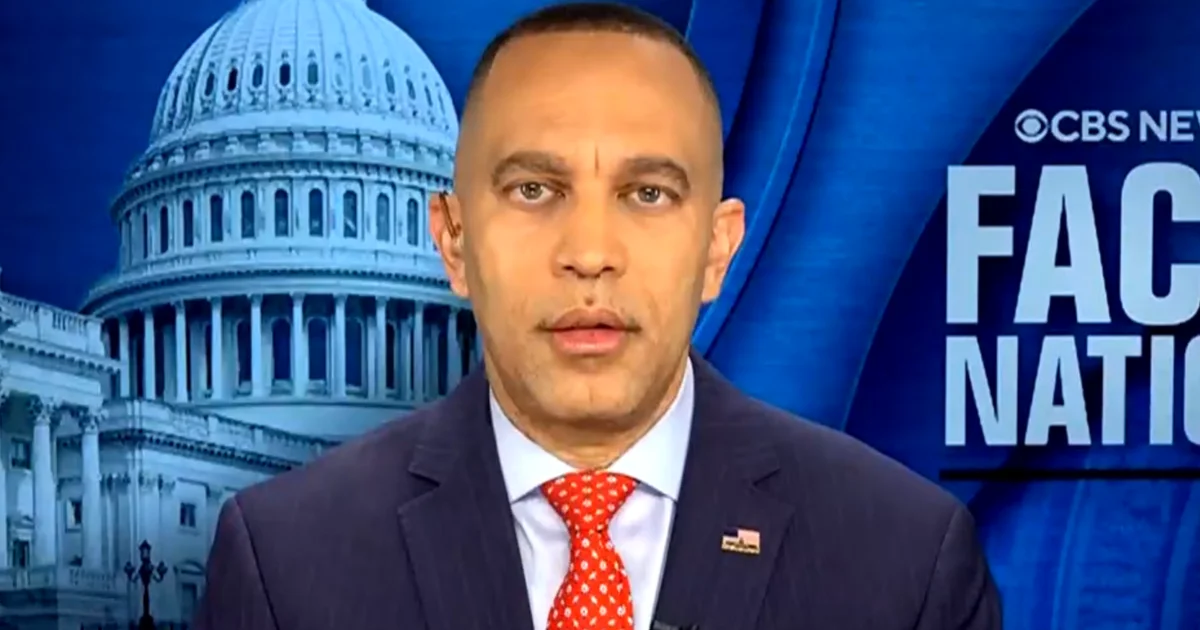
House Speaker Mike Johnson announced there will be no vote to extend COVID-era healthcare subsidies, likely leading to increased premiums for millions of Americans, as Republicans cite budget concerns and Democrats push for a quick extension amid upcoming elections.
The US is releasing delayed employment and CPI reports due to a government shutdown, resulting in missing October data, including the unemployment rate and CPI components, which impacts economic analysis and policy decisions.