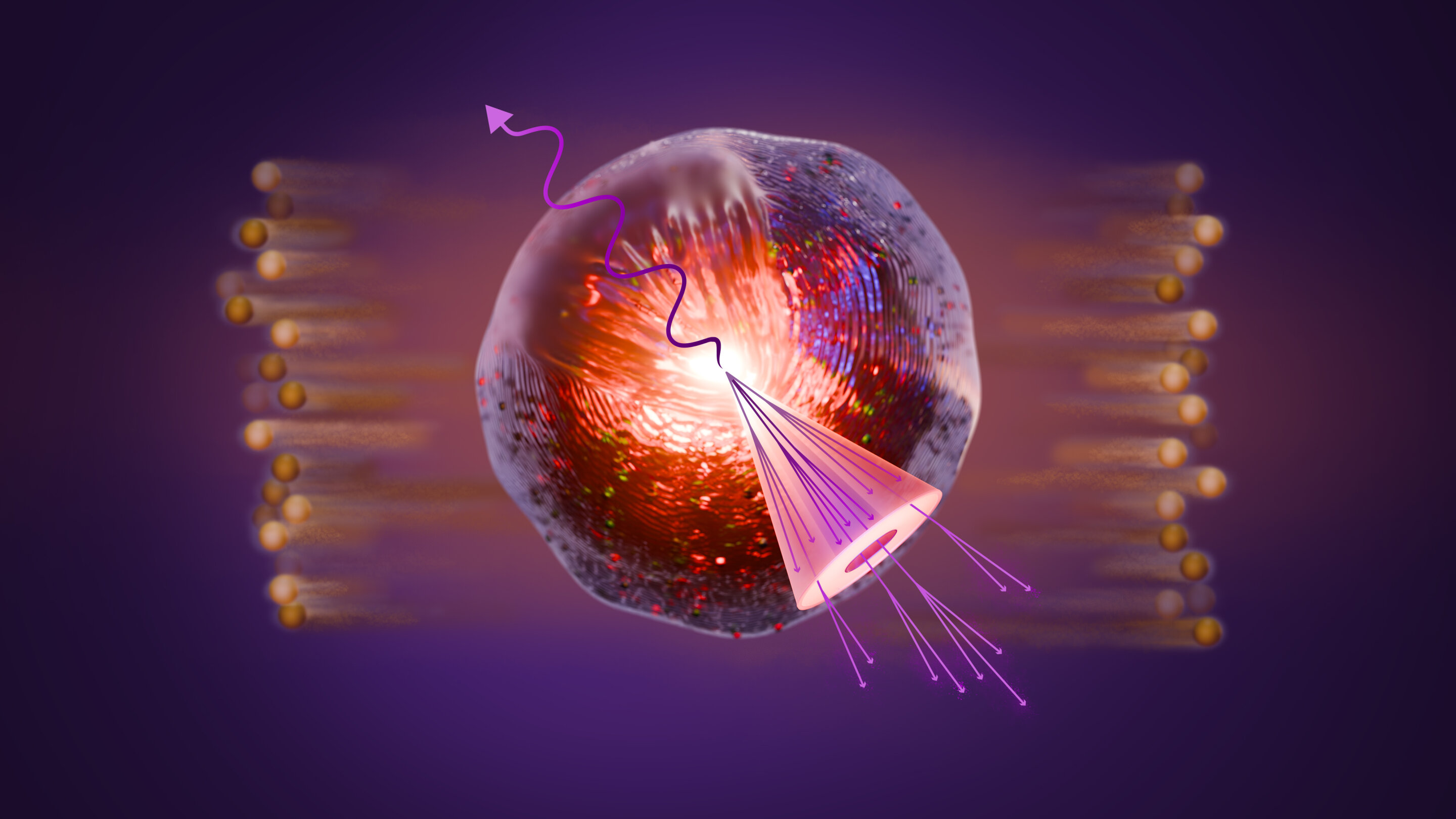
New experiments at RHIC reveal how quark-gluon plasma 'splashes' sideways when hit by energetic jets, providing insights into its properties and behavior during high-energy collisions, similar to a splash in water, and helping scientists understand the early universe conditions.
Physicists at the Relativistic Heavy Ion Collider (RHIC) are studying phase changes in nuclear matter from gold ion collisions to identify a critical point in these transformations. Their research, involving recreating and examining the transition of quark-gluon plasma, a state of matter present after the Big Bang, suggests that fluctuations in the formation of lightweight nuclei could indicate this critical point. Certain data deviations hint at potential fluctuations, but further research is required to confirm a discovery.
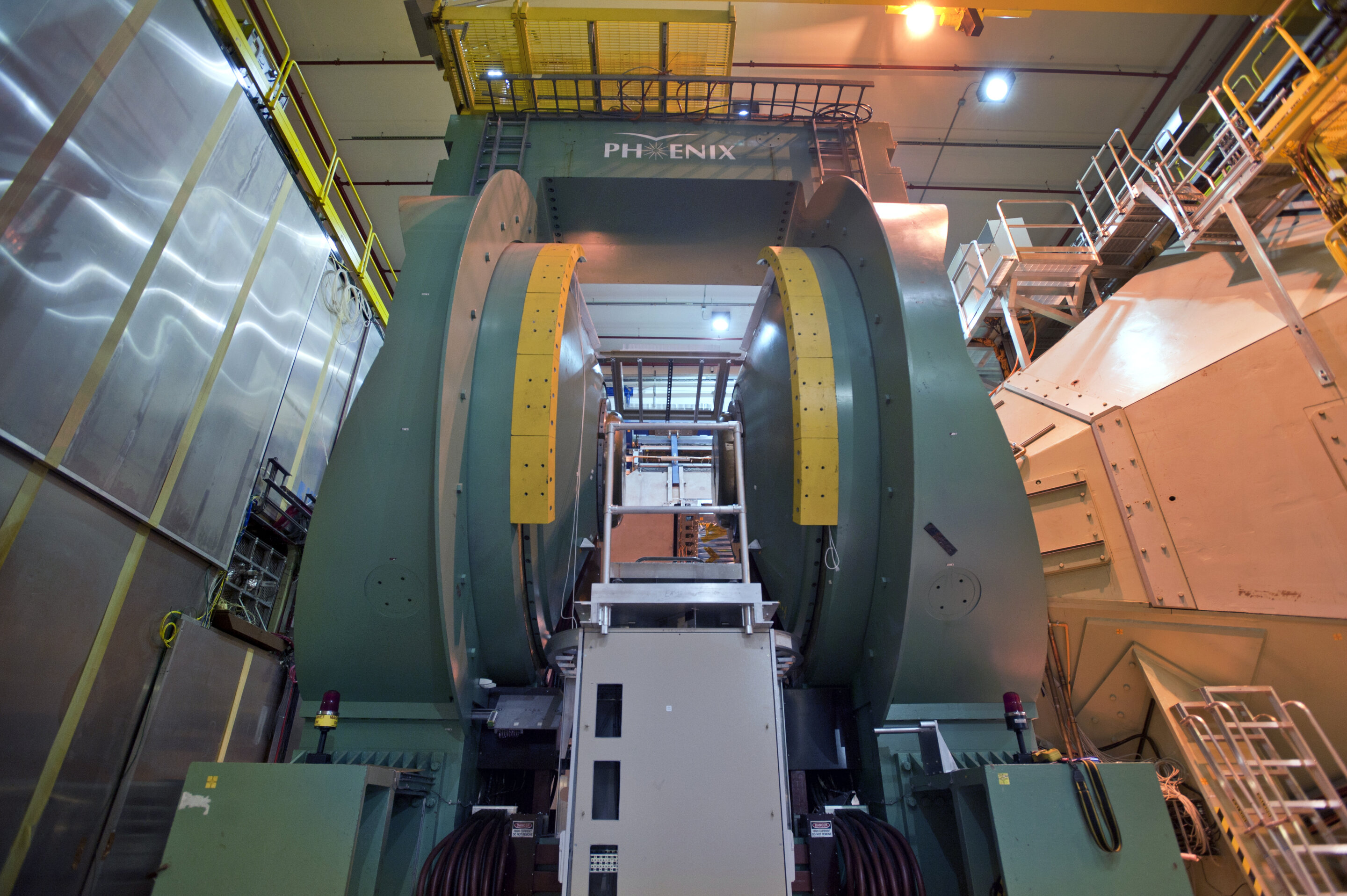
A new publication by the PHENIX Collaboration at the Relativistic Heavy Ion Collider (RHIC) provides definitive evidence that gluon "spins" are aligned in the same direction as the spin of the proton they're in. The result provides theorists with new input for calculating how much gluons contribute to a proton's spin. The new PHENIX result is one of the "golden" measurements proposed as a key motivator for the RHIC spin physics program. It's a comparison of the number of "direct photons" (particles of light) emitted when RHIC collides protons with their spins pointing in opposite directions with the number of direct photons produced when the protons in the two beams are pointing in the same direction.
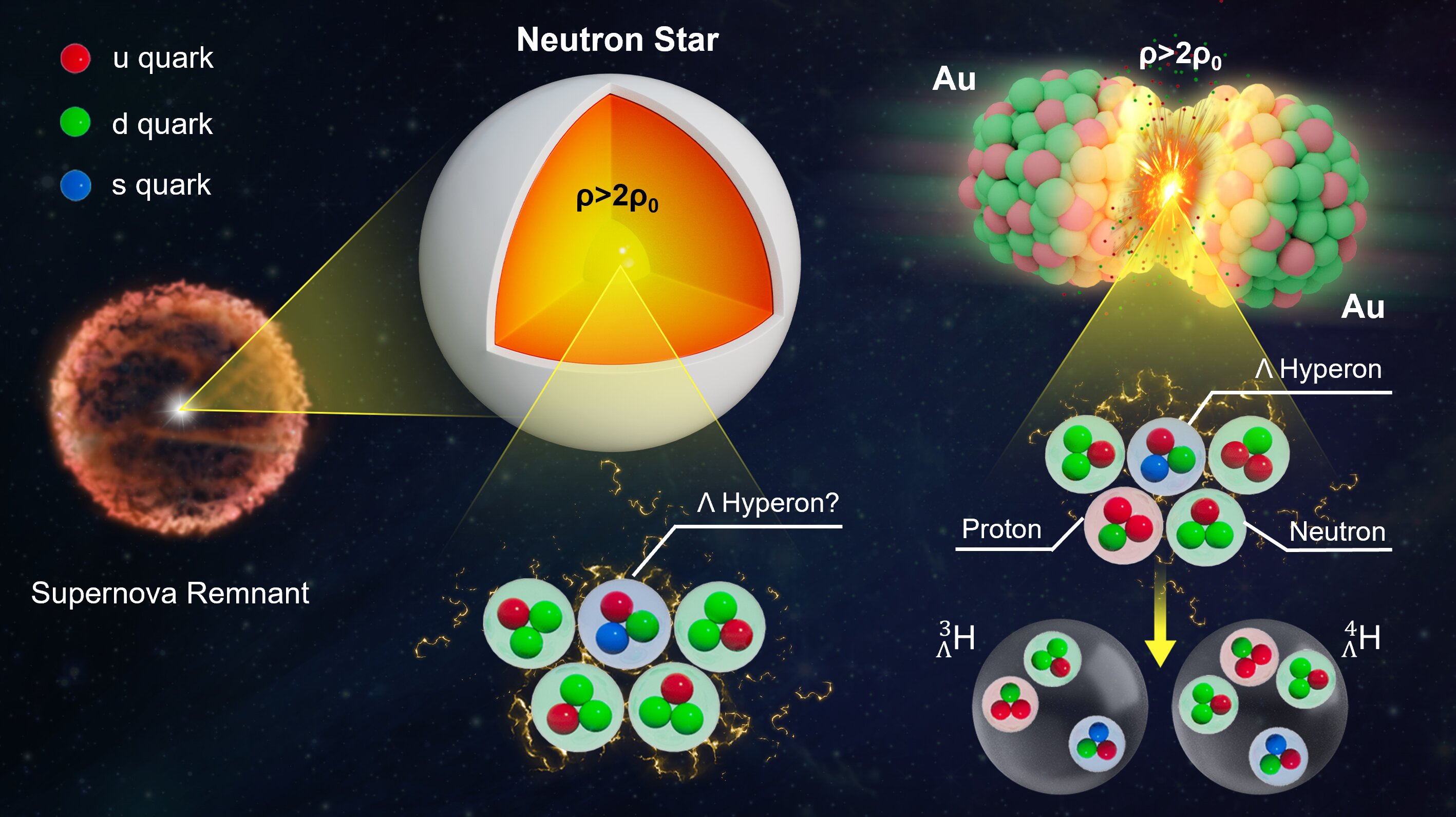
Physicists at the Relativistic Heavy Ion Collider (RHIC) have observed the directed flow of hypernuclei, rare nuclei containing at least one hyperon, in particle collisions. Hyperons, which contain a “strange” quark, are believed to be abundant in neutron stars. By simulating these conditions in the laboratory, researchers aim to understand the interactions between hyperons and nucleons. The observations, mirroring regular nuclei flow patterns, will help enhance theoretical models of neutron stars.
Physicists at the Relativistic Heavy Ion Collider (RHIC) have observed the directed flow of hypernuclei, which contain at least one "hyperon" in addition to ordinary protons and neutrons. These hyperons contain at least one "strange" quark and are thought to be abundant in the hearts of neutron stars. By comparing the flow of hypernuclei with that of similar ordinary nuclei made only of nucleons, scientists hope to gain insight into interactions between the hyperons and nucleons and understand the inner structure of neutron stars.
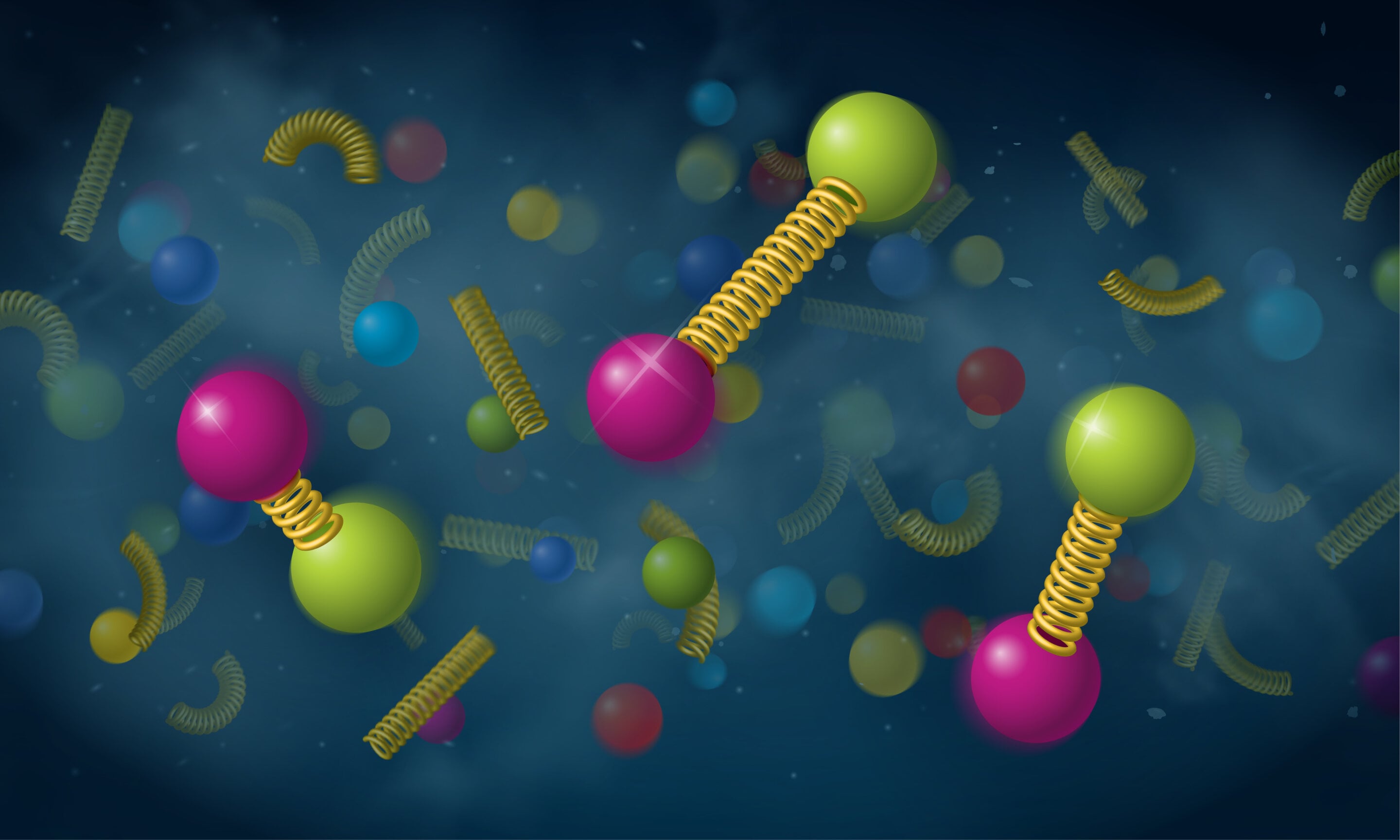
Scientists using the Relativistic Heavy Ion Collider (RHIC) have published their first data showing how three distinct variations of particles called upsilons sequentially "melt," or dissociate, in the hot quark-gluon plasma. The findings will help scientists learn about the properties of the QGP, including its temperature.