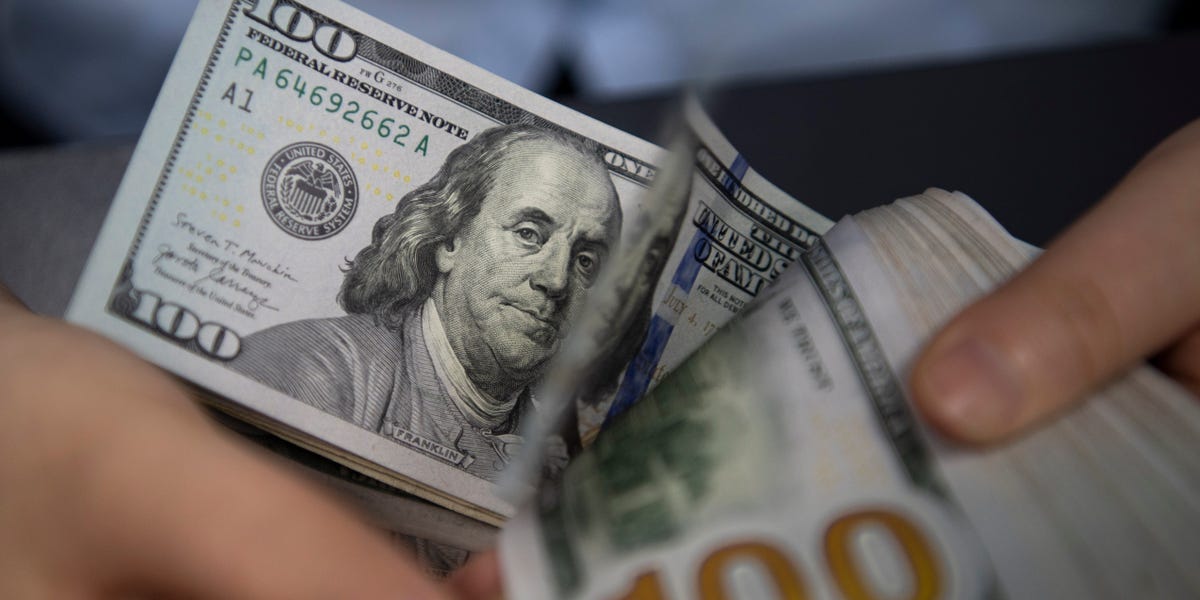
JPMorgan Chase CEO Jamie Dimon warns that the US dollar could lose its status as the world's reserve currency if the US government does not address internal financial mismanagement and restore its economic and military dominance within the next 40 years.
Federal Reserve Governor Waller discusses the U.S. dollar's role in global finance, addressing concerns about its potential decline. He outlines the various dimensions of the dollar's international role, emphasizing its dominance as a store of value, medium of exchange, and unit of account. Despite potential challenges from digital currencies, the euro, and the Chinese renminbi, the dollar's status remains strong, supported by its stability, liquidity, and widespread use in trade and finance. Waller concludes that recent developments have, if anything, strengthened the dollar's international position, and he does not foresee a significant decline in its primacy in the near future.
After 54 years as a financial analyst, Richard X. Bove predicts the end of the U.S. dollar as the world's reserve currency, citing China's potential to overtake the U.S. economy. Bove criticizes other analysts for not speaking out against the mainstream financial system and endorses cryptocurrency as a natural beneficiary of the dollar's decline.
Market expert Lynette Zang warns that the U.S. dollar is rapidly losing its status as the world's primary reserve currency, citing the Federal Reserve's need to buy U.S. debt as a sign of saturation or lack of demand. Zang also expresses concerns about the ongoing banking crisis and accuses Treasury Secretary Janet Yellen and Federal Reserve Chairman Jerome Powell of keeping the public calm while wealth is being stolen. She recommends investing in gold as a protective hedge, but warns that the introduction of central bank digital currencies (CBDCs) could lead to restrictions on buying gold. Gold is seen as a store of value and a safe-haven asset in times of economic uncertainty and geopolitical risks.
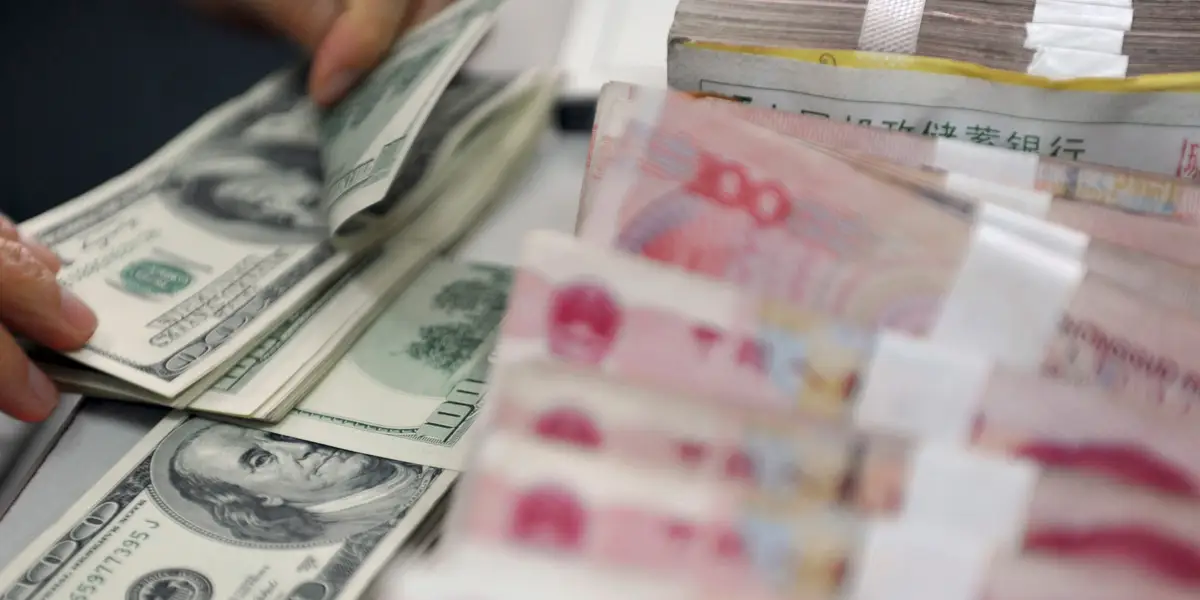
The dominance of the US dollar as the world's reserve currency is facing challenges due to a combination of factors. Western-led sanctions against Russia have prompted countries to seek alternative currencies for trade, such as the Chinese yuan and bitcoin. Additionally, concerns over the outsized influence of US monetary policy and the strong USD being expensive for emerging nations have fueled the desire for de-dollarization. Furthermore, the diversification of global trade and the rise of the shale-oil industry have put the petrodollar at risk, potentially leading to a shift away from the USD as the global reserve currency.
Emerging central banks are preparing for a new monetary regime in which gold will play a vital role as a settlement mechanism, according to Goehring & Rozencwajg. Central banks have stepped up gold allocation, boosting their reserves, led by emerging economies such as China, India, Turkey, Egypt, Qatar, and Singapore. The U.S. dollar might be on the verge of losing its reserve currency status, and a change in the dollar's reserve currency status would be the most impactful market shock of the last forty years.
China may not be fully supportive of making the yuan the reserve currency of choice, as Beijing is unwilling to open its capital accounts or to run a deficit. China is likely to pursue its sphere of currency influence among countries it trades with actively, such as Asia, breaking up US dollar dominance in parts of the world instead. The US dollar's position and clout as a reserve currency comes at a cost, a current account deficit for America, which China cannot afford to run.
China is unlikely to push for the yuan to become the dominant global reserve currency due to its unwillingness to liberalize its currency and allow money to move freely in and out of its economy, its inability to run a persistent deficit like the US, and the geopolitical risks it faces. Instead, Beijing is likely to focus on breaking up US dollar dominance in parts of the world and pursuing its sphere of currency influence among countries it trades with actively.
The dollar's status as the world's dominant currency is under scrutiny due to rivalry with China, fallout from Russia's war in Ukraine, and wrangling in Washington over the US debt ceiling. The dollar share of official FX reserves fell to a 20-year low of 58% in Q4 2022, according to IMF data. However, de-dollarisation would require a vast and complex network of exporters, importers, currency traders, debt issuers, and lenders to independently decide to use other currencies, making it unlikely. While there may not be a single dollar successor, mushrooming alternatives could create a multipolar world. The dollar's status is underpinned by the $23 trillion US Treasury market, viewed as a safe haven for money.
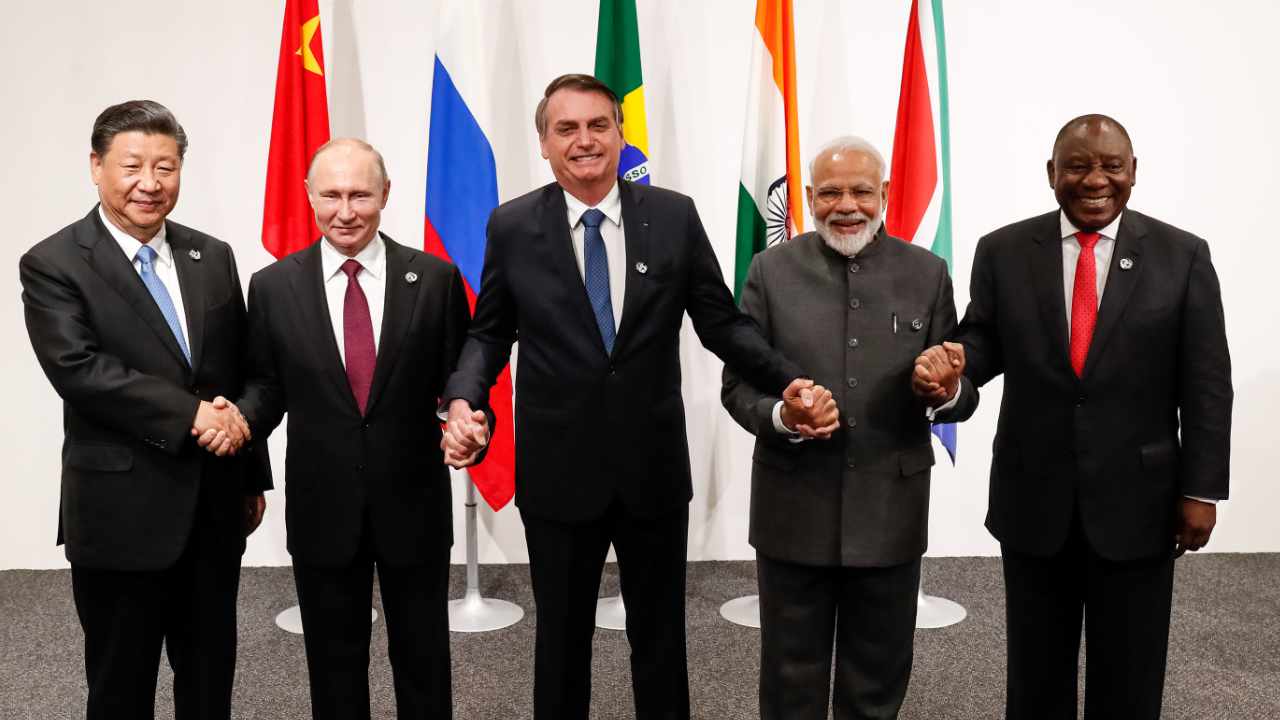
Amid the de-dollarization debate, countries are lining up backup reserve currencies for trade and payments. The Chinese yuan, gold, Bitcoin, the euro, and a common BRICS currency aim to chip away at USD supremacy. The dollar's share in global foreign exchange reserves fell to under 60% in the fourth quarter of 2021, according to the International Monetary Fund. However, the dollar is still the world's most dominant reserve currency, accounting for 54% of global foreign exchange reserves in the fourth quarter of 2022.
Gold prices rose after the US inflation report showed that the consumer price index (CPI) came in close to market expectations. The CPI was up 0.4% from March and up 4.9% year-on-year, compared to the forecast of up 0.4% and up 5.0% year-on-year. China is expanding its gold reserves and may be abandoning the US dollar, which could weaken the US dollar's dominance as the global reserve currency. The US government could run out of money by June 1 if the debt ceiling is not raised.
Central banks around the world are diversifying their foreign exchange reserves by relying less heavily on the US dollar and buying gold at a rapid rate, according to former Morgan Stanley executive Ruchir Sharma. Nations are increasingly looking for ways to transact with each other without using the dollar as a medium for transactions. Sharma warns that the US may have overplayed its hand when it launched sanctions against Russia during its conflict with Ukraine, inadvertently sending a message to other countries that they could also face consequences for being on the wrong side of a conflict.
Former White House economist Joseph Sullivan has warned that a BRICS currency would erode the U.S. dollar’s dominance. If member nations use only a common BRICS currency for international trade, “they would remove an impediment that now thwarts their efforts to escape dollar hegemony,” he described. Sullivan believes that it is “realistic to imagine the BRICS using only the bric for trade.” However, he expects the BRICS currency to “raise a litany of thorny practical concerns.”
Many countries are seeking alternatives to the US dollar to reduce their dependence on the US financial system. The US dollar became the dominant international reserve currency after World War I and gained a greater role in 1944 with the Bretton Woods Agreement. However, the dollar has lost purchasing power since then. Russia and China are working together to reduce reliance on the dollar and establish cooperation between their financial systems. Other countries, such as Brazil, Argentina, and the UAE, are also making efforts to reduce their dependence on the dollar. Despite these movements, the dollar's global sovereign status is unlikely to end anytime soon.
Strategists at the Carson Group believe that the US dollar will remain the dominant global reserve currency due to the world's confidence in the US, the dollar's dominance in trade and international finance, and the US's willingness to maintain massive trade deficits. The US's trade deficit leaves foreign buyers holding onto a heap of dollars that it needs to put somewhere, and they often turn to US treasuries or hold USD in cash, which are liabilities of the US government that the US is more than willing to issue.