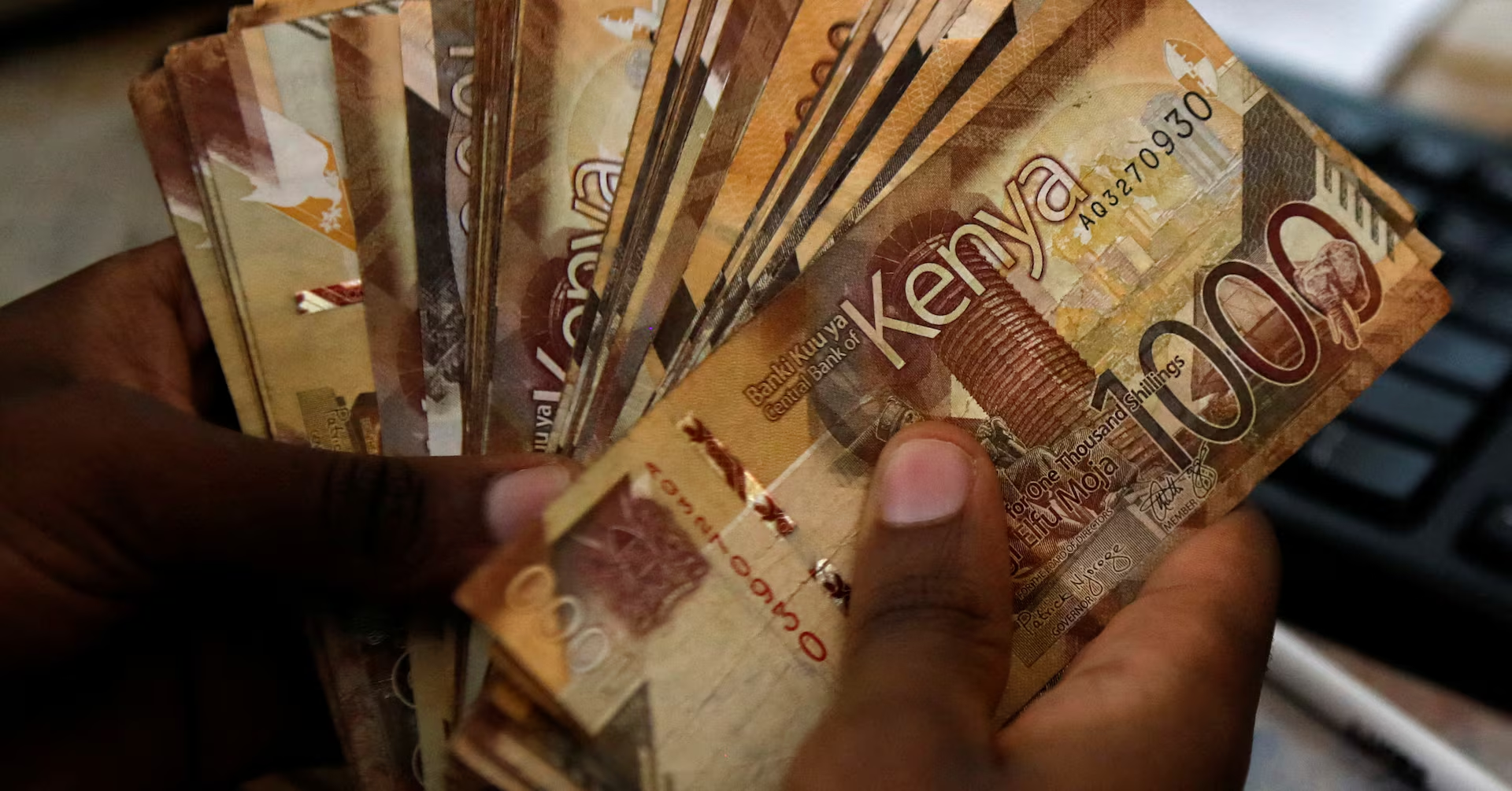
Africa is making significant progress in establishing local currency payment systems like PAPSS to reduce reliance on the dollar, aiming to lower trade costs and boost regional trade, despite opposition and threats from the US, particularly under President Trump's stance against de-dollarisation efforts.
The dollar's status as the world's dominant currency is under scrutiny due to rivalry with China, fallout from Russia's war in Ukraine, and wrangling in Washington over the US debt ceiling. The dollar share of official FX reserves fell to a 20-year low of 58% in Q4 2022, according to IMF data. However, de-dollarisation would require a vast and complex network of exporters, importers, currency traders, debt issuers, and lenders to independently decide to use other currencies, making it unlikely. While there may not be a single dollar successor, mushrooming alternatives could create a multipolar world. The dollar's status is underpinned by the $23 trillion US Treasury market, viewed as a safe haven for money.
The BRICS nations (Brazil, Russia, India, China, and South Africa) are reportedly considering creating a new currency to facilitate trade, which could be announced as soon as August when the countries meet for their annual summit in South Africa. The move is part of a larger trend towards de-dollarisation, which aims to reduce the US dollar's dominance in global markets. If the BRICS nations do create a new currency, it could help stabilize their economies and lead to increased consumer confidence and economic growth. However, it remains to be seen whether India will accept the new currency and whether the plan will actually come to fruition.