Tag

Relativity Space

All articles tagged with #relativity space

2026 Mars Landing Targeted by Private Space Company.

Originally Published 2 years ago — by Gizmodo

Featured image for 2026 Mars Landing Targeted by Private Space Company.
Source: Gizmodo

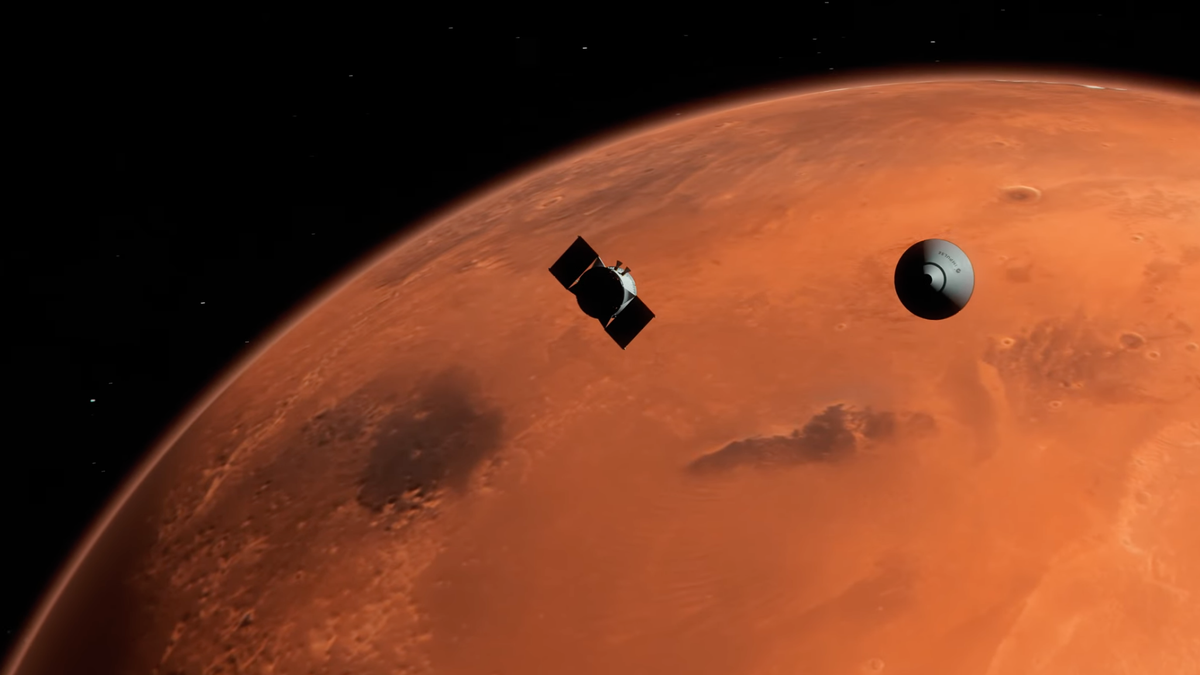
Relativity Space and Impulse Space are planning to become the first commercial venture to land on Mars and launch regular missions to create a "constant supply chain to Mars." They aim to send at least one mission for every launch window, which opens up every 26 months. The companies hope to make transport to Mars more affordable and open up new possibilities for space exploration.
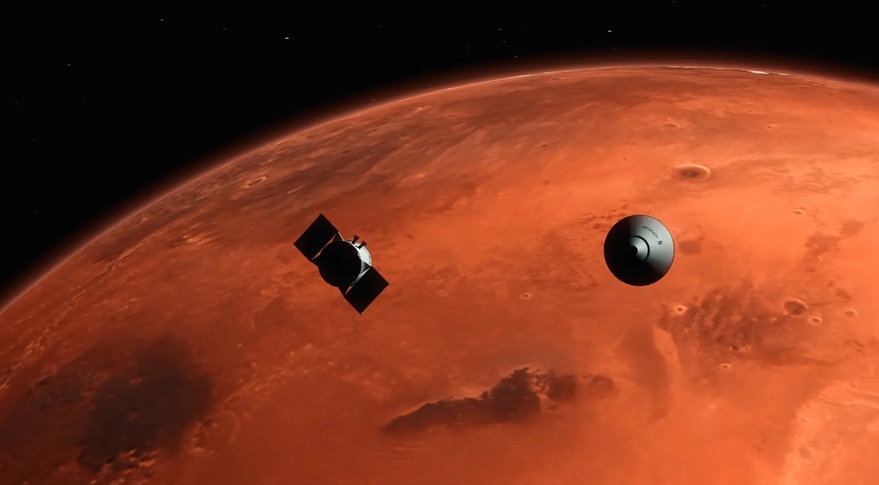

Impulse and Relativity aim for 2026 Mars lander launch.

Originally Published 2 years ago — by SpaceNews

Featured image for Impulse and Relativity aim for 2026 Mars lander launch.
Source: SpaceNews

Impulse Space and Relativity Space are targeting a 2026 launch for the first commercial robotic Mars lander mission, with plans for a regular series of such missions every 2.2 years. The companies aim to offer a catalog of different payload options and leverage designs and technologies developed for NASA’s InSight Mars lander. NASA is seen as one potential customer of those landers, and the companies want to demonstrate that there are companies both interested in and able to take on Mars missions.

"Revolutionizing Space: Relativity's Innovative Approach"

Originally Published 2 years ago — by CNBC

Featured image for "Revolutionizing Space: Relativity's Innovative Approach"
Source: CNBC

Relativity Space, a California-based aerospace startup, is using 3D printing, robotics, and machine learning to manufacture cheaper and quicker-to-manufacture rockets for future missions to the moon and Mars. The company recently launched its first 3D-printed rocket and is continuing to test its technology. Relativity Space aims to challenge Elon Musk's SpaceX and is among a number of commercial entrants testing rockets that can carry payloads to orbit and ultimately complete missions. The company has secured $1.3 billion in funding and is valued at $4.2 billion.

NASA's Innovative Alloy Enables 3D Printed Rocket Launch by Relativity Space

Originally Published 2 years ago — by SciTechDaily

Featured image for NASA's Innovative Alloy Enables 3D Printed Rocket Launch by Relativity Space
Source: SciTechDaily

Relativity Space launched the Terran 1, the first test rocket made entirely from 3D-printed parts, incorporating nine 3D-printed engines built using an innovative copper alloy known as Glenn Research Copper (GRCop), capable of withstanding temperatures nearing 6,000 degrees Fahrenheit. Developed at NASA’s Glenn Research Center, GRCop alloys offer high strength, thermal conductivity, and creep resistance, allowing them to tolerate temperatures up to 40% higher than traditional copper alloys. The GRCop alloys pair very well with the latest additive manufacturing methods, such as laser powder bed fusion and directed energy deposition, which can be used to build GRCop parts for many aerospace applications.

Relativity Space shifts focus to larger reusable rocket after shelving Terran 1.

Originally Published 2 years ago — by SpaceNews

Featured image for Relativity Space shifts focus to larger reusable rocket after shelving Terran 1.
Source: SpaceNews

Relativity Space has decided to retire its Terran 1 small launch vehicle after a single flight that failed to reach orbit, focusing its resources on a revised version of its larger Terran R rocket. The new Terran R design is a somewhat more conventional approach where only the first stage is recovered by landing on a ship downrange from the launch site, like SpaceX’s current Falcon 9 and other vehicles in development, such as Blue Origin’s New Glenn.

Relativity Space shifts focus to larger reusable rocket with new 3D-printing approach.

Originally Published 2 years ago — by Ars Technica

Featured image for Relativity Space shifts focus to larger reusable rocket with new 3D-printing approach.
Source: Ars Technica

Relativity Space is moving on from its Terran 1 rocket after its debut launch failure and is now focusing on developing the Terran R rocket, which will be significantly larger and more powerful. The Terran R will have a fully expendable version capable of lifting 33.5 metric tons and a reusable version capable of 20 re-flights with a payload capacity of 23.5 metric tons to low-Earth orbit. The rocket will be powered by 13 Aeon engines and will land on a drone ship in the Atlantic Ocean. Relativity Space plans to launch the Terran R in 2026.

Relativity Space shifts focus to larger reusable rocket after Terran 1 launch.

Originally Published 2 years ago — by CNBC

Featured image for Relativity Space shifts focus to larger reusable rocket after Terran 1 launch.
Source: CNBC

Relativity Space is shifting its focus to its larger reusable rocket, Terran R, after the first launch of its 3D-printed Terran 1 rocket failed to reach orbit. The company is blending its 3D-printing approach with traditional metal-bending techniques to accelerate work on Terran R, which is expected to debut in 2026. Relativity has won launch deals from seven customers worth over $1.6 billion for future flights on Terran R, which can launch up to 33,500 kilograms and is above SpaceX's Falcon 9 rocket in terms of capability.

3D-printed rocket launches and failures in the news.

Originally Published 2 years ago — by Ars Technica

Featured image for 3D-printed rocket launches and failures in the news.
Source: Ars Technica

Relativity Space successfully launched its Terran 1 rocket on its third attempt, but the second-stage engine failed to ignite. Virgin Orbit may receive a $200 million investment from an investor named Matthew Brown. Innospace, a South Korean startup, successfully launched its Hanbit-TLV rocket, marking the first successful launch of a space launch vehicle in the Korean private sector. Stoke Space shared photos of its "hopper" vehicle that will test the ability of its second stage to land. Isar Aerospace provided an update on engine testing for its Spectrum rocket, while OHB announced it wants to no longer hold a majority stake in Rocket Factory Augsburg.

Relativity Space's Terran 1: A Successful Failure in 3D-Printed Rocket Launch

Originally Published 2 years ago — by The Washington Post

Featured image for Relativity Space's Terran 1: A Successful Failure in 3D-Printed Rocket Launch
Source: The Washington Post

Relativity Space's 3D-printed Terran 1 rocket failed to reach orbit due to a second stage engine failure, but the launch was still hailed as a success as it achieved many of the company's milestones. The rocket is manufactured almost entirely by 3D printing, which offers several advantages, including fewer parts and a simplified manufacturing process. Relativity hopes to use this technology for a number of products and ultimately include manufacturing in space. The company has raised over $1 billion in venture capital investment and has a host of customers, including NASA, waiting for launches on its rockets.

3D-printed rocket launch fails to reach orbit in debut

Originally Published 2 years ago — by Engadget

Featured image for 3D-printed rocket launch fails to reach orbit in debut
Source: Engadget

Relativity Space successfully launched its 3D-printed rocket, Terran 1, but failed to reach orbit due to a second stage engine ignition issue. The rocket wasn't carrying a customer payload, but instead carried the first metal produced from Relativity's 3D printing system. The company still considers the mission an accomplishment as the rocket endured Max-Q. Relativity aims to demonstrate the viability of its 3D printing technique ahead of the reusable Terran R rocket's planned 2024 launch. However, there is mounting pressure to complete testing as competitors like SpaceX, Blue Origin, and Rocket Lab continue to advance.

3D-printed rocket's debut ends in failure.

Originally Published 2 years ago — by Ars Technica

Featured image for 3D-printed rocket's debut ends in failure.
Source: Ars Technica

Relativity Space's Terran 1 rocket successfully launched on its third attempt, but the second stage engine failed to ignite and fell back into the Atlantic Ocean. Despite this, the company characterized the mission as a success due to the rocket's passage through the area of maximum dynamic pressure during its flight profile. The Terran 1 rocket is made with about 85% additively manufactured material, making it a substantially new manufacturing process. Relativity may now pivot to its much larger Terran R vehicle.

Relativity Space's 3D-Printed Rocket Fails to Reach Orbit in Launch Attempts.

Originally Published 2 years ago — by The New York Times

Featured image for Relativity Space's 3D-Printed Rocket Fails to Reach Orbit in Launch Attempts.
Source: The New York Times

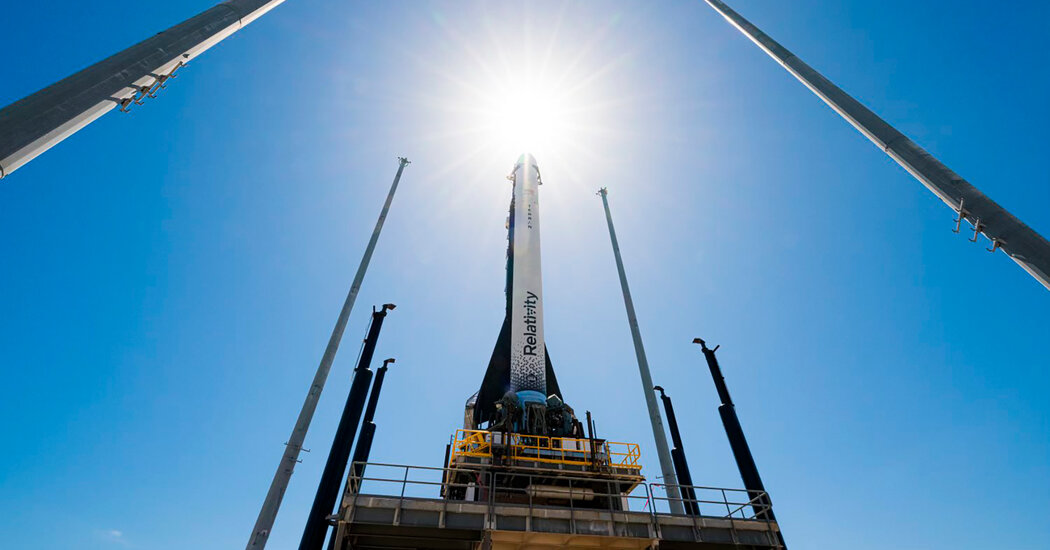
Relativity Space's 3-D printed rocket, Terran 1, failed during the second stage of its flight shortly after takeoff from Cape Canaveral, Florida. The rocket was not carrying people or a customer payload, and no one was hurt. The rocket was powered by nine 3-D printed engines and would have been the first rocket launched into orbit using liquid methane as its fuel. The rocket was carrying a wheel-shaped object, the first thing ever made by Relativity's 3-D printers, which was to demonstrate the rocket's ability to carry a payload to orbit. Relativity Space is among several companies building rockets to launch into orbit using liquid oxygen and liquid methane as propellants.

Relativity Space attempts third launch of 3D-printed rocket.

Originally Published 2 years ago — by Florida Today

Featured image for Relativity Space attempts third launch of 3D-printed rocket.
Source: Florida Today

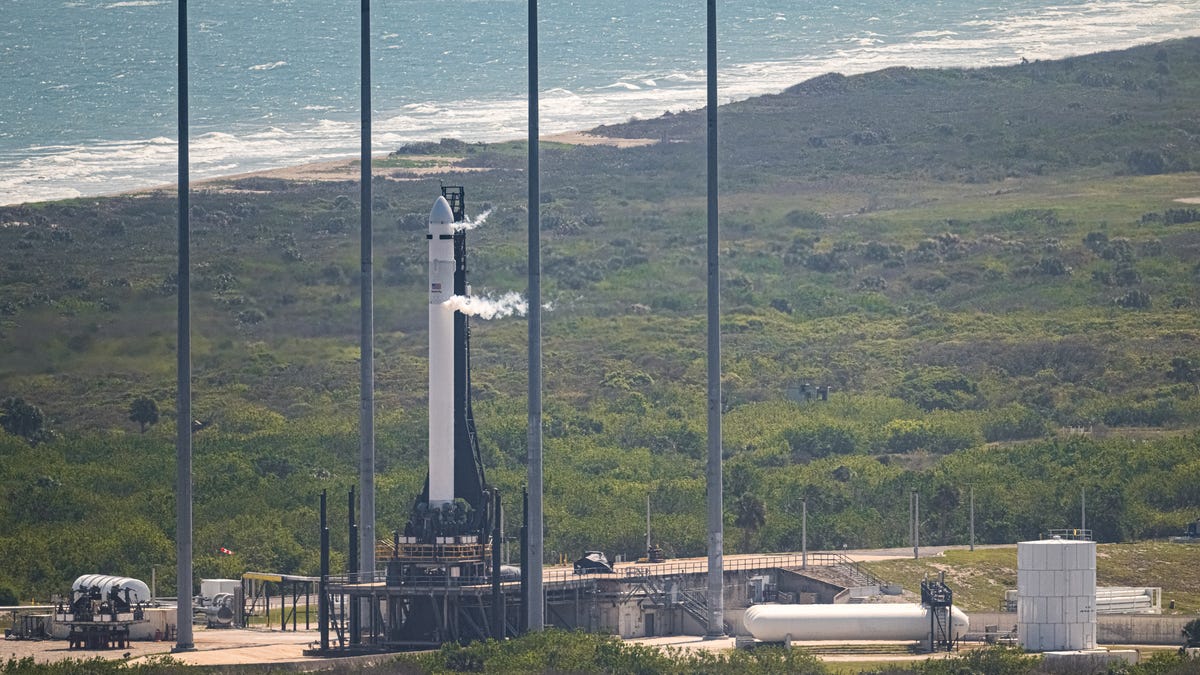
Relativity Space is set to launch its 3D-printed Terran 1 rocket, flying without a customer payload, from Cape Canaveral Space Force Station in Florida during a three-hour window that opens at 10 p.m. EDT on March 22. The rocket will fly an eastern trajectory over the Atlantic Ocean before separating from its second stage, which will then fire and attempt to achieve Earth orbit. If successful, this will mark the first 3D-printed rocket launch and the first time a methane-powered vehicle launches from Cape Canaveral.

Relativity Space to Launch World's First Fully 3D-Printed Rocket Tonight.

Originally Published 2 years ago — by Ars Technica

Featured image for Relativity Space to Launch World's First Fully 3D-Printed Rocket Tonight.
Source: Ars Technica

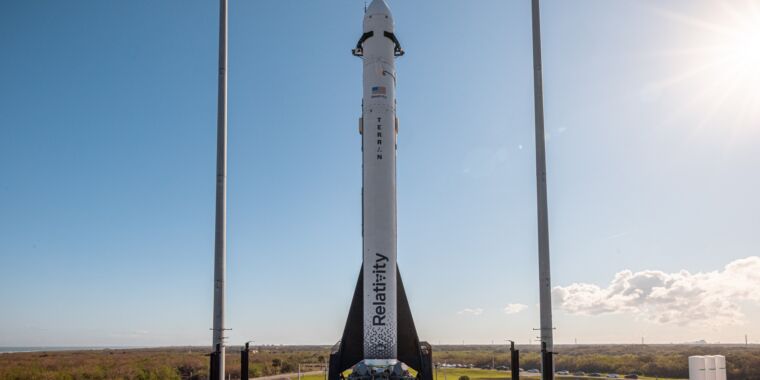
Relativity Space will attempt to launch its Terran 1 rocket, composed of about 85% 3D printed parts, for the third time on Wednesday evening from Florida. The company hopes to eventually additively manufacture as much as 95% of its rockets. The test flight, named "Good Luck, Have Fun," will carry no customer payloads and overall success is unlikely. Relativity is pushing boundaries with its methane-fueled booster, and the biggest test is whether the 3D-printed structure can withstand the dynamic pressure of ascent through the lower atmosphere.

Relativity Space attempts world's first 3D-printed rocket launch for third time.

Originally Published 2 years ago — by Space.com

Featured image for Relativity Space attempts world's first 3D-printed rocket launch for third time.
Source: Space.com

Relativity Space is set to launch its Terran 1, the world's first 3D-printed rocket, from Florida's Cape Canaveral Space Force Station tonight. The rocket is designed to haul up to 2,756 pounds to low Earth orbit and uses liquid methane as a fuel and liquid oxygen as an oxidizer. The launch will be the third attempt after previous attempts were scrubbed due to fuel-temperature issues and weather and range safety delays. The Terran 1 is a test flight for Relativity Space, which was founded in 2016 and plans to use the data to inform the development of its next launch vehicle, the reusable Terran R.