Gold eased from its all-time high as traders weigh rate expectations, while silver surged above $89 per ounce, highlighting diverging moves within the precious metals complex amid shifting outlooks for interest rates.
Despite market volatility and ongoing trade tensions, U.S. stocks have reached record highs, supported by easy financial conditions, a lower dollar, and strong corporate health. The Federal Reserve has maintained its interest rate, even as inflation pressures from tariffs are expected to be modest and delayed. Rate cuts are unlikely unless the labor market weakens significantly, with upcoming employment data being closely watched. Overall, the market's resilience and the Fed's cautious stance highlight a complex economic landscape.
Bank of America analysts predict that gold will shine in the summer of 2024, with prices potentially reaching $2,400 per ounce if the Federal Reserve cuts rates earlier than expected. While geopolitical factors like the conflict in the Middle East have boosted gold in the short term, the analysts believe that rates remain the key driver for gold prices. They also highlight the potential impact of armed conflicts on gold prices through its relationship with oil, suggesting that if a broadening regional conflict damages Middle East energy infrastructure, gold could rally to all-time highs.
Analysis suggests that there is a high probability of an equities rally after the Jackson Hole symposium, with historical data showing that equities have risen in the week following the event in most cases. Despite concerns about rising rates, there are early signs of divergence between equities and higher rates, indicating that stocks may not be significantly impacted by the last push higher in rates. The market remains cautious due to the challenging month of August and the potential tightening of financial conditions. The Federal Reserve's balanced speech at Jackson Hole signals a hold in September and a flexible, data-driven approach to November's decision.
A study has found that school districts with higher levels of social vulnerability are experiencing higher rates of SARS-CoV-2 transmission. The research suggests that factors such as poverty, lack of access to healthcare, and crowded living conditions contribute to the increased spread of the virus in these communities. This highlights the need for targeted interventions and support in order to mitigate the impact of COVID-19 on vulnerable school districts.
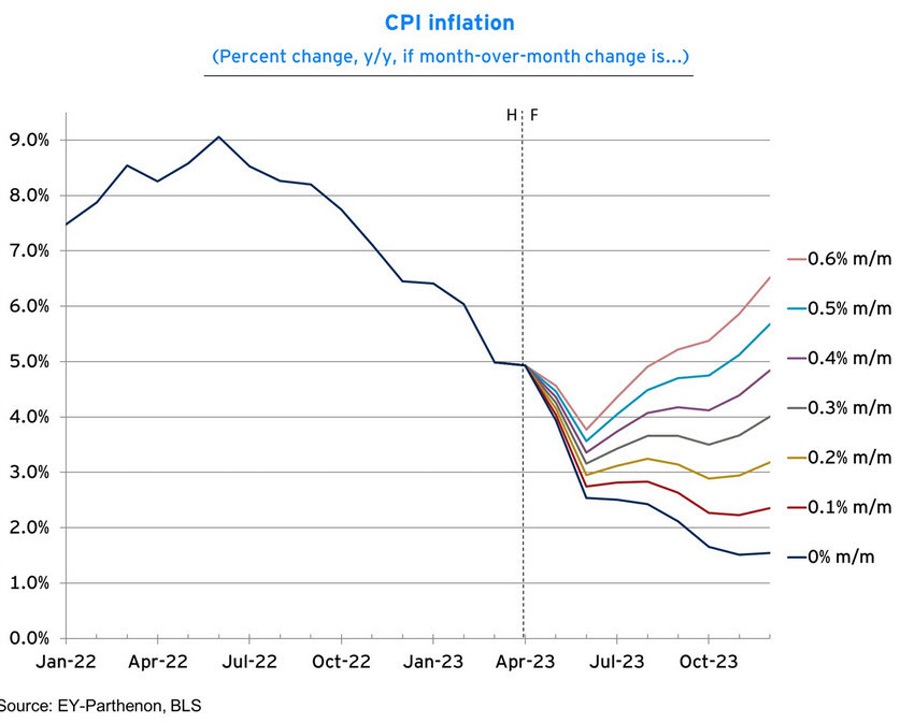
A chart from EY Parthenon's Greg Daco illustrates how monthly US inflation numbers migrate into year-over-year data. May and June will see lower year-over-year readings with gasoline prices down 30% y/y, but even with +0.2% readings, inflation will stay close to 3%, rather than falling to the Fed's target of 2%. The Fed will be looking for numbers in the +0.1-+0.2% range for many months before they signal preparedness to cut rates.
Avista Utilities has filed a request to raise rates for customers, which if approved by the Washington Utilities and Transportation Commission, would increase the average household's monthly bill by around $5.60 or 6.3%.