Wall Street CEOs warn of a potential market pullback of over 10% in the next 12 to 24 months, citing high valuations and geopolitical risks, but see such corrections as normal and healthy for market cycles, encouraging investors to stay the course and reassess portfolios.

Hong Kong's listings pipeline has reached a record high amid a booming equity market, indicating strong activity and investor confidence in the region.
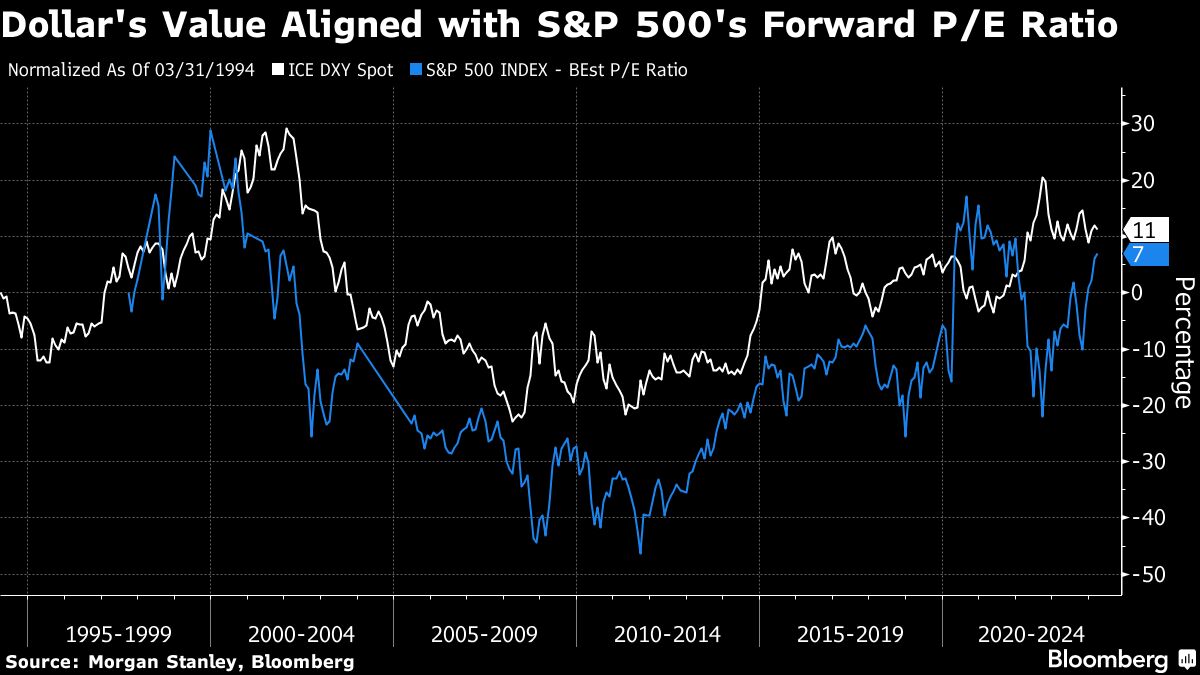
Morgan Stanley's chief investment officer warns that the structural forces affecting the US dollar could impact US equities, as deteriorating US-China relations, the end of yield curve management in Japan, and rising Bitcoin and commodity prices suggest the dollar's strength may be reaching its limit. The potential shift in the dollar regime could impact US stocks through earnings multiples, prompting investors to consider diversifying globally for future stock returns.
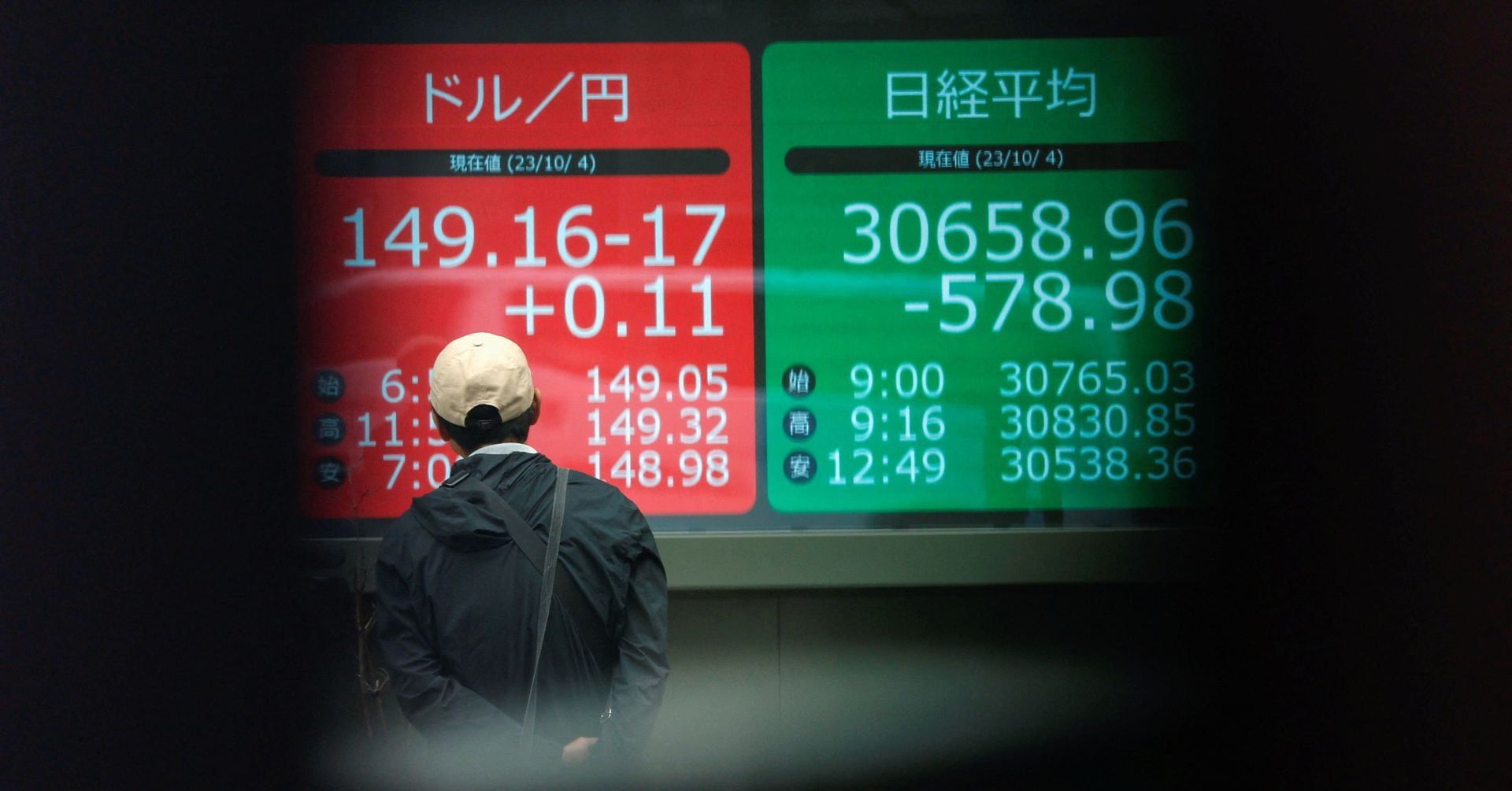
Japan's equity market continues its upward trend, with the Nikkei 225 index reaching a 34-year peak, but concerns arise as producer price figures suggest a potential shift from disinflation to deflation. The Japanese bond market reflects investor uncertainty about the Bank of Japan's policy path, while in China, the People's Bank of China maintains its medium-term policy rate, indicating a delicate balance between stimulating the economy and managing the yuan's value. Key economic indicators from Japan, Australia, and South Korea are expected to provide further market direction.
Stock futures dipped slightly on Sunday evening as Wall Street aims to extend its four-week winning streak. Despite concerns about weakening consumer spending, the equity market has rallied since the 10-year Treasury yield retreated from its brief peak above 5% in late October. Traders will be closely monitoring the start of the holiday shopping season for updates, as weak spending data could indicate that the Federal Reserve's rate hikes are beginning to impact the broader economy. The upcoming week will also feature important economic indicators and Federal Reserve commentary.
Bridgewater Associates' co-chief investment officers believe that the market has entered the second stage of tightening, where changes in economic conditions are not the primary drivers of changes in yields and asset prices. They argue that the upward adjustment in bond yields is justified due to factors such as moderately high inflation, strong wage growth, and robust labor market conditions. They expect this new stage to result in grinding pressure on growth and for the equity market to become less competitive compared to bonds. However, they note that a substantial and sustained rise in productivity, particularly through breakthroughs in AI and large language models, could potentially restore risk premiums in equities relative to bonds.
Société Générale strategist Albert Edwards warns that surging bond yields could deliver a "devastating blow" to stock markets, drawing parallels to the 1987 crash. He highlights the resilience of the equity market in the face of rising bond yields but cautions that any hint of a recession could be disastrous for stocks. Edwards points to recessionary signals such as falling trucking jobs, surging bankruptcies among smaller companies, and contracting money supply. He also emphasizes the importance of monitoring money supply weakness, which he believes has been disregarded by economists. J.P. Morgan Asset Management also warns of a potential "financial accident" caused by the yield rampage.
The Federal Reserve may signal that another rate hike may be needed due to strong economic growth and elevated inflation metrics, shattering the market's expectation of rate cuts. The bond market sees higher rates, suggesting that the Fed's long-run rate projection may be too low. The equity market, on the other hand, expects rate cuts, creating a difference of opinion. The Fed will need to communicate that they remain data-dependent, a rate hike in November is on the table, and rates in 2024 may not come down as much as expected.
Analysts predict that the August Consumer Price Index (CPI) report will show a rise in headline CPI to 3.6%, driven by increased oil and gasoline prices. The bond market expects inflation to persist, leading to higher rates and a stronger dollar, while the equity market hopes for rate cuts. The rise in oil and gasoline prices is expected to worsen the inflation outlook, and there are concerns about a turn in the used auto market and rising home and rental prices. The bond market's breakeven inflation expectations have risen, indicating that inflation is likely to continue to be a problem. The Federal Reserve may need to raise rates further unless the data changes significantly.
Analysis suggests that there is a high probability of an equities rally after the Jackson Hole symposium, with historical data showing that equities have risen in the week following the event in most cases. Despite concerns about rising rates, there are early signs of divergence between equities and higher rates, indicating that stocks may not be significantly impacted by the last push higher in rates. The market remains cautious due to the challenging month of August and the potential tightening of financial conditions. The Federal Reserve's balanced speech at Jackson Hole signals a hold in September and a flexible, data-driven approach to November's decision.