Tag

Ram Pressure Stripping

All articles tagged with #ram pressure stripping

Webb Finds the Earliest Jellyfish Galaxy Drifting Through a Young Cosmos
space2 days ago

Webb Finds the Earliest Jellyfish Galaxy Drifting Through a Young Cosmos

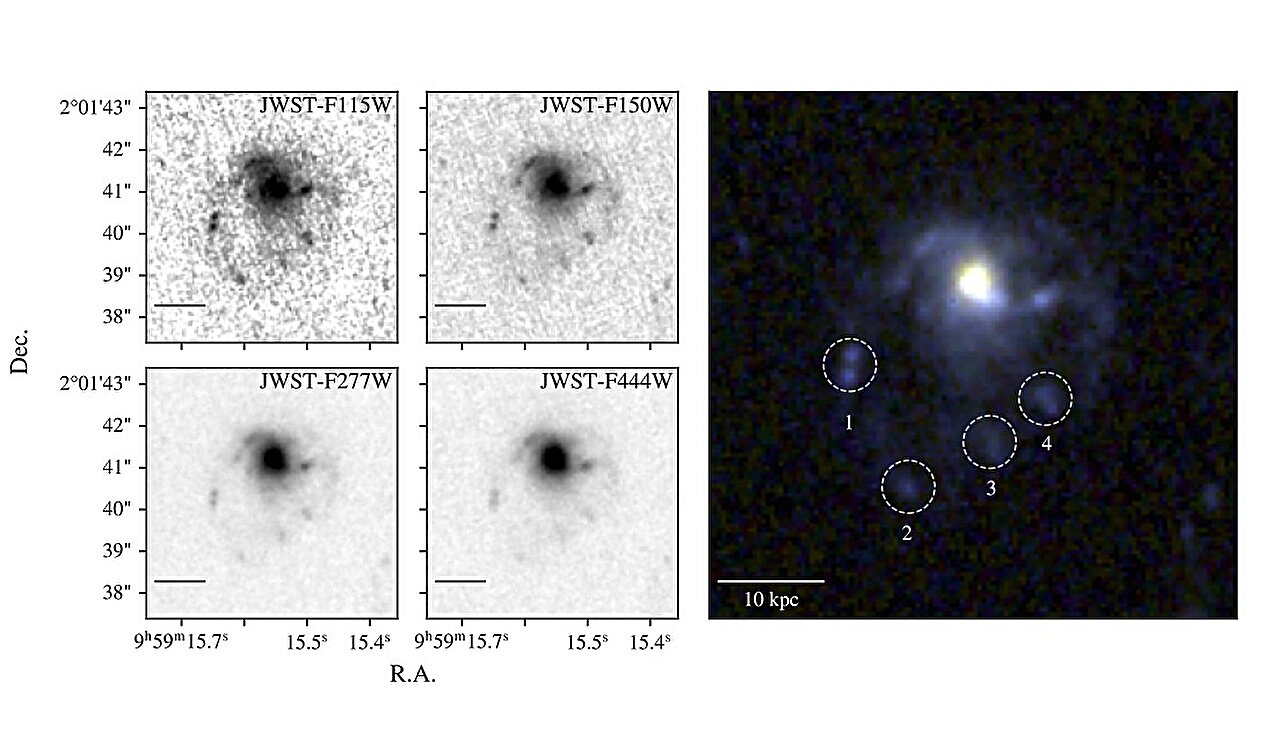
Astronomers using the James Webb Space Telescope have identified the farthest known jellyfish galaxy, at redshift z=1.156 (about 8.5 billion years old), in the COSMOS field. The galaxy shows blue, newly formed stars in long trailing gas streams created by ram-pressure stripping as it speeds through a dense cluster, implying harsh cluster environments existed earlier in the universe and potentially reshaping ideas about how galaxies evolved billions of years ago.
JWST unveils a cosmic jellyfish, offering clues to how galaxies evolved in the early universe
astronomy15 days ago

JWST unveils a cosmic jellyfish, offering clues to how galaxies evolved in the early universe

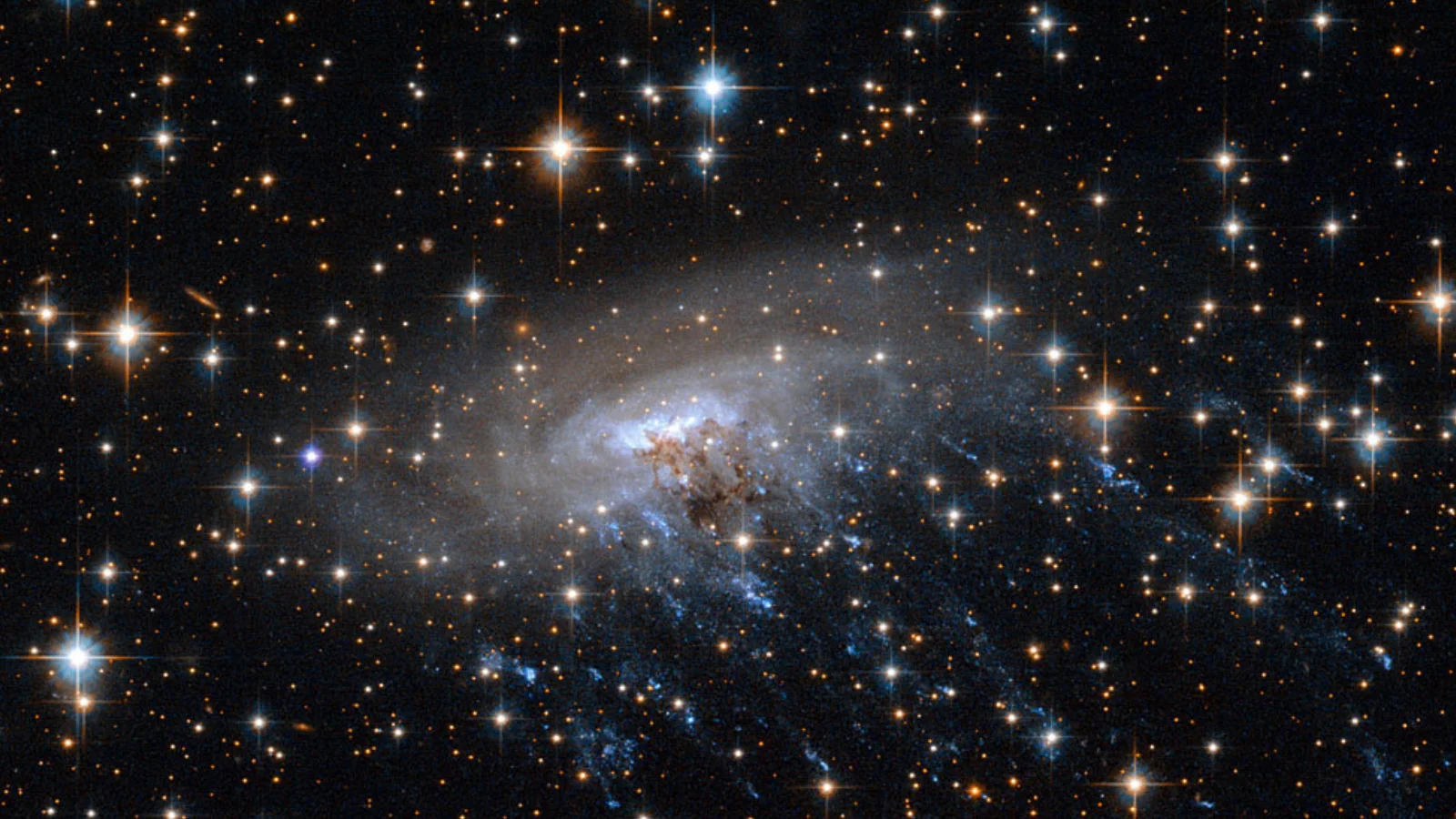
Using the James Webb Space Telescope, astronomers captured ESO 137-001, a jellyfish galaxy in the COSMOS field, showing trailing gas filaments stripped by ram pressure as it moves through a cluster. The image reveals blue, star-forming knots in the tails and places the system at about 8.5 billion years ago (roughly 5.3 billion years after the Big Bang), suggesting harsh cluster environments were already shaping galaxies earlier than thought; researchers plan further JWST studies to deepen understanding of galactic evolution.

Hubble's Captivating Glimpse into the Vibrant Virgo Cluster
astronomy2 years ago

Hubble's Captivating Glimpse into the Vibrant Virgo Cluster

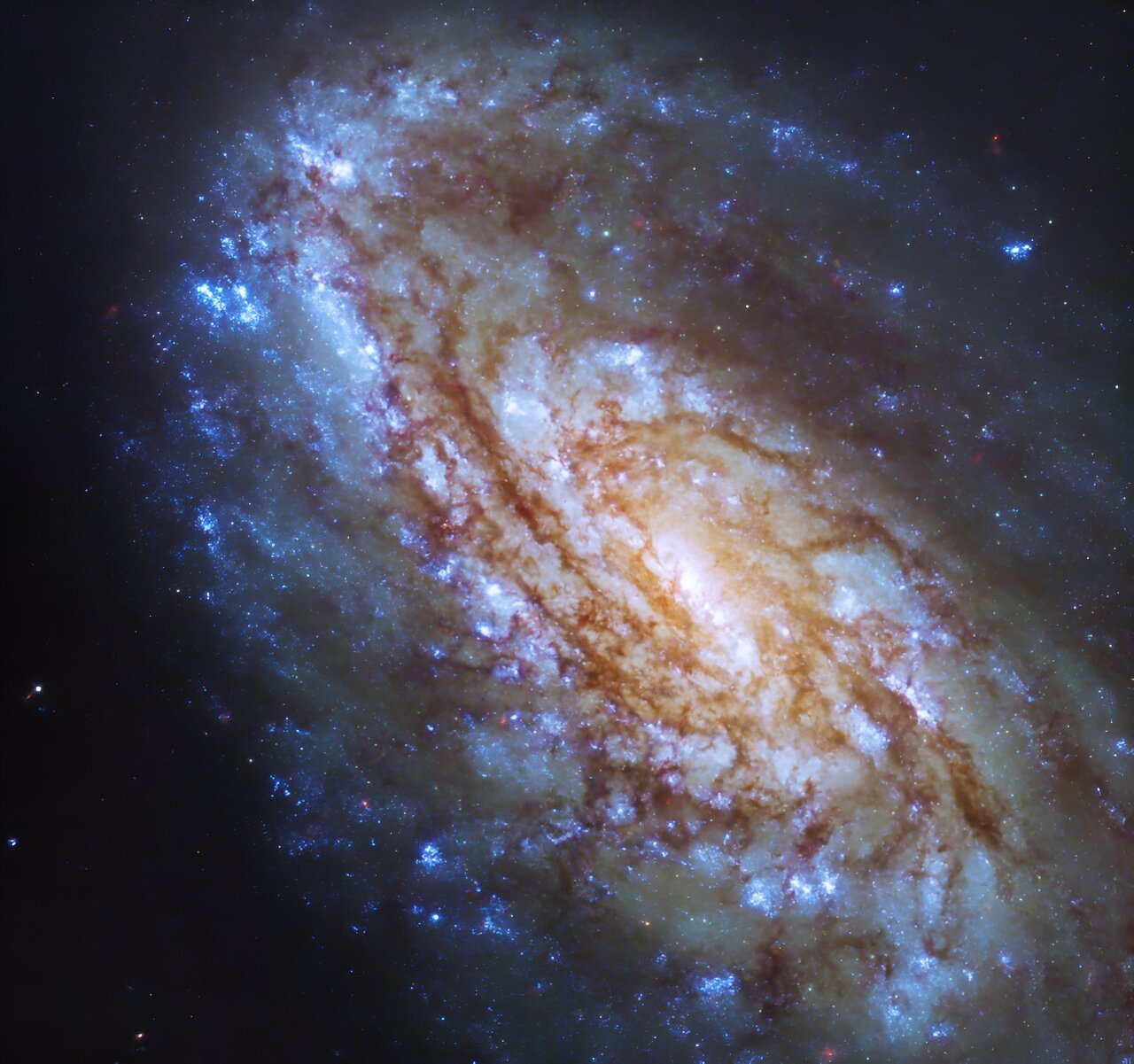
NASA's Hubble Space Telescope captured an image of NGC 4654, an intermediate spiral galaxy in the constellation Virgo. The galaxy exhibits characteristics of both unbarred and barred spirals and is located about 55 million light-years from Earth. NGC 4654 is experiencing ram pressure stripping, a process where the gravitational pull of the Virgo galaxy cluster strips the galaxy of its gas, resulting in a long, thin tail of hydrogen gas. Despite this, NGC 4654 continues to have star formation rates consistent with other galaxies of its size. The galaxy also had an interaction with a companion galaxy, NGC 4639, which limited star formation in certain regions. Scientists study NGC 4654 to understand the connection between young stars and the cold gas from which they form.

Hubble captures stunning image of distant 'jellyfish galaxy'.
science2 years ago

Hubble captures stunning image of distant 'jellyfish galaxy'.

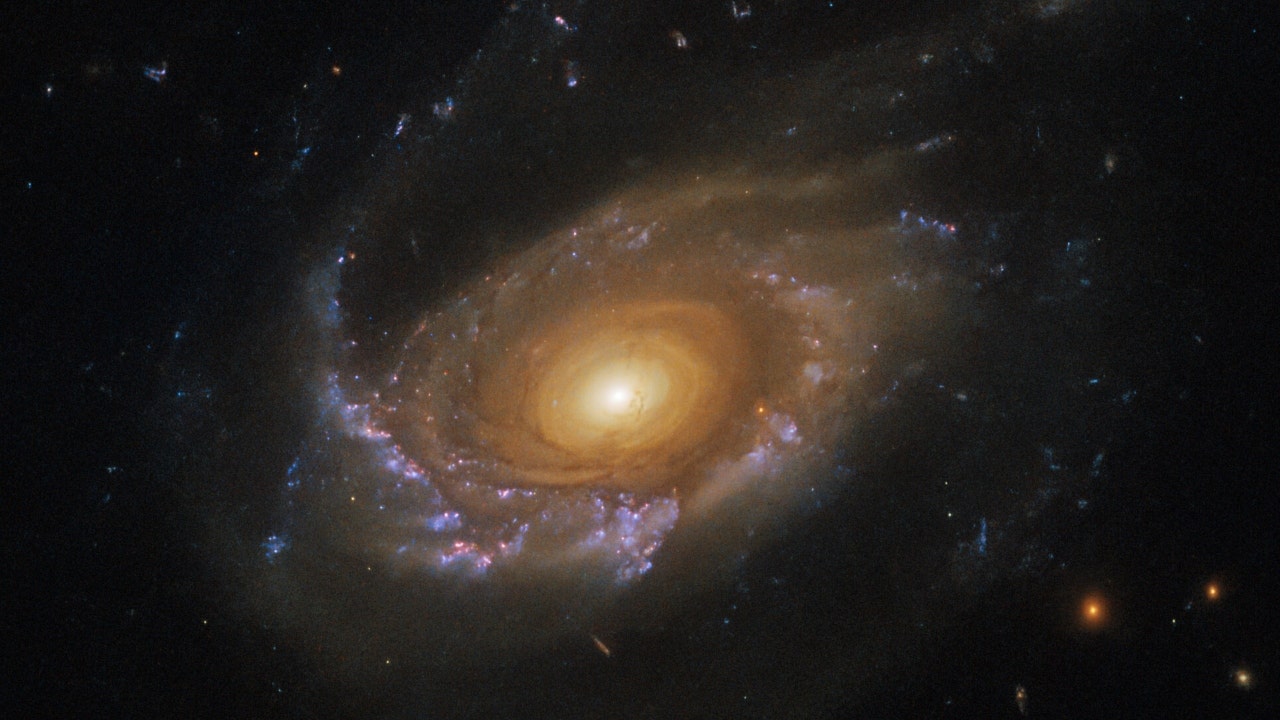
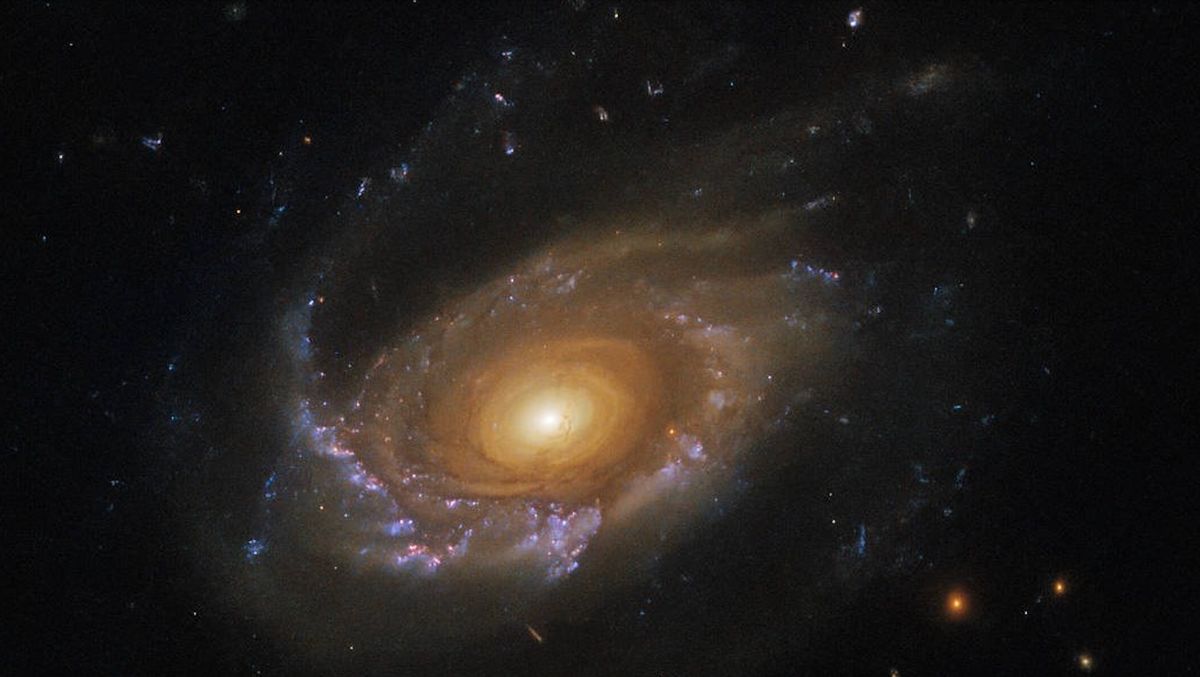
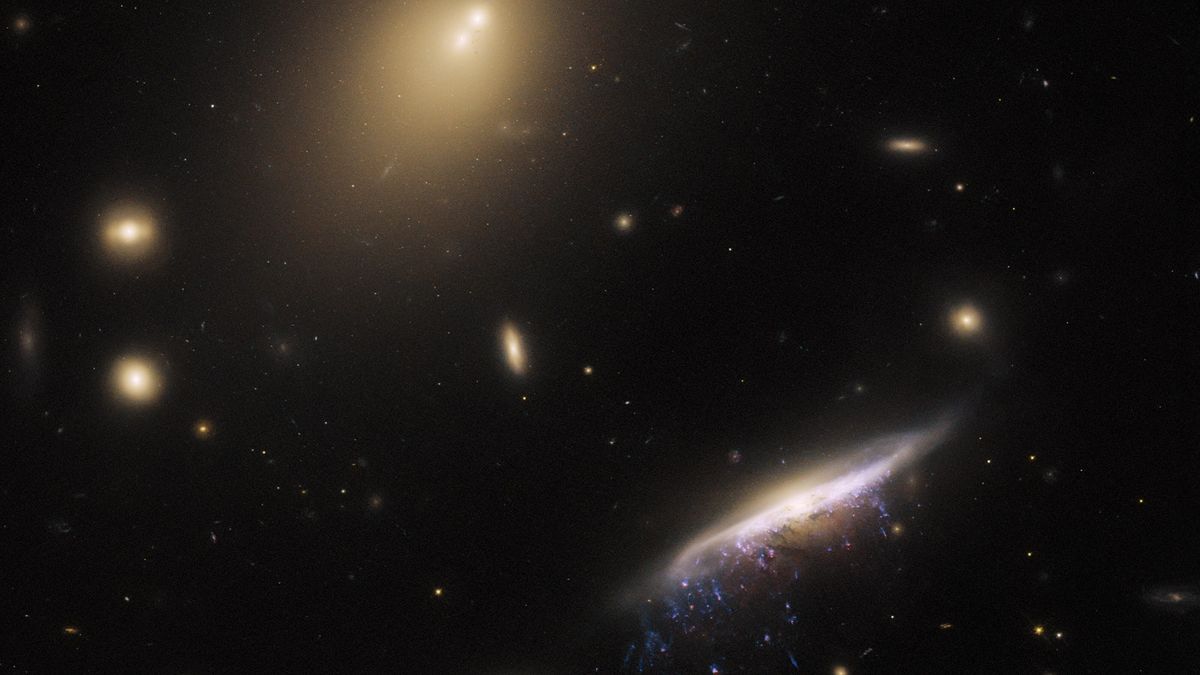
NASA's Hubble Space Telescope has captured an image of a jellyfish galaxy, JW39, located over 900 million light-years away in the constellation Coma Berenices. The galaxy is one of several jellyfish galaxies that the observatory has been studying over the past two years. Despite its serene appearance, the galaxy is adrift in a "ferociously hostile" galaxy cluster, where the gravitational pull of larger galaxies can distort its shape and strip it of star-forming gas through ram-pressure stripping. Surprisingly, star formation in the tendrils of jellyfish galaxies was not noticeably different from star formation in the galaxy disk.

Hubble's stunning capture of a jellyfish galaxy 900 million light-years away.
astronomy2 years ago

Hubble's stunning capture of a jellyfish galaxy 900 million light-years away.

NASA's Hubble Space Telescope captured a stunning image of the "jellyfish galaxy" JW39, which is located over 900 million light-years away from Earth. The galaxy is known for its tentacle-like tails and hosts a supermassive black hole at its center. JW39 and its neighboring galaxies experience ram-pressure stripping, which reduces the amounts of gas and dust within galaxies, leading to galactic burnouts.

Hubble captures distant galaxy resembling a cosmic jellyfish.
science2 years ago

Hubble captures distant galaxy resembling a cosmic jellyfish.

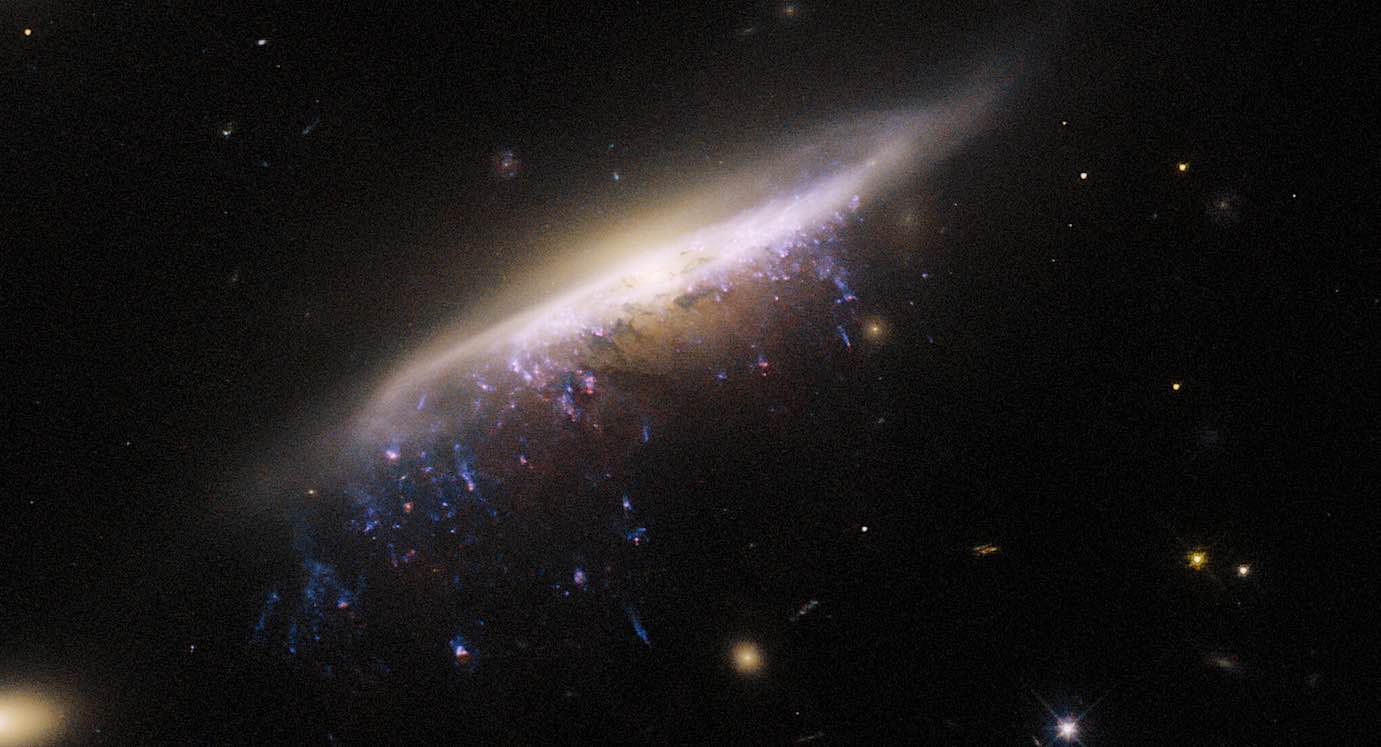
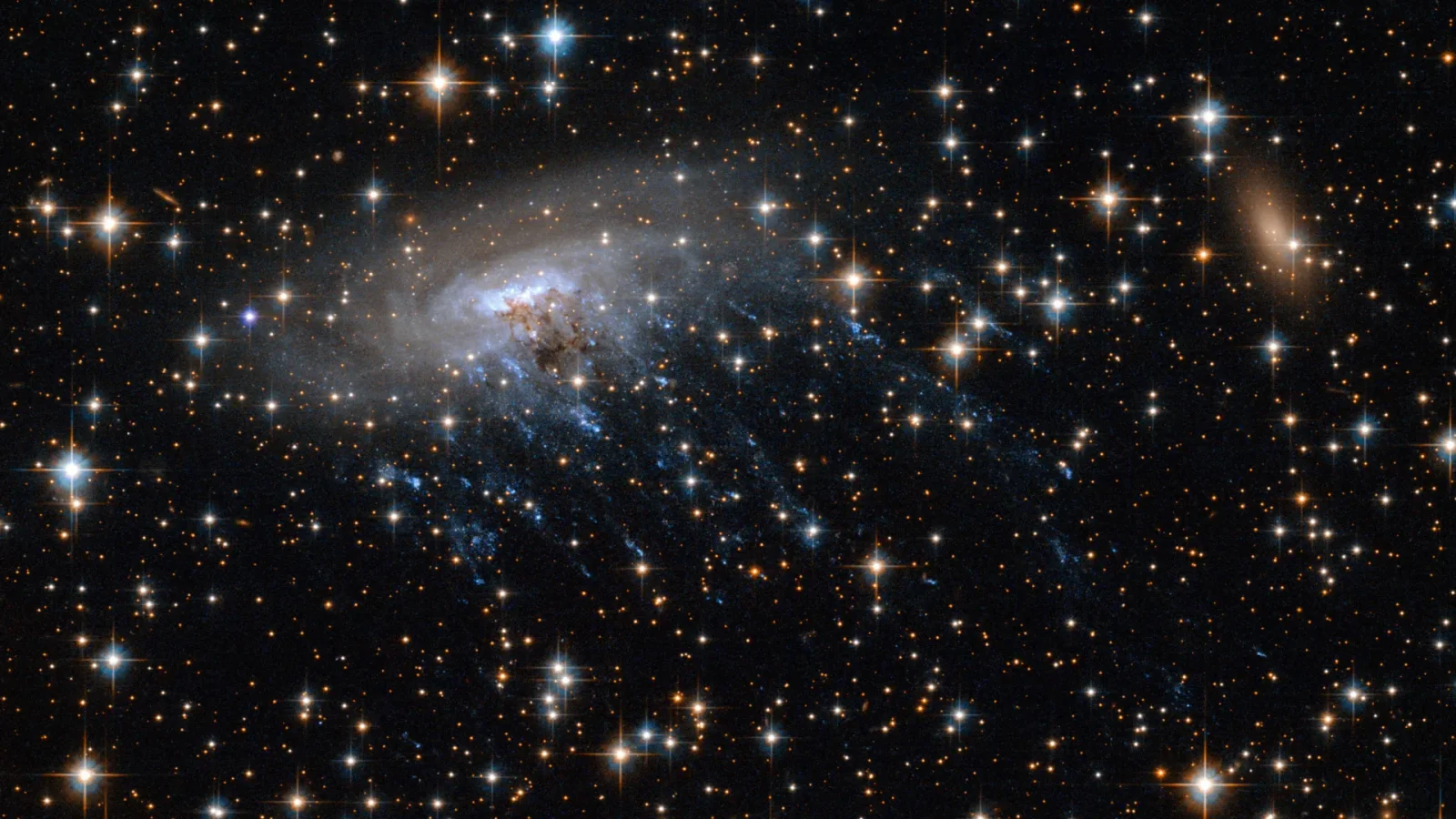
The Hubble Space Telescope has detected star-forming gas dripping from the disk of the galaxy JW100, over 800 million light-years away in the constellation Pegasus. The gas streamers resemble "dangling jellyfish tentacles" and point to a process called ram pressure stripping, which occurs when galaxies encounter the diffuse gas that pervades galaxy clusters. The observation is part of a sequence of observations designed to explore star formation in the tendrils of jellyfish galaxies and could help astronomers better understand the process of star formation elsewhere in the universe.

Hubble telescope captures stunning galactic jellyfish photo.
science-and-astronomy2 years ago

Hubble telescope captures stunning galactic jellyfish photo.

The Hubble Space Telescope has captured an image of a distant spiral galaxy, JW100, which appears to have bright streams of star-forming gas dripping from its central disk like tentacles of a jellyfish. This galaxy is an example of a "jellyfish galaxy" that exhibits long tendrils illuminated by clumps of star formation, which appear to be streaming away from the galaxy's main body. These tendrils form through a process called ram pressure stripping, which occurs when galaxies encounter the diffuse gas that pervades galaxy clusters.