Former President Joe Biden has completed his current course of radiation therapy for prostate cancer, with uncertainty about the need for further treatment, and expressed gratitude to his medical team.
Joe Biden has completed a series of radiation treatments for an aggressive, metastatic prostate cancer, with ongoing assessments needed to determine if further treatment is necessary. The former president's health updates have raised public concern, but he appears to be making progress in his recovery.
Former President Joe Biden is undergoing radiation therapy and hormone treatment for his prostate cancer, which was diagnosed as an aggressive, hormone-sensitive form with metastasis. Despite the severity, the prognosis is good, and he is responding well to treatment.
Former US President Joe Biden is undergoing radiation therapy and hormone treatment for prostate cancer, which was diagnosed as an aggressive, metastatic, and hormone-sensitive form. The treatment is expected to last five weeks, marking a significant step in his ongoing health management.
Joe Biden is undergoing a five-week course of radiation and hormone therapy for prostate cancer that was diagnosed in May and had spread to his bones, marking a new phase in his treatment.
A South Korean clinical trial found that low-dose radiation therapy (LDRT) can significantly reduce pain and improve function in patients with mild to moderate knee osteoarthritis, offering a potential alternative to pain medications and surgery, with minimal side effects.
Actress Alex Kingston revealed she was diagnosed with womb cancer last year, underwent a hysterectomy and radiation therapy, and is now advocating for women to pay attention to health symptoms and seek medical help early.
A recent clinical trial suggests that a single course of low-dose radiation therapy may reduce pain and improve mobility in individuals with mild to moderate knee osteoarthritis, potentially delaying the need for surgery, with no significant side effects observed.
Montell Jordan, the singer of 'This Is How We Do It,' revealed that his prostate cancer has returned after initial treatment, and he will undergo radiation therapy. His story highlights the importance of regular screening, especially for Black men who are at higher risk, and aims to raise awareness and reduce stigma around prostate cancer.
The article provides a personal account of undergoing radiation therapy for metastatic Ewing’s sarcoma, highlighting the process, the supportive team at Sibley Memorial Hospital, and the importance of small interactions in patient care, emphasizing that radiation can be an effective and less taxing treatment option for pain relief and disease management.
A study suggests that women who survive breast cancer, particularly those treated with radiation therapy, have an 8% lower risk of developing Alzheimer's disease, especially in older women, although the cause-and-effect relationship remains unclear and further research is needed.
Prior Lake teen Brooklynne Thorson, diagnosed with a recurrent brain tumor now confirmed as cancer, is set to undergo proton radiation and chemotherapy at Mayo Clinic, just before her college graduation. An online fundraiser has been established to support her treatment, and she plans to pursue pediatric oncology nursing at the University of Wisconsin-Eau Claire, inspired by her own battle with cancer.
Nicole Dyer-Griffith, a former Miss Universe TT and cancer patient, received positive news from her recent medical check-up, showing no residue of disease after treatment for stage-three breast cancer and brain tumor, highlighting her optimistic outlook and ongoing journey.
A study published in JAMA Internal Medicine highlights the increasing overtreatment of prostate cancer in older men with limited life expectancy in the U.S., despite guidelines recommending against it. Procedures like radiation therapy and surgery are often used unnecessarily, leading to side effects without extending life. The study suggests a "trifecta" method for discussing treatment options, emphasizing the importance of considering life expectancy in decision-making. Active surveillance is recommended for patients unlikely to benefit from aggressive treatments.
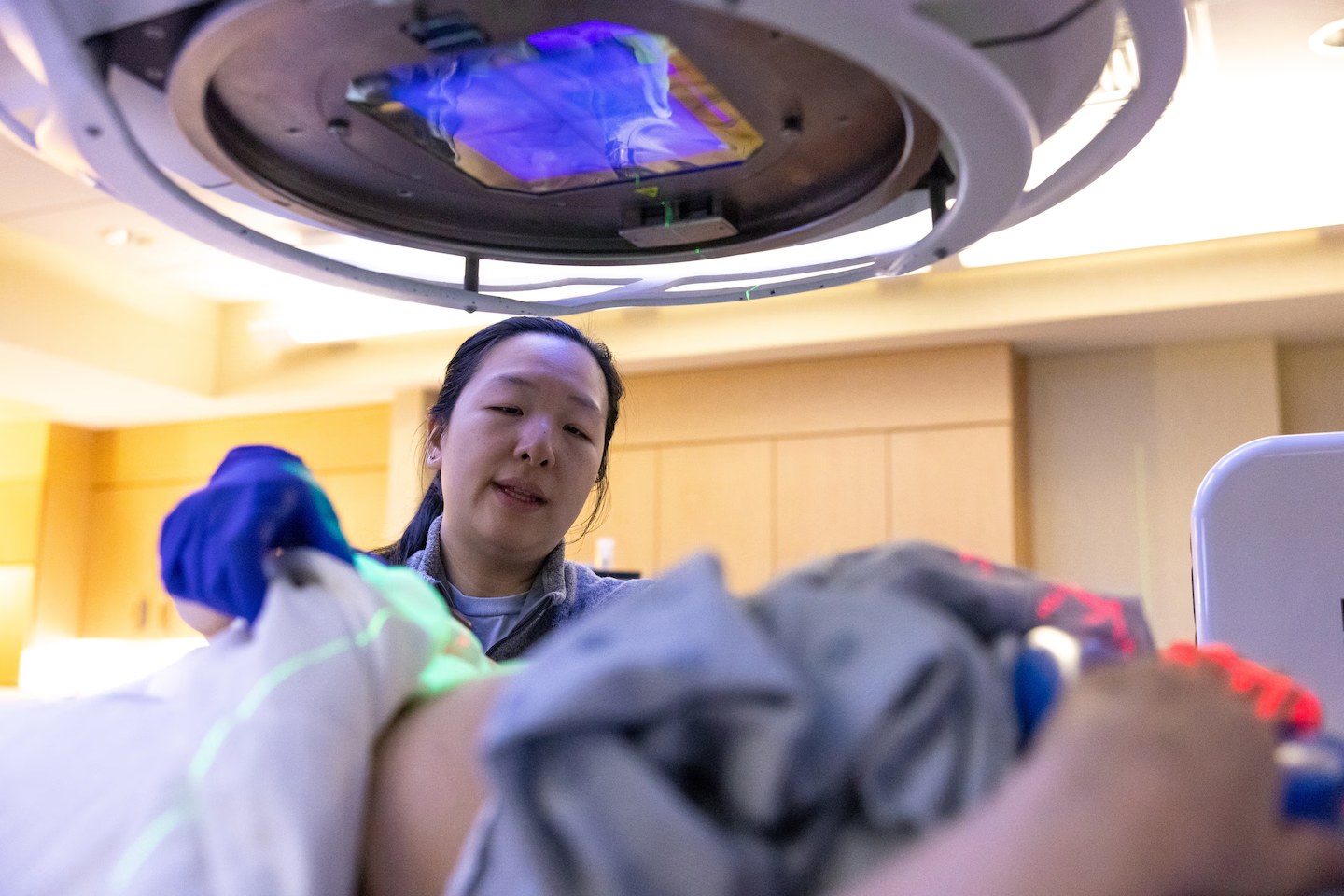
The article discusses the shift from using permanent tattoos for radiation therapy positioning to surface-guided radiation therapy (SGRT), which uses 3D cameras to track body movements without the need for tattoos. This change aims to improve the emotional and physical well-being of cancer patients by eliminating the permanent reminders of their treatment. SGRT also enhances clinic safety and reduces costs over time, despite requiring initial investment and training. The approach is gaining traction globally, reflecting a commitment to patient-centered care and innovation in cancer treatment.