Tag

Quiescent Galaxy

All articles tagged with #quiescent galaxy

astronomy1 year ago

"Unveiling the Enigmatic Demise of the Universe's Oldest Galaxy"

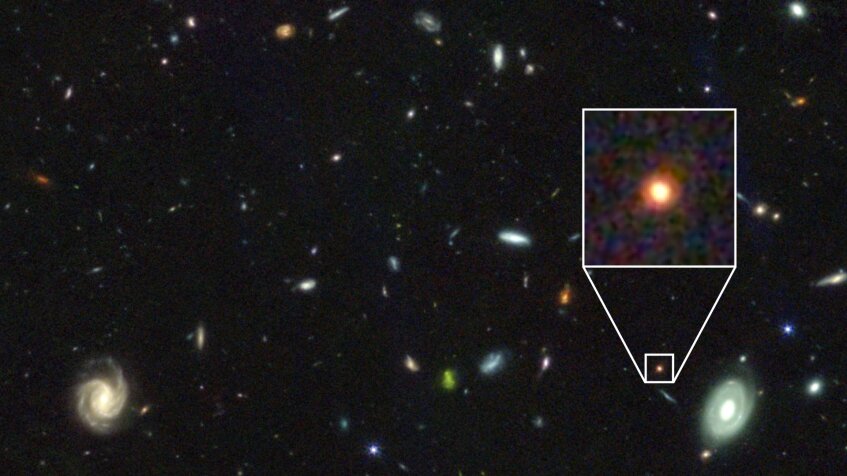
Astronomers using the James Webb Space Telescope have discovered the oldest 'dead' galaxy ever observed, challenging our understanding of early galaxy evolution. The galaxy, which ceased forming new stars over 13 billion years ago, challenges existing models of galaxy evolution and offers a unique opportunity to study the mechanisms behind galaxy quenching. This discovery suggests that our models of galaxy evolution, based on the modern universe, may need to be revised, and further research is needed to understand why this ancient galaxy did not last as long as more modern galaxies.
astronomy1 year ago

"Unlikely Galaxy: JWST's Surprising Discovery"

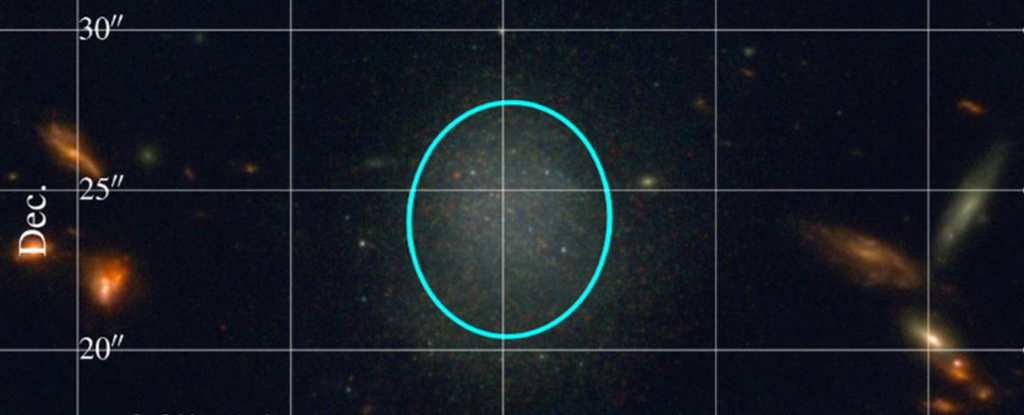
The James Webb Space Telescope accidentally discovered a unique dwarf galaxy, PEARLSDG, 98 million light years away from Earth, which challenges existing understanding of dwarf galaxy formation. PEARLSDG is inactive and lacks neighboring galaxies, defying typical characteristics of dwarf galaxies. Scientists are intrigued by this anomaly and are considering the possibility of other isolated quiescent galaxies yet to be discovered, emphasizing the need for further research in this field.

astronomy1 year ago

"Unlikely Existence: Discovery of an Impossible Galaxy"

The James Webb Space Telescope (JWST) captured an image of a distant, isolated dwarf galaxy named PEARLSDG, which is unusual for its lack of star formation and absence of close neighbors. The galaxy's distance of about 98 million light-years was measured by observing individual red giant branch (RGB) stars, indicating an older stellar population that ceased forming stars at least one billion years ago. Despite having no visible signs of interactions with other galaxies, the discovery challenges current theories of galaxy evolution and suggests the potential for more isolated quiescent galaxies to be identified with the JWST.

astronomy2 years ago

"JWST Unveils Enigmatic Quiescent Galaxy: Massive and Compact"

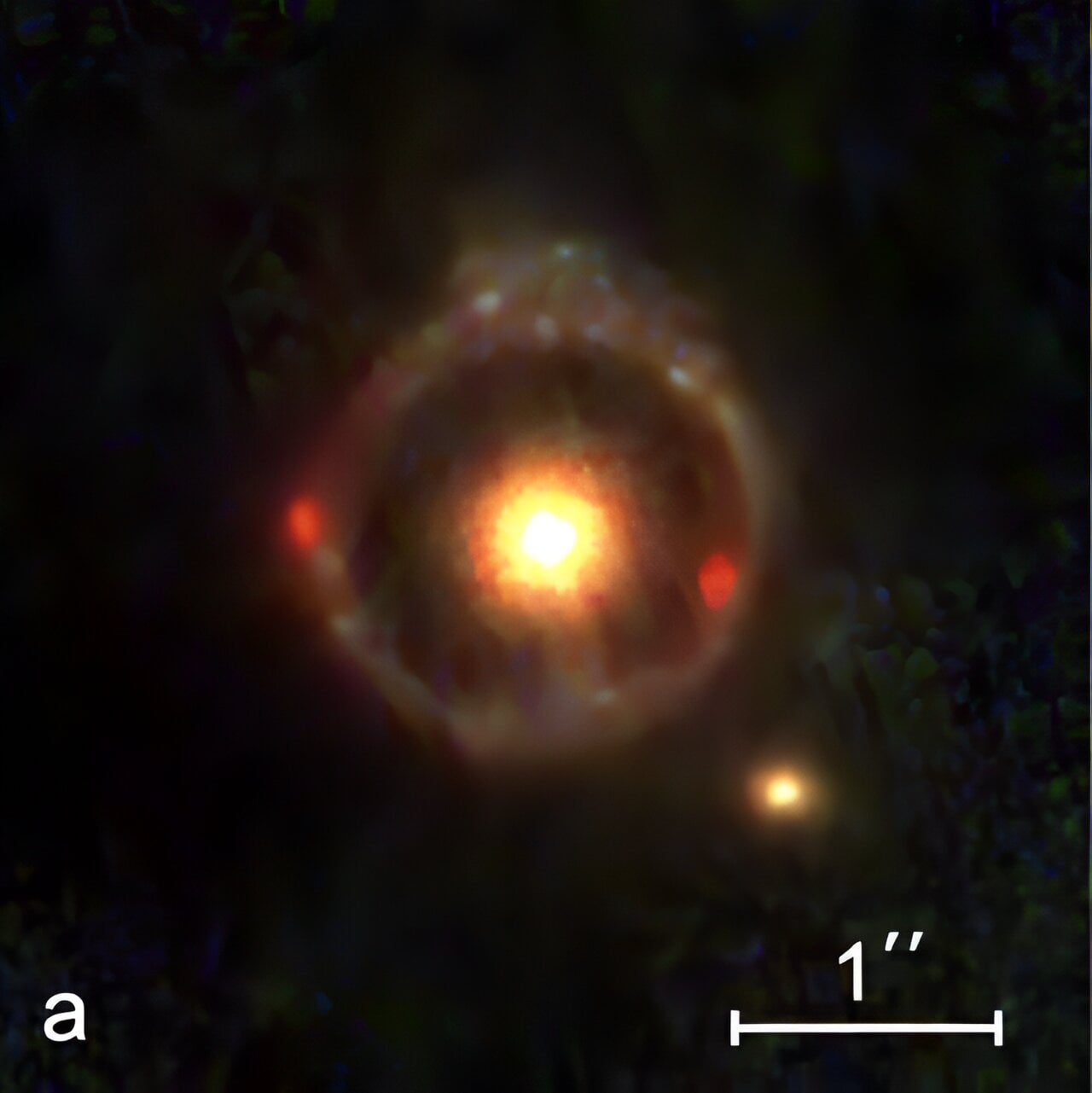
Astronomers using the James Webb Space Telescope (JWST) have discovered a massive and compact quiescent galaxy, designated JWST-ER1, as part of the ongoing COSMOS-Web survey. The galaxy exhibits a complete Einstein ring, a phenomenon caused by gravitational lensing. JWST-ER1 has a redshift of 1.94, a radius of approximately 21,500 light years, and an estimated mass of 650 billion solar masses. The galaxy is almost perfectly round and shows no obvious signs of star formation or irregularities. Further observations are needed to investigate its mass and determine if it is the central galaxy of a cluster progenitor.

astronomy2 years ago

"Groundbreaking Discovery: Astronomers Uncover Enormous Dormant Galaxy"

Astronomers have discovered a new massive and quiescent galaxy, COSMOS-1047519, at a high redshift of 4.53. This finding is significant as it adds to the limited number of spectroscopically confirmed high-redshift quiescent galaxies and provides insights into the early stages of the universe. The galaxy has a stellar mass of about 60 billion solar masses and a low star formation rate of only 10 solar masses per year. The observations suggest that COSMOS-1047519 experienced a starburst followed by rapid quenching, making it one of the youngest quiescent galaxies at a redshift higher than 3.0. The researchers propose that gas depletion due to starburst and/or AGN feedback triggered by galaxy-galaxy interactions or mergers may be responsible for quenching.

astronomy2 years ago

"Groundbreaking Discovery: Tiny, Dormant Galaxy Unveiled"

Astronomers using the James Webb Space Telescope as part of the JADES survey have discovered a new quiescent galaxy, JADES-GS+53.12365-27.80454, which is the least massive quiescent galaxy detected at a high redshift. The galaxy has a stellar mass of only 950 million solar masses and has been quiescent for 600 million years. Its structure suggests a different evolutionary path compared to more massive galaxies at similar redshifts. The discovery provides evidence of environment-driven quenching and may improve our understanding of galaxy evolution. Further investigation using ground-based surveys and targeted surveys with JWST is recommended.

astronomy2 years ago

Traits of ancient galaxy 25 billion light-years away revealed.

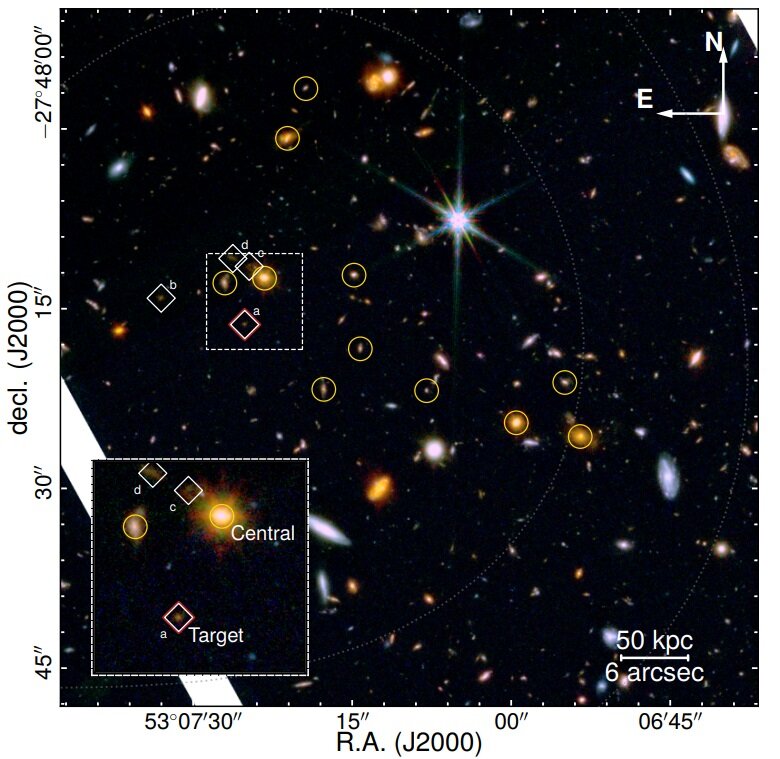
The James Webb Space Telescope has identified GS-9209, the earliest known quiescent galaxy, which formed 600 to 800 million years after the Big Bang and stopped producing stars half a billion years later. Despite being smaller than the Milky Way, it contains a similar number of stars and a central supermassive black hole five times larger than anticipated, which may have halted star formation by emitting high-energy radiation that drove out galactic gas. The discovery could explain why GS-9209 stopped forming new stars.

astronomy2 years ago

James Webb Telescope uncovers secrets of ancient galaxies and celestial monsters.

The James Webb Space Telescope has identified a massive, densely packed galaxy known as GS-9209, which formed just 600 to 800 million years after the Big Bang and is the earliest of its kind found to date. Despite being around 10 times smaller than the Milky Way, GS-9209 has a similar number of stars to our own galaxy. GS-9209 is the earliest known example of a galaxy no longer forming stars, known as a quiescent galaxy, and contains a supermassive black hole at its center that is five times larger than astronomers might anticipate in a galaxy with this number of stars.

astronomy2 years ago

Ancient and Dormant: A Giant Galaxy Discovered at Redshift 4.658.

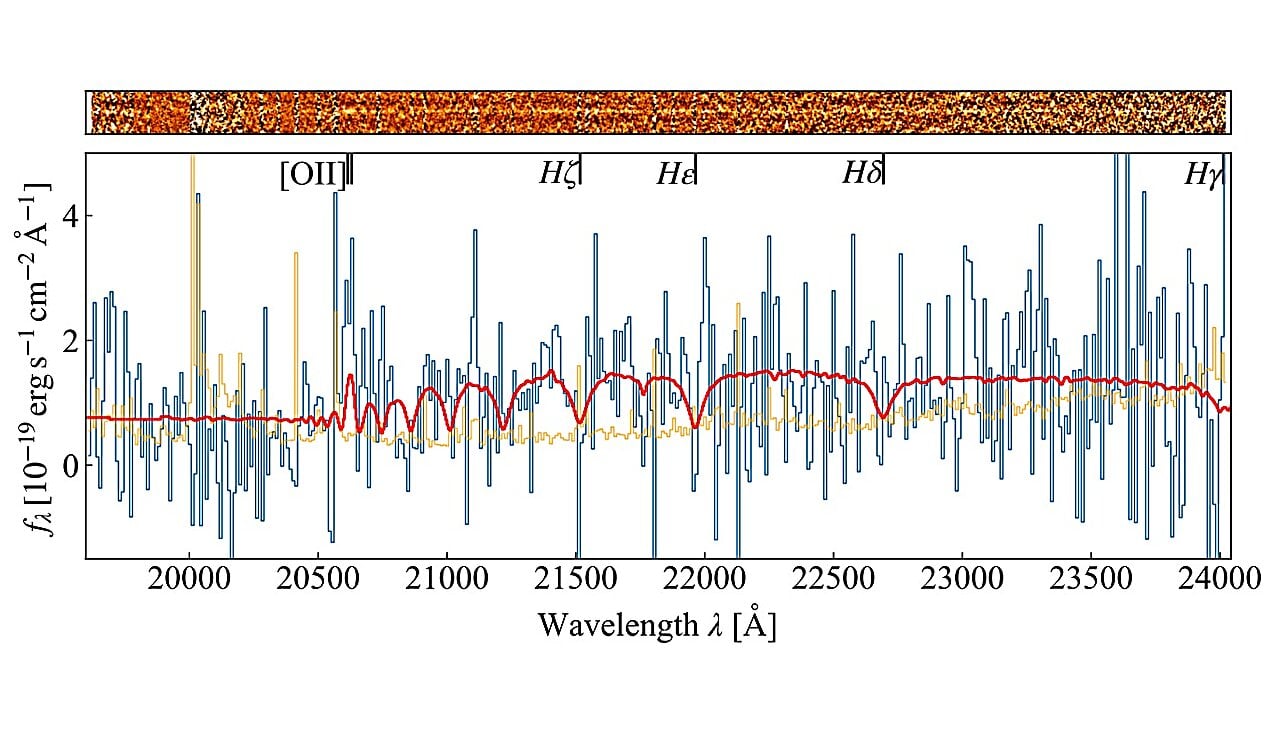
Astronomers have confirmed the existence of a massive quiescent galaxy, GS-9209, at redshift 4.658, just 1.25 billion years after the Big Bang, using the James Webb Space Telescope (JWST) NIRSpec. The galaxy has a stellar mass of M∗ = 3.8 ± 0.2 × 10¹⁰ M⊙, which formed over a ≃ 200 Myr period before quenching its star formation activity at z=6.5. This discovery sheds light on the rapid assembly of the earliest galaxies and the physics of galaxy formation.