Recent advancements in quantum computing have demonstrated that using quantum memory can significantly reduce the data required to study quantum systems, potentially proving quantum advantage. Researchers from Harvard and Google Quantum AI have shown that even with limited quantum memory, such as two copies of a quantum state, the efficiency of reconstructing quantum states is greatly improved. This breakthrough could lead to practical applications in understanding complex quantum systems and achieving quantum advantage sooner.
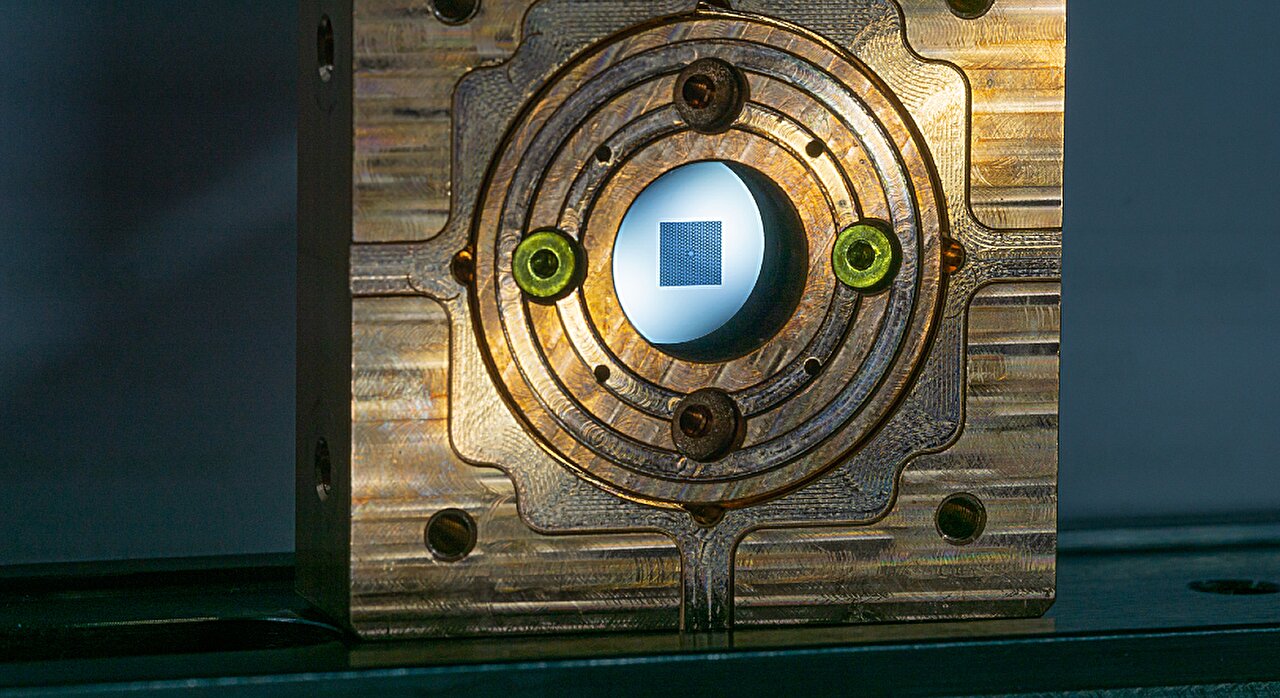
Researchers at the University of Copenhagen's Niels Bohr Institute have developed a method to store quantum data by converting light signals into sonic vibrations in a small drum, paving the way for an ultra-secure internet with incredible speeds. This new form of "quantum memory" could play a crucial role in the future network of quantum computers, allowing for the transmission of quantum information over long distances without losing its quantum state. The quantum drum's ability to handle all light frequencies and retain data signals makes it a promising candidate for use in quantum networks and quantum computers, potentially revolutionizing the field of quantum computing and communication.
Scientists have achieved a significant breakthrough by building a network of "quantum memories" at room temperature, marking a crucial step towards the development of a quantum internet. This quantum memory technology, which stores and retrieves photonic qubits at the quantum level, is essential for the next generation of the World Wide Web. Quantum communications are inherently secure and faster than classical communications, and the successful development of quantum memory at room temperature brings us closer to realizing the potential of quantum computing and quantum networks.
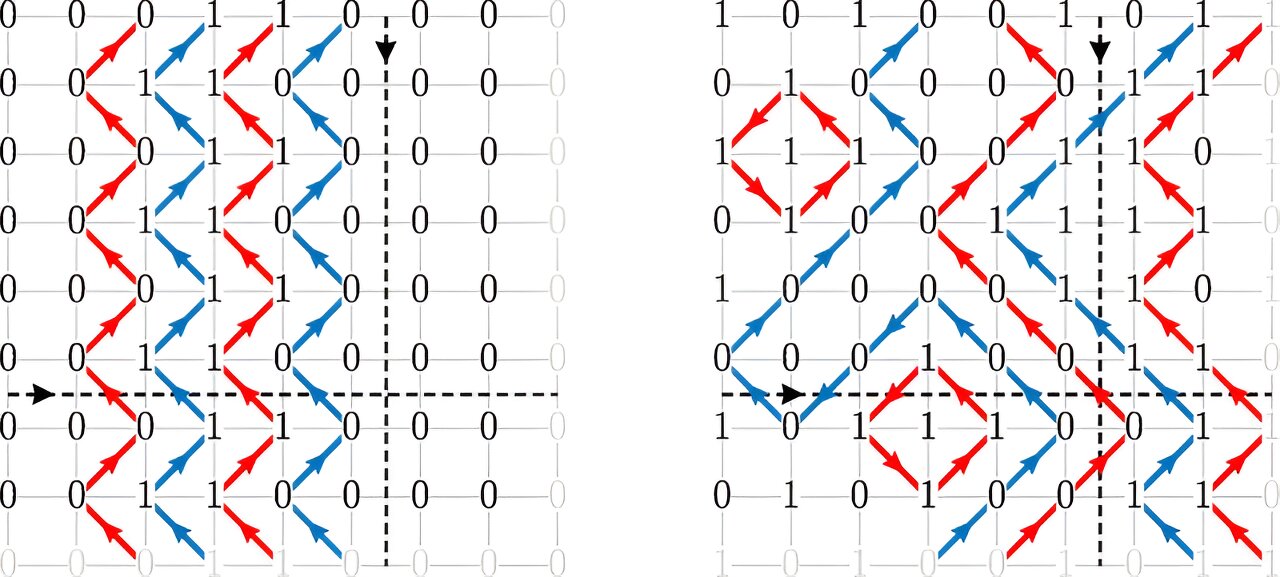
Theoretical physicists have discovered a potential method to enhance quantum computer chips' memory capabilities by arranging qubits into specific patterns, allowing the information to remain organized and resistant to disruption. This breakthrough could lead to new ways of storing information in quantum computer chips and may have broader implications for understanding fundamental phenomena in the universe.
Researchers have used mathematical tools to envision a checkerboard pattern of theoretical qubits, discovering that if arranged in the right way, the patterns could flow around the checkerboard without disappearing entirely. This breakthrough in theoretical physics may lead to new advances in quantum computer chips, potentially providing engineers with new ways to store information in incredibly tiny objects, and could be a way of storing information with quantum memory.
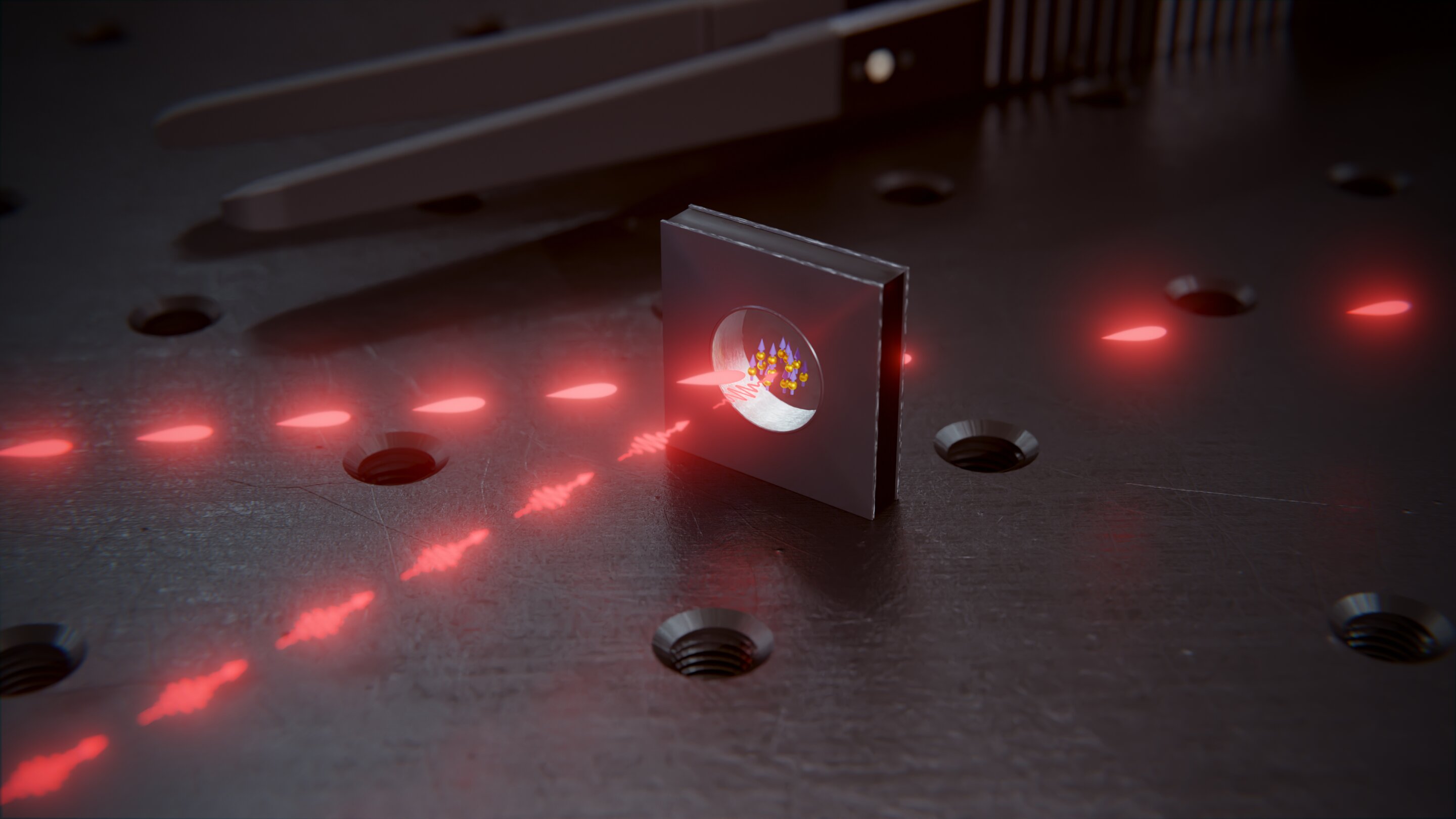
Researchers at the University of Basel have developed a mass-producible quantum memory element based on rubidium atoms in a tiny glass cell, which can store and retrieve light pulses. This miniature quantum memory, only a few millimeters in size, could be mass-produced on a wafer and is crucial for the development of quantum networks and technologies, enabling tap-proof message transmission and connecting quantum computers. The researchers achieved this by heating the cell to increase vapor pressure and exposing the atoms to a strong magnetic field, allowing for the storage of photons for around 100 nanoseconds.
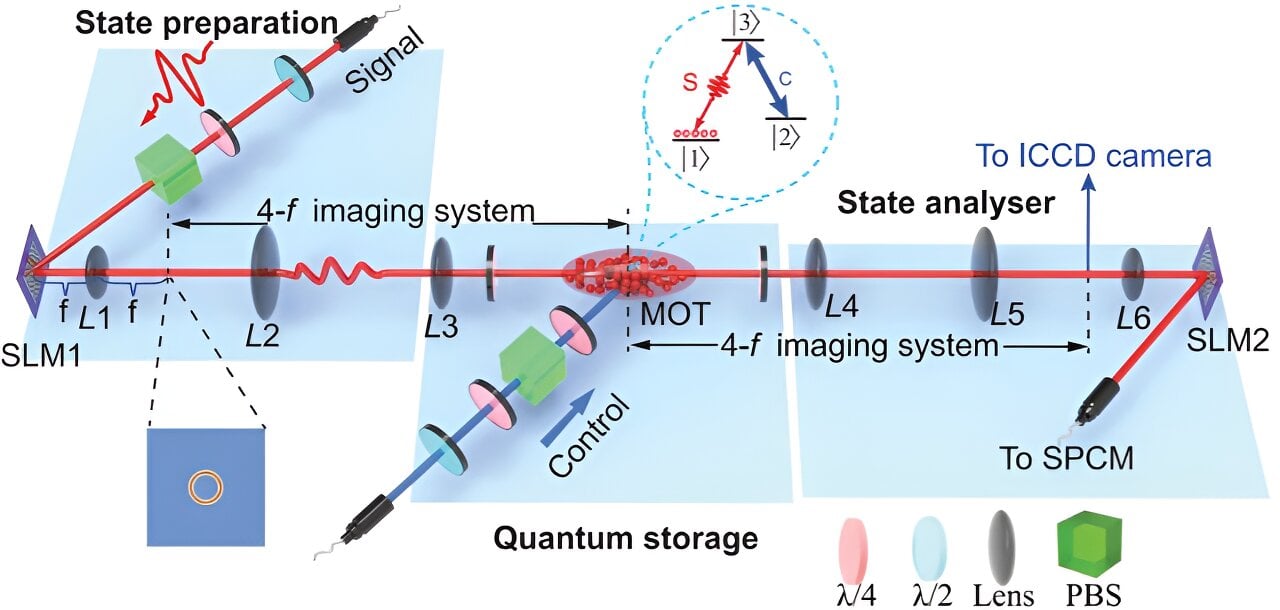
Researchers have introduced a new approach to achieve highly efficient 25-dimensional quantum memories based on cold atoms, enabling the storage of high-dimensional information in a medium. By leveraging the mode-independent interaction between light and matter associated with a spatial pattern known as the perfect vortex optical field, the team's quantum system encodes high-dimensional information on signal photons, extending the storage dimension from two to 25. This advancement not only expands memory capacity and increases the transmittable capacity of quantum communication but also has potential implications for fault-tolerant quantum computing. The approach holds promise for creating various high-dimensional quantum memories and could facilitate the realization of other quantum technologies, such as high-dimensional quantum repeaters.
MIT physicists have developed a technique inspired by noise-canceling headphones to extend the coherence time of quantum bits, or qubits, by 20-fold. By using an "unbalanced echo" approach, the team was able to counteract system noise and significantly improve the coherence times for nuclear-spin qubits. This breakthrough has implications for quantum computing, quantum sensors, gyroscopes, and quantum memory. The researchers believe that further improvements are possible by exploring other sources of noise.
Physicists from the University of Warsaw have achieved a groundbreaking feat by performing the fractional Fourier Transform of optical pulses using quantum memory. This innovative technique, implemented on a "Schrödinger's cat" state, has potential applications in telecommunications and spectroscopy. The researchers used a quantum memory based on a cloud of rubidium atoms to process the signal, allowing for the implementation of time and frequency lenses over a wide range of parameters. The method could prove crucial for optical receivers in advanced networks and optical satellite links.
Students at the University of Warsaw have developed a method using quantum memory to perform the fractional Fourier Transform of optical pulses, a unique achievement on a global scale. This transformation is useful in designing spectral-temporal filters for noise elimination and improving precision in distinguishing pulses of different frequencies. The researchers used a quantum memory based on rubidium atoms and implemented time and frequency lenses to perform the transformation. The method has potential applications in telecommunications and spectroscopy, but further mapping to different wavelengths and parameter ranges is needed.
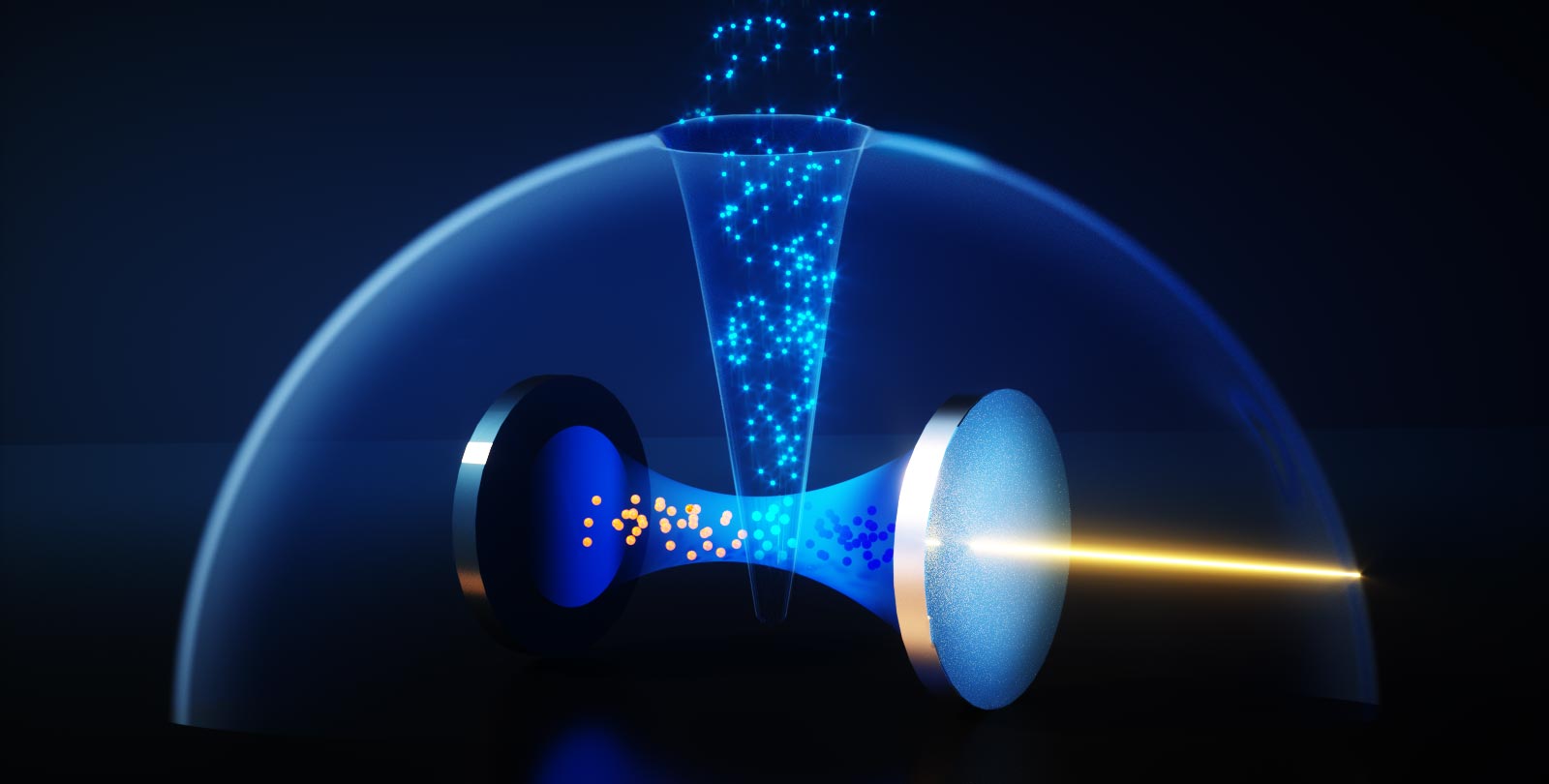
Researchers at Caltech have discovered a new phenomenon called "collectively induced transparency" (CIT), where groups of atoms cease to reflect light at certain frequencies. This finding could potentially improve quantum memory systems. The researchers found this effect by confining ytterbium atoms in an optical cavity and exposing them to laser light. At certain frequencies, a transparency window emerged in which light bypassed the cavity unimpeded. The discovery expands our understanding of the mysterious world of quantum effects and has the potential to pave the way to more efficient quantum memories in which information is stored in an ensemble of strongly coupled atoms.
Physicists at the University of Illinois Urbana-Champaign have conducted the first variance-based sensitivity analysis of Lambda-type optical quantum memory devices, which use a collection of atoms that interacts with two kinds of light to store quantum information. The researchers analyzed the impact of both random device noise and slow overall drift in experimental parameters on a Lambda-type device's memory efficiency, a measure of how often the device works as intended. The results of this analysis have informed the researchers' experimental efforts and developed a framework that allows others to perform the same analyses for their experiments.
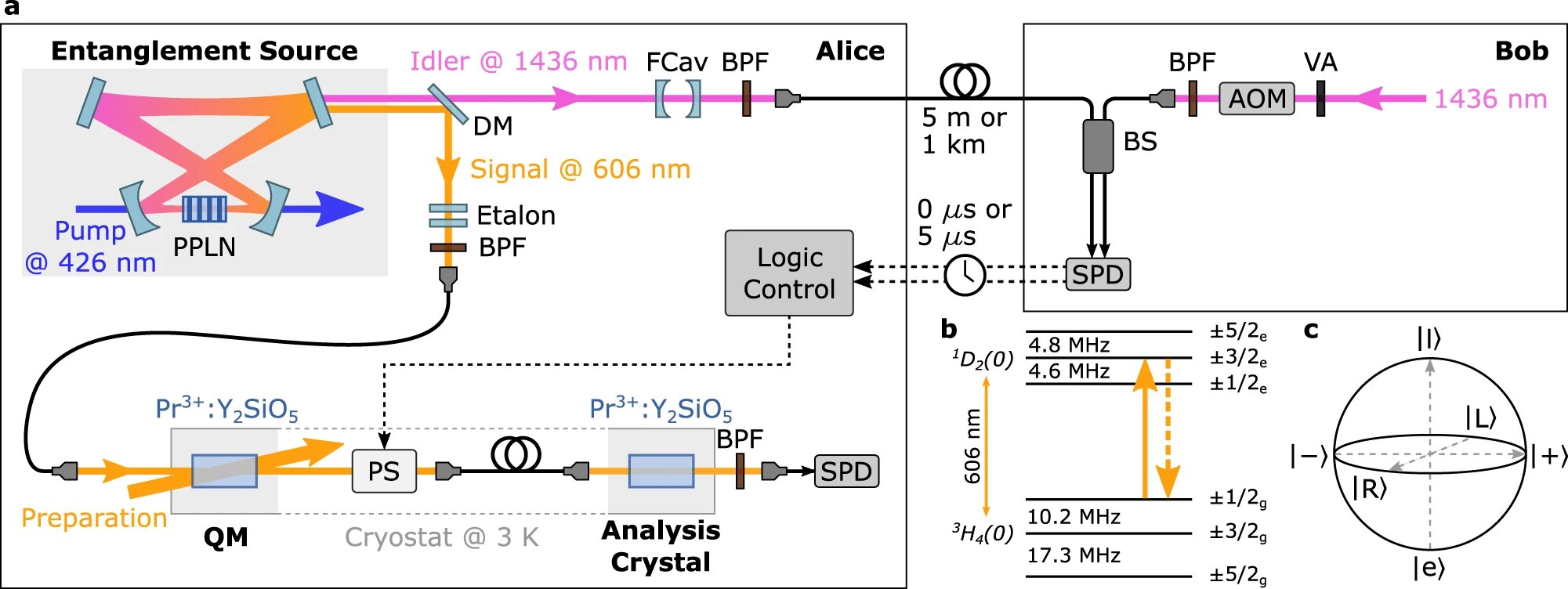
Researchers at ICFO have achieved long-distance quantum teleportation of information from a photon to a solid-state qubit using a multiplexed quantum memory and an active feed-forward scheme. The architecture is compatible with telecommunications channels, enabling future integration and scalability for long-distance quantum communication. The team plans to extend the setup to longer distances while maintaining efficiency and rates and to use the technique in the transfer of information between different types of quantum nodes for a future quantum internet.
Researchers at the University of Oxford have developed a robust quantum memory within a trapped-ion quantum network node that can store information for long periods of time despite ongoing network activity. The memory uses a combination of strontium and calcium ions to minimize crosstalk and detect errors in real-time. The team's demonstration of this quantum memory could be an important milestone on the ongoing quest to realize distributed quantum information processing and pave the way towards the creation of scalable quantum computing systems.