
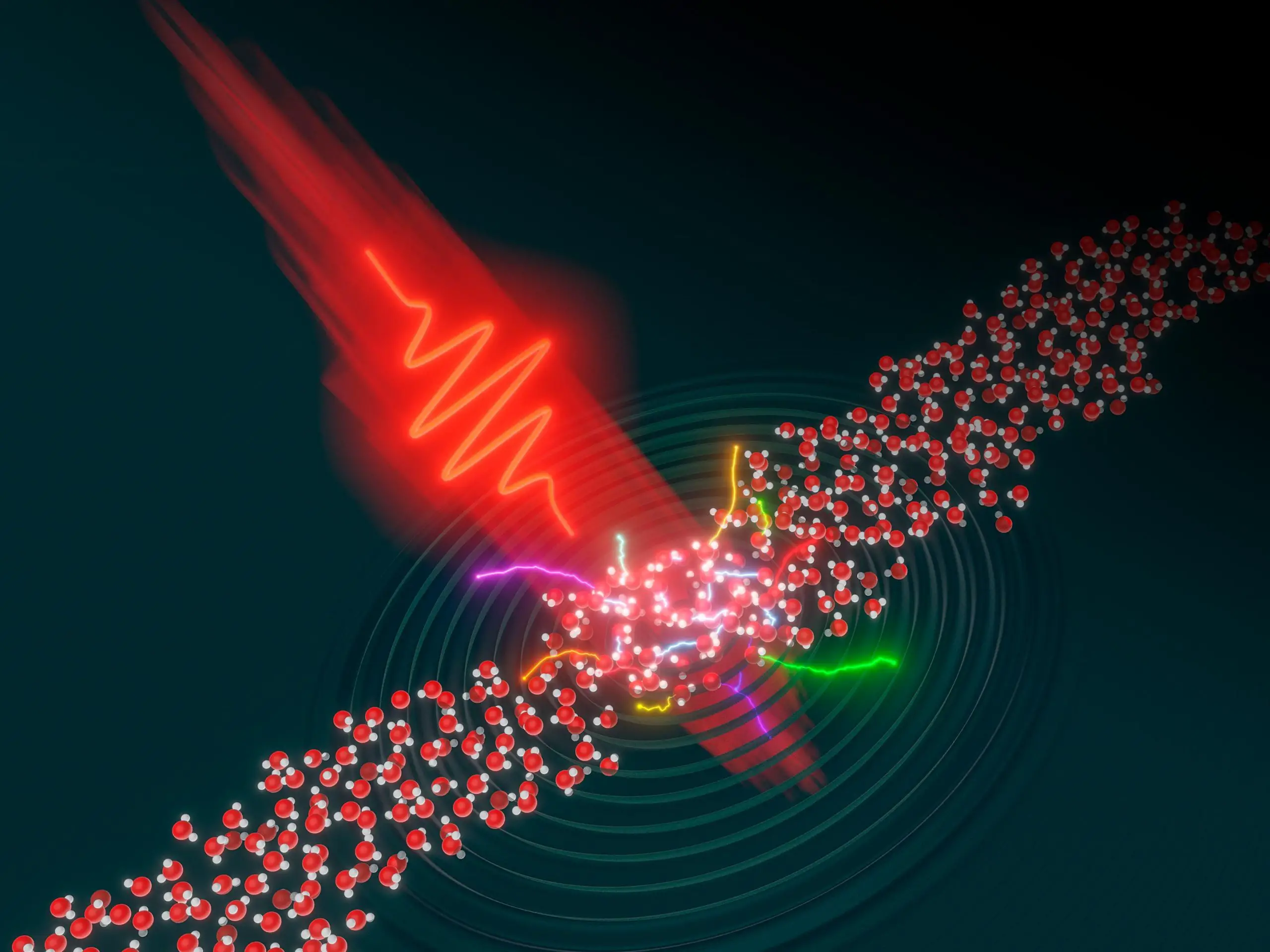
Researchers have used intense laser fields to investigate electron dynamics in liquids, shedding light on the high-harmonic spectrum and the role of the electron's mean free path in determining photon energy limits. By studying the behavior of liquids under intense laser irradiation, the team discovered that the maximum photon energy obtained through high-harmonic generation (HHG) in liquids is independent of the laser's wavelength. They identified the electron's mean free path as the crucial factor that imposes a ceiling on photon energy and developed an analytical model to account for electron scattering. This research provides new insights into ultrafast dynamics in liquids and establishes HHG as a spectroscopic tool for studying electron behavior in this phase of matter.
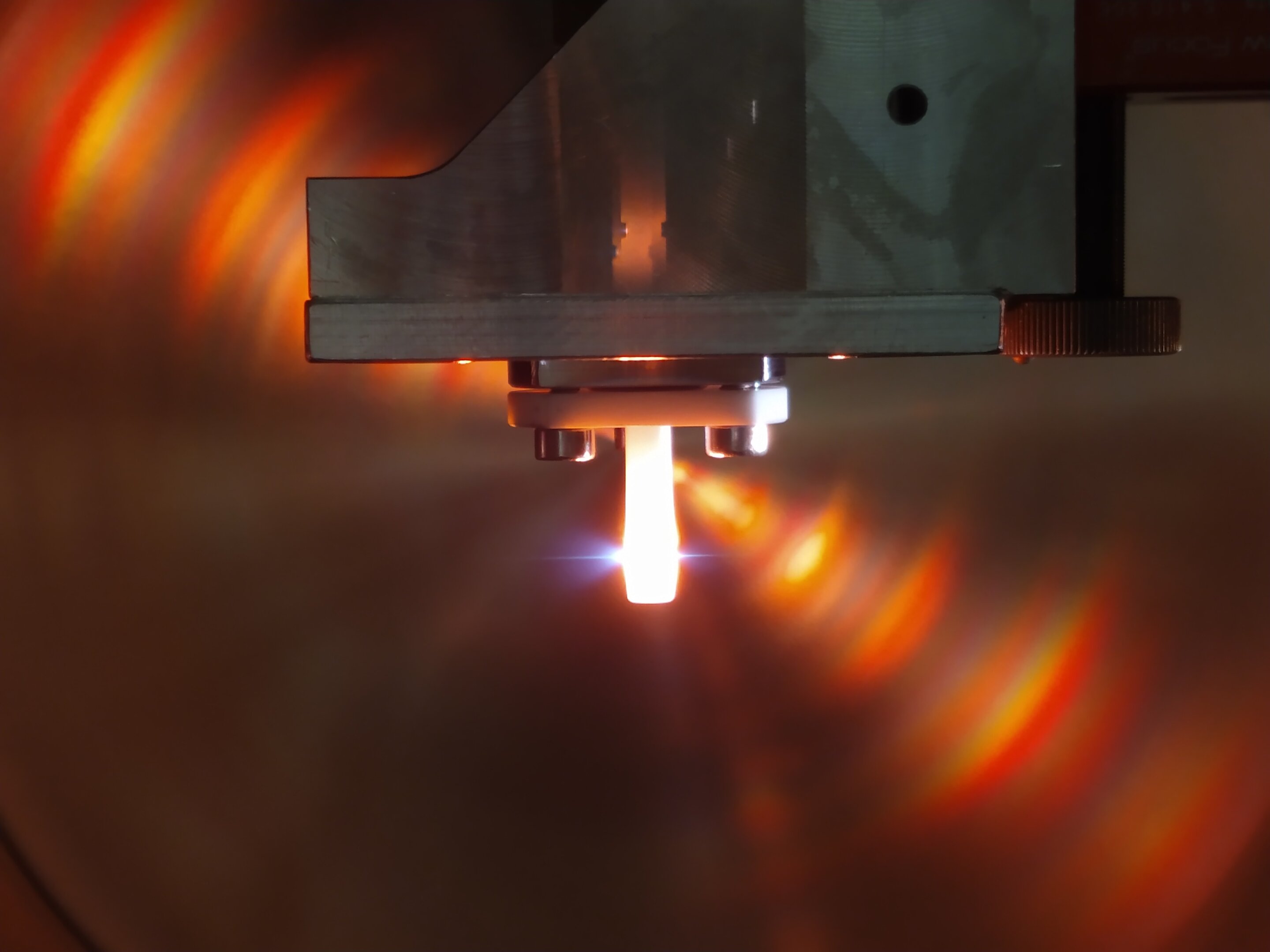
Researchers at Technion–Israel Institute of Technology have developed a new theory describing non-perturbative interactions driven by quantum light. The theory, published in Nature Physics, provides insights into strong-field physics phenomena and could guide future experiments and the development of quantum technology. The researchers applied their framework to high harmonic generation (HHG) and demonstrated that the quantum state of light affects measurable quantities, such as the emitted spectrum. The theory has potential applications in attosecond pulse generation, quantum sensing, quantum imaging, and other strong-field physics phenomena.
Physicists at the Max Planck Institute for Nuclear Physics have developed a novel method to track the motion of an electron in a strong infrared laser field in real time. The method links the absorption spectrum of the ionizing extreme ultraviolet pulse to the free-electron motion driven by the subsequent near-infrared pulse. The technique used is attosecond transient absorption spectroscopy together with the reconstruction of the time-dependent dipole moment, which connects the time-dependent dipole moment with the classical motion of the ionized electrons. The new method demonstrated here for helium can be applied to more complex systems such as larger atoms or molecules for a broad range of intensities.