
JWST traces crystal seeds from a newborn star to its outer disk
TL;DR Summary
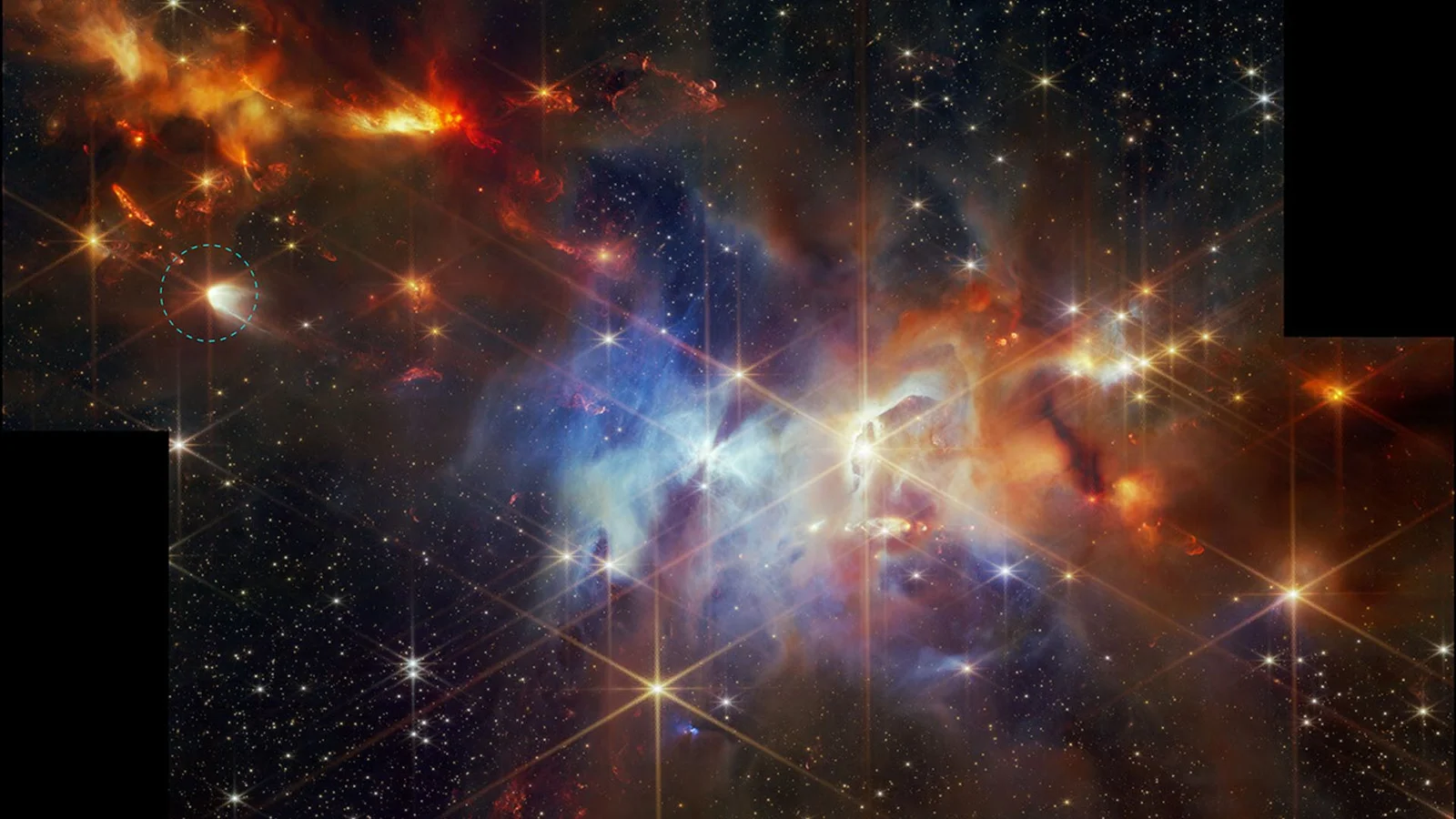
NASA’s James Webb Space Telescope mapped where crystalline silicates form around the young star EC 53 in the Serpens Nebula and showed these minerals being carried outward by winds into the outer, planet-forming disk. EC 53 undergos ~18-month bursts lasting about 100 days, forging silicates in hot regions and launching them into cooler outer regions, effectively seeding the outer disk with components that icy comets may carry—providing a direct link between crystal formation and distribution in early planetary systems. The findings, published in Nature, help explain how comets at the solar system’s edge could form.
Topics:science#crystalline-silicates#ec-53#james-webb-space-telescope#protoplanetary-disk#serpens-nebula#space
- James Webb Space Telescope sees comet-seeding crystals flowing far from newborn star (photo) Space
- Protostar EC 53 in the Serpens Nebula (NIRCam Image) NASA Science (.gov)
- Accretion bursts crystallize silicates in a planet-forming disk Nature
- NASA Webb Finds Young Sun-Like Star Forging, Spewing Common Crystals NASA Science (.gov)
- Icy Comets Get A Contribution From Stellar Furnaces Universe Today
Reading Insights
Total Reads
1
Unique Readers
12
Time Saved
73 min
vs 74 min read
Condensed
99%
14,738 → 95 words
Want the full story? Read the original article
Read on Space