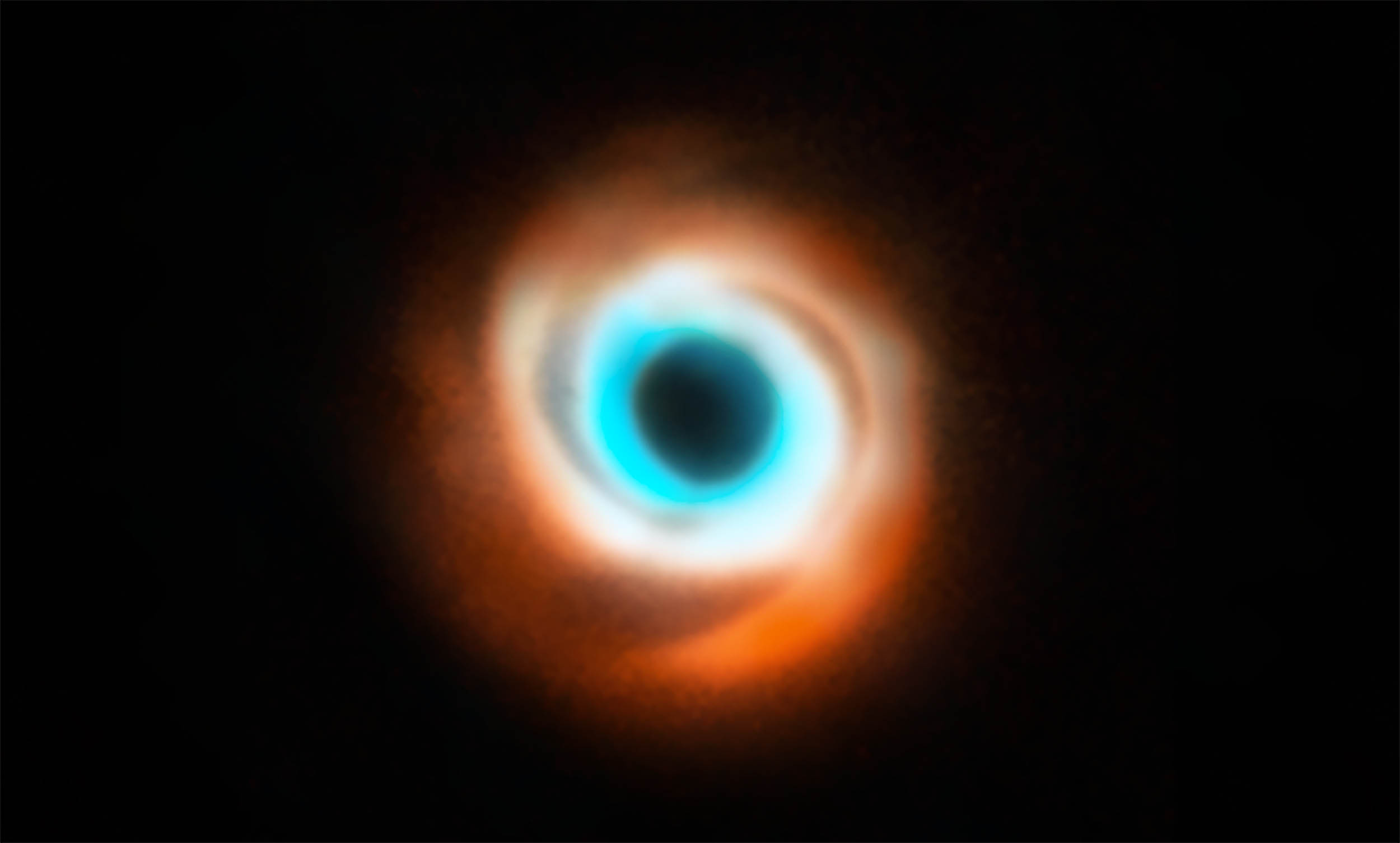
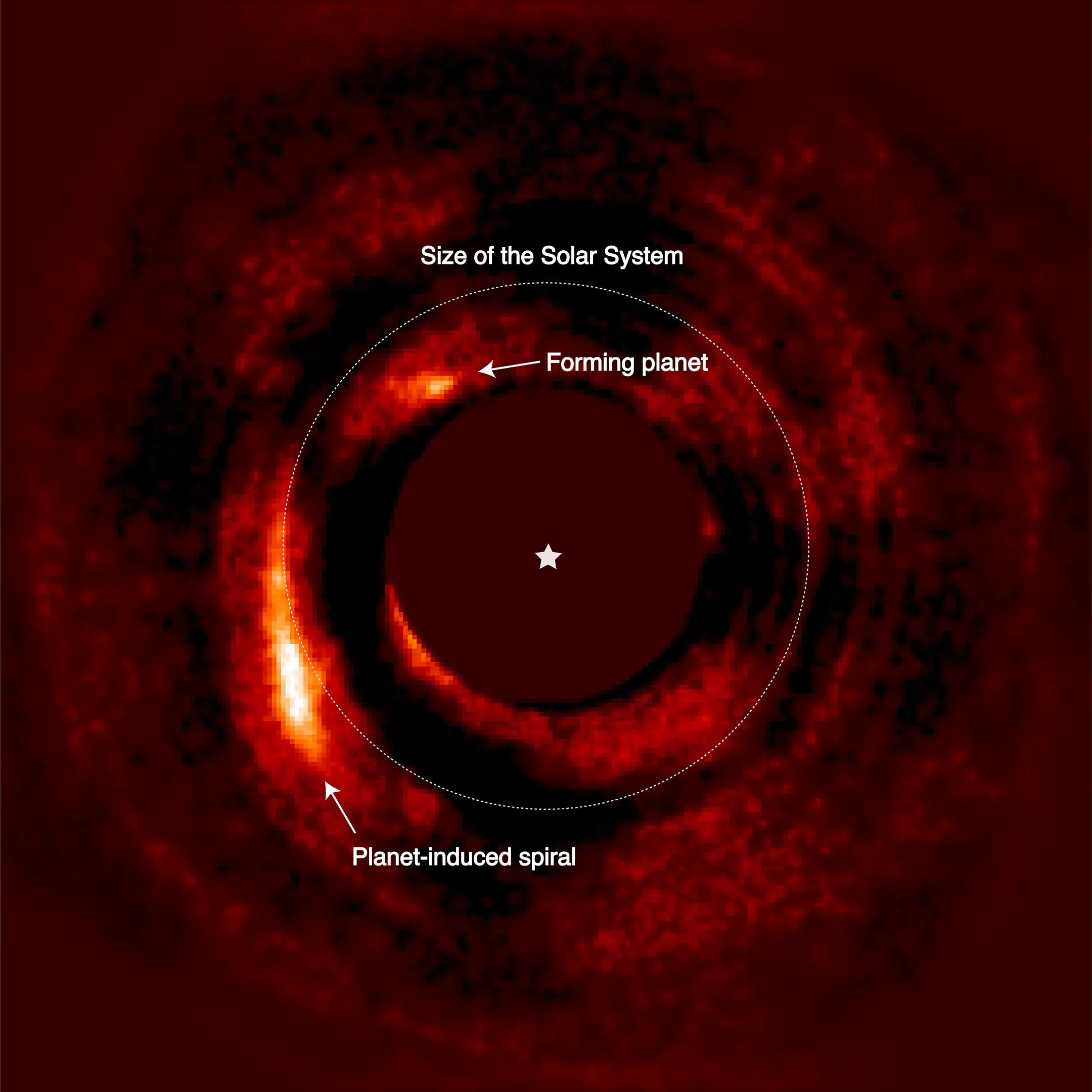
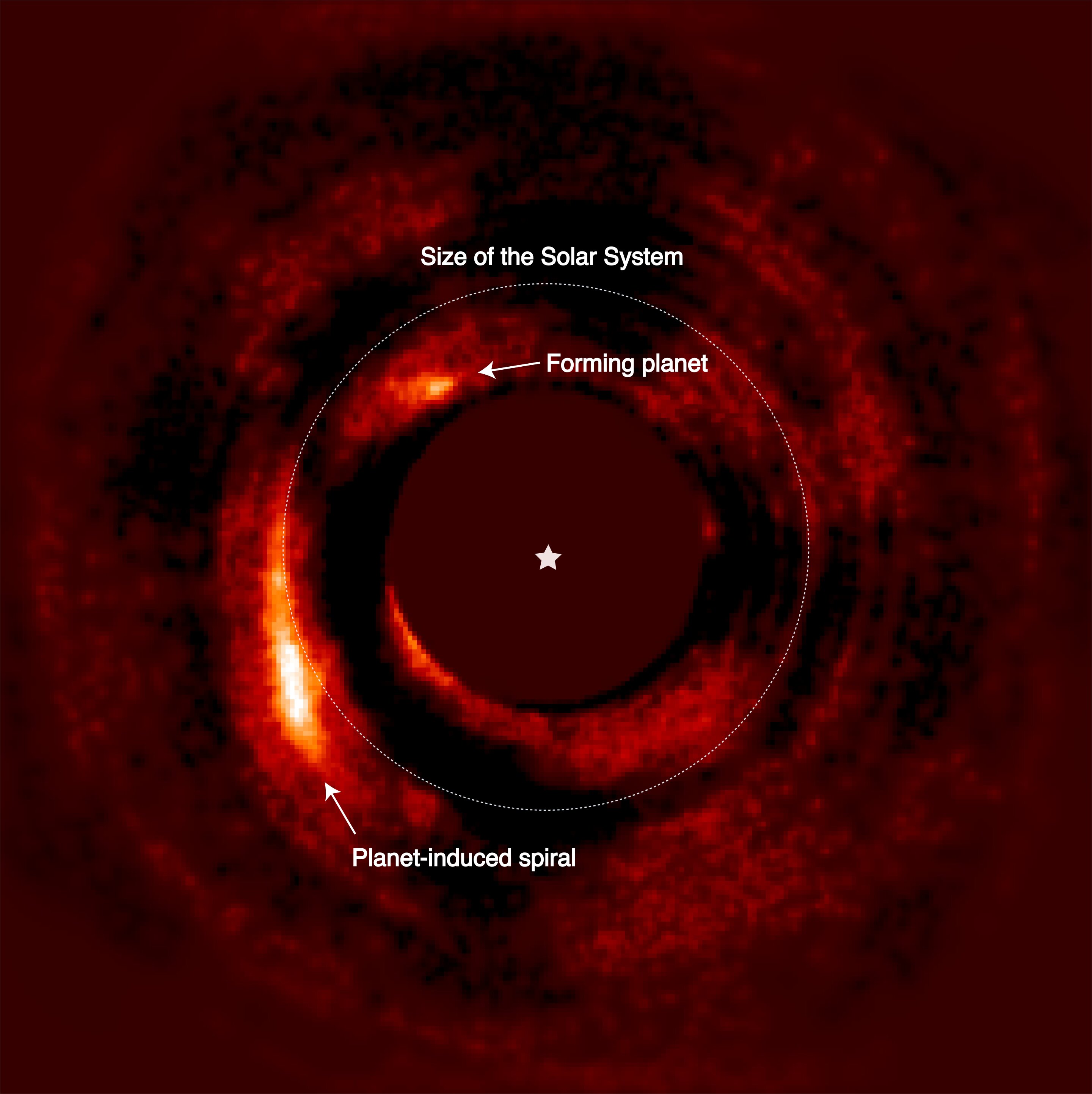
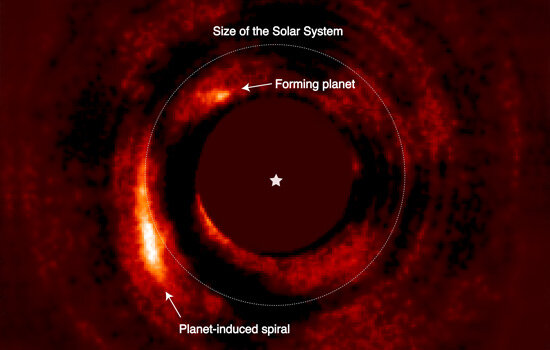
Astronomers using the European Southern Observatory’s VLT have captured the first direct images of a newborn planet around the star HD 135344B, revealing a planet still gathering mass and sculpting its dust disk, providing a rare glimpse into early planet formation.
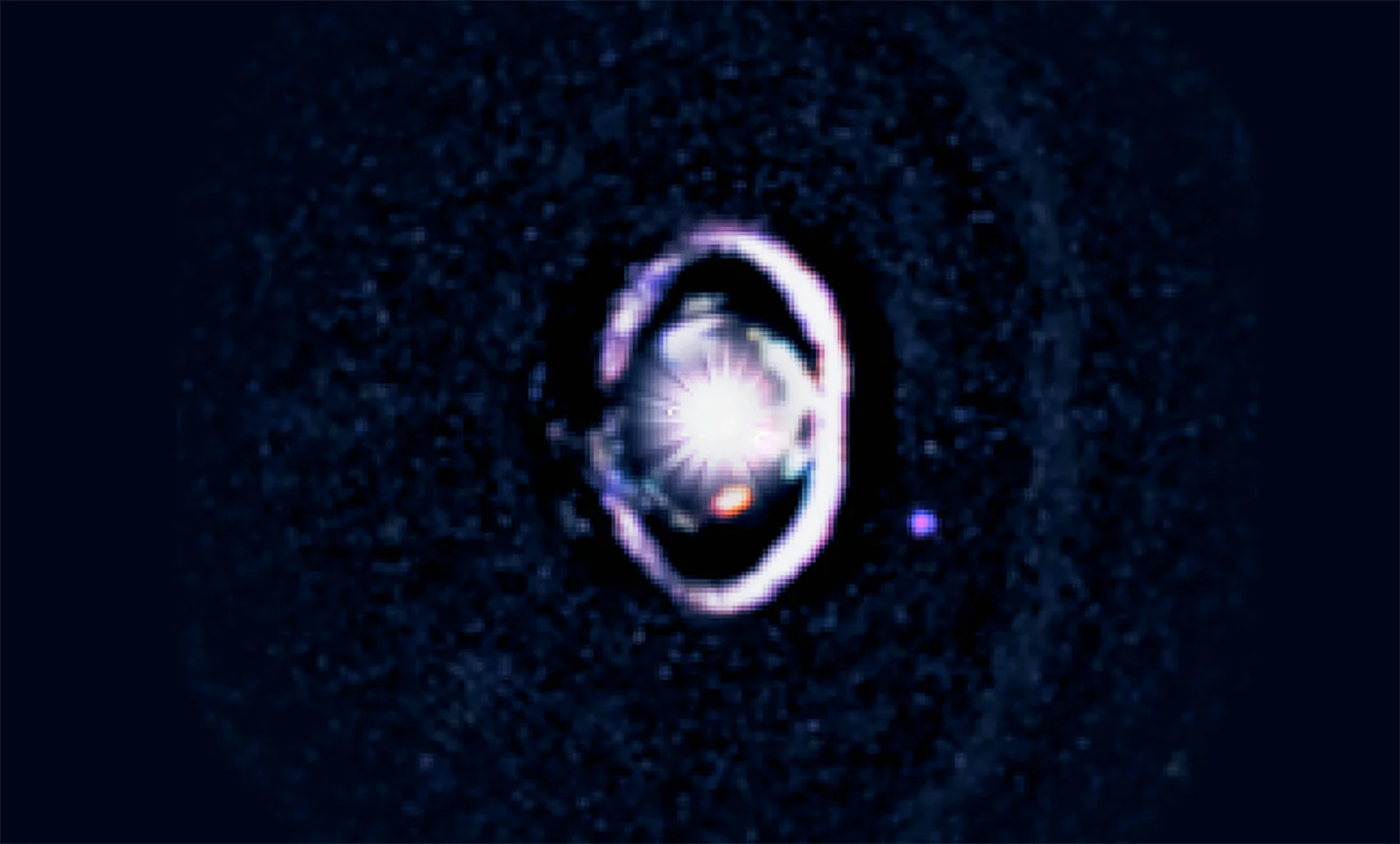
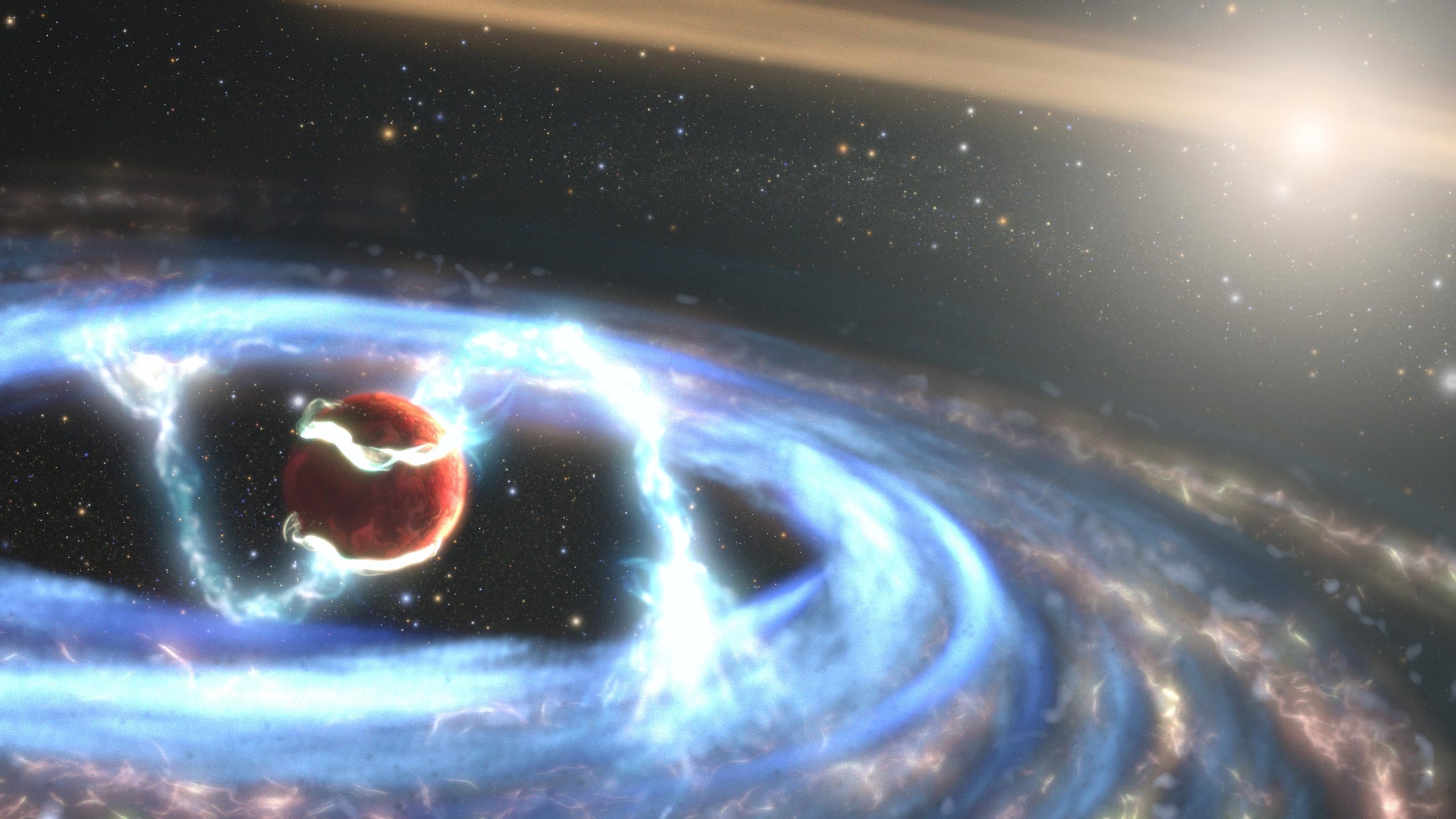
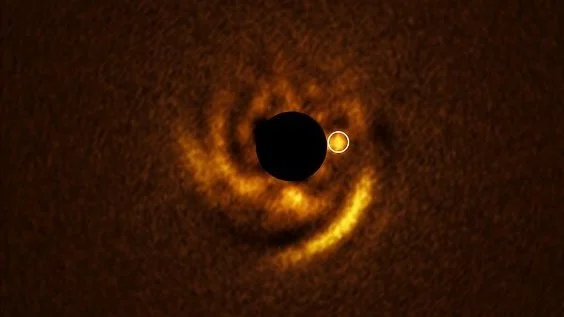
Astronomers have captured the first direct image of a forming planet, WISPIT 2b, inside a ring gap of its star's dust disk using H-alpha imaging, providing valuable insights into early planet formation and disk-planet interactions.
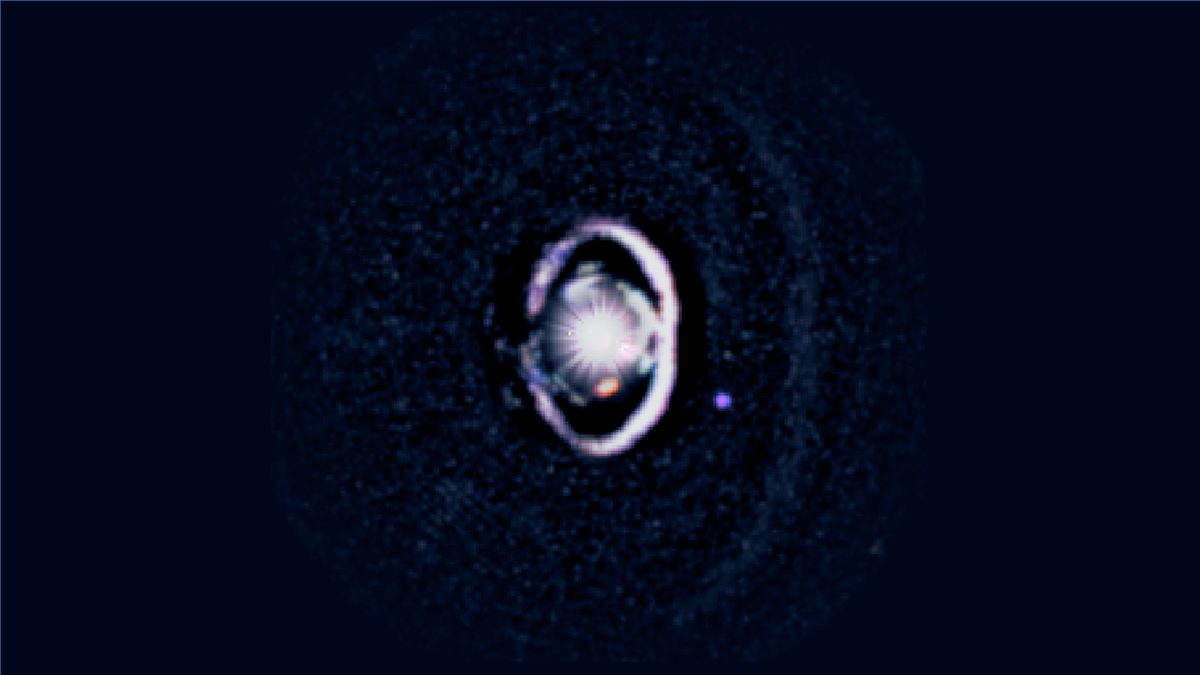
Scientists have captured images of a tiny baby planet, WISPIT 2b, forming inside its star's ring, making it the first of its kind to be directly observed in this way. Located 437 light-years away, this gas giant is just five million years old and was spotted within a gap in the protoplanetary disk of its star, WISPIT, using advanced telescopes. The discovery also hints at a possible second planet forming in the same system.
Astronomers have directly observed a young protoplanet, WISPIT 2b, forming in a dust disk around a star 437 light-years away, providing the first direct evidence of planet formation within a gap in a circumstellar disk, and possibly a second planetary body nearby.
NASA researchers directly photographed a young gas giant protoplanet, WISPIT 2b, embedded in a ring gap around its star, providing the first direct evidence of planet formation within such gaps in protoplanetary disks.
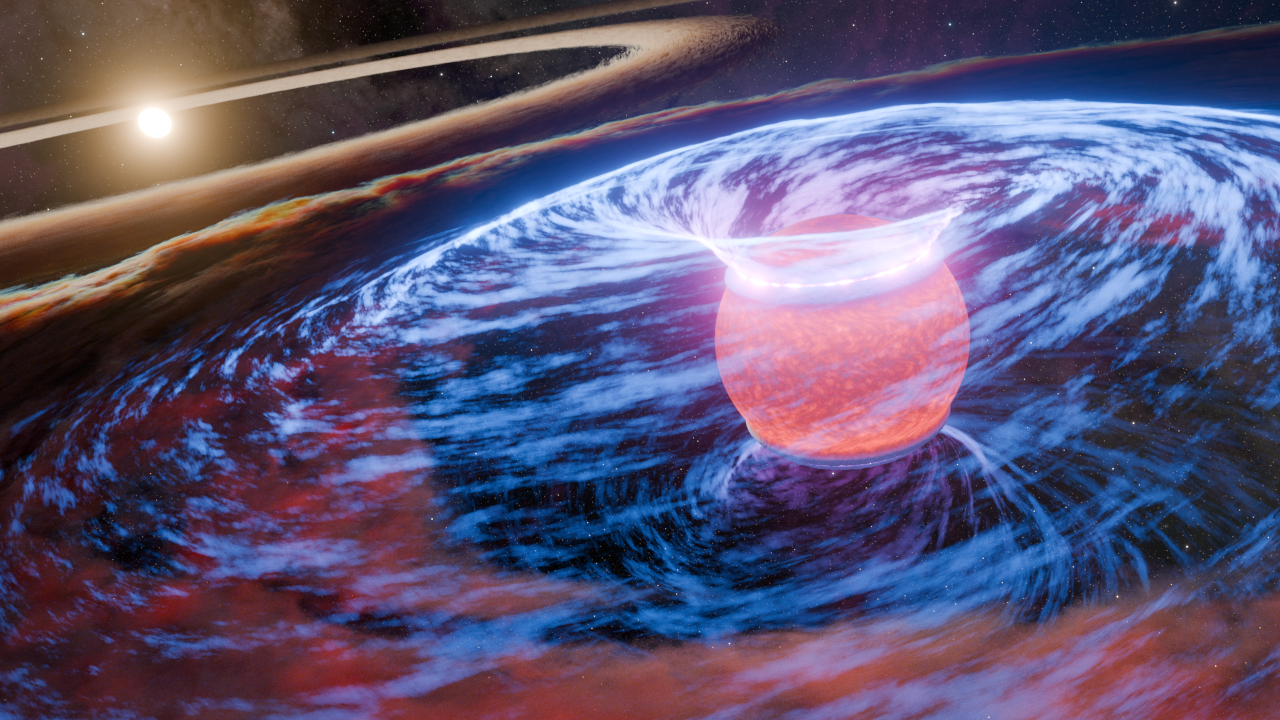
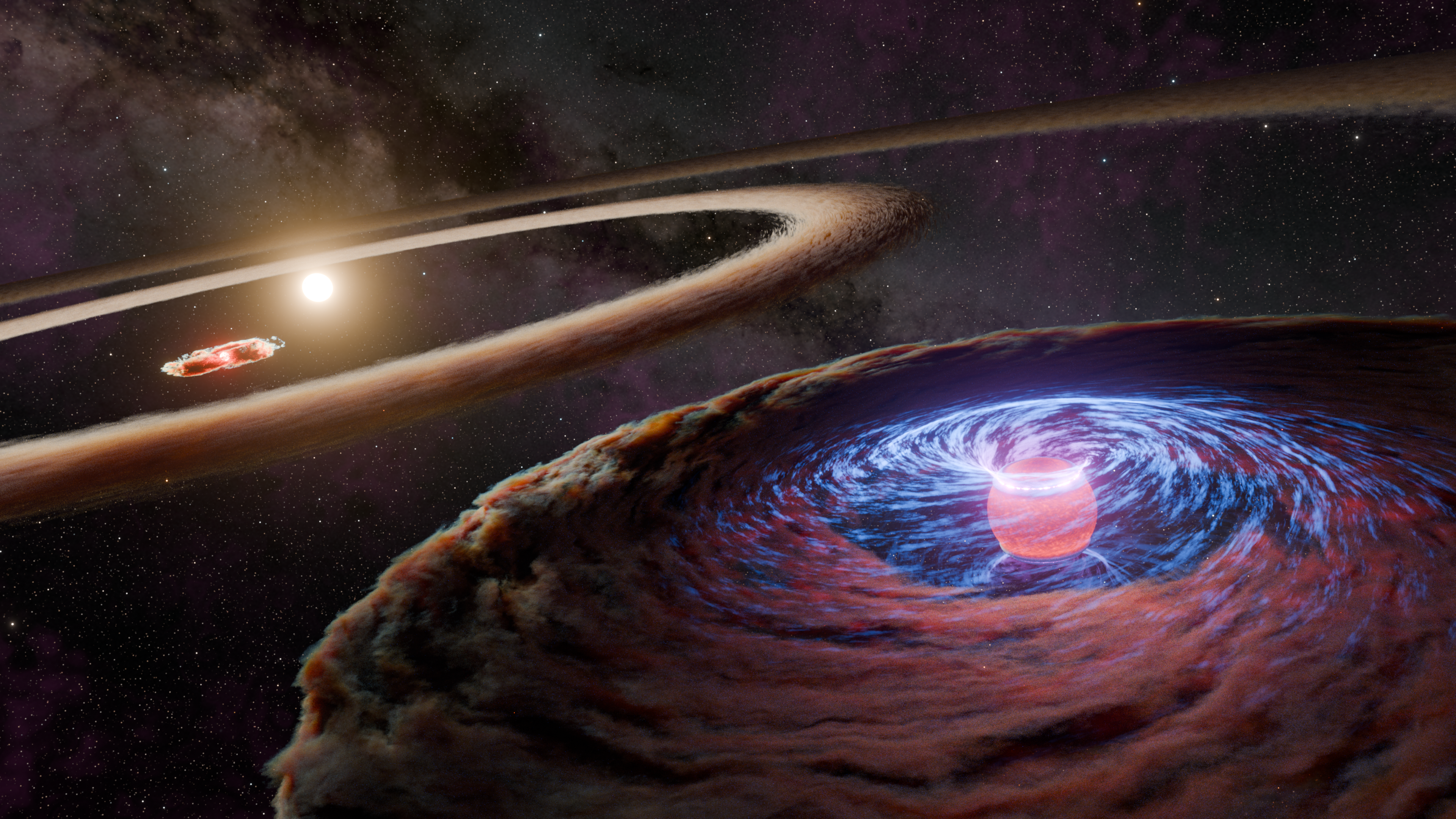
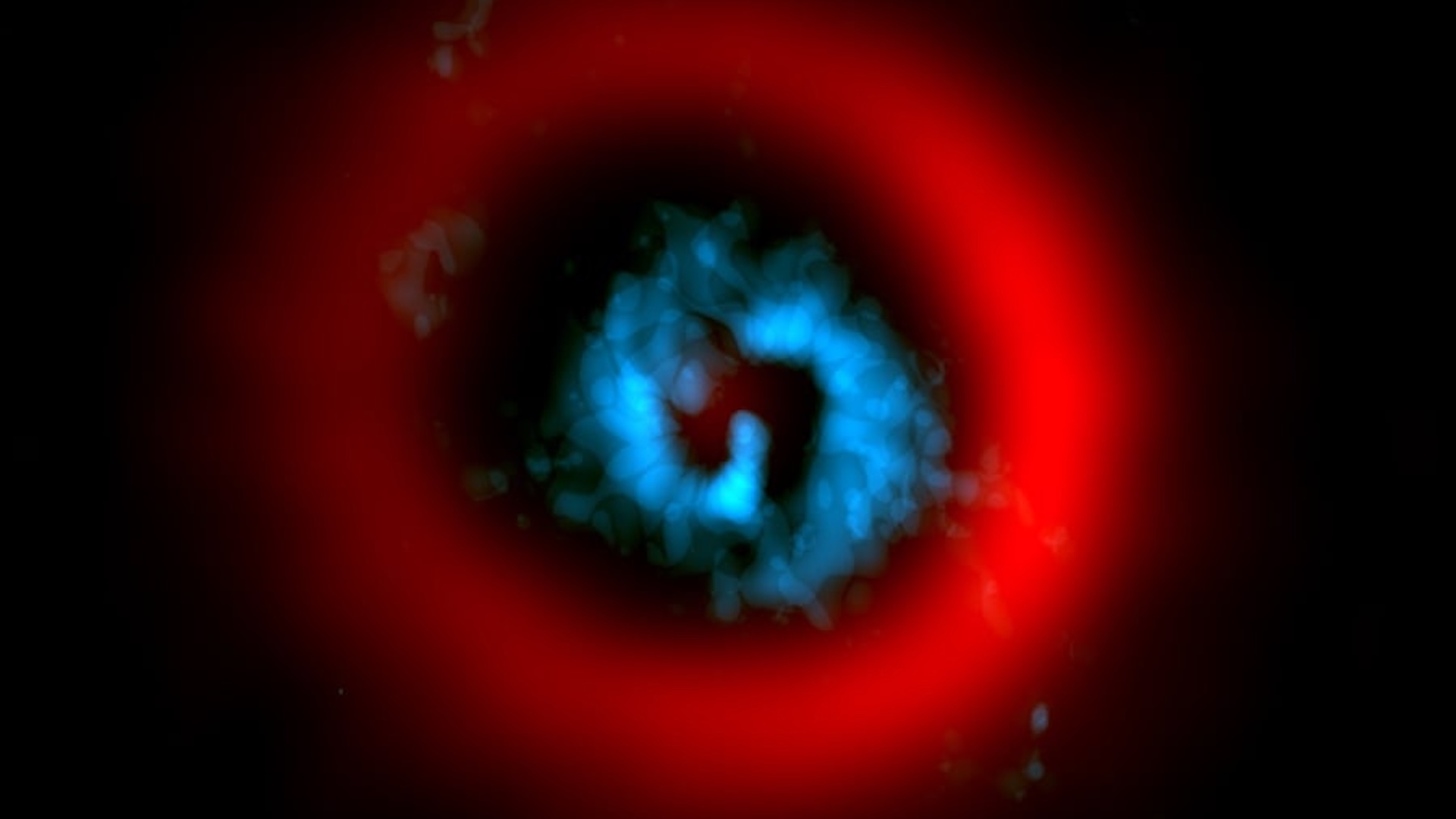
Scientists have observed a baby planet, AB Aurigae b, actively forming within its birth disk using ALMA and the Very Large Telescope, providing direct evidence of ongoing mass accretion and challenging traditional models of planet formation, especially given its early age and location within the disk.
Astronomers have captured the first direct photo of a baby planet, WISPIT 2b, forming inside a dusty disk around a young star using advanced adaptive optics, providing new insights into planet formation and confirming that protoplanets can create gaps in protoplanetary disks.
Astronomers have observed a newborn planet forming within a dust disc around a star 440 light years away, providing insights into Earth's early formation, and also discovered a dim companion star orbiting Betelgeuse, which may explain its brightness fluctuations and its impending supernova.
Scientists propose that the Earth's mantle contains two extra-dense blobs, known as large low-velocity provinces (LLVPs), which may have been leftover from a collision between Earth and a protoplanet called Theia 4.5 billion years ago. Seismic wave measurements suggest that these blobs are compositionally different from the surrounding material. Simulations indicate that during the collision, molten material from Theia mixed with the Earth's upper liquid layer, while denser solid material sank and embedded itself in the solid layer below. Further research will involve comparing rock samples from the Earth's mantle with samples from the Moon to support the idea of a rock exchange program between the two proto-worlds.
A new study suggests that remnants of the Mars-size rock, Theia, which collided with Earth and helped create the moon, may be buried near Earth's core. Computer simulations indicate that dense relics of Theia's mantle could have sunk and solidified in Earth's lower mantle, forming continent-size blobs that are more iron-rich than Earth's normal mantle rock. These blobs could have influenced geological activity unique to Earth, such as plate tectonics and subduction. Traces of these relics could potentially make their way to the surface through mantle plumes. The findings provide insight into Earth's geological evolution and its distinct characteristics compared to other rocky planets.
Astronomers have confirmed the existence of a protoplanet, HD169142 b, located 374 light years away from Earth. Using data from the SPHERE instrument of the European Southern Observatory, researchers from the University of Liège and Monash University were able to detect the thermal signature of the forming planet. The protoplanet, which is still in the process of gathering material, is located in a disk of gas and dust surrounding the star HD 169142. This discovery increases the number of confirmed protoplanets to three and provides valuable insights into the early stages of planet formation. Further observations with the James Webb Space Telescope could provide additional characterization and confirmation of the protoplanet.
Researchers from the University of Liège and Monash University have confirmed the existence of a third protoplanet, HD 169142 b, using data from the SPHERE instrument of the European Southern Observatory. The protoplanet is located in the disk of gas and dust surrounding HD 169142, a star 374 light years from our solar system. The discovery was made possible by advanced image processing tools developed by the PSILab of the University of Liège. The protoplanet is still gathering material and is buried in a significant amount of dust, which could be in the form of a circumplanetary disk. Further characterization of the protoplanet could be obtained through future observations with the James Webb Space Telescope.
Monash University astronomers have confirmed the formation of a protoplanet in the HD 169142 system using near-infrared images captured by the European Southern Observatory's Very Large Telescope. The protoplanet is located approximately 37 au from the star and has carved a gap in the disk surrounding it. The planet is buried in a significant amount of dust, which reflects stellar light, and is expected to have a circumplanetary disk that could form small satellites such as moons. The discovery of HD 169142 b is the third exoplanet to be imaged during formation, and it is an exciting target for the recently deployed James Webb Space Telescope.