Scientists have discovered two massive formations beneath Earth's surface that may be remnants of Theia, a lost planet that collided with Earth billions of years ago, potentially influencing Earth's geodynamics and offering insights into planetary evolution.
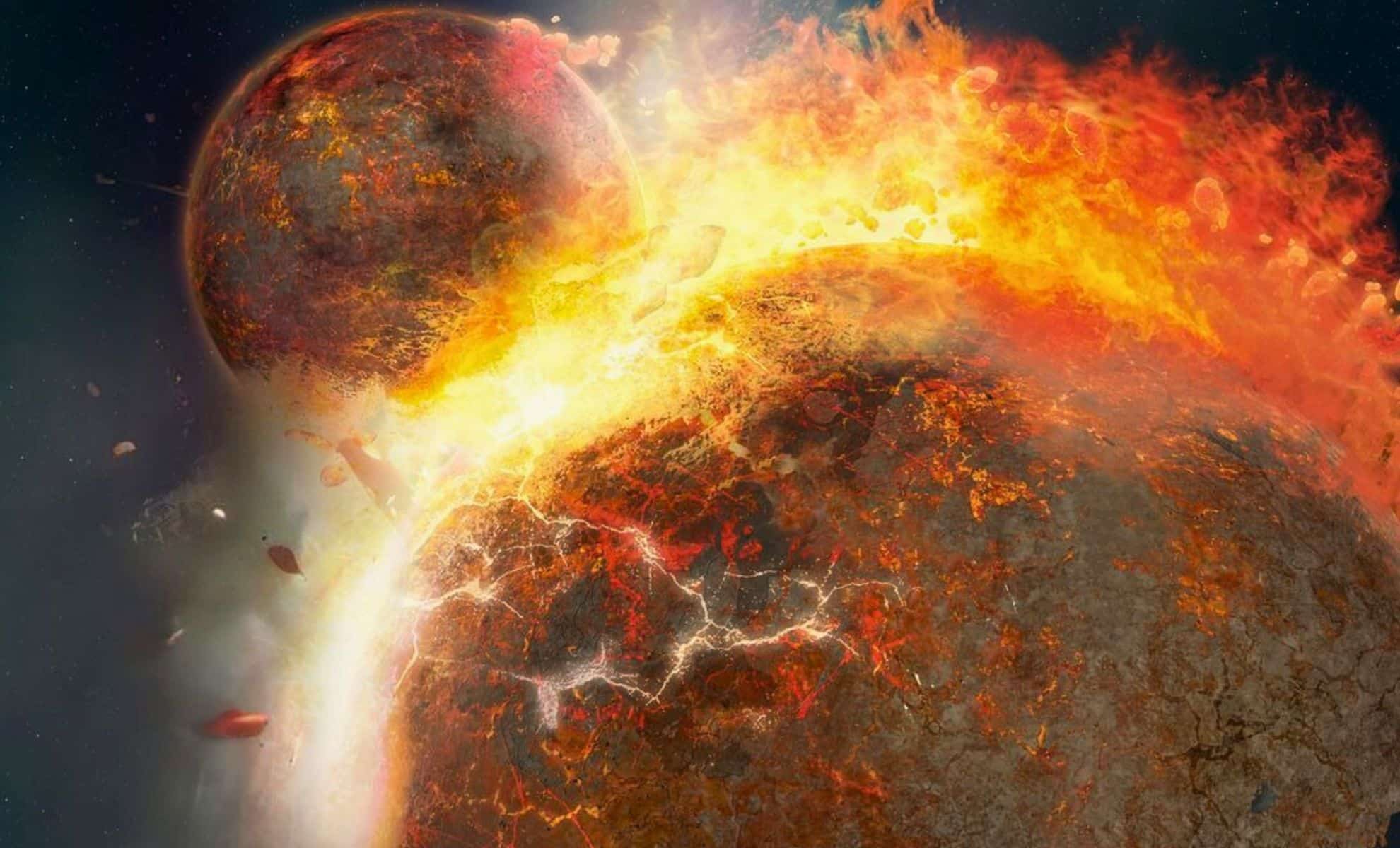
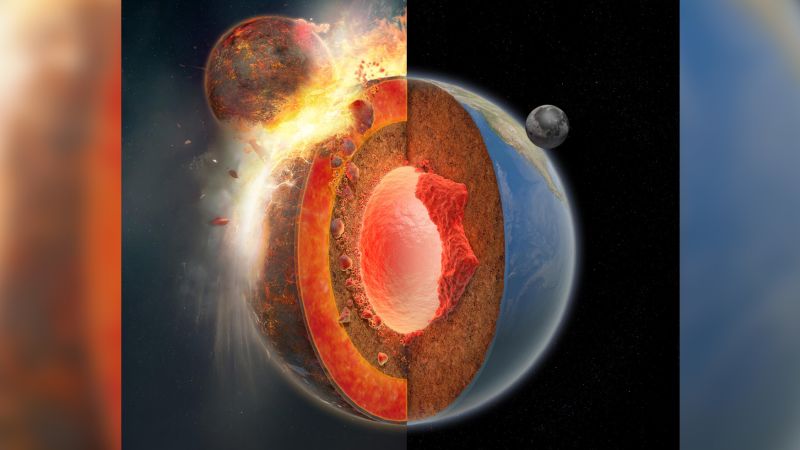
Scientists propose that the Earth's mantle contains two extra-dense blobs, known as large low-velocity provinces (LLVPs), which may have been leftover from a collision between Earth and a protoplanet called Theia 4.5 billion years ago. Seismic wave measurements suggest that these blobs are compositionally different from the surrounding material. Simulations indicate that during the collision, molten material from Theia mixed with the Earth's upper liquid layer, while denser solid material sank and embedded itself in the solid layer below. Further research will involve comparing rock samples from the Earth's mantle with samples from the Moon to support the idea of a rock exchange program between the two proto-worlds.
A new study proposes that remnants of the ancient planet Theia, which collided with Earth billions of years ago and formed the moon, may still exist buried within Earth's mantle. These remnants, in the form of molten slabs, could have embedded themselves in Earth's mantle after impact and solidified, creating two massive blobs known as large low-velocity provinces (LLVPs) that are located deep within the Earth. The study provides additional support for the giant-impact hypothesis and offers a potential explanation for the origins of the LLVPs, which have remained a mystery to scientists. However, the theory is still a hypothesis and requires further research and investigation.