While overall Obamacare sign-ups are steady compared to last year, some states are experiencing higher termination rates, fewer new enrollees, and increased consumer calls for help, raising concerns about the impact of the expiration of enhanced subsidies in January, which could lead to higher premiums and lower enrollment if not extended by Congress.

Without the extension of ACA subsidies, millions of Americans could face significantly higher health insurance premiums in 2026, with some seeing increases of over 1,000%, and an estimated 4 million people might lose coverage altogether, potentially raising overall healthcare costs due to increased uncompensated care. Congress's failure to extend these tax credits, set to expire at year's end, could have widespread financial impacts on individuals and the healthcare system.
Obamacare health insurance premiums are expected to rise significantly in 2026, with an average increase of 26%, due to factors including the potential expiration of enhanced premium tax credits, which could cause monthly premiums to more than double for some enrollees if not extended. The ongoing government shutdown is central to the debate over extending these subsidies, impacting millions of Americans enrolled in ACA plans.
Californians renewing or signing up for Obamacare plans will face a 97% average increase in premiums for 2026 due to a federal government shutdown and the potential loss of expanded tax credits, risking many losing coverage and increasing financial strain on low- and middle-income families.
Open enrollment for ACA health plans begins Nov. 1, but many Americans face significantly higher premiums in 2026 due to the expiration of enhanced subsidies, potentially leading to increased uninsured rates and influencing consumer choices amid ongoing congressional deadlock over subsidies.
The article explains the debate over ACA subsidies, highlighting that most beneficiaries earn less than 400% of the poverty level, while claims that millionaires benefit are largely inaccurate; it also details how expiration of expanded subsidies could significantly raise premiums for many Americans, especially those just above the income threshold, contributing to the ongoing government shutdown debate.
Premiums for ACA marketplace coverage are expected to rise significantly in 2026, with an average increase of 26%, and potentially up to 114% if enhanced pandemic-era subsidies expire, leading to higher costs for consumers and possible coverage declines if Congress does not extend these subsidies.
HealthCare.gov insurance premiums in Wisconsin are projected to increase dramatically in 2026, with some rates rising by over 800%, due to the expiration of enhanced federal subsidies that have lowered costs since 2021, leading to concerns about affordability for many Americans.
The cost of employer-sponsored family health insurance has risen to an average of nearly $27,000 annually, matching the price of a new Toyota Corolla hybrid, with premiums increasing for three consecutive years and concerns mounting over rising healthcare costs and policy impacts, including potential coverage reductions for high-cost drugs and the effects of federal budget cuts on Medicaid.
States and lawmakers warn that delaying the extension of enhanced ACA subsidies will lead to significant premium hikes, potential coverage drops, and logistical challenges during the upcoming open enrollment period, with some experts stating it is now 'too late' to implement changes smoothly before November 1.
Federal employees and postal service workers will face significant health insurance premium hikes in 2026, with increases of 12.3% and 11.3% respectively, amid staffing shortages and ongoing government shutdown concerns, prompting calls for cost-control measures and policy reforms.
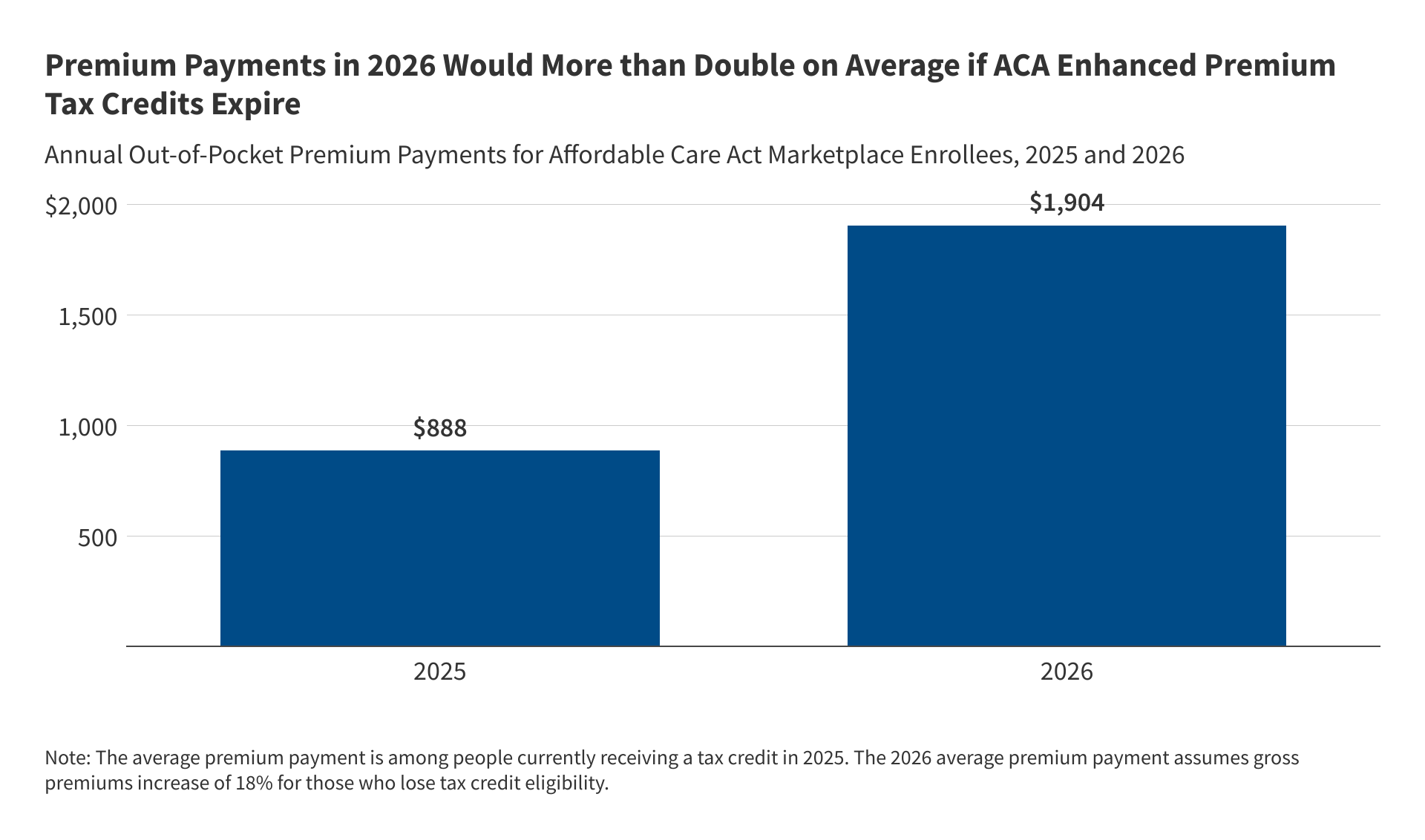
If the enhanced premium tax credits for ACA Marketplace enrollees expire at the end of 2025, average premium payments could more than double in 2026, with middle- and high-income enrollees facing significant increases due to rising premiums and changes in tax credit calculations, potentially leading to substantial financial burdens for many.
The potential U.S. government shutdown hinges on extending the enhanced ACA tax credits, which help 22 million Americans afford health insurance. Their expiration at the end of 2025 could lead to significant premium hikes—up to 75%—and cause millions to lose coverage, exacerbating financial struggles amid ongoing economic pressures.
California faces a potential health insurance crisis with upcoming policy changes requiring annual opt-in coverage, reduced federal aid for immigrants, and shorter enrollment periods, amid political negotiations over subsidies that could lead to higher premiums and coverage uncertainties for millions.
Health insurance premiums in Florida are set to double for over 4 million residents in 2026, driven by rate hikes approved by the Florida Office of Insurance Regulation, which could lead to a significant increase in the uninsured population. The increases affect individual and small employer plans, with rural counties facing the highest costs, and are part of broader national trends of rising insurance costs due to various factors, including the expiration of enhanced premium tax credits. Experts emphasize the urgent need for Medicaid expansion to prevent a healthcare crisis.