Tag

Polarized Light

All articles tagged with #polarized light

science1 year ago

Parasitic Worms Lead Praying Mantises to Roads, Study Finds

Researchers from Kyoto University have discovered that parasitic horsehair worms manipulate infected praying mantises into mistaking asphalt roads for water surfaces, leading to their deaths. The worms, which hatch in water and grow inside mantises, cause the insects to seek out horizontally polarized light, similar to that reflected by water. Experiments showed that infected mantises are more attracted to asphalt, which reflects similar light, resulting in a high infection rate among mantises found on roads. This study highlights the complex interaction between parasites and their hosts, influenced by human environments.
astronomy1 year ago

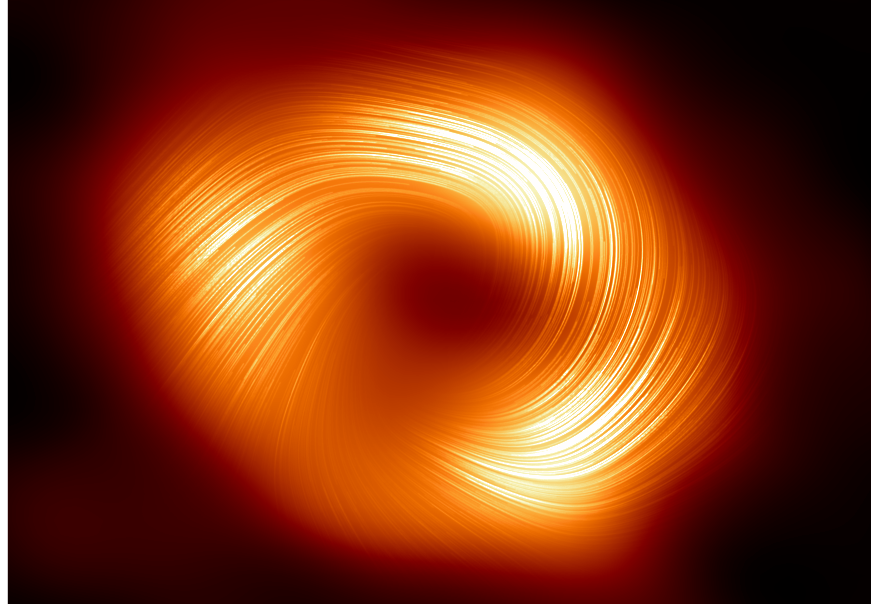
"Magnetic Spirals: Unveiling the Vortex of the Milky Way's Central Black Hole"

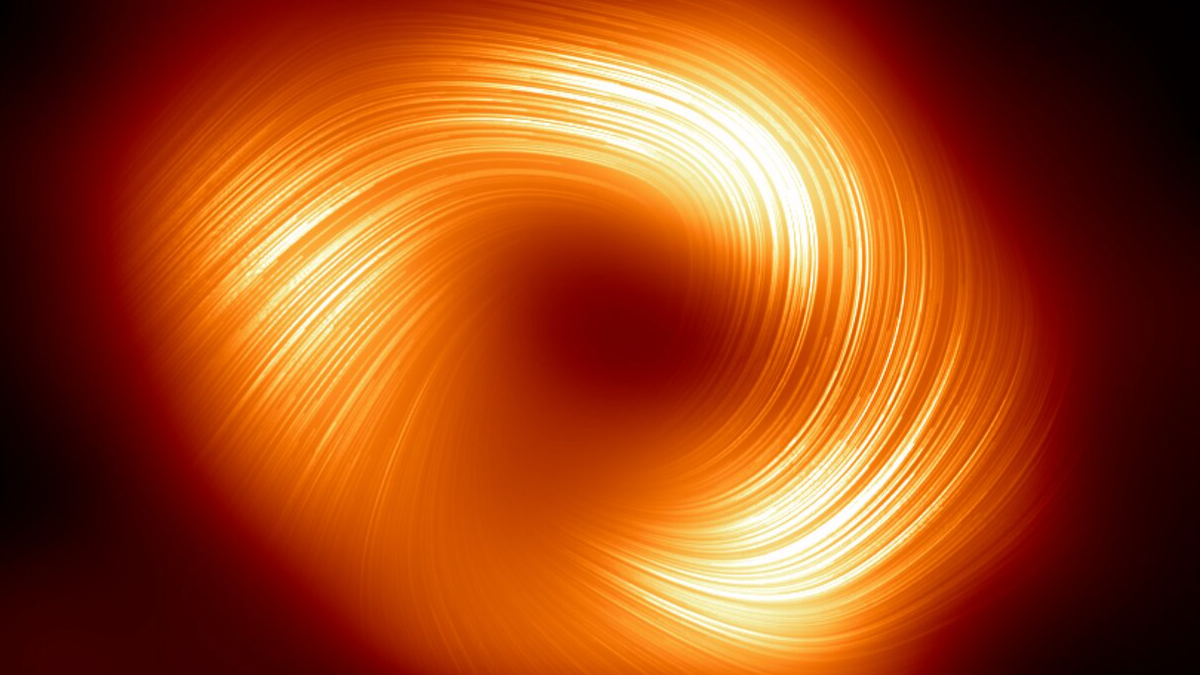
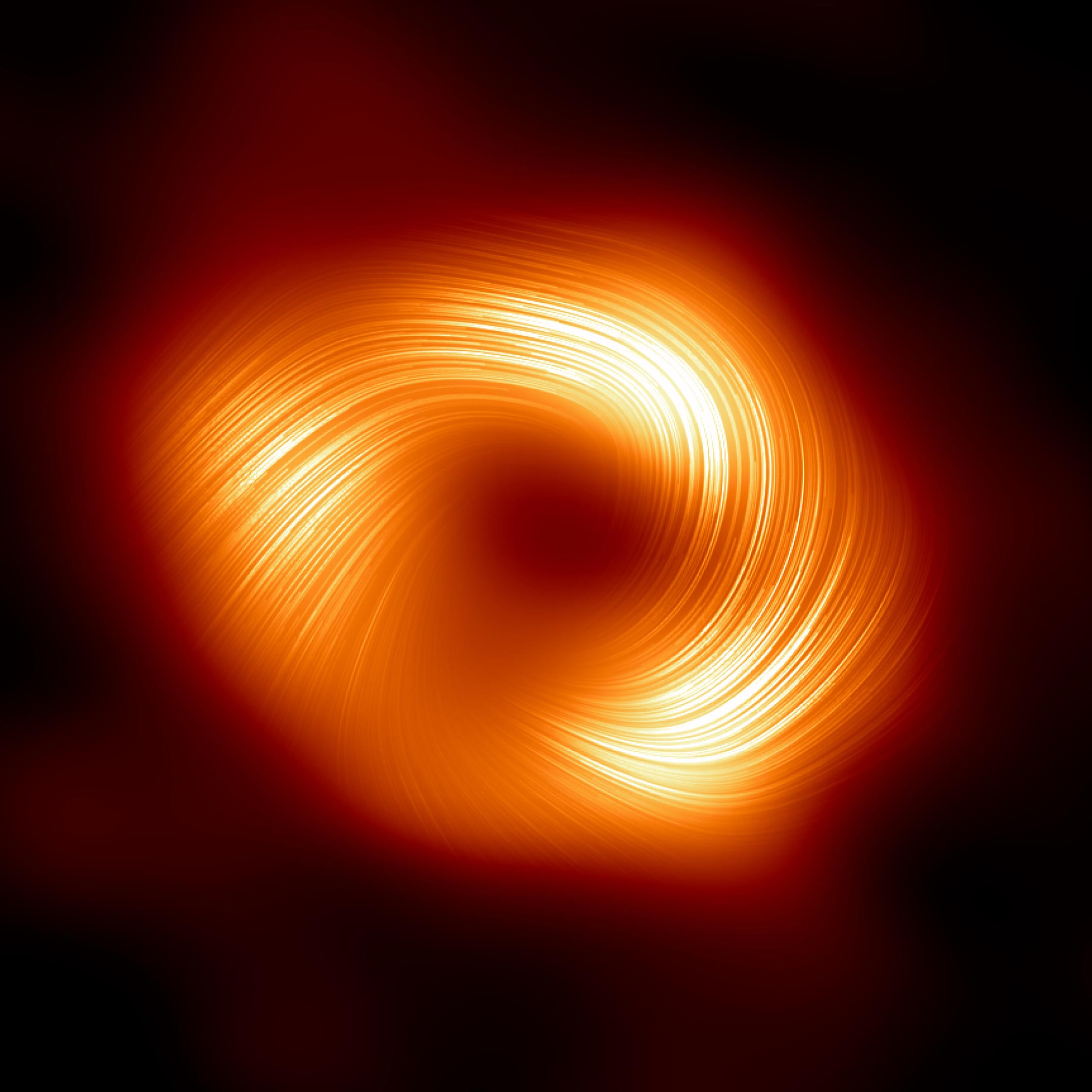
The Event Horizon Telescope (EHT) collaboration has captured a new view of the supermassive black hole Sagittarius A* in the Milky Way, revealing strong, organized magnetic fields in polarized light, similar to those of the M87 black hole. This suggests that strong magnetic fields may be common to all black holes and hints at a hidden jet in Sagittarius A*. The observations provide insight into the physical processes governing how black holes interact with their surroundings and could lead to sharper images of black holes in the future.

astronomy1 year ago

"Revealing Magnetic Fields: Event Horizon Telescope's Discovery at Milky Way's Central Black Hole"

The Event Horizon Telescope (EHT) collaboration has discovered strong magnetic fields spiraling around the supermassive black hole at the center of the Milky Way, named Sagittarius A* (Sgr A*). By studying Sgr A* in polarized light, astronomers have found similarities with the much larger black hole at the center of the Messier 87 galaxy (M87*), suggesting universal processes among supermassive black holes. The findings, reported in two papers, provide insights into the interaction of black holes with surrounding matter and will refine theoretical models. The EHT is scheduled to observe Sgr A* again with more telescopes participating, allowing for observations in more frequencies.

astronomy1 year ago

"Revealing the Intense Magnetic Fields Around the Milky Way's Supermassive Black Hole"

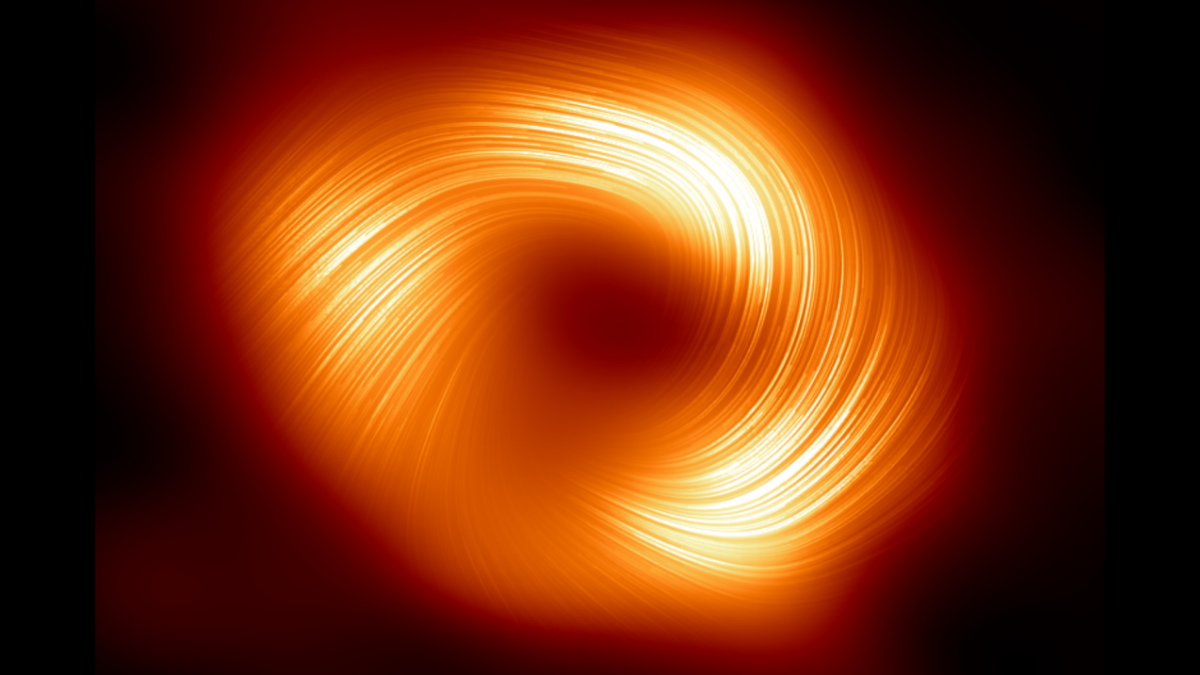
A new image of the Milky Way's supermassive black hole, Sagittarius A*, reveals the intense magnetic field surrounding it in polarized light, providing insight into the extreme physics at the galaxy's center. The image, captured by the Event Horizon Telescope (EHT) Collaboration, showcases the movement of gas and superheated matter around the black hole, offering a visualization of the intense phenomena occurring in its immediate vicinity. This breakthrough sheds light on the mysterious nature of black holes and their surrounding environments, with implications for understanding smaller supermassive black holes as well.

astronomy1 year ago

"Revealing the Hidden Magnetic Fields Around the Milky Way's Supermassive Black Hole"

The Event Horizon Telescope has captured the first view of polarized light and magnetic fields surrounding Sagittarius A* (Sgr A*), the supermassive black hole at the heart of the Milky Way, revealing similarities with the magnetic fields around the supermassive black hole in the galaxy M87. This suggests that strong and well-organized magnetic fields could be common to all black holes and hints at the possibility of a hidden and faint jet around Sgr A*. The findings provide compelling evidence that strong magnetic fields are ubiquitous to these cosmic titans and could influence our understanding of how galaxies evolve.

science-and-astronomy2 years ago

Unraveling the Mystery of Runaway Black Holes and Their Feeding Behavior.

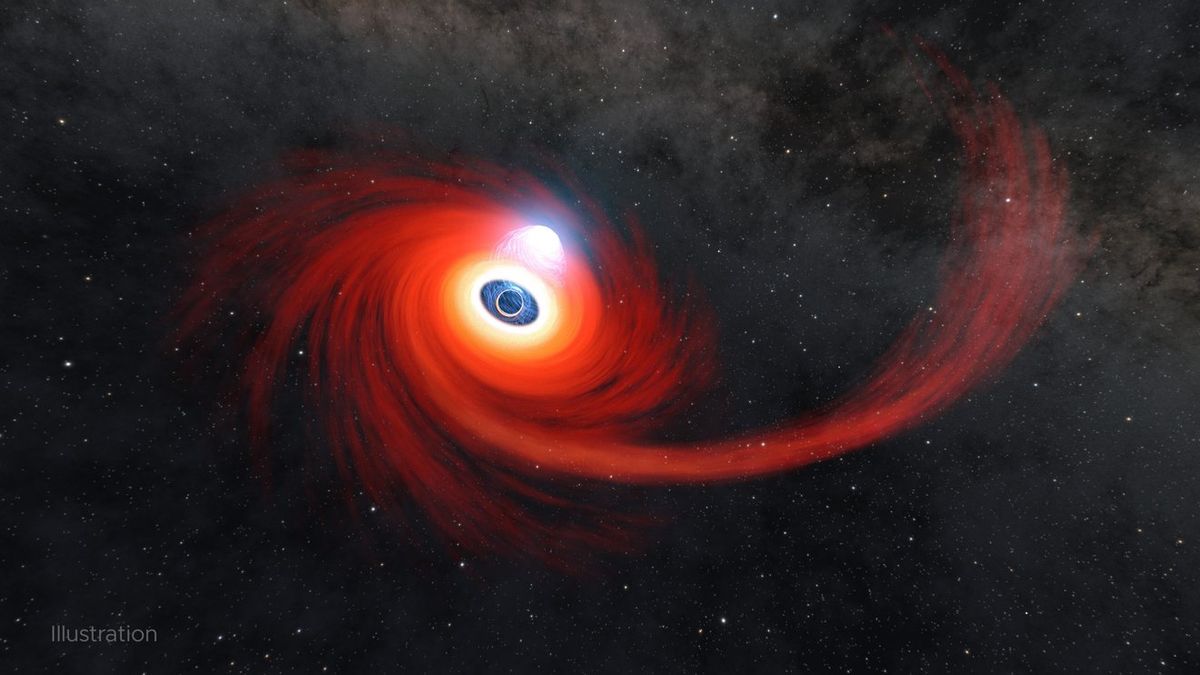
Astronomers have observed streams of star matter that collided with each other and came full circle around black holes, providing a direct look at the early stages of disk-forming around black holes. The team studying a tidal disruption event called AT 2020mot found strong evidence for the theory that the light is from star matter in the disk-forming stage. The team also calculated how polarized the detected light is and found that the light was polarized to an extraordinary amount (25%). The highly polarized light is due to the shocks created from multiple colliding streams of stellar material.

astronomy2 years ago

Unexplained 'Cow' Explosion Baffles Scientists.

The first recorded fast blue optical transient (FBOT) explosion, known as "the Cow," has been found to be the most asymmetrical explosion ever seen by astronomers, bursting into space in a flattened, pancake-like shape rather than a typical sphere. The shape of the blast, which is around the size of the solar system and occurred 180 million light-years from Earth, may challenge scientists' perceptions of how explosive events like FBOTs occur. FBOTs are a major puzzle for scientists, and very little is known about them or what causes them.